The cleaning plan should fit the building rather than force every Guildford workplace into the same routine. Office cleaning supplies management in Guildford matters to businesses operating from offices, including those in managed buildings. Products, equipment and tasks should suit how each space is used.
A dependable approach keeps essential supplies organised and cleaning tasks clear. Building managers also need to understand how products and equipment fit into the daily cleaning plan, alongside the management of janitorial supplies.
This article explains how to manage cleaning supplies, equipment and tasks in a practical way for Guildford workplaces. You’ll learn what to consider when defining cleaning requirements, how product and equipment choices affect the routine, and how office cleaning and hygiene services can help maintain a workplace.
Key Takeaways
- Match cleaning products and equipment to the needs and use of each workplace, rather than relying on a one-size-fits-all approach.
- Set a clear cleaning scope so building managers can coordinate tasks across shared and office areas.
- Organise janitorial supplies around the routine, making it easier to keep essential items available and responsibilities clear.
- Learn how DLT Cleaning Services Ltd’s Office Cleaning and Hygiene Services can support a consistently maintained workplace in Guildford.
Professional-grade products and equipment
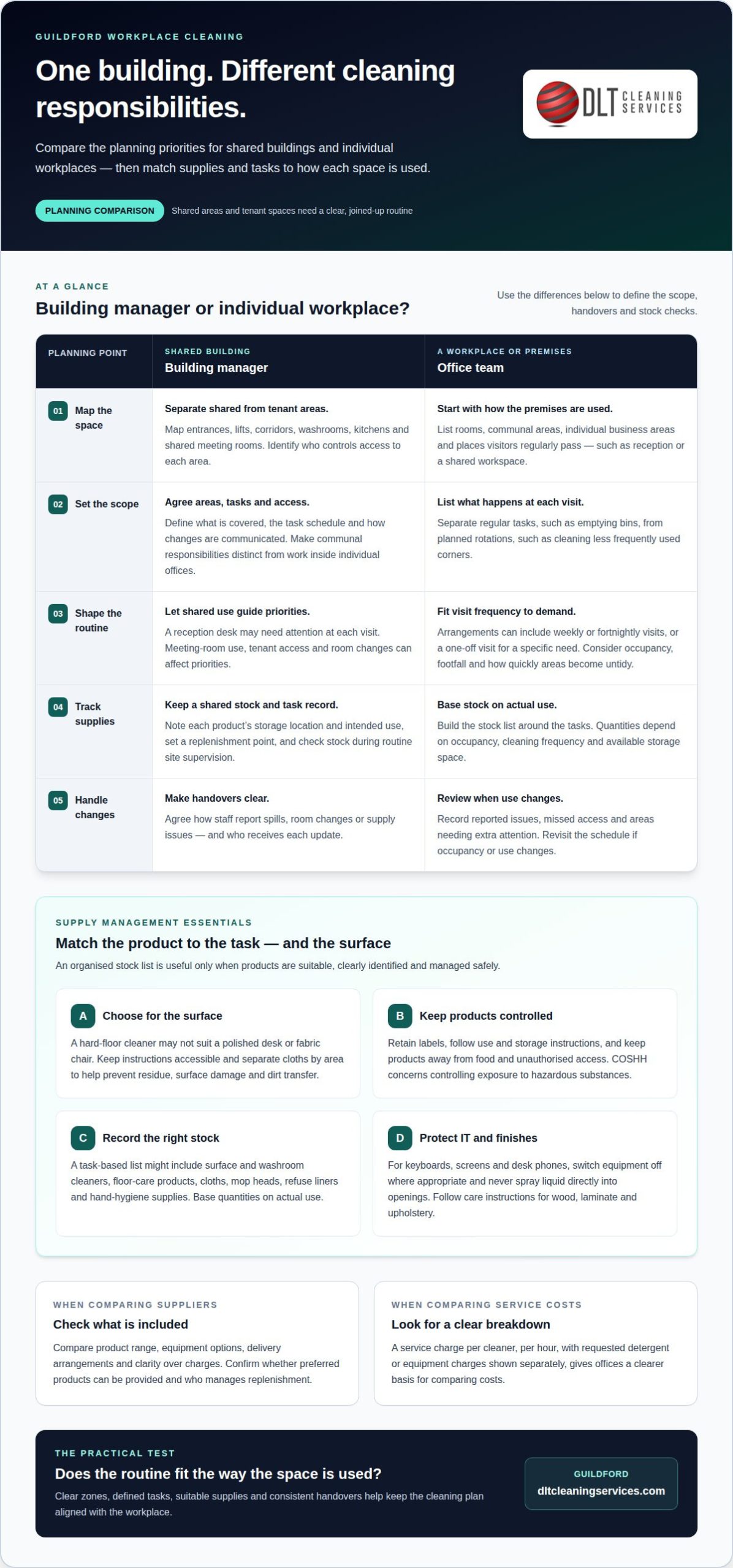
Choose products according to the surface and task. A hard-floor cleaner, for example, may not be suitable for a polished desk or fabric chair. Match each product to its intended use, keep instructions accessible and separate cloths by area. This helps prevent residue, surface damage and the transfer of dirt between kitchens, washrooms and offices.
For Guildford offices comparing cleaning supplies suppliers, useful points include the range of products, equipment options, delivery arrangements and clarity over any charges. Some cleaning services let customers provide preferred products; detergent options supplied for a service may incur an additional charge. A comprehensive comparison therefore considers both what is supplied and who manages replenishment.
Handle workplace cleaning products carefully: retain labels, follow instructions for use and storage, and keep products away from food and unauthorised access. COSHH concerns controlling exposure to hazardous substances. A sensible process identifies products, considers how staff could be exposed and sets appropriate controls, such as following instructions and using suitable protective equipment.
Build an office stock list around the actual tasks. It might include surface and washroom cleaners, floor-care products, cloths, mop heads, refuse liners and hand-hygiene supplies. Quantities depend on occupancy, cleaning frequency and storage space, so base stock records on actual use rather than a generic list.
When considering eco-friendly cleaning supplies for a Guildford office, compare product information and choose options suited to the surface and task. Environmental claims and product ranges vary, so don’t rely on green packaging or broad wording alone.
Take particular care with IT and telecoms equipment. For a keyboard, screen or desk phone, switch off the equipment where appropriate, use a clean, dry or suitably prepared cloth, and never spray liquid directly into openings. Follow furniture care instructions too: dust wood, wipe laminate and treat upholstery as directed. These steps make supplies management more deliberate while helping protect sensitive equipment and finishes.
A cleaning service charges per cleaner, per hour, and shows requested detergent or equipment charges separately, giving offices a clearer basis for comparing service costs.
Cleaning for office building managers
Building managers coordinate cleaning across shared areas, tenant suites and access points. A clear agreement defines the areas covered, the task schedule and how changes are communicated. For example, a reception desk may need attention at each visit, while meeting-room use can affect cleaning priorities.
Map the building by zone before setting the routine. Include entrances, lifts, corridors, washrooms, kitchens and shared meeting rooms, then identify who controls access to each area. In a multi-tenant Surrey property, an area schedule helps distinguish communal responsibilities from tasks inside individual offices.
Poor supplies management can mean running out of essentials, using the wrong product on a surface or leaving a task unfinished. In a kitchen, missing cloths or hand-hygiene supplies can disrupt the planned clean. Unclear storage can also make products harder to manage safely.
Use a straightforward stock and task record. Note each product’s storage location and intended use, and set a point for replenishment. Check stock during routine site supervision and pair the record with a task list for areas such as reception counters, kitchen worktops and washroom touchpoints. This makes gaps easier to identify and report.
Communication matters as much as the schedule. Agree how building staff report a spill, a room change or a supply issue, and who receives the update. A friendly, consistent handover helps prevent a missed kitchen clean when meeting-room bookings or tenant access arrangements change.
Review the arrangement when occupancy or building use changes. A newly used meeting room, for instance, may require a different task frequency from a quiet office. DLT Cleaning Services Ltd’s Guildford office cleaning support can help building managers set out the cleaning scope and routine for their premises.
Cleaning for offices and other premises
Cleaning plans work best when they reflect how the premises are used. A small office with a reception desk has different priorities from a shared workspace with meeting rooms and kitchen facilities. Map the areas, note which are communal and which belong to individual businesses, and identify where visitors regularly pass. This information helps shape a practical task schedule.
In Guildford, cleaning arrangements can include ongoing weekly or fortnightly visits, as well as one-off visits. Weekly attention may suit a busy office kitchen or entrance, while a one-off visit can address a specific need, such as preparing a meeting room for an event. The right pattern depends on occupancy, footfall and how quickly each area becomes untidy.
Other commercial premises also need routines suited to their layout. A reception area, staff break space and private office each have different cleaning priorities. For example, a shared kitchen routine should account for worktops, sinks and visible spills, while an office routine may focus on desks, floors and frequently used touchpoints.
To define cleaning services in Guildford, list the rooms, access arrangements and tasks expected at each visit. Separate regular work, such as emptying bins, from tasks that need a planned rotation, such as cleaning less frequently used corners. A clear scope helps managers review whether the premises are being maintained as intended.
Review the schedule when the way a workplace is used changes. Adding a meeting area or increasing use of a shared kitchen may mean adjusting the task plan. Keep a record of reported issues, missed access and areas needing extra attention. These observations help managers discuss the routine and keep cleaning aligned with the premises.
DLT Cleaning Services Ltd can clean Guildford offices outside normal business hours using keyholding. Customers can arrange for cleaning to take place while they are away by setting up secure key or access arrangements.
Cleaning tasks and janitorial supplies
In Guildford, managing office cleaning supplies means aligning stock with the tasks carried out across the workplace. A clear routine connects each area, such as floors, washrooms and shared kitchens, with the products and equipment needed.
Usage and Inventory Tracking
Track supplies by recording what is stored, where it is kept and how quickly it is used. Note when items such as floor cleaner, cloths or hand soap are replenished, then compare usage with the cleaning schedule. This helps distinguish increased demand from misplaced stock. A simple stock sheet can also identify who records deliveries and reports low supplies.
Supply Reordering
There’s no universal reorder interval for every workplace. Set review points according to actual use, storage capacity, delivery arrangements and the time needed to obtain each item. Reorder before stock runs out, using a practical threshold for your premises. Reviewing records alongside upcoming tasks helps prevent shortages without filling limited cupboards with excess supplies.
Connect supplies to specific cleaning duties. A floor-care task, for instance, requires the appropriate product and equipment to be ready before work begins. Organise cloths and tools by use, and record when reusable items need replacing. This makes routines easier to follow across Guildford workplaces, especially when several areas share storage.
Office cleaning and hygiene services in Guildford can bring cleaning tasks and supplies together in a defined routine. The scope should clarify the duties covered, the supplies used and how stock issues are reported. Managers can then organise replenishment without confusing janitorial stock with general workplace purchases.
For a routine that reflects your premises and cleaning priorities, discuss office cleaning arrangements.
DLT Cleaning Services Ltd: Office Cleaning
DLT Cleaning Services Ltd provides Office Cleaning for businesses in Guildford that need a defined workplace routine. Discussing the premises, priority areas and required tasks helps shape a scope around the building’s day-to-day use, from shared offices to kitchens and washrooms.
Where workplace hygiene is also a priority, DLT Cleaning Services Ltd Hygiene Services can complement the cleaning plan. Building managers can outline the areas needing attention and the practical requirements of the site, so the agreed service reflects the environment rather than a generic checklist.
If you’re planning office cleaning or reviewing how your premises are maintained, contact DLT Cleaning Services Ltd to discuss your requirements and request a free, no-obligation quote.
Make your next cleaning plan work for your building
A well-managed cleaning routine should keep pace as tenants, room use and workplace priorities change. Treat supplies planning as part of building operations, not just as a cupboard inventory. A discussion about office cleaning supplies management in Guildford can help turn your priorities into a practical approach for the premises.
DLT Cleaning Services provides Office Cleaning and Hygiene Services for businesses seeking support with workplace cleaning and hygiene. Start by identifying which areas need regular attention, where current arrangements create extra work and which responsibilities you want a cleaning service to take on. This gives the conversation a practical focus without assuming every building needs the same routine.
If you’re ready to discuss the needs of your workplace, contact DLT Cleaning Services. A considered plan can make day-to-day building management feel more manageable.
Frequently Asked Questions
What types of businesses do you provide office cleaning for in Guildford?
DLT Cleaning Services provides office cleaning for small independent businesses and large national chains in Guildford. The routine can be shaped around the workplace, whether it has private offices, shared rooms or a reception area. Hygiene Services are also available to support workplace hygiene. DLT’s focus is commercial premises, not homes or industrial heavy-duty cleaning.
What are the costs and pricing for office cleaning supplies management in Guildford?
The cost depends on the premises, its condition, the task list and the location. There is no single price for every Guildford workplace: a small office and a larger building with several areas have different requirements. DLT Cleaning Services provides free, no-obligation quotes so you can consider the proposed work and cost against your premises’ needs.
How can an office reduce cleaning supply costs and waste?
Reduce waste by matching each product to a defined task and avoiding duplicate items with the same purpose. Agree which products are used for kitchen surfaces and which are reserved for washrooms, and use existing stock before opening replacements. Choose pack sizes suited to available storage and periodically review unused or discarded products to identify purchasing habits to change.
Compare office cleaning supplies suppliers serving Guildford
When comparing supplies options, consider the product range, equipment, delivery arrangements and clarity over charges. Also establish who manages replenishment. Preferred products may be provided by the customer, while detergent options supplied as part of a service may incur an additional charge.