Cleaning doesn’t have to compete with the working day. Office cleaning in GU1 can be planned around business hours, with access arrangements and the needs of each workplace shaping the schedule.
It’s understandable to want a clean, presentable office without disrupting staff, meetings or visitors. The timing is only one part of a workable arrangement: clear entry procedures, agreed priorities and the right visit frequency also help keep cleaning consistent.
This guide explains how out-of-hours office cleaning can fit around your team’s routine, what to consider when arranging keys or alarm access, and how your building’s layout and occupancy affect the cleaning plan. It also explains the difference between routine cleaning and deeper treatments, so you can identify what your workplace needs and plan the next step with confidence.
Key Takeaways
- Plan cleaning around working hours, and distinguish routine floor care from carpet or other deeper treatments.
- Set clear procedures for keys, passes and alarms, including how access items are issued, stored and returned.
- Shape the cleaning schedule around occupancy, footfall and busy periods, rather than desk count alone.
- For shared buildings, define which areas are included, who authorises access and how occupants are informed.
Can cleaning take place outside office hours?
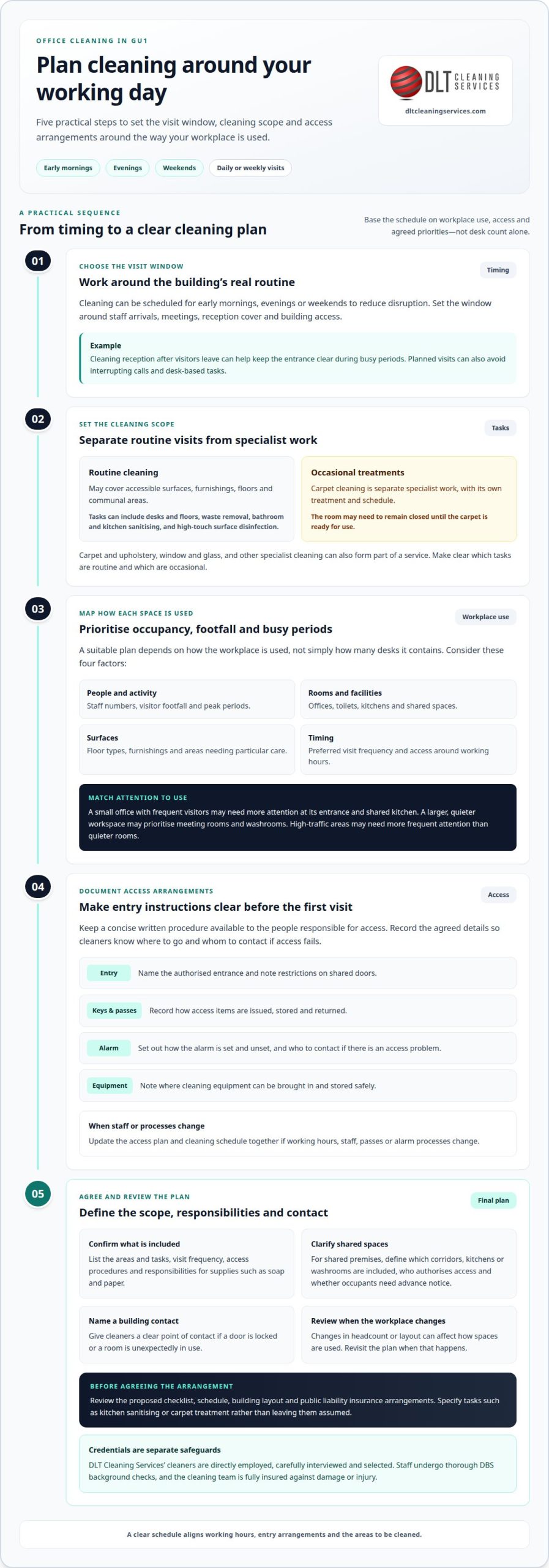
Yes. In Guildford, professional office cleaning can be scheduled for early mornings, evenings or weekends to reduce disruption. The right window depends on staff arrivals, meetings, reception cover and building access. For example, cleaning reception after visitors leave can keep the entrance clear during busy periods. Planned visits also give cleaners room to work without interrupting calls or desk-based tasks.
Routine office cleaning and carpet treatment are separate tasks. A regular visit can cover accessible surfaces, furnishings, floors and communal areas. Carpet cleaning is separate specialist work, with its own treatment and schedule. The room may need to remain closed until the carpet is ready for use, so arranging this work outside office hours can help avoid staff walking through treated areas.
Insurance and DBS checks are separate credentials. DLT Cleaning Services’ cleaners are directly employed, carefully interviewed and selected to meet high standards. All staff undergo thorough DBS background checks, and the cleaning team is fully insured against damage or injury. These safeguards are especially relevant when cleaners enter an office without staff present or need access to restricted rooms.
Available office cleaning tasks can include desk and floor cleaning, waste removal, bathroom and kitchen sanitising, and high-touch surface disinfection. Carpet and upholstery, window and glass cleaning, and specialist cleaning can also form part of a service. The agreed schedule should distinguish routine tasks from occasional treatments.
Most office cleaners bring their own cleaning products, vacuums and materials. The products and equipment used should suit the surfaces being cleaned, such as desks, carpets and hard floors. Before hiring, review the proposed checklist, schedule, building layout and public liability insurance arrangements. A commercial cleaning contract should define included areas and tasks, visit frequency, access procedures, and responsibilities for supplies such as soap and paper. For example, it should say whether kitchen sanitising and carpet treatment are included, rather than leaving those tasks assumed.
Access, keys, alarms and working hours
For evening or early-morning office cleaning in Guildford, agree access arrangements before the first visit. A written procedure can record which entrance cleaners should use, who issues keys or passes, and where those items are stored and returned. It should also explain how the alarm is set and unset, and whom to contact if access fails. Clear instructions help prevent delays and keep cleaners out of areas beyond the agreed scope.
Set the visit window around the building’s actual use, not just its advertised office hours. Reception may remain staffed after other teams leave, while meeting rooms may be occupied later. Identify areas that need to stay accessible and times when equipment noise could interrupt calls or neighbouring businesses. If working hours change, update the access plan and cleaning schedule together.
- Entry: name the authorised entrance and any restrictions on shared doors.
- Keys and passes: record how access items are issued, stored and returned.
- Alarm: set out the agreed procedure and the contact for access problems.
- Equipment: note where cleaning equipment can be brought in and stored safely.
For shared premises, distinguish your office from communal areas in the cleaning plan. Specify who approves access to corridors, kitchens or washrooms, and whether other occupants need advance notice. This avoids confusion when several businesses use the same entrance or facilities. A named building contact also gives cleaners a clear point of contact if a door is locked or a room is unexpectedly in use.
Keep the procedure concise and available to the people responsible for access. A change of staff, pass or alarm process should prompt an update, not an informal handover. A clearly documented cleaning schedule and access plan helps align working hours, entry arrangements and the areas to be cleaned.
Commercial cleaning for businesses of different sizes
A suitable cleaning plan depends on how a workplace is used, not simply how many desks it contains. A small office with frequent visitors may need more attention to its entrance and shared kitchen, while a larger, quieter workspace may prioritise meeting rooms and washrooms. For a Guildford office, consider occupancy, footfall and busy periods so cleaning focuses on the spaces people use most.
Visit frequency depends on staff numbers and hygiene requirements. DLT Cleaning Services offers daily or weekly contract cleaning to suit different workplaces. High-traffic areas may need more frequent attention than quieter rooms. For example, a busy reception and shared washroom may need regular cleaning, while a lightly used meeting room may need less. The schedule can allocate time according to these differences.
To shape a practical cleaning plan, consider the details that affect the work:
- People and activity: staff numbers, visitor footfall and peak periods.
- Rooms and facilities: the number of offices, toilets, kitchens and shared spaces.
- Surfaces: floor types, furnishings and areas that need particular care.
- Timing: preferred visit frequency and access around working hours.
These details help match the cleaning scope to your business. A compact office might prioritise desks, floors and a kitchenette, while a larger site may need a planned routine across several teams and communal areas. The aim is to cover heavily used spaces consistently, without spending time on empty rooms at the expense of busy ones.
For a clear quote, provide your postcode, approximate premises size, room and toilet count, floor types, and preferred visit frequency. A change in headcount or layout can affect how the premises are used, so review the cleaning plan when workspaces change. For instance, adding desks may increase shared kitchen use even if the office footprint stays the same. These practical details help define a suitable scope and schedule.
Contract cleaning for office building managers
A building-wide cleaning plan needs a clear scope for each tenant area and shared space. List the locations to be cleaned, such as entrances, corridors, kitchens, washrooms and meeting rooms. Also identify who approves access to each area and whether occupants need notice before communal spaces are cleaned. This helps prevent confusion when several businesses share the same facilities.
Set out regular duties separately from periodic work. A checklist can describe tasks for desks, floors, waste removal and washroom maintenance, then record any separate specialist carpet, upholstery or window cleaning. Deep cleaning can address work beyond routine visits. Keeping these tasks distinct makes it easier to understand what the contract covers and when each area receives attention.
Clarify responsibility for supplies, too. The agreement should state who provides soap, paper and sanitary products, and how staff report shortages. It can also record whether cleaning products and equipment are supplied for the work. For example, the manager may need to know where equipment is stored and who handles replenishment of washroom items.
Agree how the schedule will work around building activity. For occupied spaces, account for meetings, calls, essential routes and wet-floor areas. If a corridor is busy at a particular time, schedule its cleaning to reduce disruption. List office equipment such as screens and keyboards as a specific task rather than assuming it is included with desk cleaning.
Building managers can keep a cleaning plan practical by reviewing its checklist when occupancy or layout changes. A new tenant, altered reception or relocated kitchen can change which spaces need attention and who authorises access. A brief review helps keep responsibilities aligned across the building, including communal areas shared by multiple occupants.
For a contract that reflects your building’s shared spaces and access needs, discuss office cleaning arrangements.
DLT Cleaning Services Ltd: Office Cleaning
DLT Cleaning Services Ltd provides Office Cleaning for workplaces that need a planned approach to day-to-day cleanliness. If your Guildford office has specific priorities, such as reception presentation, shared kitchens or washroom hygiene, these needs can shape the cleaning arrangement. Hygiene Services can also support workplace hygiene requirements.
When discussing office cleaning in Guildford, share the areas to be cleaned, preferred working hours and access arrangements. A building manager may need a plan covering both individual offices and communal spaces, while a smaller business may prioritise its busiest rooms. A clear scope helps match the work to your premises and routine.
For an office cleaning arrangement suited to your workplace, contact DLT Cleaning Services Ltd.
Make your cleaning plan work for what comes next
As your workplace changes, its cleaning arrangements can evolve with it. A new team structure, different use of meeting rooms or a shift in visitor patterns may call for a fresh look at priorities. Treat the plan as part of managing the working environment, rather than a fixed document that stays untouched. That approach helps keep office cleaning in GU1 aligned with how your business operates over time.
Consider what matters most to your staff and visitors, then discuss how a consistent cleaning arrangement can support those needs. DLT Cleaning Services provides office cleaning and hygiene services for workplaces in Guildford, with plans shaped around your premises and routine. Request a free, no-obligation quote to discuss the scope and schedule.
Contact DLT Cleaning Services Ltd to discuss your workplace cleaning requirements and take the next step with confidence.
Frequently Asked Questions
Can you clean a shared office building?
Yes, shared office buildings can be cleaned with a plan that distinguishes tenant areas from communal spaces. For example, a building manager can define cleaning boundaries for individual suites, shared kitchens and reception areas. DLT Cleaning Services Ltd serves Guildford and provides office cleaning for workplaces in the area. Clear responsibility for tenant and communal areas helps prevent duplicated work or spaces being overlooked.
Do staff need to clear their desks?
Staff should put away paperwork and personal belongings before cleaners work on accessible desk surfaces. This gives cleaners room to wipe clear areas without disturbing confidential documents or personal items. For example, a tidy desk leaves more of the surface around a monitor accessible for cleaning. Cleaners should not unplug computers or move cables to reach the floor, so equipment remains undisturbed.
What should I send for an office cleaning quote?
For a quote for office cleaning in Guildford, send your postcode, approximate premises size, room and toilet count, floor types, and preferred visit frequency. Include the office’s current condition and the tasks you want covered, such as washroom care or kitchen cleaning. Mention access constraints and particular priorities, too. These details help shape a quote around your premises and the work required, rather than a generic scope.
Which office cleaning companies serve GU1 Guildford?
DLT Cleaning Services Ltd serves Guildford and provides office cleaning for workplaces in the area. The company caters for small independent businesses as well as large national chains, so the service can suit different commercial environments. If your premises are in GU1, describe the type of workplace and its cleaning requirements when discussing an arrangement. This helps establish a relevant scope for your office.
How much does office cleaning cost in Guildford GU1?
There’s no single fixed price for office cleaning in Guildford GU1. DLT Cleaning Services Ltd bases its quote on factors including property size, condition, task list and location. Share those details to receive a free quote for the work required. A clear description of the premises and requested tasks helps ensure the proposed scope reflects your actual cleaning needs.
Do GU1 office cleaners offer one-off and regular cleaning?
DLT Cleaning Services offers regular office cleaning and deep cleaning. Contract cleaning can be arranged daily or weekly, while a deep clean addresses broader cleaning needs. Carpet and upholstery cleaning is separate specialist work, not an automatic part of a deep clean. The right approach depends on whether your Guildford workplace needs ongoing maintenance or a more intensive clean.