A spotless office is only part of a dependable cleaning service. A peace of mind office cleaning service should also have a clear scope, reliable communication and a practical way to report and resolve missed tasks. Its deep-cleaning plan and experience with workplaces like yours matter too.
Choosing an office cleaner means more than agreeing on routine tasks. You need to know what will be cleaned, how often, who oversees the work and how the service can adapt when your workplace’s needs change.
This guide explains how to assess Guildford office cleaners, from clear plans and reporting to high-touch areas and specialist requirements. Learn what to look for in workplace experience so you can choose a service that fits your office and gives you confidence in its day-to-day cleaning.
Key Takeaways
- Set cleaning frequency according to how each area is used, how quickly it becomes soiled and when cleaning can take place.
- Look for a clear scope of work and a straightforward way to report missed tasks or changes to your schedule.
- Assess how the cleaning plan addresses high-touch surfaces and deeper cleaning, not just routine tasks.
- Consider whether the provider understands office environments and can tailor its approach to your workplace’s specific requirements.
1. Looking for the right office cleaning company in Guildford?
Choose a cleaner whose plan reflects how your Guildford workplace is used, not a generic checklist. A professional assessment should map rooms, floor types, bins, frequently touched surfaces and restricted-access areas. It should also show who is responsible for each task, so employees and cleaners understand what is covered and how the plan fits the building.
Cleaning frequency depends on practical factors: how heavily a space is used, how quickly dirt becomes visible and when cleaning can take place. A busy kitchen, for example, may need attention more often than a lightly used meeting room. A clear schedule sets out each task, its frequency and who is responsible.
Workplace hygiene supports infection prevention, but cleaning is only one part of a wider safety approach. Employers have a duty of care to provide a clean and safe work environment. A written safety policy can explain cleaning routines alongside staff practices such as regular handwashing and covering coughs and sneezes.
Employees may feel reassured when cleaning is visible and the routine is clear. If work takes place during office hours, explain which areas are being cleaned and how access will be managed. Signs can direct employees around areas being cleaned, and a one-way system can reduce close passing in shared corridors. These measures should fit the workplace’s safety arrangements.
DLT Cleaning Services’ cleaners are directly employed, carefully interviewed and selected to meet high standards. All staff undergo thorough DBS background checks, and the cleaning team is fully insured against damage or injury. Ask how supervision and task allocation will support the agreed cleaning scope.
What do customers say about Peace of Mind office cleaning? Assess published reviews and references for recurring comments about attendance, consistency and how concerns are handled. Specific examples, such as feedback on resolving a missed task, are more useful than a broad claim about customer satisfaction.
2. Account management, reporting and communication
Consistent cleaning depends on clear account management, not just a task list. A point of contact gives your workplace a route for schedule changes, access updates and service concerns. Agree how routine updates will be shared, who receives them and how staff can flag an issue without interrupting cleaning.
A useful report connects completed work with the agreed scope. If a meeting-room surface was missed, for example, record the room and requirement, then track the follow-up. This makes the concern specific and actionable instead of leaving staff to report a general impression of inconsistent cleaning.
Office routines can change around public holidays, events or shifts in staff attendance. Share those changes through the agreed contact so the cleaning schedule can be adjusted. A diary entry for a company event, for example, can flag a room that needs attention before or after its usual use.
Explain surface-care requirements before cleaning products are selected. Identify materials or finishes that need particular care, such as a delicate desk surface or specialist flooring, and record the instructions where the cleaning team can follow them. Clear details help prevent unsuitable products or methods being used.
Employees also need a simple way to understand what happens during cleaning. A short staff notice can explain which areas are included, how to report a missed task and whom to contact about access or surface concerns. For a practical starting point, explore the office cleaning service and consider how clear communication can support a consistent workplace routine.
A written cleaning scope can help prevent tasks being missed or duplicated between cleaners and staff. Make it clear which responsibilities belong to the cleaning team and which remain with workplace staff, then refer to the same scope when reviewing the work. This shared reference makes handovers and service discussions more concrete.
When a task is missed, record the room and agreed requirement so it can be followed up. Use that record to clarify whether the task was within the cleaning scope and whether the follow-up is complete. Consistent records give the account contact a specific point to discuss instead of relying on memory or general impressions.
3. Deep cleaning and sanitising high-touch areas
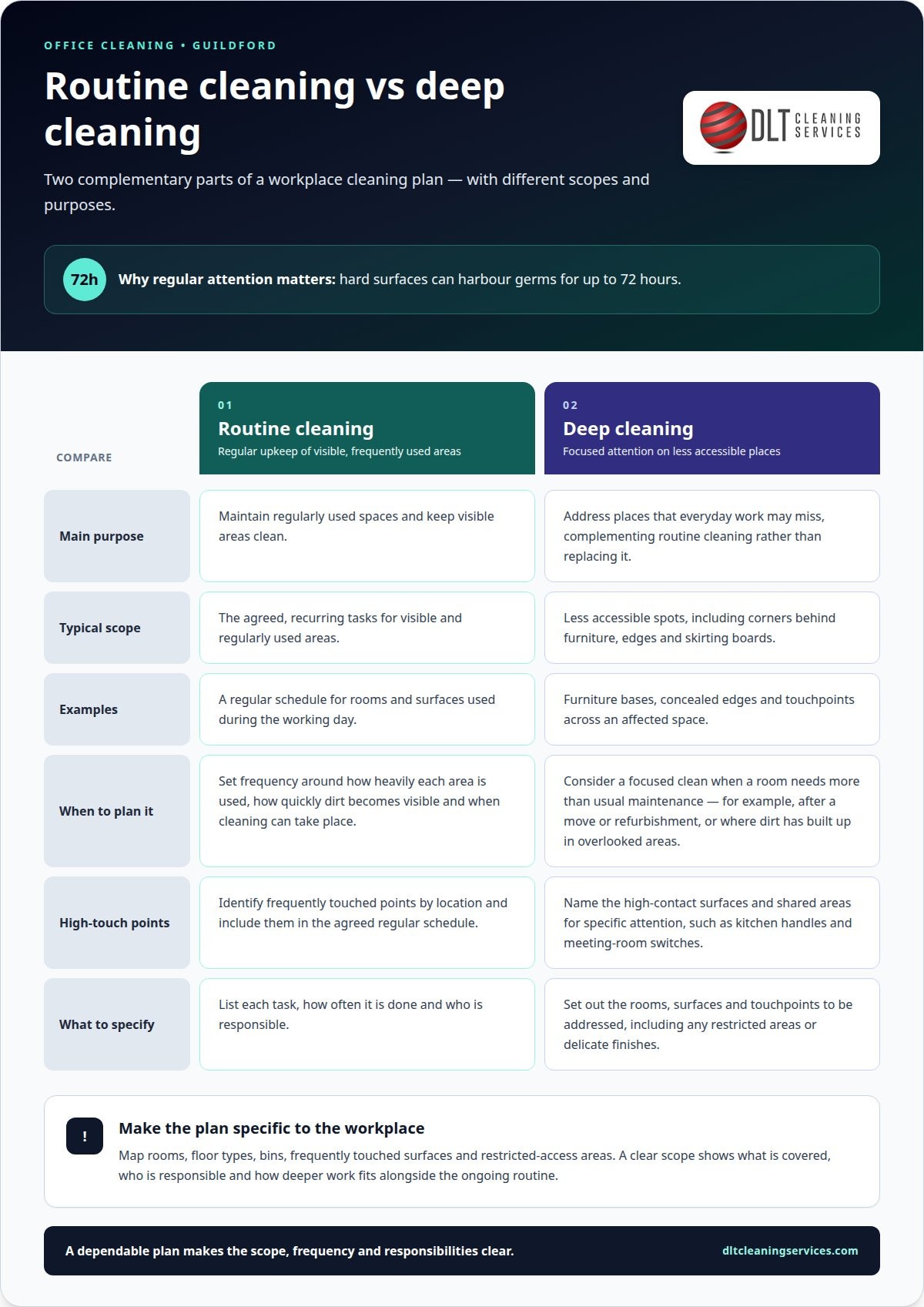
Routine cleaning covers visible, regularly used areas, while deep cleaning addresses less accessible places. A plan can include corners behind furniture, edges, skirting boards and other spots missed during everyday work. Specify the rooms and surfaces that need deeper attention, so this work complements rather than replaces routine cleaning.
High-touch points need particular care because employees handle them throughout the working day. Door handles, light switches and stair banister rails should be cleaned regularly and often. Hard surfaces can harbour germs for up to 72 hours, making a consistent approach important. A cleaning schedule can identify these points by location and include them in the agreed routine.
For Covid-19 infection control, a workplace plan should make high-contact surfaces and shared areas clear priorities. A professional cleaning team can clean surfaces first, then sanitise them using a method suited to the material and the agreed scope. This helps distinguish ordinary surface cleaning from the additional attention given to frequently touched points, such as shared kitchen handles and meeting-room switches.
Deep cleaning is also useful when a room needs more than its usual maintenance. An office move, refurbishment or build-up of dirt in overlooked areas can prompt a focused clean. The work may cover concealed edges, furniture bases and touchpoints across the affected space. Clear room-by-room instructions help the cleaning team apply the right approach without overlooking restricted areas or delicate finishes.
To assess a deep-cleaning service, look for a defined scope, named areas and clear coverage of high-touch points. A practical plan explains what the cleaning team will address, how those tasks fit the ongoing schedule and how the work will be recorded. This detail makes the service easier to assess and focuses attention on areas employees use most.
4. Office-cleaning experience and specialism
Office experience matters because each workplace has different routines, surfaces and access needs. An open-plan office, for example, has shared desks and walkways, while meeting rooms may need attention after frequent bookings. A suitable cleaning plan reflects these differences rather than applying the same routine everywhere.
Look for a clear account of how the cleaning team will approach everyday office areas. A proposal can show whether the scope covers kitchens, washrooms, workstations, entrances and meeting spaces. It should also explain how restricted rooms and secure areas will be handled, so cleaning fits the workplace without disrupting operations.
Identify specialist requirements separately from ordinary office cleaning. A delicate surface, particular floor finish or restricted archive may need specific handling or access arrangements. Record these needs in the scope and explain them before work begins. Clear separation helps prevent specialist tasks from being overlooked or treated as routine cleaning.
Experience is most useful when it informs practical decisions. A team familiar with busy meeting areas, for example, can account for room use, furniture and access when planning its work. Ask how supervision, task allocation and reporting connect to the agreed scope. Specific examples of managing similar workplace needs are more informative than broad claims of expertise.
Before appointing a service, map the workplace’s ordinary and specialist requirements, then check that the proposed scope addresses both. This gives you a stronger basis for assessing whether the cleaning approach fits your premises, staff routines and access arrangements. If you need a tailored approach to workplace cleaning, discuss your office cleaning requirements.
A commercial cleaning plan should specify the tasks, their frequency and who is responsible. This makes the expected work easier to compare with the needs you have identified, including specialist handling and access arrangements. A tailored plan also clarifies how routine duties fit around workplace use, rather than leaving responsibilities or timing open to interpretation.
Office cleaning plans should reflect a business’s specific requirements and work schedule. Check that the proposed arrangements account for both, so the service fits operational needs and the scope stays clear for the cleaning team and office users.
DLT Cleaning Services: Office Cleaning
DLT Cleaning Services provides office cleaning, deep cleans and hygiene support for workplaces in Guildford and across Surrey, Hampshire and Berkshire. Dedicated on-site supervision helps keep agreed tasks and workplace requirements in view.
If you are assessing a new cleaning arrangement, start by outlining the areas, surfaces and specialist needs that matter most. This gives DLT Cleaning Services a clear basis for tailoring its approach to your workplace. Its Hygiene Services can support your organisation’s needs alongside office cleaning.
If you’re looking for a considered approach to workplace cleaning, contact DLT Cleaning Services to discuss your requirements.
Make your next cleaning decision with confidence
A well-chosen cleaning arrangement should continue to serve your workplace as its needs evolve. Choosing a peace of mind office cleaning service means selecting support that can adapt as teams, room use and working patterns change. Review the scope over time to keep it relevant.
DLT Cleaning Services Ltd provides Office Cleaning and Hygiene Services for businesses seeking workplace cleaning and hygiene support. A peace of mind office cleaning service should fit your organisation’s needs and routines rather than follow a one-size-fits-all approach.
If you’re ready to discuss a peace of mind office cleaning service for your workplace, contact DLT Cleaning Services Ltd. Take the next step at a pace that feels right for you.
Frequently Asked Questions
Looking for the right office cleaning company in Guildford?
Choose an office cleaner by assessing whether its proposal suits your premises, access arrangements and working pattern, then look for clear accountability if tasks are missed. Ask for a written scope and a practical example of how the provider handles changes, such as a rearranged meeting room or newly restricted area. For businesses considering DLT Cleaning Services Ltd, these criteria can help define a suitable office-cleaning arrangement.
Are peace of mind office cleaning service providers vetted, trained and insured?
These arrangements depend on the specific company and contract. Ask for clear information about staff preparation and insurance.