A cheaper cleaning plan can cost more in the long run. Getting the best value from your cleaning budget means keeping standards consistent while controlling product use, avoiding waste and focusing effort where it matters most. The lowest spend isn’t necessarily the best result.
It is understandable to focus on spending, especially when supplies and workplace needs change. But a budget goes further when you choose suitable products, maintain equipment and prevent dirt from building up into tougher jobs.
This guide explains how to choose supplies, reduce waste and prioritise high-traffic areas. It also shows how to assess whether a professional cleaning service offers value for money, looking beyond the hourly rate to consistency, reliability and quality of work.
Key Takeaways
- Choose durable, effective supplies and use multi-purpose products where they suit the task to keep purchasing simpler.
- Prevent waste by following product instructions, maintaining cleaning tools and planning stock before supplies run low.
- Prioritise busy areas and shared touchpoints, then review the cleaning plan as workplace needs change.
- Assess a professional service by the consistency, reliability and quality of its work, not price alone.
1. Choosing quality and multi-purpose cleaning supplies
Start with the surfaces and tasks your workplace needs to clean, then choose products labelled for those uses. A multi-purpose cleaner can handle everyday marks on suitable kitchen and bathroom surfaces, reducing the number of products you need to buy. Keep specialist products for tasks a general cleaner cannot manage effectively.
Compare products by how well they work for the task, not just their shelf price. Follow the label and use the recommended amount; using more does not automatically improve the result. For concentrated products, compare the cost of the quantity needed to make a usable solution. Refillable options may cost less over time if refills use less packaging and fit your routine, but compare refill and container costs first.
Choose equipment that suits your surfaces and workload. A sturdy mop and bucket, a suitable vacuum, washable microfibre cloths and a labelled spray bottle cover common office tasks. Check handles, fittings and washable parts before buying. Equipment in good condition helps prevent delays and repeat work. Rinse, wash and dry reusable tools after use to help them last longer.
When comparing cleaning services, assess the full scope rather than focusing on whether a provider is an independent cleaner or an agency. A straightforward arrangement may suit an independent cleaner, while an agency may offer coordination and cover. The better-value option depends on the work, reliability and support you need. Ask which tasks are included, who supplies equipment and products, and how absences are handled.
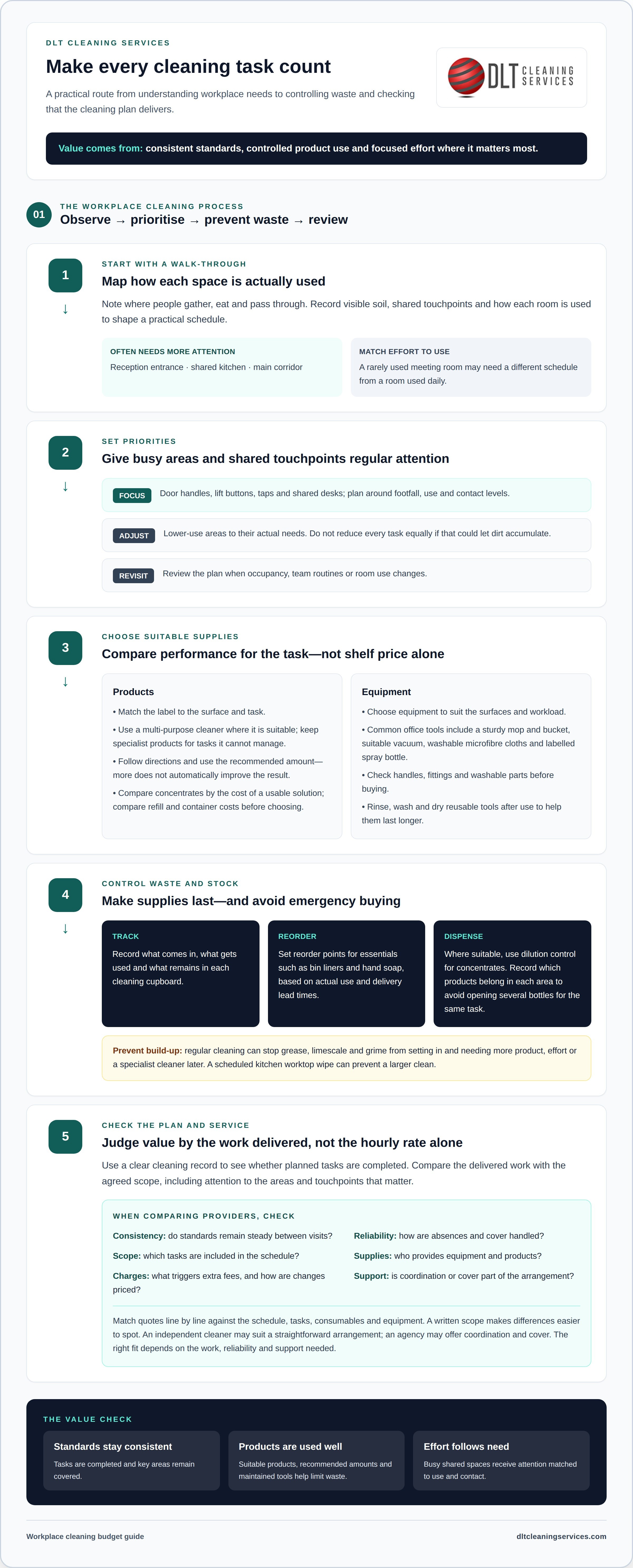
To compare quotes, match the cleaning schedule, tasks, consumables and equipment line by line. Ask what could trigger extra charges and how changes to the agreed work are priced. A clear written scope makes differences easier to spot and helps prevent unexpected fees.
For everyday cleaning, a multi-purpose product labelled for the surfaces you need can offer good value by reducing the number of separate products required. Keep specialist cleaners for tasks it cannot handle. Concentrates and refillable options may also reduce costs, but compare the cost of the usable solution or refill with alternatives.
2. Reducing waste and avoiding last-minute purchases
Keep a simple stock record for each cleaning cupboard. Note what comes in, what gets used and what remains; regular checks can reveal products that are over-ordered or running low. Set a reorder point for essentials such as bin liners and hand soap, based on actual use and delivery lead times. This helps prevent emergency buying and avoids storing supplies that may expire or deteriorate.
Where suitable, use concentrated solutions with a dilution control system. Staff can dispense the intended amount instead of guessing, helping reduce product waste. Follow each label’s instructions: using more than recommended can leave residue without improving the clean. Record which products are used in each area so staff do not open several bottles for the same task.
Regular cleaning can stop grease, limescale and grime from setting in. Once deposits build up, removing them may take more product and effort, or require a specialist cleaner. A short scheduled wipe of a kitchen worktop, for example, can prevent a larger clean later. Rinse, wash and dry reusable cloths and mop heads after use to extend their working life.
Keeping touchpoints clean and well maintained can help limit infection risks and the associated cost of staff absence. Focus routines on shared desks, door handles and kitchen taps, using products suitable for those surfaces. A clear cleaning record also helps teams see whether planned tasks are completed.
Reducing cleaning frequency can save time and supplies, but cutting every task equally may allow dirt to accumulate. Review room use, visible soiling and contact levels. Keep busy shared spaces on a regular schedule while adjusting lower-use areas to their actual needs. Revisit the plan when occupancy or working patterns change.
Using a professional company to manage facilities services may reduce the employment costs of recruiting and supervising cleaning staff directly. Compare the full responsibilities involved, including scheduling, supply management and cover arrangements, rather than counting wages alone. This helps show whether a managed approach makes sense for your budget and operations.
These measures work together: controlled dilution limits excess, while using the recommended amount helps products last longer and work as intended. Rinsing, washing and properly drying tools also extends their useful life and helps prevent dirt from building up into harder, more product-intensive cleaning.
3. Assessing cleaning needs and prioritising high-traffic areas
Start with a walk-through of the workplace and note where people gather, eat and pass through. A reception entrance, shared kitchen and main corridor usually need more attention than a rarely used meeting room. Record visible soil, touchpoints and how each space is used, then use those observations to shape a practical cleaning schedule.
Prioritise busy areas and shared touchpoints, such as door handles, lift buttons, taps and shared desks. Cleaning plans should reflect footfall and use, rather than applying the same frequency to every room. Review the schedule when occupancy, team routines or room use changes. A meeting room used daily may need a different plan from one used occasionally.
To judge value, look beyond the hourly rate. Consider whether the agreed tasks are completed, standards remain consistent between visits and the schedule covers the areas that matter. A lower rate can prove expensive if missed tasks lead to extra work or persistent problems. Compare the work delivered with the original scope, including attention to shared touchpoints.
At home, match cleaning tasks to household routines and the rooms used most. Wipe kitchen worktops after food preparation, clear crumbs from dining areas and clean bathroom surfaces as needed. Simple tasks such as dusting, tidying and emptying bins can be done independently. Follow product labels, use suitable equipment and avoid mixing cleaning products.
UK cleaning service prices can differ by region, but the price for a particular job also depends on travel, premises size, task scope and visit frequency. These factors affect the time and resources needed. Compare like-for-like schedules and included tasks rather than assuming a quote from another area applies to your premises.
To keep priorities clear, list each area, its use and the cleaning standard it needs. For example, a busy kitchen may need regular surface cleaning, while a low-use store cupboard may need less frequent attention. Reassess the list as workplace needs change, so the budget supports essential tasks rather than routine work that no longer adds value.
4. Using a professional cleaning company
A professional cleaning service can offer value when a workplace needs consistent standards without managing every task in-house. Start by matching the agreed schedule to how the premises operate. For example, a shared kitchen may need regular attention, while a low-use meeting room may need less frequent cleaning. A clear scope helps everyone understand what each visit should cover.
Judge performance across repeated visits, not just by the first clean. A simple checklist can record completed tasks, missed areas and recurring issues, such as marks left on a reception floor. Consistent procedures and monitoring help maintain standards. Review the records alongside the schedule, then adjust the plan if staffing levels, occupancy or room use changes. This provides a practical measure for getting the best value from your cleaning budget.
Reliable cover matters too. Ask how the service handles staff absences or holidays, and how changes to agreed cleaning times are communicated. Clear communication helps prevent missed visits from disrupting workplace routines. Consider security as part of value: cleaners may enter when employees are absent, so agreed access arrangements and careful handling of the premises are important.
Professional cleaners should understand the work and follow suitable procedures. A useful service can also identify potential cross-contamination risks, such as shared equipment moving between a kitchen and office desks. Check that the cleaning plan addresses these points and that staff are prepared for their assigned tasks. This supports consistent work without adding unnecessary steps.
Flexibility can help control costs. If a business can accommodate different cleaning times, a provider may be able to plan visits more efficiently; route scheduling can also reduce call-out rates. Compare the complete service, including task coverage, reliability, communication and supervision, rather than focusing only on the hourly rate. Getting the best value from your cleaning budget means choosing a service whose quality and dependable delivery meet the workplace’s actual needs.
Flexibility about service times may reduce costs, while route-based scheduling may reduce call-out rates. A commercial contractor should meet the organisation’s cleaning requirements and offer value for money.
Check for open communication and prompt, professional resolution of service challenges. Contractors should provide well-trained cleaners supported by dedicated field and office teams, with training for general and technical cleaning services.
DLT Cleaning Services
DLT Cleaning Services Ltd helps Guildford businesses create consistent cleaning plans that reflect their premises, priorities and budget. Its office cleaning and hygiene services support workplaces that need dependable standards without managing every cleaning task internally. Dedicated on-site supervision helps keep each contract aligned with agreed requirements and health and safety procedures.
Established in 1999, the company works with businesses in Guildford. Discuss your requirements with DLT Cleaning Services Ltd: identify the areas that need attention, the schedule that suits your operations and the standards you want maintained. This gives the service a clear basis for supporting your workplace and getting the best value from your cleaning budget as it continues to meet your needs.
For a practical conversation about your workplace cleaning needs, contact DLT Cleaning Services Ltd.
Make your next cleaning decision with confidence
A useful next step is to decide what a clean workplace needs to make possible. That might mean giving staff a comfortable place to work, creating a welcoming environment for visitors or maintaining confidence in shared spaces. Clear priorities keep future decisions connected to what matters in your business.
A practical way to get the best value from your cleaning budget is to connect each decision to a workplace outcome, rather than treating cleaning as a line to cut. Record the result you want and how you will recognise it. This gives your team a shared reference point when operational needs shift or priorities compete.
Use that intention to guide your next conversation about workplace cleaning. Discuss your requirements with DLT Cleaning Services and take a considered next step towards a clean, well-supported workplace.
Frequently Asked Questions
How Do You Know If You’re Getting Value for Money from Your Cleaning Service?
You are getting value when the agreed work is completed consistently and recurring cleaning issues are addressed. In Guildford, keep a brief record of missed tasks, repeat complaints and follow-up actions, then review it alongside invoices and visit records. This helps distinguish an isolated oversight from a pattern that needs attention. A service should also make it straightforward to raise concerns and agree practical changes.
Is it cheaper to hire a cleaner independently or through an agency?
An independent cleaner may suit a straightforward arrangement, while an agency may offer coordination and cover. Compare the full scope, reliability and support you need rather than the provider type alone.