Could the very schedule meant to protect your workplace be the reason your team’s sick days are climbing? It’s a frustrating reality for many managers who see visible grime in communal areas or suffer through inconsistent service from their current providers. You likely already recognise that a tidy environment is essential for focus, yet finding the right balance between cost and hygiene often feels like a moving target. Determining exactly how often should offices be cleaned is no longer just about keeping the carpets vacuumed; it’s about strategic maintenance that supports your business’s bottom line.
In this guide, we’ll help you establish a clear, justifiable cleaning schedule that prioritises high-traffic touchpoints over simple floor coverage. You’ll discover how a tailored approach can significantly reduce absenteeism, boost staff morale, and ensure your office always looks its best for important client meetings. We will look at industry standards for 2026, the impact of hybrid working on maintenance needs, and how a dedicated, hands-on management style can transform your workspace into a healthier, more professional environment that reflects the high standards of your own operations.
Key Takeaways
- Learn how to assess your specific workspace needs, from high-traffic communal areas to private suites, to create a bespoke maintenance plan.
- Understand the essential daily and weekly tasks that determine how often should offices be cleaned to ensure health and safety compliance.
- Discover the psychological benefits of a clean environment and how rigorous hygiene services can significantly reduce employee sick days.
- Identify the seasonal triggers and operational milestones that require a professional deep clean to maintain long-term standards.
- Recognise the value of hands-on, supervised cleaning contracts in preventing the gradual decline of office hygiene over time.
Factors Determining Your Office Cleaning Frequency
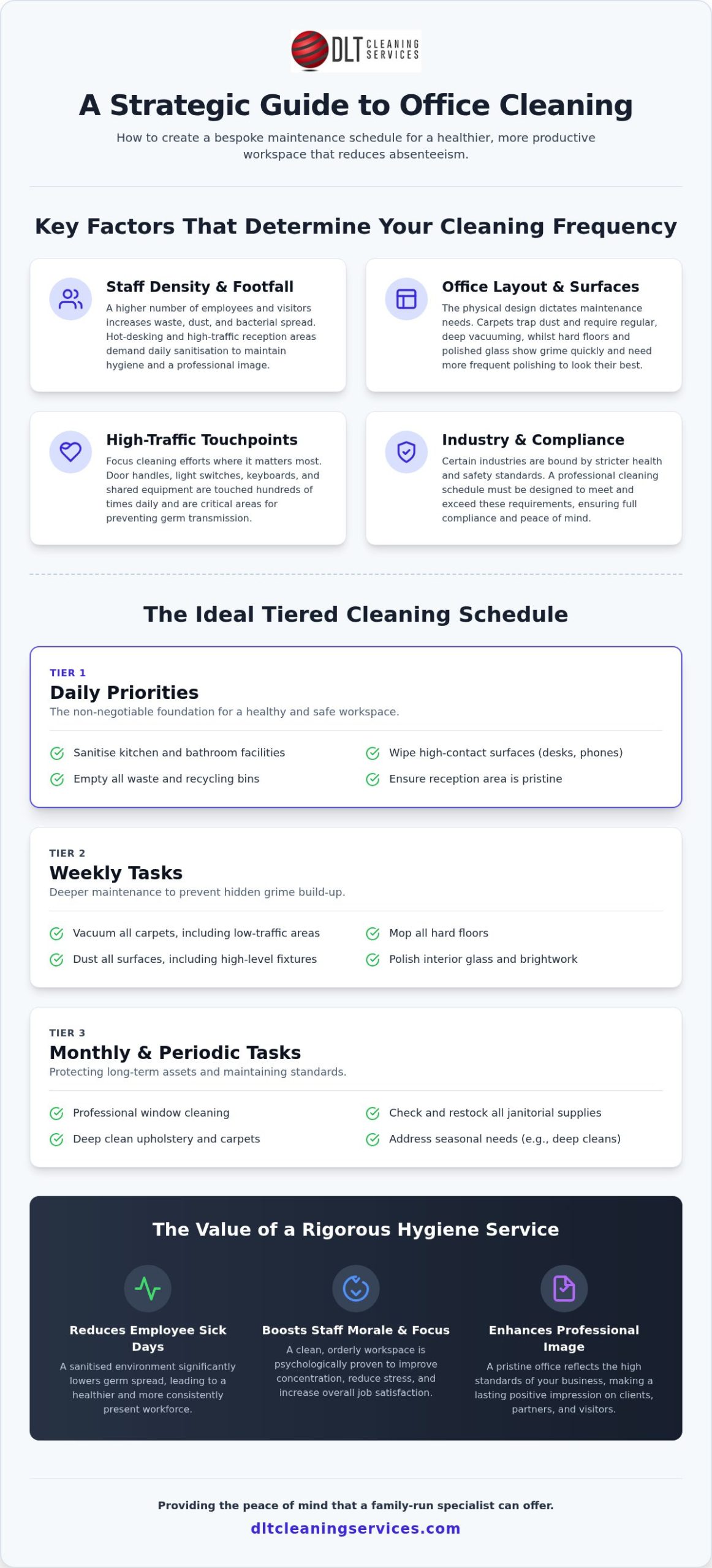
Every workspace has its own rhythm and specific requirements. A quiet consultancy in Surrey won’t have the same needs as a bustling logistics hub in Hampshire. When you’re trying to decide how often should offices be cleaned, it’s vital to look beyond the total square footage. You need to consider the daily activity within those walls. High-traffic communal zones, such as kitchens and bathrooms, naturally require more frequent attention than a rarely used boardroom. The type of business you run also plays a part; certain industries have stricter hygiene requirements to stay compliant with health and safety standards.
Staff Density and Footfall
Density is one of the most significant factors in any cleaning plan. A 50-person office requires more than double the care of a 10-person suite, even if the rooms are the same size. More people means more waste, more dust, and a faster build-up of bacteria on shared surfaces. This challenge is amplified by modern flexible work patterns. Hot-desking is now common, but it creates a unique hygiene risk. If different employees use the same desk throughout the week, those surfaces must be sanitised daily to prevent the spread of illness. Don’t forget your visitors either. Frequent footfall amongst visitors in reception areas or meeting suites means these spaces must stay in pristine condition to maintain your professional reputation.
Office Layout and Surface Types
The design of your workspace directly impacts its maintenance needs. Commercial cleaning for a glass-heavy, modern office involves different challenges than a traditional carpeted suite. Whilst carpets act as a trap for dust and require regular vacuuming to protect indoor air quality, hard flooring shows visible grime and scuff marks much quicker. Modern designs often favour polished surfaces that highlight every fingerprint, meaning they need more frequent polishing to look their best.
We also recommend a “touchpoint” analysis for every contract. This involves identifying every door handle, light switch, and shared piece of equipment. In high-traffic communal areas, these surfaces are touched hundreds of times daily. Focussing your schedule on these specific areas ensures you’re investing in hygiene where it matters most, rather than just cleaning for the sake of it. A tailored approach keeps your team healthy and your environment impressive, providing the peace of mind that a family-run specialist can offer.
The Ideal Office Cleaning Schedule: Daily, Weekly, and Monthly
Building on the density and layout factors discussed previously, a structured timetable ensures that no area is overlooked. Determining how often should offices be cleaned requires a tiered approach that balances daily hygiene with long-term maintenance. This strategy protects your staff from illness whilst preserving the professional appearance of your premises for clients and stakeholders alike. A clear answer to how often should offices be cleaned depends on this careful mix of daily essentials and periodic deep-dives.
Daily Cleaning Priorities
Daily tasks form the non-negotiable foundation of any healthy workspace. These essentials focus on health and safety compliance and the immediate removal of germs from high-contact areas. Waste removal and the thorough sanitisation of kitchen and bathroom facilities must happen every day to prevent odours and bacterial growth. Wiping down high-contact surfaces like keyboards, mice, and phones is equally critical, especially in offices with flexible working or shared desks. Finally, ensuring the reception area remains pristine is vital for making a positive first impression on every visitor who walks through your doors.
Weekly and Monthly Task Rotation
Not every task requires a daily visit. Weekly deep-dives focus on areas that accumulate hidden grime over time. This includes the vacuuming of low-traffic areas, such as secondary corridors or storage suites, and dusting high-level surfaces like cupboard tops and picture frames. On a monthly basis, the focus shifts toward protecting your long-term office assets. Monthly window cleaning and upholstery refreshment keep the workspace bright and inviting. Consistent checking of janitorial supplies is another essential part of this rotation; it prevents mid-week shortages of soap or paper towels that can disrupt the office flow.
Beyond the routine, a well-managed schedule accounts for ad-hoc requirements. Spills, seasonal changes, or preparations for an upcoming audit require a flexible partner who can adapt quickly. Our team at DLT Cleaning Services Ltd can help you organise a bespoke schedule that matches your specific operational rhythm, ensuring your environment stays healthy and productive year-round. Taking ownership of these details allows your business to function without the distraction of a deteriorating environment.
Linking Office Cleanliness to Employee Productivity
Cleanliness isn’t just about appearances; it’s a vital tool for business efficiency. When business owners ask how often should offices be cleaned, they’re often looking for the sweet spot where hygiene supports maximum output. A tidy environment significantly reduces cognitive load. If a desk is covered in dust or a communal kitchen is cluttered, the brain spends unnecessary energy processing that visual noise. By maintaining a pristine workspace, you allow your team to focus entirely on their tasks, improving overall task efficiency and accuracy.
The role of air quality is equally important in this equation. Dust accumulation and poor ventilation can lead to “sick building syndrome,” causing lethargy, headaches, and respiratory irritation amongst staff. Regular vacuuming and high-level dusting don’t just make the room look better; they ensure the air remains fresh. This proactive approach to maintenance keeps the environment energising rather than draining, ensuring your team remains alert throughout the working day.
Reducing Employee Sick Days
Rigorous hygiene services are your first line of defence against workplace illness. In a typical Berkshire office, the kitchen is often the primary site for “germ hotspots.” Shared items like kettle handles, fridge doors, and microwave buttons can harbour bacteria that spread colds and flu rapidly through a team. By ensuring these areas are sanitised daily, you break the cycle of infection. The cost-benefit analysis here is clear: the investment in professional cleaning is significantly lower than the price of multiple staff members taking concurrent sick leave. A healthy workforce is a consistent workforce, and consistency is the foundation of growth.
Morale and Professional Pride
Staff feel more valued when they work in a well-maintained, organised environment. It’s difficult for an employee to take pride in their work if their surroundings suggest a lack of care from the business. A clean office fosters a culture of respect and professionalism, where everyone feels motivated to maintain high standards. This also has a direct impact on the recruitment of top talent. High-calibre candidates often judge a potential employer by the state of their premises. A workspace that shines tells a story of stability and attention to detail. It shows that you value your team’s well-being, which is a powerful message in today’s competitive job market. When you decide how often should offices be cleaned, you’re not just buying a service; you’re investing in your company’s reputation and its most valuable asset: its people.
Deep Cleaning vs Routine Maintenance: When to Step Up
Routine maintenance is the heartbeat of a healthy office, but it isn’t always enough to reach every hidden corner. Whilst daily visits handle visible surfaces and high-traffic zones, grime inevitably builds up in places that aren’t part of a standard daily rotation. Understanding how often should offices be cleaned involves knowing when to supplement your regular service with an intensive deep clean. You might start noticing duller carpets or a fine layer of dust on high-level shelving; these are clear signs your office needs professional cleaning at a deeper level to restore the environment to its original standard.
Integrating these intensive sessions into a weekly office cleaning contract ensures that your workspace never reaches a point of visible decline. By scheduling deep cleans at regular intervals, such as quarterly or bi-annually, you protect the longevity of your office assets and maintain a consistently high standard of hygiene. This proactive approach prevents the accumulation of allergens and bacteria that daily wiping might miss, ensuring the air remains fresh and the surfaces truly sanitised.
The Anatomy of an Office Deep Clean
A professional deep clean is a methodical process that utilises specialised equipment and techniques. It targets areas that are often overlooked during the busy working week. This intensive work typically includes:
- Steam cleaning carpets: Removing deep-seated dirt and allergens that standard vacuuming leaves behind.
- Ventilation hygiene: Sanitising hard-to-reach grilles and vents to improve indoor air quality.
- Bathroom restoration: Deep descaling of tiles and intensive grout cleaning to maintain hygiene standards.
- IT and Server Rooms: Delicate dust control for sensitive equipment to prevent overheating and hardware failure.
Strategic Timing for Intensive Cleans
Timing is everything when it comes to minimising disruption. Many businesses in Guildford and the surrounding areas choose to plan their deep cleans around bank holidays or quiet business periods. The tradition of a “Spring Clean” remains highly relevant for modern workplaces; it’s the perfect time to clear away the remnants of the winter flu season. You should also consider scheduling an intensive clean ahead of major corporate events or important client visits. A pristine environment speaks volumes about your company’s values and attention to detail. If you’re ready to elevate your workspace standards, you can request a tailored cleaning proposal from our experienced team today.
Why Managed and Supervised Cleaning Frequency Matters
A well-designed schedule is the first step, but the true value lies in the consistent execution of those tasks. When considering how often should offices be cleaned, the management of that schedule is just as critical as the frequency itself. Many businesses suffer from “unsupervised” cleaning models where standards inevitably slip over time. Without oversight, the rigorous hygiene protocols mentioned earlier can become surface-level wipes, leaving germ hotspots to flourish. Professional management ensures that the investment you make in your workspace actually delivers the promised health and productivity benefits.
Our approach at DLT Cleaning Services Ltd centres on stability and dedication. Established in 1999, we’ve seen how a lack of accountability can disrupt even the most detailed maintenance plans. We take the stress out of health and safety compliant cleaning by providing a reliable framework that adapts to your operational needs. This commitment to consistency is what separates a standard vendor from a genuine business partner.
The Role of On-Site Supervision
Dedicated on-site supervision is a cornerstone of our service for every contract. Supervisors don’t just tick boxes; they ensure that every task on the checklist is completed to a high standard. This hands-on, family-run approach is particularly beneficial for Surrey businesses that value personal investment and accountability. If a specific area requires extra attention after a busy event, a supervisor is on hand to reallocate resources immediately. This real-time problem solving prevents minor oversights from becoming chronic issues, maintaining the professional standards your clients expect.
Building a Bespoke Cleaning Plan
Moving away from “one-size-fits-all” models allows for a more efficient use of your budget. A tailored hygiene strategy recognizes that a small creative studio has different needs than a large national chain. We focus on your specific footfall and business activity to provide a schedule that is both effective and justifiable to stakeholders. This local expertise is vital for answering the question of how often should offices be cleaned with a strategy that evolves as your business grows. It’s about taking ownership of the environment so you can focus on your own operations.
If you’re ready to move toward a more reliable service, you can easily request a bespoke office cleaning quote in Surrey. Partnering with a specialist who understands the nuances of the South East business landscape provides the peace of mind that your workspace is in expert hands. We pride ourselves on being an amicable and dedicated guide through the complexities of workplace hygiene, ensuring your office remains a foundational element of your business success.
Elevating Your Workspace Standards
Determining how often should offices be cleaned is a vital decision for any manager who values employee well-being and operational efficiency. By focussing on high-traffic touchpoints and establishing a tiered schedule of daily, weekly, and monthly tasks, you create an environment where staff can truly thrive. This proactive approach doesn’t just reduce absenteeism; it builds a culture of professional pride that impresses visiting clients and supports your team’s daily focus.
At DLT Cleaning Services Ltd, we’ve been a family-run specialist since 1999, providing dedicated on-site supervision for every contract across Surrey, Hampshire, and Berkshire. Our hands-on management style ensures that your bespoke cleaning plan is executed with total consistency, taking the stress out of workplace hygiene. We’re ready to take ownership of your environment so you can focus on your core operations with complete peace of mind. It’s time to transform your office into a foundational element of your business success.
Request your bespoke office cleaning quote today and discover the difference that a dedicated, supervised service can make for your workspace.
Frequently Asked Questions
Is daily office cleaning really necessary for a small team?
Daily cleaning is essential even for small teams to maintain basic hygiene and professional standards. Whilst a five-person office generates less waste than a large corporate suite, bacteria on communal surfaces like kettle handles and light switches still multiply every day. Focussing on these high-touch points daily prevents the build-up of germs and ensures the workspace remains inviting for both your team members and any visiting clients.
How often should office carpets be professionally steam cleaned?
Office carpets should be professionally steam cleaned at least twice a year to maintain air quality and asset longevity. In high-traffic reception areas or busy corridors, you might require this service quarterly to remove deep-seated grime and allergens. Regular vacuuming only handles surface dust; steam cleaning is necessary to sanitise the fibres thoroughly. This proactive maintenance prevents the respiratory irritation that often leads to lethargy amongst your staff.
What are the most common high-traffic areas that need daily attention?
The most critical high-traffic areas include kitchen facilities, bathrooms, reception desks, and shared meeting rooms. These zones are the primary sites for germ transmission and visible wear. In a typical Surrey office, door handles, lift buttons, and shared printer stations also require daily sanitisation. Focussing your hygiene services on these specific touchpoints ensures maximum protection for your team without wasting resources on low-traffic storage suites or rarely used boardrooms.
Can a clean office actually reduce employee sick leave?
A clean office significantly reduces sick leave by breaking the cycle of infection on shared surfaces. Professional hygiene services target the germ hotspots where bacteria and viruses linger, such as keyboards and communal fridge handles. By sanitising these areas daily, you can lower the transmission rate of common colds and flu. This investment is almost always offset by the savings gained from reduced absenteeism and improved team consistency.
How long does a standard professional office clean take?
A standard professional clean typically takes between two and four hours, depending on the size of the premises and the density of the staff. A small 10-person suite might be completed quickly, whilst a multi-floor building requires a dedicated team for several hours. We provide on-site supervision for every contract to ensure that every task on the checklist is completed efficiently within the agreed timeframe, maintaining high standards without disrupting your operations.
What should be included in a weekly office cleaning checklist?
A weekly checklist should focus on areas that don’t require daily attention but accumulate grime over time. This includes dusting high-level surfaces, vacuuming behind furniture, and sanitising internal glass partitions. You should also include the thorough cleaning of skirting boards and a check of all janitorial supplies. This tiered approach is a key part of determining how often should offices be cleaned to balance cost-effectiveness with a pristine, professional environment.
How do I know if my current cleaning frequency is insufficient?
You likely need to increase your frequency if you notice visible dust on high-level surfaces, overflowing bins, or a persistent stale smell in communal areas. High rates of employee illness or visible grime in reception are also clear indicators. If you’re questioning how often should offices be cleaned, a professional audit can identify gaps in your current schedule. Inconsistent standards from your current provider often suggest a lack of hands-on management and supervision.
Do I need to provide my own cleaning supplies and equipment?
No, we typically provide all professional-grade cleaning supplies and equipment as part of our managed service. This includes specialised vacuums, sanitising chemicals, and all necessary cloths and mops. By handling the procurement and maintenance of these tools ourselves, we ensure that our team always has the right equipment on hand to deliver a high-standard clean. This takes the logistical burden off your shoulders, allowing you to focus on your own business operations.