What if an office looks clean, yet its washrooms are short of soap and shared surfaces are missed? Small gaps like these make it difficult to know whether your hygiene routine covers the areas staff use every day. Workplace hygiene services address practical tasks alongside routine office cleaning, from washroom care and janitorial product supply to bathroom deep cleans.
A hygienic workplace depends on more than tidy floors and empty bins. Shared kitchens, touchpoints and washrooms all need attention, and clear responsibilities help prevent important tasks from being missed or duplicated.
This guide explains the main elements of workplace hygiene, how they work together and how to set priorities across your office. You’ll also learn how to coordinate everyday responsibilities with professional support. DLT Cleaning Services is a family-run company providing office cleaning and hygiene services, with dedicated on-site supervision for office cleaning contracts.
Key Takeaways
- Workplace hygiene goes beyond visible cleaning. Shared spaces and washrooms need clear, consistent attention.
- Build a practical routine by mapping office areas, considering how they’re used and noting where supplies or tasks are missed.
- Routine cleaning, workplace hygiene services and periodic deep cleans have different, complementary roles.
- Separate recurring tasks from occasional needs so your team can set priorities and coordinate responsibilities.
- Dedicated oversight supports consistent office cleaning for businesses with different workplace needs.
What workplace hygiene services cover in a modern office
Workplace hygiene is the combination of practices and services that keeps shared working spaces clean, sanitary and ready for use. It covers more than the visible finish of a desk or floor. In an office, it includes the spaces people share, the upkeep they need and the supplies that help staff use them comfortably.
The idea is related to housekeeping, but office hygiene needs to reflect the rooms and facilities people actually use. Desks and work areas sit alongside kitchens, meeting rooms, entrances and washrooms, each with different upkeep needs. A broad overview of workplace housekeeping and industrial housekeeping shows how the term spans different settings. An office routine should be tailored to its own shared spaces rather than applying the same tasks everywhere.
How workplace hygiene differs from general office cleaning
Routine office cleaning maintains the workplace through planned, repeatable tasks. Depending on the arrangement, these may include wiping surfaces, vacuuming, emptying bins and cleaning kitchens or washrooms. Regular tasks provide the foundation, but they may not cover every hygiene need or happen at the same interval.
Workplace hygiene services complement routine cleaning with focused support, such as bathroom deep cleans and the supply of janitorial products. These services address washroom upkeep and the practical need to keep essential supplies available. The right combination depends on the facilities: a small office with one kitchen has different needs from a larger site with several washrooms and shared meeting areas.
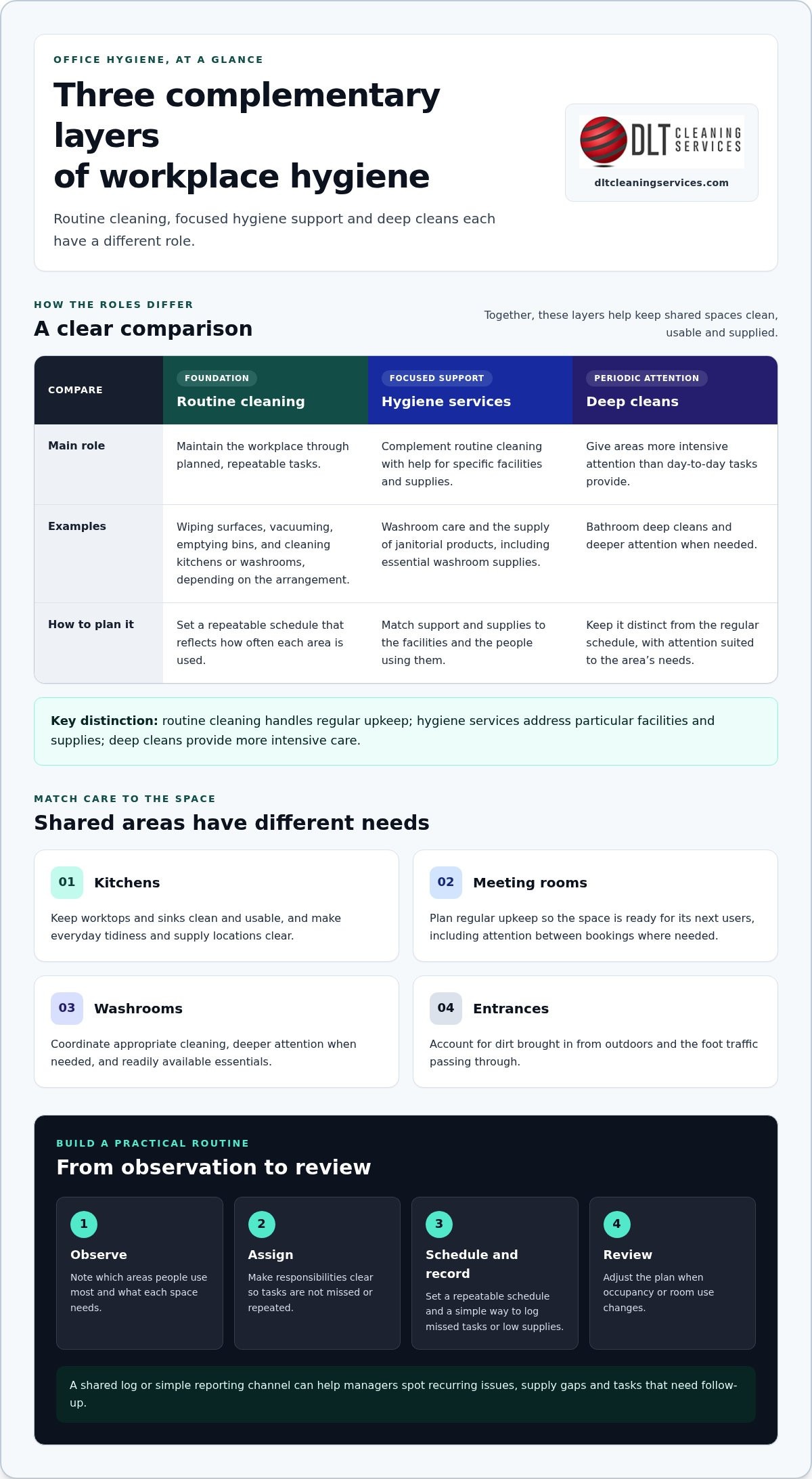
Think of these elements as connected, not competing. Routine cleaning takes care of regular upkeep, while hygiene support addresses specific facilities and supplies. A deep clean has a different purpose, giving areas more intensive attention than day-to-day tasks provide. Separating these roles helps clarify what belongs in the regular schedule and what needs its own arrangement.
Why shared workplace areas need particular attention
Shared areas serve different purposes, so their upkeep needs to be clear and consistent. Kitchens need attention to worktops and sinks; meeting rooms are used by changing groups; entrances collect dirt brought in from outside; and washrooms need both cleaning and readily available supplies. When responsibilities are unclear, small practical jobs can be missed or repeated.
Consider the main shared spaces in your office and what staff need from each one:
- Kitchens: Clean, usable surfaces and a clear plan for everyday tidiness.
- Meeting rooms: Regular upkeep that prepares the space for its next users.
- Washrooms: Appropriate cleaning, deeper attention when needed and suitable supplies.
- Entrances: A routine that accounts for dirt and foot traffic brought in from outdoors.
These examples show why workplace hygiene isn’t a single task or room. It’s a coordinated approach to the whole office, with cleaning and hygiene support matched to each space’s purpose.
How workplace hygiene routines support a cleaner office
A reliable office routine starts with observation, not a one-size-fits-all checklist. Note which spaces staff and visitors use most, what tasks each area needs and who is responsible for them. Then set a repeatable schedule and a straightforward way to record missed tasks or supplies that need replenishing. This makes the routine easier to manage and adjust as office use changes.
Planned cleaning, washroom care and accessible supplies work together over time. A one-off tidy-up doesn’t replace a routine that keeps tasks visible, responsibilities clear and shared areas ready for use. A schedule can also help managers spot patterns, such as a meeting room that needs attention after frequent use or a kitchen where supplies run low between checks.
Which office areas should feature in a hygiene routine?
Walk through the office and consider the purpose and use of each area. Desks and shared touchpoints, such as door handles, are practical cleaning priorities. Meeting rooms may need attention between bookings, while kitchens and entrances have their own everyday demands. Include washrooms in the plan, with procedures suited to the facilities and cleaning arrangement.
Set the frequency according to actual use. A room occupied throughout the working day may need more frequent attention than one used occasionally. Hybrid attendance can also change which areas are busiest on particular days. Review the schedule when occupancy or room use shifts, and make clear which tasks belong to the cleaning routine and which require staff to tidy up after themselves.
How cleaning supplies support everyday workplace hygiene
Cleaning tasks are harder to complete consistently when suitable products aren’t available where they’re needed. Plan supplies around the facilities and the people using them. Staff may need everyday items in a shared kitchen, while colleagues and visitors rely on washroom essentials being replenished. Keep storage organised and assign responsibility for checking stock so an empty dispenser or missing product doesn’t come as a surprise.
For example, a kitchen supply plan should reflect how the room is used and make clear where items belong. This practical overview of janitorial supplies for office kitchens can help teams identify what the space needs. Choose products for their intended use and ensure staff follow the instructions supplied with them.
Give employees a straightforward way to report a spill, a supply gap or a missed task, and identify who should follow up. A shared log or simple reporting channel helps managers see whether an issue is isolated or recurring, then adjust responsibilities or the cleaning plan. Keep the process clear so staff know what to report and where.
When schedules and supplies need coordinating, office hygiene support can complement routine cleaning with services suited to the workplace.
Routine cleaning, hygiene services and deep cleans: what is the difference?
These terms describe related but distinct parts of an office care plan. Routine cleaning maintains everyday work areas; hygiene support addresses specific facilities and supplies; and a periodic deep clean gives selected areas more intensive attention than the usual schedule. Understanding the difference helps managers plan tasks without assuming one service covers them all. Workplace hygiene services complement routine office cleaning, with each element serving a practical purpose.
| Type of support | Purpose and typical focus | How it fits |
|---|---|---|
| Routine office cleaning | Maintain orderly work areas through planned, repeatable cleaning tasks. | Provides the regular foundation for a clean office. |
| Hygiene support | Address specific needs such as bathroom deep cleans and janitorial product supply. | Complements regular cleaning by focusing on facilities and supplies. |
| Periodic deep cleaning | Give selected areas more intensive attention beyond everyday upkeep. | Can be planned alongside the routine to address less frequent needs. |
A tidy room doesn’t, by itself, show which tasks have been completed. A clear schedule and scope help staff understand what routine cleaning covers, which hygiene tasks are included and when additional attention is planned. Cleaning and disinfection are also different: cleaning addresses dirt and residue, while disinfection is a separate process involving a suitable product used according to its instructions.
What does routine office cleaning usually address?
Routine office cleaning focuses on recurring upkeep, such as keeping work areas orderly, wiping appropriate surfaces, vacuuming and emptying bins. The task list should reflect the building and how it is used, then be organised into a planned schedule. This provides a dependable baseline instead of relying on occasional attention or informal assumptions about who will do what.
When might a workplace need additional hygiene support?
Additional support may be useful when a workplace needs bathroom deep cleans or a dependable arrangement for janitorial product supply. Priorities depend on the facilities, their condition, how people use them and the workplace’s requirements. Reviewing these needs alongside the routine helps managers distinguish regular upkeep from focused hygiene tasks, without treating every area or service as interchangeable.
Clear definitions also help when discussing workplace care with staff and cleaning teams. Describe the outcome needed, the area involved and whether the task is part of routine upkeep or requires additional attention. This gives everyone a shared understanding and keeps expectations practical for the office.
How to review your workplace hygiene needs
A useful review doesn’t need a complicated audit. Walk through the office, compare what you see with the current cleaning arrangements and note where responsibilities or supplies are unclear. This gives you a practical view of what’s working, what needs attention and whether workplace hygiene services could complement your existing routine.
Map areas, usage and current arrangements
Make a simple list of the office’s shared spaces, including work areas, meeting rooms, kitchens, entrances and washrooms. Note how each is used across the working week. A meeting room booked throughout the day may need different upkeep from one used occasionally. Hybrid attendance may also change when certain areas are busiest.
Next, review the existing arrangements. Check which tasks are scheduled for washrooms and common areas, who monitors janitorial supplies and how staff can flag an issue. Ask employees for practical feedback, then look for specific, observable examples rather than general impressions. For instance, record that a dispenser was empty or that a shared room was left untidy after use.
Separate recurring needs from occasional work. A task that comes up repeatedly may belong in the routine or a regular supply check. A less frequent requirement, such as a bathroom deep clean, may need to be planned as additional hygiene support. This distinction helps keep one-off jobs from obscuring everyday responsibilities.
Turn the review into a practical hygiene plan
Use your notes to rank actions according to how spaces are used, their current condition and the needs of the business. Set out which tasks sit with professional cleaning and which are part of everyday workplace upkeep. Make responsibilities visible so staff know how to report a gap and the right person can follow it up. Review the plan when room use or workplace arrangements change.
For a concise review, use this checklist: map the spaces, note how they’re used, check cleaning arrangements, review supplies, record specific gaps and assign the next action. A written record helps managers discuss needs clearly and distinguish recurring tasks from occasional deep-clean requirements. For related considerations, see this guide to health and safety compliant cleaning guidance.
If your review points to a need for coordinated office cleaning or hygiene support, discuss your workplace hygiene needs with DLT. DLT Cleaning Services provides office cleaning and hygiene services, including bathroom deep cleans and janitorial product supply. Office cleaning contracts include dedicated on-site supervision.
Workplace hygiene services in Guildford: how DLT supports offices
For businesses in Guildford, workplace hygiene support should fit the way the office operates, rather than follow a one-size-fits-all pattern. DLT Cleaning Services Ltd is a family-run company providing office cleaning and hygiene services across Surrey, Hampshire and Berkshire. The team supports small independent businesses and large national chains, with arrangements shaped around each workplace’s setting and practical needs.
DLT’s hygiene services include bathroom deep cleans and janitorial product supply. These complement routine office cleaning by addressing specific washroom needs and helping keep shared facilities supplied. Bringing these elements together makes it easier for a business to understand what its regular cleaning arrangement covers and where additional hygiene support fits.
Office cleaning contracts include dedicated on-site supervision to support consistent service delivery. For managers, this provides oversight of agreed tasks and workplace expectations, alongside the everyday responsibilities staff have for shared spaces.
How hygiene support fits around an office’s needs
A workplace’s requirements depend on its facilities, occupancy patterns and operational priorities. A small office may have a few shared rooms and one washroom; a larger workplace may have more facilities and a wider range of areas to coordinate. DLT provides office cleaning and hygiene support shaped to the setting, combining regular maintenance with relevant hygiene services rather than treating every site as identical.
This approach helps teams distinguish routine tasks from more focused support. A business may have an established office cleaning schedule and also need bathroom deep cleans or a managed supply of janitorial products. Reviewing how rooms are used and what the current arrangement covers helps clarify priorities. Managers can explore tailored office cleaning services to understand how cleaning can be adapted to their premises.
For Guildford businesses, local support is part of DLT’s wider service across Surrey, Hampshire and Berkshire. The aim is a considered, dependable arrangement that works alongside the business’s own routines, whether the workplace is an independent office or part of a national organisation.
Discuss a practical next step for your workplace
To start a useful conversation, outline the areas in your office, the cleaning routines already in place and any hygiene priorities you’ve identified. Details such as shared facilities, supply needs and tasks that need clearer ownership help build a practical picture of the support required.
If you’re ready to discuss office cleaning or hygiene support for your workplace, speak with DLT Cleaning Services.
Make your next hygiene review count
Turn your review into a working plan, not a document that sits untouched. Choose someone to keep the task list current, note changes in how rooms are used and revisit priorities when your team’s routines shift. Clear ownership keeps everyday responsibilities visible and helps you spot when arrangements need adjusting.
Workplace hygiene services are most useful when they fit the way your office operates. A clear picture of your facilities, existing routines and main concerns gives you a practical starting point, whether you’re refining an arrangement or addressing a specific gap.
DLT Cleaning Services is a family-run company serving businesses across Surrey, Hampshire and Berkshire, with dedicated on-site supervision for office cleaning contracts. Start a conversation with DLT about your office hygiene needs and take the next step towards a plan that works for your team.
Frequently Asked Questions
Can workplace hygiene services be adapted to a small office?
Yes. Workplace hygiene services can be arranged around a small office’s facilities and working patterns rather than a large-site checklist. Start by identifying essential spaces, who uses them and which tasks are currently managed informally. In a compact Guildford office, for example, a shared kitchenette and one washroom may shape priorities more than a rarely used meeting room. Review the arrangement if attendance or use changes.
What should a workplace hygiene policy include?
A useful policy should set out which areas and tasks it covers, who oversees each responsibility and how staff can report a problem. Include expectations for shared spaces, the process for raising supply shortages and instructions for using and storing cleaning products safely. Keep the document straightforward enough for employees to follow, and assign someone to review it when facilities, working arrangements or cleaning responsibilities change.
How can employees help maintain hygiene between professional cleaning visits?
Employees can keep personal work areas orderly, clear away food and promptly report spills, damage or empty supplies through an agreed channel. Make clear that reporting a problem is helpful, not a substitute for scheduled cleaning. For example, staff should flag a liquid spill that needs attention rather than attempt a task involving an unfamiliar product. Clear expectations prevent uncertainty about who should act.
Are workplace hygiene services different from facilities management?
Yes. Workplace hygiene services focus on cleaning and hygiene-related needs, while facilities management is a broader approach to coordinating the workplace environment and its operation. Depending on the organisation, facilities management may cover building maintenance, space planning or service coordination. Cleaning can sit within that wider picture, but the terms aren’t interchangeable. Defining the scope helps managers understand which responsibilities belong to each arrangement.
What should a business consider when supplying cleaning products for staff?
Choose products suited to the intended task and the surfaces in your workplace, then make the manufacturer’s instructions accessible to staff. Keep products in their original, labelled containers and store them in a designated place away from food and drink. Explain who checks stock and how staff request replacements. Avoid mixing products, and make sure employees know how to raise concerns about a product or its use.
Can workplace hygiene routines change as a business grows?
Yes. New employees, additional rooms or changed working patterns can alter which facilities are used and how quickly supplies are consumed. Revisit the arrangement after a move, office expansion or change in attendance, and compare the updated needs with the current task list. For instance, adding a meeting room may require clearer ownership of its preparation between bookings. Adjust responsibilities and cleaning arrangements as the workplace develops.