A small office isn’t automatically a simple cleaning job. If you’re asking how much to clean a small office in Guildford, the answer depends on more than floor area: the rooms, cleaning tasks and visit schedule all shape a tailored proposal.
It’s understandable to want a clear figure and a fair comparison. But proposals can cover different tasks or frequencies, so a lower headline price may not represent the same service. A useful proposal should reflect how your workplace is used and what you need cleaned.
This article explains the main factors that shape an office-cleaning proposal and what to prepare for your enquiry, from your layout and washrooms to your preferred schedule. You’ll also learn how to compare proposals by their scope and service arrangements, rather than price alone. DLT Cleaning Services Ltd is a family-run company established in 1999, providing tailored office cleaning in Guildford with dedicated on-site supervision for office-cleaning contracts.
Key Takeaways
- To understand how much to clean a small office in Guildford, focus on the work and visit pattern behind the tailored proposal.
- Compare proposals by checking whether they cover the same areas, tasks, schedule and service oversight.
- Prepare a clearer enquiry by noting your office layout, operating hours, access arrangements and cleaning priorities.
- DLT Cleaning Services Ltd provides tailored office cleaning, with dedicated on-site supervision for office-cleaning contracts.
How much does it cost to clean a small office in Guildford?
Before comparing cleaning proposals, define what the small office needs. The answer to “how much to clean a small office in Guildford” depends on the premises, the visit pattern and the agreed tasks. Floor area is relevant, but it doesn’t show whether the office has several separate work zones, a busy shared kitchen or washrooms that need attention during each visit.
This guide explains the factors behind a tailored proposal, rather than giving a fixed rate or price estimate. Recurring office cleaning is planned around routine tasks and visit frequency. A deep clean or additional hygiene requirements can involve a different scope, so list these separately instead of assuming they are part of routine visits.
A tailored cleaning proposal sets out the areas to be cleaned, the tasks required and the agreed visit pattern. This gives you a more useful basis for planning than a figure without details of the service behind it.
Commercial cleaning can involve different methods, equipment and types of work. The Commercial Cleaning Industry Overview offers general background, while your proposal should make the specific office-cleaning scope clear.
Why there is no single price for every small office
Two offices of similar size may need different work. One might be an open-plan space with a small kitchenette; another may have several enclosed rooms, shared facilities and distinct work zones. How people use those areas also affects which tasks deserve priority.
Visit frequency and the agreed task list shape the work required. A useful schedule identifies what is covered on each visit. For example, you can specify which shared areas need attention every time and which tasks can be scheduled less often. This avoids assumptions about what “clean the office” includes.
What a useful Guildford quote should help you understand
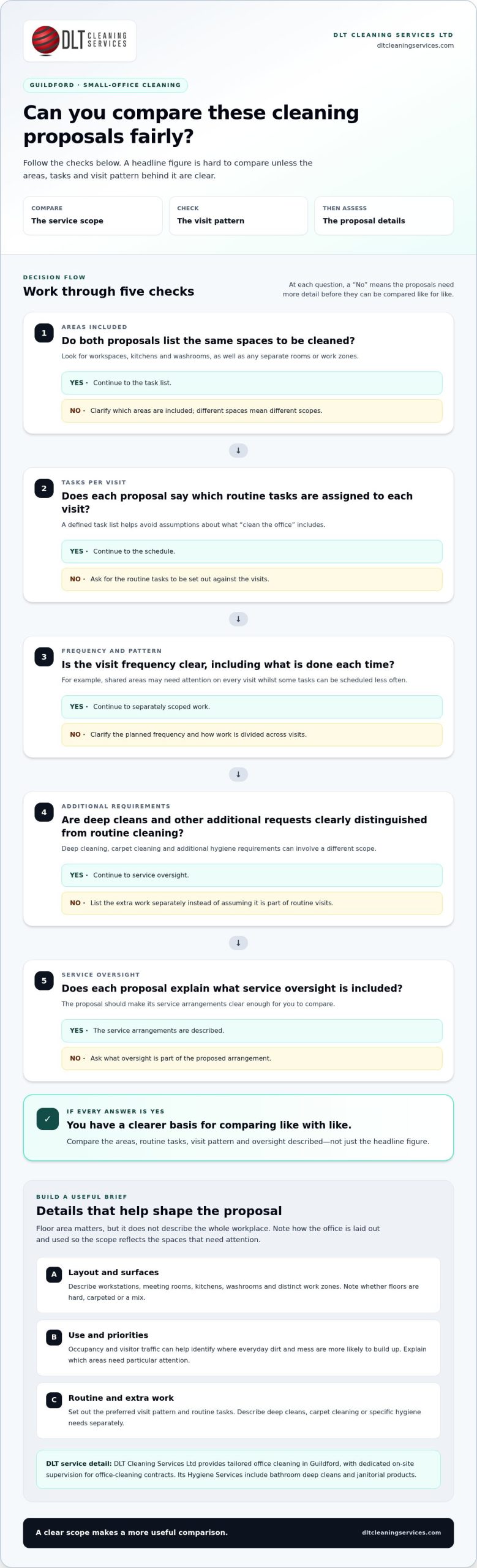
A useful proposal sets out the areas covered, routine tasks and visit pattern. It should give you enough detail to compare like with like, including whether the same spaces and responsibilities appear in each proposal. Look beyond the total: different scopes make headline figures difficult to compare fairly.
- Which areas are included, such as workspaces, kitchens and washrooms.
- Which routine tasks are assigned to each visit.
- How often visits are planned and what service oversight is described.
For a local view of the service, explore office cleaning in Guildford. A well-defined brief helps DLT shape an office-cleaning proposal around your premises and routine, so you can assess what the arrangement is designed to cover.
Which factors shape a small-office cleaning quote in Guildford?
A useful proposal starts with the parts of the workplace that need attention, not simply the overall floor area. Usable space, room layout, how employees and visitors use the office, the cleaning tasks and visit pattern all help define the work. A small-office cleaning proposal is shaped by the premises’ usable area and layout, occupancy and footfall, visit frequency, and the tasks agreed for each visit.
Premises layout, occupancy and cleaning priorities
Describe the office in practical terms: workstations, meeting rooms, shared kitchens, washrooms and flooring types. A compact suite split into several rooms may need a different task plan from an open-plan office with the same usable area. Include distinct work zones so the proposed scope reflects the spaces people actually use.
Occupancy and visitor traffic help identify where everyday dirt and mess are most likely to build up. For example, a meeting room used for client visits may need a different priority from a quiet office used by a small team. Washrooms, kitchens and meeting areas are details to define in the scope, not tasks to assume are included. Explain what attention each area needs, then prioritise essential work rather than treating every room identically.
Floor types and furniture can also clarify the brief. Note whether each area has hard flooring, carpet or a mix of surfaces, and identify any particular cleaning priorities. These details give the cleaning team useful context for planning appropriate routine tasks. Clear descriptions reduce the chance of you and the team making different assumptions about what “clean the office” means.
Visit frequency, task scope and additional services
The frequency you request affects how routine work is divided across visits. You may want shared areas addressed every time, while other tasks follow a less frequent schedule. Set out your priorities and preferred visit pattern so the proposal can show what is planned for each visit, rather than relying on a one-size-fits-all task list.
Keep routine office cleaning distinct from separately scoped work. A deep clean or carpet-cleaning request has a different scope from regular upkeep, so describe it separately rather than assuming it sits within the ongoing routine. DLT’s Hygiene Services include bathroom deep cleans and janitorial products. If you have specific bathroom or janitorial needs, include them in your brief so they can be considered clearly.
Standards and task frameworks can help explain why a scope needs to be specific. The Cleaning Industry Standards from ISSA relates to K-12 settings, so it isn’t an office-cleaning specification, but it illustrates how defined requirements can support consistent expectations.
When describing your priorities, focus on the rooms, how they are used and the tasks that matter most. This gives DLT a clear starting point for a proposal tailored to your Guildford office. You can also find out more about DLT’s office cleaning services.
How can you compare small-office cleaning quotes in Guildford?
Two proposals are only comparable if they describe a similar service. A total on its own won’t tell you whether the same rooms, tasks and visits are covered. Before deciding how much to clean a small office in Guildford, line up the details in each proposal and note any differences in scope.
Use a simple comparison table to make gaps visible. Add each proposal’s details in the corresponding column, using “not specified” where information is absent. This flags an unclear scope without assuming a task is included.
| What to compare | Proposal A | Proposal B |
|---|---|---|
| Areas covered | Rooms and zones listed | Rooms and zones listed |
| Routine tasks | Tasks described | Tasks described |
| Visit pattern | Frequency and task allocation | Frequency and task allocation |
| Separate requests | Specialist work identified separately | Specialist work identified separately |
| Service oversight | Arrangements described | Arrangements described |
What to compare in each proposed cleaning scope
Start with the rooms and surfaces named in each proposal: workspaces, meeting rooms, kitchens, washrooms and floors. Then compare the routine tasks assigned to those areas. One proposal might describe kitchen cleaning broadly, while another specifies the tasks. Align the descriptions before comparing the overall proposal.
Check that the visit pattern fits your office routine and that tasks are allocated clearly across visits. Record requested specialist work, such as deep cleaning or carpet cleaning, separately from recurring office cleaning. If one proposal includes that work and another does not, they aren’t like for like until you account for the difference.
Also note exclusions and services described separately. A task omitted from the routine scope changes what the proposal covers, even if the premises and visit frequency look similar. Focus on understanding those differences rather than ranking proposals by a single figure.
How staffing and supervision support consistency
Service arrangements matter alongside task lists. DLT cleaners are directly employed, carefully interviewed, DBS-checked and fully insured. Office-cleaning contracts also receive dedicated on-site supervision. These details explain how the service is organised; they are not a price comparison or a substitute for checking the agreed cleaning scope.
As you review proposals, note how oversight is described and who is responsible for managing the contract. Compare the service arrangements as well as the tasks: clear responsibility for supervision can help you understand how the work will be managed. A thorough comparison considers both the cleaning proposed and the arrangements supporting its delivery.
How to prepare for an accurate small-office cleaning quote in Guildford
A concise, practical brief makes it easier to describe what your office needs and gives a cleaning proposal a clear starting point. If you’re considering how much to clean a small office in Guildford, gather details about the premises, working routine and priorities before making an enquiry. You don’t need a technical floor plan; an approximate description is useful.
Information to gather before requesting a proposal
Work through this checklist and note anything that could affect the cleaning routine. Be specific about which spaces need regular attention, and separate occasional requests from ongoing tasks.
- Sketch the layout. Note the approximate size and arrangement of the premises, including work areas, meeting rooms and separate offices.
- List shared spaces. Include kitchens, washrooms, reception areas and other rooms used by employees or visitors.
- Describe occupancy and footfall. Share typical staffing levels, visitor patterns and busy periods, especially in shared areas.
- Set out priorities. Identify the routine tasks that matter most and any workplace cleaning routines already in place.
- Outline the schedule. Give your operating hours, preferred cleaning times and the frequency you have in mind.
- Explain access arrangements. Include relevant entry instructions, access restrictions and practical details for reaching the premises.
- Separate occasional needs. Record deep-cleaning or distinct hygiene requests apart from regular office cleaning.
How to describe a small Guildford workplace clearly
Put these details into a short written brief and identify Guildford as the service location. A simple room-by-room note can be clearer than a broad description such as “small office”. For instance, state which shared spaces are used daily and which rooms need less frequent attention. If a detail is approximate, say so rather than guessing. This helps the proposed scope reflect your actual workplace and routine.
Include preferences that could help shape the arrangement, such as areas needing particular attention or times when cleaning would fit best with office operations. DLT Cleaning Services Ltd is a family-run company established in 1999, providing office cleaning tailored to workplace requirements.
Once your brief is ready, share your Guildford office-cleaning requirements with DLT to help shape a proposal around your premises and routine.
Get a tailored small-office cleaning quote from DLT in Guildford
A clear brief gives DLT a practical picture of your premises and the routine you want cleaning to support. It allows the proposed office-cleaning scope to be shaped around your workplace, rather than assumptions about what a small office needs. If you’re still weighing up how much to clean a small office in Guildford, a tailored proposal can help you understand the service planned for your premises.
What working with DLT means for a small workplace
DLT Cleaning Services Ltd is a family-run company established in 1999. Its office-cleaning service is tailored to the workplace’s agreed needs and routine. This means the task list and schedule can be set out for your premises, rather than assuming every office needs the same arrangement.
People and oversight matter too. DLT cleaners are directly employed, carefully interviewed, DBS-checked and fully insured. Office-cleaning contracts receive dedicated on-site supervision as part of contract management. These arrangements clarify who carries out the work and how the service is overseen, alongside the practical details of the cleaning scope.
Keep recurring office cleaning distinct from occasional or separately scoped work. Your ongoing proposal should describe regular tasks and the visit pattern, while a deep-cleaning or hygiene requirement can be set out separately. This makes the arrangement easier to understand and helps keep expectations clear as your workplace routine changes.
Take the next step towards a tailored proposal
Use your notes to explain the layout, operating hours, access arrangements, priority areas and preferred cleaning frequency. A brief doesn’t need to be elaborate. Clear, relevant details give DLT a useful foundation for tailoring a proposal to your Guildford premises and the routine you’ve described.
The proposal is tailored to the information provided, rather than presented as a fixed price for every small office. Setting out occasional cleaning or hygiene needs separately also helps distinguish those requests from regular office cleaning. You’ll then have a clearer basis for assessing what the proposed service covers.
For a straightforward next step, request a tailored office-cleaning quote from DLT and share the details of your Guildford workplace.
Turn your cleaning brief into a clear next step
A cleaning proposal is most useful when it gives your team a shared understanding of the service you’re considering. Keep your brief as a practical reference: it can help you explain priorities internally and assess whether the proposed routine still fits if workplace use changes. This makes the question of how much to clean a small office in Guildford part of a broader decision about the support your workplace needs.
DLT Cleaning Services Ltd brings a family-run approach to office cleaning. Its directly employed, carefully interviewed, DBS-checked and fully insured cleaners, together with dedicated on-site supervision for cleaning contracts, offer clear points of reference as you consider the service arrangement. The scope is tailored to the premises and agreed routine, rather than assuming every small office needs the same plan.
When you’re ready to move from preparation to a proposal, share your Guildford office requirements with the team. Request a tailored office-cleaning quote and take the next step towards a cleaning arrangement shaped around your workplace.
Frequently Asked Questions
What affects the cost of cleaning a small office?
The cost is influenced by the work required to maintain the premises, including the areas and surfaces in scope, how often cleaning takes place and the tasks assigned to each visit. For instance, an office with shared facilities used throughout the day may need a different plan from one with little shared-space use. Describe any separate deep-cleaning or hygiene requirements distinctly so they aren’t confused with routine office cleaning.
Does a small office need daily or weekly cleaning?
It depends on how the office is used, rather than its size alone. A workplace with regularly used shared areas may need more frequent attention to those spaces, while a quieter office may suit a less frequent routine. Consider which tasks need attention often and which can be scheduled differently. The proposed frequency should fit your working pattern and the condition you want to maintain, rather than follow a standard schedule by default.
What is usually included in a small-office cleaning service?
There isn’t a universal task list, so the service scope should state what routine office cleaning covers at your premises. The proposal should make clear which areas and responsibilities are included, rather than relying on broad wording. DLT’s Office Cleaning is tailored to office environments. Its Hygiene Services include bathroom deep cleans and janitorial products; identify these requirements separately from routine cleaning in your brief.
Can office cleaning be arranged outside normal working hours?
Cleaning times form part of the service plan, so include your preferred window in the brief if you’re considering cleaning outside normal working hours. State when the office is occupied, any access restrictions and relevant security arrangements. This gives the proposed schedule useful context and helps distinguish a preferred time from an essential requirement. The cleaning arrangement is tailored to the workplace and its routine, rather than assuming one timing suits every office.
Do office cleaning quotes include washrooms and kitchen areas?
Name washrooms and kitchens in the proposed scope rather than assuming they are included. How these spaces are used and what you need done can affect the tasks planned. DLT’s Hygiene Services include bathroom deep cleans and janitorial cleaning, as well as the supply of janitorial products. If you need these alongside regular office cleaning, describe them clearly so the proposal distinguishes routine tasks from additional hygiene requirements.
How can I get an accurate office-cleaning quote in Guildford?
Give DLT a clear description of your Guildford workplace and the service you need. A simple floor plan or room list can clarify the layout; mark shared facilities, areas with restricted access and spaces with particular cleaning needs. Include your preferred schedule and distinguish ongoing tasks from occasional requests. These details help shape a tailored proposal around your actual office, not a generic assumption about its size.