Could a co-working space stay welcoming without cleaning getting in the way of work? With co-working space cleaning Guildford managers need a plan for shared desks and communal areas used by different people throughout the day, as well as calls and meetings that need a quieter environment.
A standard office-cleaning checklist can miss the details of shared use. It may cover every room but overlook how often desks turn over, when meeting rooms are free or which facilities stay busy. A clear scope shaped around the space’s daily rhythm gives cleaners and managers a practical reference.
This guide explains how to plan consistent cleaning for desks, meeting rooms, communal areas and washrooms, and how to organise the work with minimal disruption. It also covers how to set expectations and choose an arrangement with clear oversight. DLT Cleaning Services is a family-run commercial cleaning company established in 1999, with dedicated on-site supervision for each contract.
Key Takeaways
- Shape co-working space cleaning Guildford around shared use, including how desks, rooms and communal areas change throughout the day.
- Build a clear scope by space and task, separating routine cleaning from periodic deep cleans and washroom hygiene.
- Compare coworking areas with fixed-use offices to identify where occupancy, shared touchpoints and room turnover affect priorities.
- Plan a practical routine by mapping spaces, reviewing bookings and access, then discussing the arrangement with the site team.
- DLT Cleaning Services provides Office Cleaning and Hygiene Services, supported by dedicated on-site supervision for each contract.
Why co-working space cleaning in Guildford needs a shared-space approach
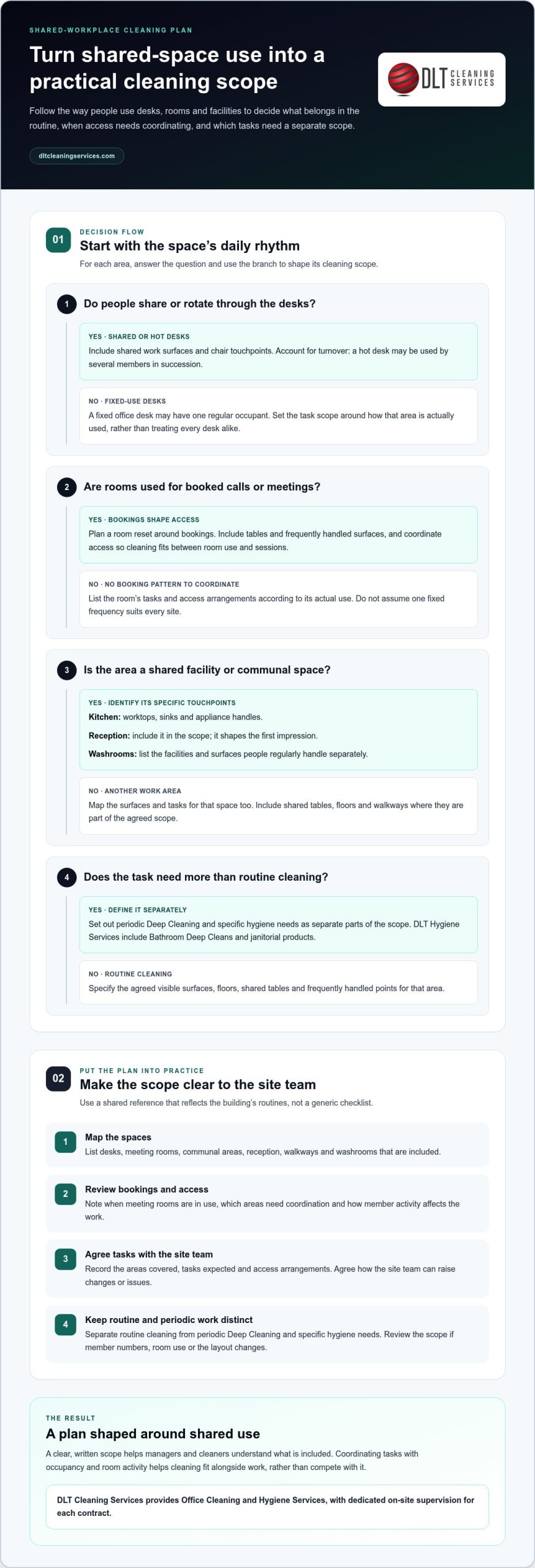
For a workspace operator, the challenge is more than keeping the building tidy. It’s maintaining a presentable environment as the people using it and their activities change throughout the day. A hot desk may be used by several members in succession, while a fixed office desk may have one regular occupant. That turnover affects which areas need attention and when. A practical plan for co-working space cleaning Guildford operators can use should reflect the actual flow of people through the space, rather than assume every area is used in the same way.
Coworking-space cleaning is a routine planned around shared areas, occupancy and daily activity. The model brings different individuals and organisations into a common workplace, as the general overview of Coworking describes. Cleaning should reflect that shared use, with common surfaces and facilities included in the scope and tasks organised to avoid disrupting the space’s purpose.
Which shared areas need particular attention?
Each area has its own pattern of use. In hot-desk areas, include work surfaces and chair touchpoints in the scope. Meeting rooms need a clear reset plan for tables and frequently handled surfaces after bookings. Kitchens see repeated use around worktops, sinks and appliance handles, while reception areas shape the first impression. Washroom tasks should cover the facilities and the surfaces people regularly handle.
Rather than treating every surface identically, identify high-contact points and list them as specific tasks. In a Guildford workspace, a meeting room used for client discussions may have different access windows from a kitchen used throughout the working day. Mapping these priorities helps keep them visible and reduces the chance that smaller shared areas are missed.
How does a clean workspace support the member experience?
Visible upkeep helps a workspace feel welcoming and professionally managed. Members can see whether a desk is ready to use, a meeting room is orderly and communal facilities are cared for. Visitors see these details too, which contributes to the overall impression of the workplace.
Well-maintained surroundings also support everyday comfort for members and staff. A written scope gives the site team and cleaners a shared understanding of what is included. Scheduling tasks around the space’s activity helps cleaning fit alongside work rather than compete with it, with attention given to both work areas and shared facilities.
What a co-working space cleaning plan should cover
A useful cleaning plan turns the general aim of keeping a workplace presentable into a clear scope. Map tasks to the spaces, surfaces and patterns of use instead of applying the same checklist to every room. This makes it easier to distinguish routine cleaning from periodic deep cleaning and to identify where hygiene services have a separate role.
For co-working space cleaning Guildford managers should consider which areas are included, how cleaners access them and how bookings affect the work. A meeting room used for back-to-back sessions has different timing requirements from a quieter corner, while kitchen use may rise and fall during the day. Agreeing these details with the site team helps set practical expectations. A health and safety compliant cleaning guide can also help managers consider how cleaning arrangements fit their workplace standards.
Routine cleaning for desks, meeting rooms and communal areas
Routine Office Cleaning can cover visible surfaces, floors, shared tables and frequently handled points according to the agreed scope. Desk use and room turnover help identify priorities. For example, a hot-desk area calls for attention to shared work surfaces, while a meeting room reset may focus on its table, chairs and touchpoints after use. Include reception, walkways and shared kitchens according to how members use them. Define the tasks and timing around the workspace, rather than assuming one fixed frequency suits every site.
It also helps to define what sits outside routine cleaning. Periodic Deep Cleaning can provide more thorough attention to selected areas, while specific hygiene needs can be listed separately. Clear boundaries make the scope easier to review if member numbers, room use or the layout changes.
Washroom hygiene and supplies in shared workplaces
Washrooms need a clear hygiene routine because members and visitors rely on these shared facilities throughout the day. DLT’s Hygiene Services include Bathroom Deep Cleans and janitorial products. List washrooms separately in the scope, noting the facilities to be covered and how use and access affect the arrangement.
Make the plan straightforward to follow. Record the areas covered, the tasks expected and any access arrangements that affect the work. Note spaces where bookings or member activity call for coordination, and agree how the site team can raise changes or issues. This gives managers and cleaners a common reference instead of leaving expectations to memory.
For Guildford workspace operators, a commercial cleaning arrangement can bring these elements together around the building’s operating routines. DLT Cleaning Services provides Office Cleaning and Hygiene Services, with dedicated on-site supervision for each contract. Explore DLT Cleaning Services to see how a clearly defined cleaning scope can support your shared workplace.
How coworking cleaning differs from a standard office routine
The cleaning fundamentals remain consistent across workplaces: maintain the agreed areas and surfaces with care. What changes is the emphasis. A fixed-use office may have desks assigned to the same team, while coworking spaces often combine dedicated areas with hot desks and bookable rooms. For co-working space cleaning Guildford managers should account for those different patterns, rather than assume every room turns over at the same pace.
The comparison below shows where shared use can influence priorities. It’s a planning guide, not a measure of which workplace is cleaner.
| Consideration | Fixed-use office | Shared coworking area |
|---|---|---|
| Occupancy | Desks may be used mainly by an assigned team or individual. | Hot desks may have changing users over the working day. |
| Touchpoints | Priorities reflect the team’s regular work areas and shared facilities. | Shared desks and common surfaces may need closer attention in the scope. |
| Room turnover | Meeting rooms may follow a more familiar pattern of use. | Bookable rooms can move between groups or meetings during the day. |
| Scheduling | Cleaning can be planned around the team’s usual presence. | Task timing may need to account for bookings and member access. |
Where does shared use change cleaning priorities?
Changing users don’t automatically mean a space needs a higher cleaning standard. They do make it useful to identify which surfaces are shared and how room use affects the routine. A hot desk used by different members has a different pattern from a workstation assigned to one person. A bookable room may need a planned reset between sessions, while a private office can be considered in line with its regular occupancy.
Use these distinctions to set priorities without overstating risk. The aim is a suitable, consistent routine for each area.
How can the cleaning routine fit different work patterns?
Cleaning can be coordinated with room bookings, quieter periods and member access. A manager might identify windows when a meeting room is free or note which areas remain busy throughout the day. These details help organise the work without implying that tasks should be skipped or that one type of workplace deserves a different standard of care.
Fixed-office cleaning follows established use; coworking cleaning adapts task priorities to shared access and changing room use. This distinction gives site teams a practical way to review the routine when member activity or booking patterns change.
How to organise a practical cleaning schedule for a Guildford coworking space
A workable schedule starts with how the space operates, not with assumed visit days or times. For co-working space cleaning Guildford operators can use a simple planning process to connect tasks with room use, member access and the site team’s priorities. The result is a routine that’s clear to manage and can be reviewed when activity changes.
- Map the spaces. List shared desks, private offices, meeting rooms, kitchens, washrooms and entrances. Mark which areas are included in the cleaning scope and note any access arrangements.
- Understand patterns of use. Review your booking or occupancy information to identify busy areas and periods. A meeting room with bookings throughout the day, for example, may need different task timing from a private office used by the same team.
- Set priorities by task. Define regular cleaning tasks for each area, then identify surfaces or facilities that need attention based on how they are used. Keep periodic deep-cleaning tasks separate from routine work.
- Plan access and timing. Consider opening patterns, scheduled meetings and member activity. Agree how cleaners can access relevant spaces and how tasks can be arranged to minimise disruption to calls, meetings and daily work.
- Agree how changes are shared. Set a straightforward way for the site contact to communicate room-use changes, access issues or operational updates. This helps the cleaning routine respond to practical changes without relying on assumptions.
- Review with the site team. Revisit the plan when occupancy patterns, facilities or opening arrangements change. Use the review to clarify responsibilities and adjust priorities where needed.
Map the building, use patterns and cleaning priorities
A floor plan or room list makes the scope easier to discuss. Mark areas with changing use, such as hot desks and bookable rooms, alongside shared facilities and quieter spaces. Then use your own occupancy and booking information to decide which tasks belong in the routine and which need periodic deeper attention. This keeps priorities grounded in how the building is actually used.
Coordinate cleaning with members and workspace operations
Timing is about fitting the agreed work around activity, not changing the standard of care. Managers can identify access windows around bookings and quieter periods, while making the routine clear to members and staff. For broader planning principles, the complete office cleaning manager’s guide offers further context on setting clear workplace cleaning expectations.
DLT Cleaning Services provides Office Cleaning in Guildford with dedicated on-site supervision for each contract. Discuss a tailored office cleaning arrangement built around your workspace and its operating patterns.
Co-working space cleaning in Guildford with DLT Cleaning Services
Keeping a shared workspace consistently welcoming calls for an arrangement shaped around its rooms, facilities and operating patterns. DLT Cleaning Services Ltd provides commercial cleaning in Guildford, including Office Cleaning and Hygiene Services. For coworking operators, the scope can reflect the site’s priorities, from shared work areas and communal facilities to washroom hygiene.
A clear arrangement gives managers a defined point of accountability and helps align cleaning tasks with how the site is used. DLT provides dedicated on-site supervision for each contract. Its cleaners are directly employed, DBS-checked and fully insured. These measures clarify who carries out the work and how it is overseen, while the scope can be tailored to the workspace.
A tailored commercial cleaning arrangement
No two shared workspaces have exactly the same layout or activity. Cleaning priorities can be shaped around the facilities on site, how members use them and the agreed scope. Office Cleaning can support the upkeep of working areas and communal spaces, while Hygiene Services address washroom requirements, including Bathroom Deep Cleans and janitorial products.
Setting out areas and tasks clearly connects the service to the operator’s priorities instead of relying on a generic office routine. Managers planning a bespoke scope can also explore tailored office cleaning services to consider how cleaning should fit their workspace.
Local experience and accountable service
Family-run and established in 1999, DLT Cleaning Services provides commercial cleaning in Guildford. Dedicated on-site supervision is part of each contract, giving the client and cleaning team a clear channel for discussing the agreed scope and practical site requirements.
For managers, that local relationship can keep attention on the workspace’s actual needs: the areas included, hygiene priorities and how cleaning fits with daily operations. A considered arrangement supports a welcoming, well-managed environment while allowing the scope to reflect the site.
If you’re planning co-working space cleaning Guildford operators can rely on, DLT Cleaning Services can help. Discuss cleaning for your Guildford workspace and set out the Office Cleaning or Hygiene Services required for your site.
Make your next cleaning plan work for the space
Use your next planning review to turn day-to-day observations into a practical starting point. Note which areas need to be ready for members first, where bookings affect access and which tasks need separate consideration. This gives your team a useful basis for discussing co-working space cleaning Guildford without making assumptions about how the workspace is used.
Keep the plan easy to revisit. As room bookings, membership patterns or facilities change, update the priorities and share them with the people responsible for the site. A clear, adaptable scope helps keep cleaning aligned with the workspace.
To shape an arrangement around your operating needs, start planning cleaning for your Guildford workspace. Set out the areas, tasks and access requirements with DLT Cleaning Services to plan a well-managed environment for members and visitors.
Frequently Asked Questions
How much does co-working space cleaning cost in Guildford?
The cost depends on the workspace and cleaning scope, so a set price can’t be given without understanding the requirements. Relevant details include the size and layout of the premises, the areas to be cleaned, the tasks involved and any access arrangements. For a useful discussion about co-working space cleaning Guildford operators should prepare a clear list of facilities and priorities, including any separate washroom hygiene needs.
Can a co-working space be cleaned while members are working?
Yes. Cleaning can be planned around an occupied workspace, with task timing and access arranged to suit site activity. A cleaner might work in an available area while a booked meeting takes place elsewhere. Managers can help by identifying rooms in use and quieter areas where calls are common. The agreed arrangement should set clear expectations for access and coordination rather than assume every task can happen at any time.
What should members do with personal belongings before shared desks are cleaned?
Members should remove their belongings from the desk where possible and follow the workspace’s clear-desk guidance. Laptops, notebooks, chargers and other personal items can make surfaces difficult to access, so storing them safely leaves the worktop clear for cleaning. Managers can explain expectations through desk signage or membership guidance. The cleaning scope should focus on agreed surfaces and state that cleaners are not expected to move, store or handle members’ possessions.
Are periodic deep cleans different from routine coworking cleaning?
Yes. Routine cleaning covers the regular upkeep tasks set out for the workspace, while a deep clean gives selected areas more thorough attention. They serve different purposes, so record them separately rather than treating a deep clean as a replacement for routine tasks. DLT’s Hygiene Services include Bathroom Deep Cleans. Managers can identify areas for periodic attention according to the premises and its needs.
Can a cleaning plan cover both coworking desks and private offices?
Yes. One plan can include shared desks and private offices, with the scope identifying the tasks and access arrangements for each. Hot-desk surfaces may need to be ready for shared use, while a private office may have different access requirements. Listing the areas separately helps the site team explain what is included and flag rooms that need coordination, without assuming the same approach suits every space.
Do coworking spaces need a separate washroom hygiene plan?
A distinct washroom section in the cleaning plan is helpful because these facilities have specific hygiene and supply considerations. It can set out the areas to be covered, how access is managed and who raises issues with the site team. DLT’s Hygiene Services include Bathroom Deep Cleans and janitorial products. Keep supply responsibilities and expectations clear in the agreed scope.
How can Guildford coworking managers reduce disruption during cleaning?
Managers can reduce disruption by sharing room-booking information, identifying areas in use and agreeing how cleaners access shared facilities. Flagging a client meeting in a particular room, for example, helps the site team coordinate access. A named site contact can communicate changes, such as an unexpected session in a room. Review these arrangements as workspace operations change so cleaning remains coordinated with member activity.