Office cleaning should fit the way your Guildford premises are used, not follow a one-size-fits-all routine. Scalable office cleaning solutions in Guildford can be tailored to the size and layout of your workplace, the areas that need attention and your preferred daily or weekly schedule. Routine commercial cleaning often takes 1-3 hours, depending on the building’s size and layout.
A clean workplace needs a practical plan that keeps busy areas presentable without disrupting the working day. The right cleaning frequency and task list depend on your premises, how staff use them and your day-to-day requirements.
This guide explains how to shape a cleaning schedule, what affects the time involved and how requirements can change as your office grows or its use shifts. It also shows how a tailored office cleaning service can help maintain a consistent, well-kept workplace in Guildford.
Key Takeaways
- Match the cleaning plan to your office’s size, layout and the areas that need attention.
- Set priorities around how your premises are used, as different commercial spaces have different cleaning needs.
- Shape a bespoke contract around the tasks and schedule that suit your workplace.
- Choose daily or weekly cleaning based on your business type, footfall and workplace requirements.
Cleaning services scaled to office size and requirements
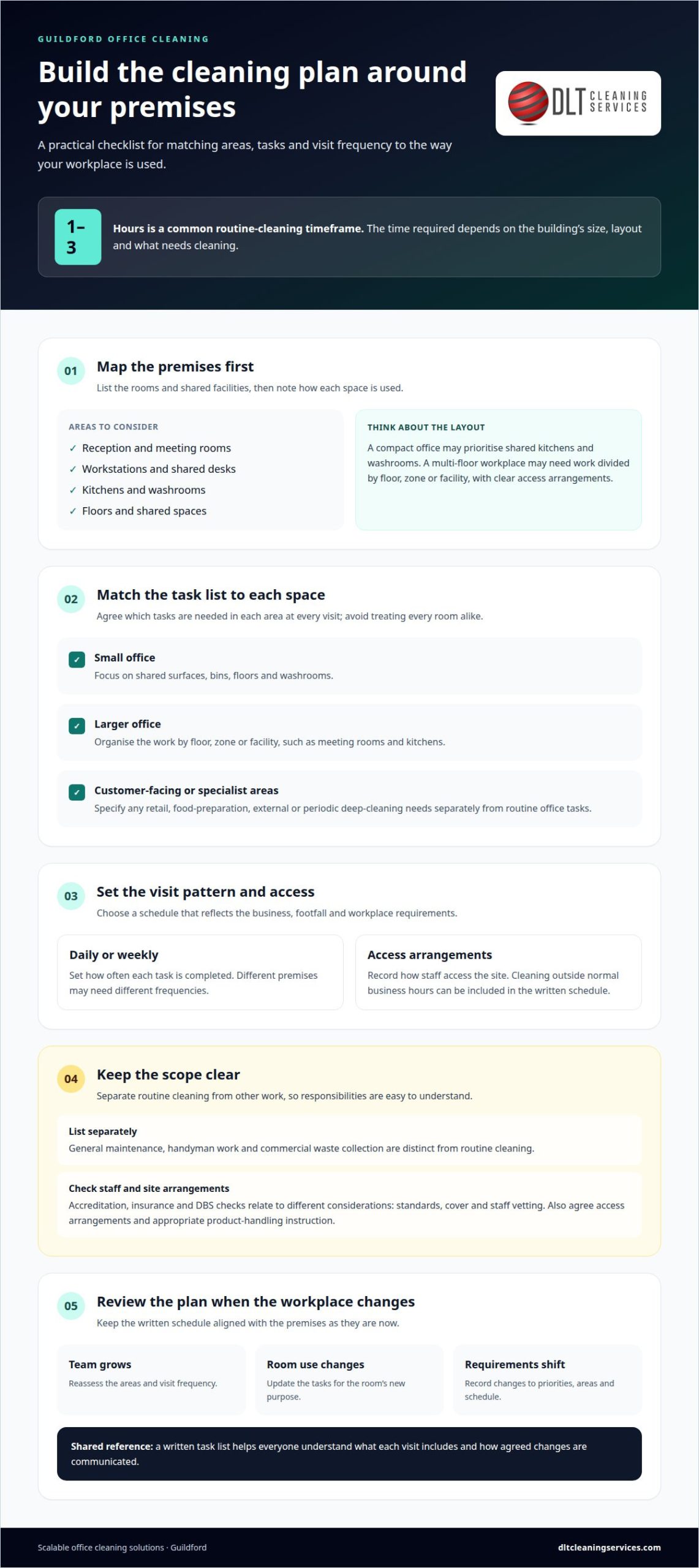
The right cleaning plan starts with the premises, not a standard task list. A compact Guildford office may prioritise desks, shared kitchens and washrooms, while a multi-floor workplace needs clear zones, access arrangements and agreed priorities. Routine commercial cleaning often takes 1-3 hours, depending on building size and layout. The time required depends on what needs cleaning and how the space is arranged.
Build the cleaning scope around the rooms and how they are used. List reception, meeting rooms, workstations, kitchens and washrooms, then decide which tasks each area needs at every visit. As your team grows or rooms change purpose, update the areas and frequency so the plan reflects the workplace as it is now. That is how scalable office cleaning solutions in Guildford can adapt without treating every room alike.
- Small office: focus on shared surfaces, bins, floors and washrooms.
- Larger office: divide work by floor, zone or facility, such as meeting rooms and kitchens.
- Changing premises: revise the task schedule when occupancy or room use changes.
Accreditation, insurance and DBS checks address different considerations: standards, cover and staff vetting. DLT Cleaning Services’ directly employed cleaners are DBS-checked, and its cleaning team is fully insured. Consider these details alongside the work required and staff access arrangements when choosing an office cleaning service.
For health and safety, cleaning procedures should explain product handling and staff instruction. According to UK Government, under regulation 12 employers must provide suitable and sufficient information, instruction and training to employees liable to be exposed to hazardous substances.
General maintenance, handyman work and commercial waste collection are separate from routine cleaning. List tasks such as replacing a fitting or arranging waste collection separately, so they are not mistaken for cleaning duties. When your office grows or its requirements change, revise the priorities, areas and visit frequency in the cleaning schedule. A clear record of changes helps keep the agreed work aligned with current needs.
Cleaning for offices and commercial premises in Guildford
Guildford premises have different cleaning priorities, from shared office facilities to customer-facing retail areas. Start by defining the scope and separating routine cleaning from specialist work.
Daily commercial cleaning contracts
A daily contract can specify the areas covered at each visit, such as entrances, washrooms, kitchens and staff spaces. Retail spaces may need daily cleaning, depending on the business and footfall. Restaurants and food-preparation areas also need daily cleaning and regular deep cleans. Commercial kitchen and extraction-system cleaning may require a separate, clearly defined scope.
Set out the tasks, visit frequency and access arrangements in writing. This makes it clear which work is routine upkeep and which is periodic deep cleaning.
External commercial cleaning
Window cleaning and external cleaning are distinct from internal office tasks. For a Guildford shop, consider whether the scope includes customer-facing glazing, entrance doors or the area immediately outside the premises. The building’s layout and access needs can affect how this work is organised.
List each external area separately in the cleaning schedule. This makes the scope easier to understand and shows how the work relates to the premises and its facilities.
Package inclusions and provider changes
Cleaning plans can cover washrooms, kitchens, shared desks, floors and periodic deep cleans. When assessing products and methods, review product information, surface suitability, dilution instructions and the cleaning method. These practical checks help facilities teams make informed choices without relying on broad environmental claims.
When changing cleaning providers, prepare a handover covering the agreed tasks, access arrangements, schedule and priority areas. Record differences between the existing and new scope, including kitchen or deep-cleaning duties, so responsibilities remain clear. A written task list also helps everyone communicate changes as the premises or working patterns evolve.
For Guildford workplaces, a clearly scoped office cleaning plan from DLT Cleaning Services Ltd can help align routine tasks with the premises and its facilities.
Professional cleaning teams can key-hold and clean Guildford offices outside normal business hours. This can be included in the written schedule alongside agreed tasks and access arrangements utilising scalable office cleaning solutions Guildford.
Bespoke office cleaning contracts
A tailored contract turns workplace priorities into a clear, repeatable cleaning plan. Define the premises, tasks, visit pattern and process for recording changes.
Tailored contract arrangements
Start with a site schedule that names each area and its required tasks. For example, a Guildford office might prioritise reception and meeting rooms before visitor days, while routine visits cover shared spaces and washrooms. Specify how often each task is completed, how access is arranged and how workplace changes are communicated.
Keep the scope practical. Separate regular duties from occasional requests, such as adding a room after your team expands. A written task list gives everyone a shared reference and helps prevent assumptions about what each visit includes.
Comparing quotes and service agreements
Compare quotes against the same written specification, not just the headline offer. Check that each covers the same rooms, tasks, visit frequency, cleaning materials and periodic work. For example, one proposal may include kitchen surfaces but list deep cleaning separately.
Read the contract and service-level agreement for responsibilities, reporting arrangements, review points and how agreed changes are recorded. Check what happens if a task is missed, how feedback is handled and who coordinates adjustments. These details make service commitments clearer than a general description of office cleaning.
To prepare a consistent brief, record the areas, priority tasks, preferred schedule and access requirements for your premises. Share the same information for each proposal. This gives you a like-for-like basis for comparing scopes, rather than relying on different assumptions about your workplace.
Before signing, map each requirement to a contract clause or task schedule. If you add a meeting room or change how shared facilities are used, document the revised scope and review the service agreement. Clear records help keep the arrangement aligned with your operational needs.
Daily and weekly office cleaning
Offices may need daily cleaning or visits several times a week, depending on the business and footfall. A Guildford workplace with frequent visitors may need regular attention to reception, meeting rooms and shared facilities. A quieter office can prioritise those areas on busier days while keeping essential tasks in its routine.
Set cleaning frequency according to how staff use each space. For example, a shared kitchen used throughout the day may need more frequent attention than a meeting room used occasionally. Washrooms, entrances and high-use surfaces can also shape the schedule. Specify the tasks for each visit instead of leaving daily and weekly duties open to interpretation.
- Daily tasks: prioritise busy shared areas, washrooms and kitchen surfaces.
- Several visits each week: schedule regular upkeep around office attendance and visitor patterns.
- Weekly tasks: allocate suitable periodic work, such as detailed attention to less-used areas.
Separate essential routine work from tasks that can be done less often. A daily visit might cover bins and shared surfaces, while a weekly task list includes detailed cleaning behind movable furniture. The right scope depends on the premises and how they are used, not an arbitrary checklist.
Review the schedule when working patterns change. If your Guildford team begins using meeting rooms more often, adjust their cleaning frequency and task priorities. If attendance is lower on certain days, align visits with the busier days. This keeps the routine connected to how your workplace operates.
A clear schedule also helps staff understand what each visit covers. Record the rooms, tasks and frequency, then review the plan when office use changes. For a cleaning schedule shaped around your working week, discuss your office’s cleaning requirements.
Cleaning frequency also depends on the type of premises. Warehouses may need cleaning weekly or monthly, depending on dust levels, while clinics and care settings need enhanced daily hygiene routines. These requirements differ from a standard office schedule, so task plans should reflect the work carried out and the condition of each space. For an office, review routines as use changes instead of assuming one schedule suits every workplace.
DLT Cleaning Services: Office Cleaning
DLT Cleaning Services Ltd provides office cleaning for Guildford workplaces, with schedules tailored to the premises and requirements. A tailored service is a practical next step if your team is growing, rooms are changing purpose or your current routine no longer fits daily operations.
Agree the areas, priorities and preferred visit pattern, then build a practical cleaning plan around them. Each contract includes dedicated on-site supervision to support consistent service and attention to health and safety. Hygiene Services can address workplace hygiene needs alongside office cleaning.
For office cleaning in Guildford, contact DLT Cleaning Services Ltd to discuss your requirements and request a free quote.
Set your workplace up for its next stage
A cleaning plan should keep pace with your business, not become another constraint as your team or premises change. If your current arrangement no longer reflects how your workplace operates, use the next conversation to clarify what matters most: the areas needing attention, the schedule that suits your working week and any hygiene requirements to include.
DLT Cleaning Services Ltd provides Office Cleaning and Hygiene Services for Guildford businesses. Outline your priorities to give the team a practical starting point for discussing scalable office cleaning solutions in Guildford and planning a service around your workplace.
Whether you’re reviewing an established routine or planning for growth, a considered next step can help you move forward with greater clarity. Contact DLT Cleaning Services Ltd to discuss your office cleaning requirements and take the next step towards a workplace plan that fits.
Frequently Asked Questions
Which office cleaning companies serve Guildford and surrounding areas?
DLT Cleaning Services Ltd serves Guildford and the local business community. Choose a provider whose agreed scope suits your premises and work pattern, then clarify access, task records and supervision before service begins. DLT’s cleaners are directly employed, DBS-checked and fully insured, important details when staff need access to your workplace and shared areas.
What scalable office cleaning solutions Guildford businesses need are available, from small offices to multi-site businesses?
Office cleaning and hygiene services can be planned for small independent businesses and larger organisations. For a multi-site operation, set a separate scope for each Guildford workplace and record local priorities such as washrooms, kitchens and shared desks. This gives each site a suitable plan and keeps service requirements clear across locations. DLT Cleaning Services Ltd supports office cleaning and hygiene needs throughout the area.
What cleaning schedules and staffing levels can Guildford office cleaners provide?
Guildford offices can arrange daily or weekly contract cleaning, with visit patterns shaped by premises use and the agreed task scope. Staffing needs depend on the rooms included, layout, workload and schedule. Define the work for each site rather than assuming a standard team size, then align staffing with the tasks and time required.