A larger office needs more than a longer cleaning rota. For office cleaning for 50+ employees in Guildford, the right frequency is usually daily or several times a week, depending on staff numbers, footfall and hygiene requirements. The work should also reflect how your office is used, with clear priorities for shared spaces, washrooms and touchpoints.
It’s understandable to want a consistent standard without disrupting the working day or leaving supplies and overlooked tasks to manage internally. This guide explains how dedicated cleaning staff, site-specific checklists, deep cleans, tailored contracts and janitorial supplies can fit a Guildford office. You’ll also see what to consider when setting cleaning frequency and dividing routine tasks from periodic work, so you can plan a service around your team and premises.
Key Takeaways
- Set cleaning frequency around how your team uses the office, including busy shared spaces and hygiene needs.
- Use a site-specific checklist to make routine tasks clear and identify where periodic deep cleaning is needed.
- Shape the contract around your premises, priorities and cleaning schedule rather than relying on a one-size-fits-all plan.
- Agree who supplies cleaning products and materials, and how janitorial stock will be managed.
Dedicated cleaning staff and office-specific specifications
Planning office cleaning for 50+ employees in Guildford starts with matching the rota to how the premises are used. Assign clear responsibility for each area and shift. A dedicated team can learn which meeting rooms need attention after busy sessions and which shared kitchens need regular checks. Most offices schedule cleaning daily or several times a week, depending on staff numbers, footfall and hygiene requirements. Match visits to actual use, not headcount alone.
To compare quotes fairly, give each provider the same details: office layout, staff numbers, busy areas, preferred visit times and priority tasks. Ask for a written scope, staffing plan and supervision arrangements. Guildford businesses can use these details to compare local commercial cleaning services on what is included, rather than relying on headline claims alone.
For office cleaning for 50+ employees in Guildford, divide the specification into zones. Reception may need tidy floors and clean touchpoints, whilst kitchens and washrooms need focused hygiene attention. List tasks for each visit, then separate out less frequent work. This gives the cleaning team a practical reference and helps managers identify missed or changing priorities.
Ask how staff are vetted and how access is managed, especially where offices contain confidential records or restricted rooms. If enhanced DBS clearance is a concern, discuss whether it suits the role and site access. Also ask for evidence of valid public liability insurance. Cleaners should receive COSHH training, covering safe handling of hazardous substances, alongside workplace safety training.
Check who supervises the work, how absences are covered and how concerns are recorded. A named supervisor and a clear reporting route make responsibilities easier to follow across visits. For office cleaning for 50+ employees in Guildford, confirm that the proposed team can follow site access instructions and the agreed schedule. These practical details help assess whether the staffing arrangement suits your workplace.
Site-specific checklists and deep cleans
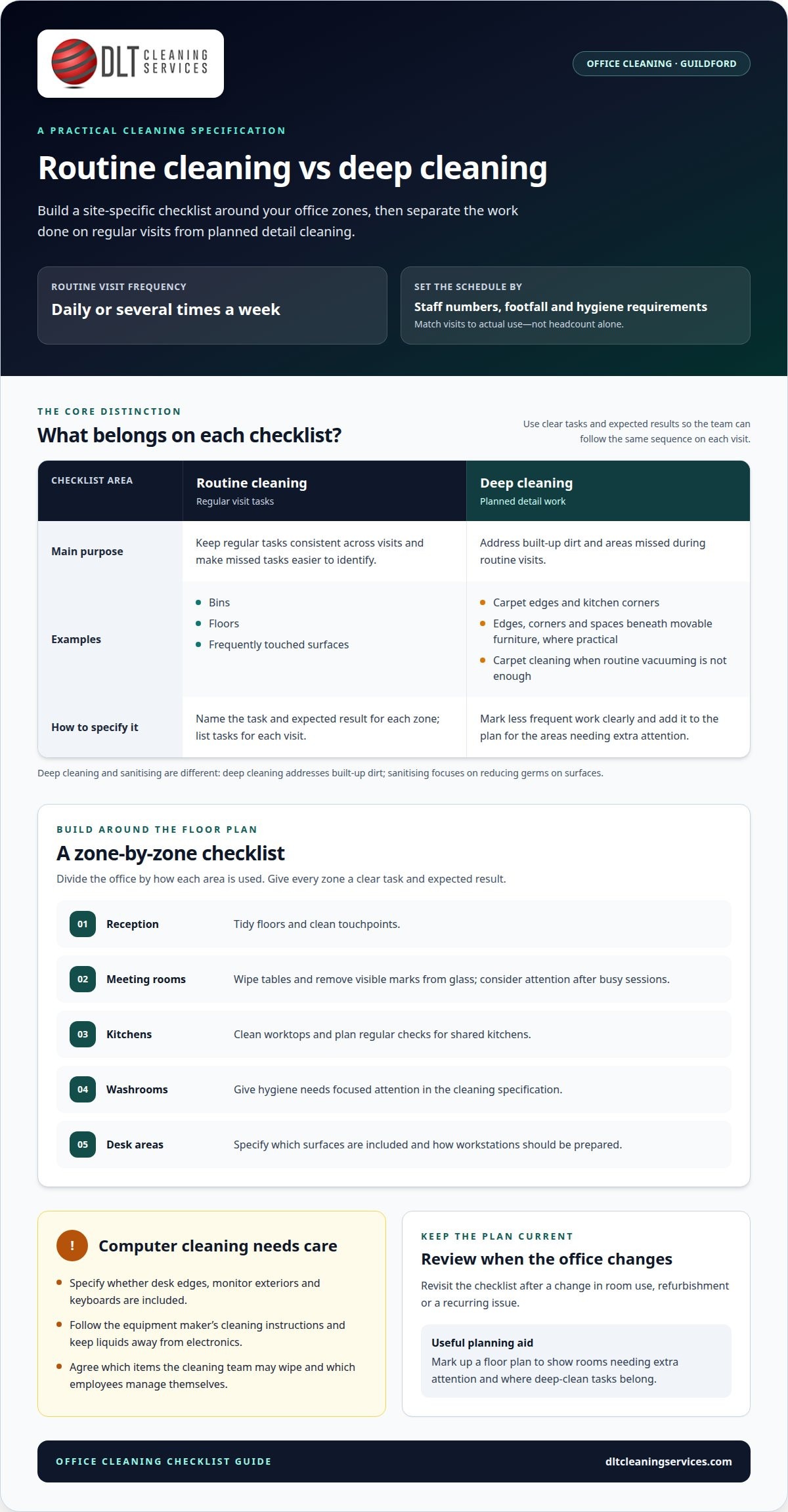
A useful checklist follows your office layout rather than a generic room list. Divide it into zones such as reception, meeting rooms, kitchens, washrooms and desk areas. For each zone, name the task and expected result: for example, wipe meeting-room tables, remove visible marks from glass and clean kitchen worktops. This helps the team follow the same sequence on each visit and makes missed tasks easier to identify.
Separate routine tasks from deeper work. A regular checklist might cover bins, floors and frequently touched surfaces, while a deep clean can address dirt and areas missed during routine visits. Add carpet cleaning when flooring needs more than routine vacuuming, and include edges, corners and spaces beneath movable furniture where practical. Set out access instructions for desks and meeting rooms so the work can be completed without disturbing papers or equipment.
Computer cleaning needs particular care. Specify which surfaces are included, such as desk edges, monitor exteriors and keyboards, and follow the equipment maker’s cleaning instructions. Keep liquids away from electronics and agree how staff should prepare workstations before a visit. A clear checklist can distinguish equipment the cleaning team may wipe from items employees manage themselves.
For deep cleaning and sanitisation, specify the surface, task and intended outcome. Deep cleaning addresses built-up dirt in areas such as carpet edges or kitchen corners, while sanitising focuses on reducing germs on surfaces. You can also include lower-waste supplies and suitable lower-impact products in the cleaning brief. In Guildford, a professional cleaning plan should reflect the building’s materials and the areas that need the most attention to support office cleaning for 50+ employees Guildford.
Review the checklist after a change in room use, refurbishment or recurring issue. A marked-up floor plan can show which rooms need extra attention and where deep-clean tasks belong. If you need a consistent schedule that combines routine work with planned detail cleaning, explore DLT Cleaning Services Ltd as a practical next step.
Bespoke cleaning contracts for large and small offices
A 50+ employee office may need a different contract from a small premises, but headcount alone shouldn’t set the scope. Map the working environment first: note the rooms in use, opening patterns, shared facilities and areas with heavier footfall. Then define the cleaning tasks, visit frequency and responsibilities for each zone. This gives commercial cleaning services a clear basis for a tailored agreement, rather than a standard schedule that misses your office’s particular demands.
Before signing a cleaning agreement, compare its scope, term and cancellation conditions. Read the written agreement for the initial term, renewal process, notice period and any cancellation charges. Check that the service schedule and process for changing tasks are clear too. These details show how the arrangement can adapt if your premises or working patterns change.
Mobilisation is the transition from an agreed scope to the first cleaning visit. Plan the steps in order: confirm site access, share building instructions, agree the cleaning schedule, identify priority areas and arrange supplies. For example, a business moving into a refurbished floor may include carpet care and kitchen cleaning in its initial plan. Set the start date once site requirements and responsibilities are organised.
Assign clear responsibility for consumables. List what your office uses, such as hand soap, paper towels and toilet tissue, then decide who monitors levels, orders replacements and stores stock. A usage log or regular stock check can flag shortages before washrooms run out. If your team supplies the products, document their storage location and restocking process. If cleaning staff manage supplies, make replenishment responsibilities clear in the service agreement.
Review the cleaning plan when the office layout or staffing pattern changes. A new meeting area, additional desks or a less-used floor can affect the tasks and visit frequency required. Record agreed changes in the service schedule, including any revised priorities or consumables arrangements. This keeps the plan aligned with your premises and gives everyone a practical reference for managing the service.
Cleaning tasks and janitorial supplies
For an office with 50 or more employees, daily cleaning works best when tasks reflect how each space is used. Reception may need clear floors and wiped surfaces, while a busy kitchen needs attention to worktops, sinks and tables. Washrooms require a separate hygiene routine, and shared meeting rooms benefit from a reset after use. Set out the expected tasks by area, so staff know what the cleaning visit covers and employees know which supplies they manage themselves.
Agree who provides cleaning products, vacuums and materials before the service begins. Most office cleaning companies bring their own cleaning products, vacuums and materials, although some offer discounts if the business supplies them. Either approach can work. Record the arrangement, storage location and process for reporting low stock, so cleaning equipment and consumables are ready when needed.
Janitorial supplies include items used to maintain shared facilities, such as hand soap, toilet tissue and paper towels. Keep these separate from cleaning materials such as cloths and floor-care products. A named staff member can check washroom dispensers and storage cupboards during routine premises checks, then report items that need replenishing. This distinction helps identify whether a shortage is due to low stock, an empty dispenser or supplies that have not been put away.
To organise supplies, list each item, where it is stored, who replenishes it and how staff report shortages. For example, a kitchen checklist can cover washing-up liquid and hand soap, while a washroom check records tissue and towel levels. Review the list when the office layout or team’s needs change. Clear ownership supports consistent hygiene and avoids uncertainty for both employees and cleaners.
Use these details to define the cleaning tasks and supply responsibilities for your workplace. Discuss office cleaning tasks and supplies as part of planning a service that fits your Guildford premises.
DLT Cleaning Services: Office Cleaning
DLT Cleaning Services Ltd provides office cleaning for businesses seeking a plan shaped around their premises and working routines. Its hygiene services can support workplace hygiene needs. For a Guildford office, this may suit teams looking for consistent cleaning responsibilities and a managed schedule.
Each contract includes dedicated on-site supervision to keep agreed tasks and site requirements in view. Share priorities such as busy shared areas, washroom hygiene or supply arrangements to guide a discussion about your workplace needs.
Contact DLT Cleaning Services Ltd to discuss office cleaning for your Guildford team and request a free quote.
Shape a cleaning plan around your next stage
A decision about office cleaning for 50+ employees in Guildford can help establish a stronger foundation for workplace operations. Treat the service as an ongoing part of your planning, not simply a task to arrange once. As teams, layouts and working patterns evolve, revisit your priorities and keep the cleaning plan aligned with them.
Before discussing a managed service, identify the outcome you want. You may be looking for clearer accountability, less time overseeing workplace cleaning or a consistent approach to shared spaces. A focused conversation can turn those priorities into a practical starting point for your office.
For a considered discussion about your workplace requirements, contact DLT Cleaning Services Ltd. A clear plan can help keep your office ready for the people who use it every day.
Frequently Asked Questions
What does office cleaning typically include for a workplace with 50 or more employees?
A cleaning plan can cover work areas, floors, shared facilities and frequently touched surfaces. The task list should reflect how staff use the building. For example, an office with regular visitors may prioritise a tidy reception, while a busy kitchen may need more attention to worktops and sinks. Carpet and window cleaning can also be included as periodic tasks.
How many cleaning hours or cleaners are needed for a 50+ person office?
The required cleaning hours and team size depend on the premises, not headcount alone. Scoping should account for cleanable floor area, the number of washrooms and kitchens, footfall, task depth and visit frequency. A single-floor office with compact shared facilities has different needs from a multi-floor site with separate meeting areas. A site walkthrough and task schedule help define the workload.
What cleaning frequency is recommended for offices with 50 or more employees?
Daily cleaning or several visits each week are possible approaches; the right frequency depends on staff numbers, footfall and hygiene requirements. A practical plan can prioritise frequently used areas at each visit, then schedule lower-use rooms according to need. Review the schedule if occupancy changes, for example, when more staff begin working on-site or a shared area becomes busier.
Do Guildford office cleaning providers offer out-of-hours or daily cleaning?
Flexible cleaning visits, including early mornings, evenings and weekends, can reduce disruption during working hours. Daily cleaning is another option, while some offices arrange visits several times a week. For a Guildford workplace, DLT Cleaning Services can tailor the timing and frequency to access arrangements, staff activity and the areas that need attention most often.