A smooth cleaning handover is built before the first shift. Onboarding a new office cleaning service starts with a site assessment and a clear cleaning specification, then moves through staffing and transfer arrangements, document and insurance checks, and preparation of equipment and supplies. Access, safety guidance and communication routes also need to be ready before work begins.
The behind-the-scenes work can feel less visible than the cleaning itself, but it helps prevent confusion over responsibilities, building access and service standards. This guide explains what to expect during the handover, which records and insurance details are part of the preparation, and how the cleaning team gets ready for your premises. It also covers practical ways to manage transition risks and review the schedule once cleaning starts, so you can see how a careful start supports a consistent service.
Key Takeaways
- Arrange suitable equipment, cleaning products and consumables before the service begins, and identify any site facilities the team will need.
- Prepare handover records and insurance checks early, including Employee Liability Information where it applies.
- Set out site-specific safety guidance, access arrangements and clear communication routes so the team knows how to work safely from the first shift.
- Reduce transition risks with a detailed site assessment, clear staffing arrangements and a practical review of the cleaning schedule after launch.
Equipment, cleaning products and consumables
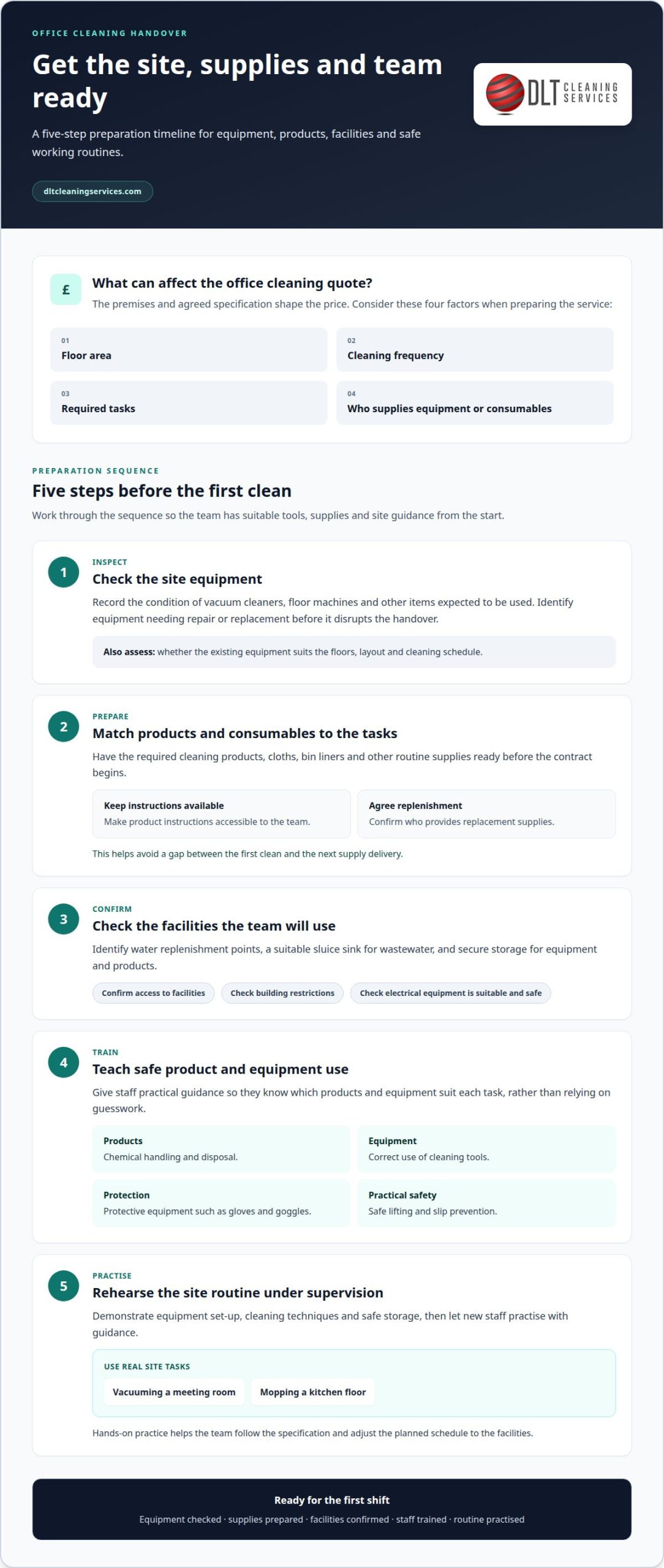
Office cleaning prices depend on the premises and the agreed specification. Floor area, cleaning frequency, required tasks and whether equipment or consumables are supplied can all affect the quote. DLT Cleaning Services provides a free quote for office cleaning in Guildford and surrounding areas.
- Inspect the site equipment before the start date. Record the condition of vacuum cleaners, floor machines and other items expected to be used. Identify anything requiring repair or replacement before it disrupts the transition. A site inspection also shows whether the existing equipment suits the floors, layout and cleaning schedule.
- Match products and consumables to the agreed tasks. Prepare the required cleaning products, cloths, bin liners and other routine supplies before the contract begins. Keep product instructions available to the team, and agree who provides replenishments. This avoids gaps between the first clean and the next supply delivery.
- Check the facilities used by the cleaning team. Identify water replenishment points, a suitable sluice sink for wastewater, and secure storage for equipment and products. Confirm access to these areas and any building restrictions. For electrical cleaning equipment, check that it is suitable and safe to use before work begins.
- Train staff in safe product and equipment use. Cover chemical handling and disposal, the correct use of cleaning tools, and protective equipment such as gloves and goggles. Include safe lifting and slip prevention in practical instruction. Staff should understand which products and equipment suit each task, rather than relying on guesswork.
- Practise the site routine under supervision. Demonstrate equipment setup, cleaning techniques and safe storage, then let new staff practise with guidance. Use real examples, such as vacuuming a meeting room or mopping a kitchen floor. This hands-on training helps the team follow the specification and adjust the planned schedule to the facilities.
Pre-commencement documentation and insurance checks
Record the site, tasks, areas, cleaning frequency, allocated hours, access arrangements, responsibilities and reporting route in the cleaning contract and service specification. This gives employees and managers a shared reference during onboarding.
- Complete the handover records. Where TUPE applies, Employee Liability Information supports the transfer of relevant employee details. According to The National Archives, failure to provide Employee Liability Information can trigger UK statutory tribunal penalties of at least £500 per affected worker. Keep handover documents organised alongside the agreed service specification.
- Review insurance documents before work starts. Check the policyholder’s name, cover period and activities described in the documents against the cleaning contract. Record where current certificates are held and who manages renewals. This makes it easier to identify a document that needs attention before the first shift.
- Check references during staff onboarding. A cleaning employer can contact referees to understand an employee’s relevant work experience, reliability and approach to workplace issues. Record completed checks securely, then use the information to guide site placement, induction and any practical support the employee needs.
- Review the first clean against the specification. A supervisor can inspect agreed areas, such as reception, kitchens and meeting rooms, then record missed tasks or access problems. Compare the result with the required standards and pass clear actions to the team. This turns early observations into practical adjustments.
- Set regular quality reviews and employee check-ins. Use completed task records, inspection findings and client feedback to spot recurring issues across the ongoing service. Managers can speak with employees about unclear instructions or site difficulties, then assign a named person to follow up. A clear review process keeps responsibilities visible.
For a more consistent handover, connect the written specification with office cleaning arrangements, including the agreed tasks and reporting process.
What happens behind the scenes?
Cleaners should follow the office’s written confidentiality and data-protection procedures. They should not read documents, photograph screens or share information seen while working; report exposed records through the agreed contact. The Control of Substances Hazardous to Health Regulations 2002 apply to chemical safety in UK workplaces, according to The National Archives.
Provide COSHH and workplace safety guidance
Give cleaners a site-specific induction before work begins. Explain relevant COSHH guidance, health and safety procedures, safeguarding arrangements and who to contact if an issue arises. Identify restricted areas, explain how to report hazards, and cover what to do if staff encounter an unsafe spill or unattended document.
- Walk through the site rules. Show cleaners the agreed entry and exit routes, emergency arrangements and any areas requiring extra care. Discuss practical examples, such as avoiding a wet-floor hazard near a busy entrance.
- Explain confidentiality in context. Point out how to handle unattended paperwork, visible computer screens and conversations overheard during cleaning. Make clear that information stays private and concerns go to the named site contact.
Set chemical handling and storage procedures
Show cleaners how to handle, use and store each cleaning product safely. Before practical tasks begin, review product instructions, required protective equipment and disposal procedures. Store products in their designated area, away from food and personal belongings, and explain which product is suitable for each task.
- Demonstrate safe handling. Practise measuring or applying products as directed, using gloves or goggles where required. Staff should never mix products or transfer them into unlabelled containers.
- Agree the response to an incident. Explain how to isolate a spill, prevent others entering the area and report it promptly. Identify the supervisor who records the detail and arranges the next action.
Cleaning contractor handover risks and benefits
A contractor change can unsettle routines, but a planned handover preserves useful building knowledge. Where TUPE applies, cleaners assigned to the premises transfer automatically to the incoming contractor on their existing employment terms. The outgoing contractor must provide Employee Liability Information at least 28 calendar days before the transfer date.
Assess handover risks and benefits
Arrange a detailed site assessment before the contract begins. Record access arrangements, priority areas, established routines and practical building requirements. Existing cleaners may know which rooms need attention first and how occupants use shared facilities. Capturing that knowledge can smooth the transition; missed instructions or staffing gaps can disrupt the service.
- Map site knowledge. Discuss room access, sensitive areas, alarm procedures and recurring issues with the relevant site contacts. Record what the incoming team needs to deliver the specification consistently.
- Plan for operational gaps. Confirm staffing arrangements and identify who handles absence, access changes, equipment problems and additional requests. Agreeing these routes before the start reduces uncertainty when an issue arises.
Check which TUPE rules apply
Establish whether the contract change involves a relevant transfer under TUPE. If it applies, assigned cleaners transfer to the incoming contractor with their existing employment terms. Employee Liability Information helps the incoming contractor understand the transferring employees’ details and prepare staffing arrangements.
- Coordinate transfer information. Arrange the Employee Liability Information handover between outgoing and incoming contractors. The required timing is at least 28 calendar days before the transfer date.
- Keep communication clear. Give employees and the client a clear contact for handover questions. Explain who manages day-to-day site matters, so employment arrangements and cleaning responsibilities are not confused.
Planning a contractor transition? Discuss your office cleaning handover and the site requirements.
DLT Cleaning Services: Office Cleaning
DLT Cleaning Services Ltd provides office cleaning and hygiene services for workplaces preparing for a new contract or reviewing current arrangements. Dedicated on-site supervision helps keep each contract organised and supports health and safety compliance.
Consider DLT Cleaning Services when your workplace needs structured cleaning, clear responsibilities and on-site supervision. Share your priorities, building requirements and expected tasks to shape an arrangement around how your office operates. You can also discuss hygiene services for your workplace.
For a planned handover or a fresh start, contact DLT Cleaning Services to discuss your office cleaning requirements and request a free quote.
Set the standard for the next stage
Onboarding a new office cleaning service is an opportunity to define a dependable working relationship from the outset. Agree how communication should work, how to raise concerns and what a well-maintained workplace means for your team. These priorities can guide conversations beyond the handover and keep the arrangement aligned with your business.
DLT Cleaning Services Ltd offers office cleaning and hygiene services for workplaces seeking a considered approach to their cleaning needs. If you’re planning a change or want to discuss a new arrangement, contact DLT Cleaning Services Ltd to talk through what your workplace needs. A clear starting conversation can help you move ahead with confidence and a shared sense of purpose.
Frequently Asked Questions
What should happen on launch day?
On launch day, the supervisor should be visible, reachable and ready to resolve practical issues. Test entry arrangements before work begins, then confirm the agreed areas and cleaning sequence on site. Make sure employees know whom to contact if a room is occupied or a task cannot be completed. A brief end-of-shift review can capture issues while details are fresh.
What steps should a UK business follow to onboard a new office cleaning service?
Begin with a site assessment, then agree the cleaning specification, schedule and responsibilities. Complete relevant handover documents, align staffing arrangements and prepare safe access to the premises. Before the first clean, make sure the team understands site rules and reporting routes. Once work starts, review results against the agreed requirements and record any adjustments, such as changing the order for busy shared spaces.
What checks should UK businesses carry out on a commercial cleaning company?
Review the company’s identity, staffing arrangements, supervision and relevant insurance documents. Check that its service plan covers your premises, cleaning tasks, access needs and safety procedures. References can offer useful context about reliability and communication. For a Guildford office, clarify how the team will report missed tasks, building issues or schedule changes, and who will receive those updates.
What UK health and safety, COSHH and risk assessment requirements apply to office cleaning?
The Control of Substances Hazardous to Health Regulations 2002 apply to chemical safety in UK workplaces. For an office cleaning arrangement, site-specific guidance should explain product handling, protective equipment, storage and what employees do if a spill occurs. A risk assessment should consider the actual premises and tasks, such as wet floors near a reception entrance or cleaning around occupied workstations.
What insurance should an office cleaning contractor have in the UK?
Check that the insurance documents identify the business and show cover relevant to the cleaning work and its employees. Public liability and employers’ liability are useful policy types to review against the contract and working arrangements. Keep the evidence with your service records, note the renewal date and clarify who will provide updated documents when the policy changes.
How should cleaning schedules, access, keys and alarm codes be arranged with a new cleaning provider?
Set out cleaning days, permitted hours, priority rooms and areas that must remain undisturbed. Agree how keys are issued, recorded, returned and stored, and share alarm instructions only with staff who need them. Test entry before the first shift. Name a contact for access changes and update permissions promptly when staffing or building arrangements change.