A calm, specific comment can turn a missed detail into a clear improvement. Share simple preferences or minor adjustments directly with the cleaning operative; take recurring concerns, broader complaints or changes to the service to the company’s manager. Knowing how to give feedback to your cleaning company means explaining what you noticed and what you’d like to happen next, without making the conversation personal.
It’s reasonable to expect cleaning to meet the agreed standards, and useful feedback helps make those expectations clear. This guide explains who to speak to, how to describe an issue constructively and how to agree practical next steps. Specific, balanced feedback can help a cleaning team spot patterns, reinforce what’s working and improve consistency. Whether you’re pleased with the result or want something changed, a respectful conversation gives both sides a clearer basis for maintaining a clean, well-managed workplace.
Key Takeaways
- Match the communication channel to the issue: mention simple preferences directly, and raise recurring or broader concerns with the company’s management.
- Describe what you observed, explain the change you’d like, and keep the conversation constructive and respectful.
- Make instructions easier to follow by writing down priorities and clarifying which tasks matter most.
- Thoughtful feedback can help a cleaning team spot patterns, reinforce good work and improve consistency over time.
1. Can I provide feedback directly to the cleaner or should all communication go through the company?
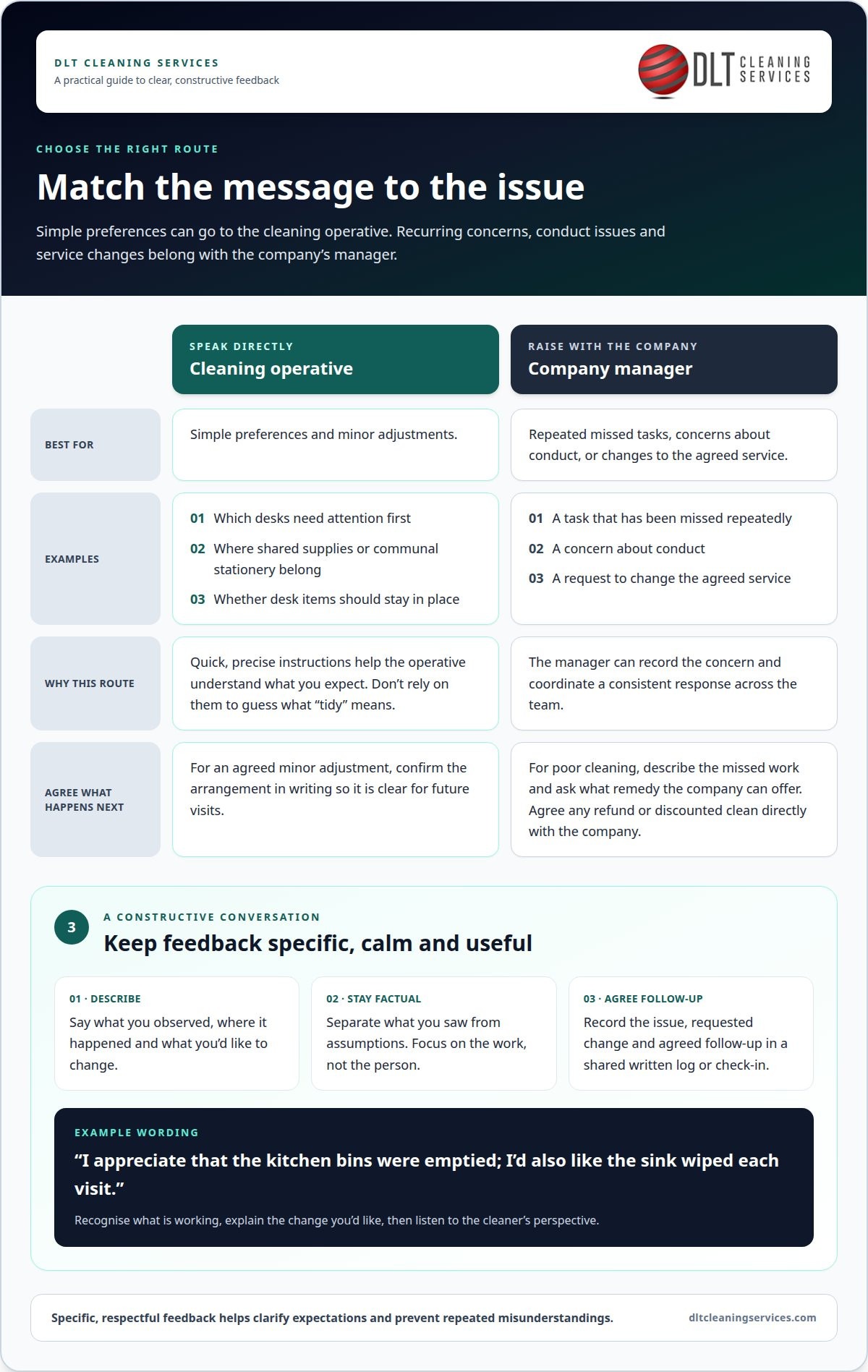
Choose a communication route that matches the issue. Tell the operative directly about a simple preference, such as which desks need attention first or where shared supplies belong. For repeated missed tasks, concerns about conduct or changes to the agreed service, speak to the company’s manager. The manager can record the concern and coordinate a consistent response across the team.
Keep the conversation professional and constructive. Describe what you observed, then suggest a practical change: “The meeting-room tables still had marks after the clean; could they be checked before you finish?” Avoid blame or assumptions about why it happened. If you speak face to face, use a calm tone, open posture and friendly expression. This helps everyone focus on the expectations, not on conflict.
For office-organisation preferences, give precise instructions. Explain, for example, whether desk items should stay in place or where communal stationery belongs. Don’t expect a cleaner to guess what “tidy” means. If you’re unsure whether an instruction is clear, ask the operative to repeat the agreed arrangement in their own words.
You can request a refund or discounted clean after poor cleaning. Describe the work that was missed and ask the company what remedy it can offer; agree any adjustment directly with the company.
To give feedback without damaging the relationship, use “I” statements, be specific and recognise what is working. For example: “I appreciate that the kitchen bins were emptied; I’d also like the sink wiped each visit.” Then listen to the cleaner’s perspective. A respectful exchange makes it easier to clarify expectations and agree a constructive next step.
Establish a regular two-way channel, such as a brief check-in with the manager or a shared written log. Record the issue, requested change and agreed follow-up. This gives the client and cleaning team a clear reference, helps prevent repeated misunderstandings and makes it easier to discuss whether the change has worked.
2. Giving feedback to ensure the cleaning meets expectations
Make feedback useful by linking each observation to an agreed cleaning standard. Note the room, surface and visit, then describe what you saw. For example: “After Tuesday’s clean, the glass meeting-room door still had fingerprints.” This gives the company a specific point to address, rather than a broad judgement such as “the office wasn’t clean”.
Before raising a concern, separate what you observed from what you assume. A dusty shelf is observable; saying the operative rushed is an assumption. Explain the improvement you expect, such as wiping the shelf on each scheduled visit, and invite the cleaner to share their perspective. Calm, direct wording keeps the discussion constructive and focused on the work.
Positive feedback matters too. Mention a specific result that helped, such as a consistently tidy reception area or restocked washroom supplies. This tells the team which details meet your expectations and should continue. If you use a scorecard, rate clear criteria such as cleanliness, time management and professionalism on a scale of 1 to 5, adding a brief example behind each score.
Knowing how to give feedback to your cleaning company starts with being timely, factual and specific. Raise a missed task soon after noticing it, while the location and visit are easy to identify. Speak directly to the cleaner about a straightforward adjustment, or send the company a concise message about a recurring concern. Include what happened, where it happened and the change you’d like.
There’s no single response time that suits every complaint. Ask the company to acknowledge your message and agree when it will provide an update, based on the issue and action needed. If the update doesn’t arrive, follow up with the original details.
A fair review is another way to give feedback to your cleaning company: describe your own experience, include strengths and shortcomings, and avoid unsupported claims. Specific comments about office cleaning standards help readers understand what was delivered and give the company feedback it can act on.
3. Checking that cleaners understand instructions
Clear instructions connect your expectations with the work that needs doing. If you’re away during the clean, leave a written priority list where the cleaning team can find it. Name each room and task, such as wiping kitchen counters, emptying meeting-room bins or cleaning the reception floor. Specific details distinguish essential tasks from preferences.
Keep each instruction direct and observable. Instead of writing “make the kitchen spotless”, say “wipe the counters and clean the sink”. If an area needs attention before others, mark it as a priority. This helps the cleaner organise the visit and shows which details matter most to your satisfaction.
Separate regular tasks from one-off requests. A note such as “please clean the glass partition today” makes a temporary adjustment clear, whilst “please include the partition in each scheduled clean” sets an ongoing expectation. For house cleaning or office routines, avoid contradictory directions, such as asking for a surface to be cleared whilst also asking for items to remain untouched.
For a minor adjustment, tell the cleaner directly when practical, then put the agreed change in writing. For example, explain that desk papers should stay in place, but the surrounding surface can be wiped. If you’re not present, leave the instruction with the priority list rather than relying on a passing message.
Check understanding by asking the cleaner or manager to confirm the main priorities and any changed task. If a note could mean two things, clarify it before the next clean: identify the exact area, the action needed and whether the request is temporary or ongoing. This gives both sides a shared reference and helps concerns move forward without confusion.
4. Impact of feedback on cleaning service quality
Feedback can improve a cleaning service when it turns an individual observation into useful information. For instance, repeated reports of missed kitchen surfaces can reveal that a task needs clearer instructions or closer review. A single complaint identifies one concern; a pattern helps managers decide whether to provide guidance, review training or adjust the cleaning routine.
That process works best when managers gather details before speaking with staff. They can establish which room was affected, what the client expected and whether anything disrupted the visit. This context supports a fair conversation instead of passing on an accusation without understanding what happened. Staff can then receive practical guidance, such as a reminder to inspect shared areas before leaving.
Balanced feedback also strengthens the working relationship. Positive comments about a consistently tidy reception area show which standards matter and recognise work that might otherwise go unnoticed. Managers can share that feedback with the team, while constructive concerns can guide improvements. Over time, client observations and manager checks can build a clearer picture of cleanliness, attention to detail, reliability and professionalism.
In the UK, the rights that apply depend on whether cleaning was booked as a consumer or under a business contract, as well as the agreed terms. If the service falls short, explain the specific issue to the provider and request an appropriate remedy. The contract and circumstances shape what happens next.
Feedback can also inform team development. If several clients identify the same gap, managers can review onboarding, training or task guidance before deciding how to respond. Feedback can show where additional support may help, but a single comment shouldn’t determine hiring decisions. The aim is a consistent standard, not blame.
For an office environment where clear standards and ongoing feedback matter, discuss your workplace cleaning requirements and the outcomes you want the service to support.
DLT Cleaning Services
DLT Cleaning Services Ltd provides office cleaning and hygiene services for workplaces in Guildford and across Surrey, Hampshire and Berkshire. If feedback points to recurring missed tasks, unclear priorities or a need to refine the cleaning routine, sharing those details helps clarify what your workplace expects.
Dedicated on-site supervision supports the management of each contract and gives feedback a practical route into service oversight. This helps keep expectations visible and gives the team context when addressing concerns about cleaning quality. Specific observations, such as which area needs more attention or which task should be prioritised, make follow-up discussions more useful.
If your workplace needs a considered approach to cleaning and hygiene, contact DLT Cleaning Services Ltd to discuss your requirements.
Make clear communication part of your cleaning partnership
Make feedback an ongoing part of how your workplace manages its cleaning arrangements. A brief review of priorities and recurring concerns can help keep expectations aligned as the space, staff or day-to-day needs change. Knowing how to give feedback to your cleaning company means treating the conversation as a practical way to shape the working relationship, not simply as a response to something going wrong.
When you’re ready to discuss what your workplace needs from its cleaning arrangements, contact DLT Cleaning Services. A conversation can help you explain your priorities and consider the right approach for your workplace, including office cleaning and hygiene services. Contact DLT Cleaning Services today to discuss your requirements and take a positive step towards a well-maintained working environment.
Frequently Asked Questions
Can I provide feedback directly to the cleaner or should all communication go through the company?
You can raise a straightforward, one-off adjustment with the cleaner, but direct communication shouldn’t replace the company’s process for formal concerns. If a request changes agreed duties or affects other visits, involve the manager so responsibilities stay clear. For example, ask the cleaner to move a meeting-room chair back after cleaning, but tell the manager if the same agreed task is repeatedly missed.
How should you raise a complaint with a cleaning company in the UK?
Raise the issue with the company’s manager in writing, using the contact route set out in your service agreement or existing correspondence. State that you’re making a complaint, explain the outcome you’re seeking and keep a copy of your message. If cleaning is covered by a business contract, refer to its agreed scope and complaint procedure; a private household arrangement may have different terms.
What details should you include when reporting a cleaning problem?
Include the visit date, affected room, task and what you observed. For example, note that a particular washroom dispenser was empty after the scheduled clean, rather than saying the whole visit was poor. Add a photograph if it clearly shows the issue, and mention any earlier report about the same problem so the company can understand whether it has happened before.
How can you give constructive feedback to your cleaner?
A practical approach to how to give feedback to your cleaning company is to describe the result, explain its impact and propose a clear adjustment. For example: “The entrance floor was still wet when staff arrived; could it be left dry before the area is reopened?” Keep your wording neutral, recognise relevant good work and allow the cleaner to explain. This makes the request easier to understand and act on.
What should you do if a cleaning company does not resolve your complaint?
If the company hasn’t resolved your complaint, follow up in writing and refer to your original message, the agreed remedy and any promised update. Ask for a clear response and check the contract’s complaint or dispute process. Keep relevant emails, visit records and photographs together. If you’re a consumer, you can seek independent guidance about available next steps; business customers should review their contract terms. If you’re considering how to give feedback to your cleaning company again, refer to the unresolved issue and the outcome you’re seeking.