The cheapest renewal quote is not always the best value: a low figure may exclude tasks that later cost extra. Sound office cleaning contract renewal advice starts with comparing like-for-like proposals, then assessing whether each service and price suit your workplace.
It’s reasonable to focus on renewal costs, but the inspection history can show whether the arrangement is working. Review complaint logs, service requests and corrective-action records from the past 12 months, alongside the cleaning schedule and any changes to your building or working patterns. Check that additions and extra tasks are clearly described and priced. This guide explains how to compare equivalent proposals, update the cleaning scope, align services with changing business needs and assess value beyond the quoted amount. It also considers how supervision, communication, consistency and hygiene services can shape a dependable contract, so your renewal reflects day-to-day performance as well as price.
Key Takeaways
- Compare proposals on the same cleaning tasks and look for clearly itemised additions, not just the headline price.
- Use service records from the past three to six months to spot where the cleaning scope needs to change.
- Set out task frequency, periodic work and any specialist areas so the schedule reflects how your workplace operates.
- Judge value through consistent cleaning, responsive issue handling and effective supervision, as well as cost.
1. Comparing contract pricing with equivalent proposals
Before comparing prices, use your current contract as a baseline and document the tasks, visit frequency, areas covered and any consumables required. Ask each provider to price the same scope. A quote for daily cleaning that includes kitchen and washroom tasks, for example, is not comparable with one that excludes them. Clear requirements make differences easier to spot and responsibilities easier to manage throughout the contract.
Review the cost breakdown, not just the total. Extra tasks and charges should be clear before work starts. Check whether the proposal includes periodic cleaning, supplies, equipment and management oversight. Record any exclusions so you can compare the full service, not just the headline price. A low figure can increase when individual items are added, so make sure the complete scope and its costs are documented.
A significantly cheaper commercial quote may reflect fewer staff hours, lower staff pay or less management oversight. These differences can affect the proposed schedule and the level of supervision. Ask how the quoted staffing and oversight support your expectations, including reliable access and security arrangements. A provider can also include a costed Real Living Wage option, allowing you to assess the proposed pay approach alongside the service and its cost.
Cleaning may be priced as a regular contract amount or broken down by visit and task, so compare the pricing basis as well as the total. Office cleaning quotes depend on the premises, scope, frequency and staffing. Ask for a clear, site-specific quote and check whether VAT is included. Resolve unclear exclusions before signing, and record agreed changes in the contract. This practical office cleaning contract renewal advice keeps comparisons focused on equivalent services, transparent charges and clear responsibilities.
2. Updating the cleaning scope for facility changes
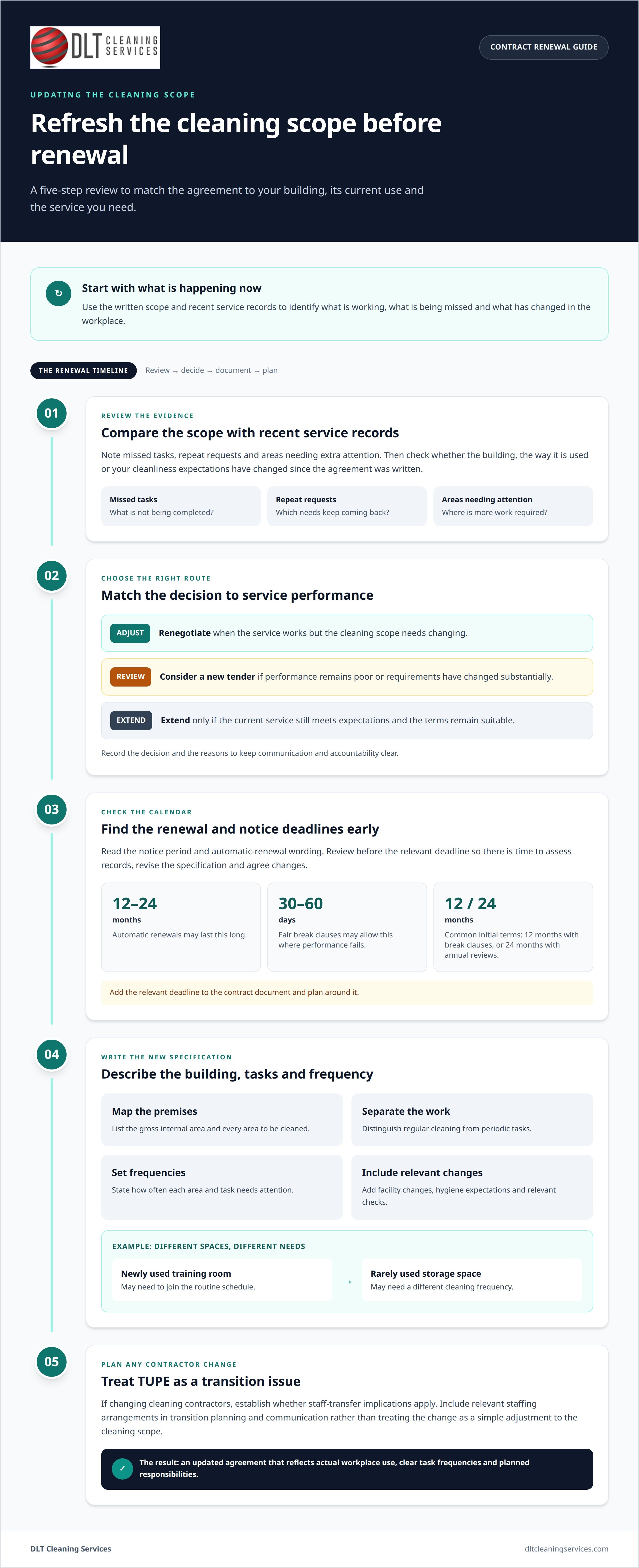
Base your review on the building’s current needs, not an old schedule. Compare the written scope with recent service records. Note missed tasks, repeat requests and areas needing extra attention. Then consider whether the building, its use or your cleanliness expectations have changed since the contract was written. A new meeting room, a different desk layout or a busier kitchen can change the work required.
Renegotiate when the service works but the scope needs adjusting. Consider a new tender if performance remains poor or your requirements have changed substantially. Extend the agreement only if the current service still meets expectations and the terms remain suitable. Record your decision and reasons to keep communication and accountability clear.
Read the contract’s notice period and automatic-renewal wording before deciding. UK cleaning contracts may include automatic renewals lasting 12 to 24 months; fair break clauses may allow 30 to 60 days where performance fails. Add the relevant deadline to the contract document and plan around it.
If you change cleaning contractors, treat TUPE as a transition issue. Establish whether staff-transfer implications apply, then include relevant staffing arrangements in transition planning and communication. This helps ensure the change is not treated as a simple adjustment to the cleaning scope.
Review the contract before its renewal or notice deadline, allowing time to assess records, revise the specification and agree changes. Contracts commonly use an initial term of 12 months with break clauses, or 24 months with annual reviews. Use the review point to decide whether the structure still fits.
For an updated specification, list the building’s gross internal area and every area to be cleaned. Separate regular cleaning from periodic tasks, and describe the required frequency for each. For example, a newly used training room may need to join the routine schedule, while rarely used storage space may need a different frequency. Include facility changes, hygiene expectations and relevant checks in the revised document, so cleaning services match actual use and planned investment in the premises.
3. Aligning services with changing business needs
A revised cleaning agreement should reflect how the workplace operates now, not an outdated routine. State how often each task must be done and which areas it covers. A growing team may use meeting rooms more often, while hybrid working may change demand across desks and kitchens. Clear frequencies make standards easier to measure and help both parties understand what completion means.
Set service-level measures around work that can be observed and recorded. These might include scheduled tasks completed, missed cleans logged, inspection results and the time taken to address reported issues. Define how checks are recorded, who reviews them and how corrective actions are documented. Avoid targets without a practical measurement method; a monthly review of completed schedules, for example, gives the agreement a clear evidence trail.
Describe periodic work and its frequency separately. State whether internal or high-level window cleaning is included rather than leaving it to assumption. Also specify whether the provider supplies consumables such as bin bags and hand soap. Recording who supplies each item prevents gaps in hygiene arrangements and clarifies responsibilities.
Some workplaces need particular attention. Identify specialist areas such as science laboratories or IT suites, describe the cleaning required and explain any access or security arrangements. A tender should also set out relevant safeguarding requirements, including keyholding responsibilities and any need for enhanced DBS checks. Where cleaning products are used, specify COSHH compliance within the health and safety requirements. These details help clarify operational responsibility and liability without treating every room as a standard office.
Link the schedule to business changes through regular performance and rate reviews. A new workspace, altered opening pattern or changed hygiene expectations may call for different task frequencies or coverage. Keep the updated scope, measurable checks and agreed responsibilities together in one document so future reviews assess delivery against the same standards.
4. Evaluating cleaning contracts beyond price
A low renewal figure means little if missed cleans, poor communication or inconsistent standards disrupt the workplace. Review complaint logs, service requests and corrective-action records from the past 12 months. Compare these with inspection results and completed schedules to see whether service quality is consistent, not just satisfactory on one visit. If the provider ignores attempts to resolve concerns, that is a practical reason to consider a change.
Risks to address include missed visits, unclear responsibilities, high staff turnover and slow responses to problems. Agree a complaint-resolution pathway within 24 hours, and record who handles reports and corrective action. Also consider whether cleaner absences are covered by trained replacement staff, and whether keyholding or site data creates security and privacy concerns. The Information Commissioner’s Office says UK GDPR applies when personal data is handled.
Assess the provider’s operational approach as well as the cleaning results. Check how staff supervision and contract management support communication, whether cleaners arrive as scheduled, and whether visits can be rescheduled when business needs change. Equipment should be maintained and in good working order. Ask how staff training supports consistent service.
During a commercial cleaning review, ask: “How do you record inspections, missed tasks and corrective actions?” “Who responds to feedback, and how are problems resolved?” “How do you maintain service when a cleaner is absent?” Look for answers tied to clear responsibilities and records, rather than broad assurances. Also discuss how staff support and supervision contribute to continuity.
Set clear measures that prompt action. Commercial cleaning contracts may use weekly washroom hygiene scores, with below 85 percent as an action threshold, and weekly high-touch checks, with below 90 percent as the threshold. A response taking over 6 hours can also trigger action. Use these measures to assess value alongside quality, consistency and communication. Discuss your office cleaning requirements when reviewing a contract.
DLT Cleaning Services: Office Cleaning
DLT Cleaning Services Ltd provides office cleaning and hygiene services for businesses reviewing or renewing their arrangements. If your current scope no longer reflects how your workplace is used, a review can help align the schedule with your operational needs.
DLT manages each contract with dedicated on-site supervision to support health and safety compliance. This provides a direct route for oversight and communication as agreed tasks are carried out. For businesses in Guildford, reviewing the scope can help ensure routine office cleaning and hygiene services reflect the premises’ requirements.
For a considered discussion about your office cleaning requirements, contact DLT Cleaning Services Ltd.
Make the next renewal part of business planning
A renewal can be more than a contract decision. Use it to make workplace care part of ongoing operational planning, so changes in how your team uses the premises can inform future cleaning arrangements. Assigning an internal owner to manage communication also helps keep agreed services relevant as the business develops.
Good office cleaning contract renewal advice should lead to a practical next step and an agreement that reflects your workplace. DLT Cleaning Services Ltd provides Office Cleaning and Hygiene Services for businesses reviewing their arrangements and maintaining their premises.
If you’re considering a new arrangement or want to discuss your requirements, contact DLT Cleaning Services Ltd. A considered conversation can help you move forward with greater clarity and confidence.
Frequently Asked Questions
What should an office cleaning contract renewal include in the UK?
Include the agreed service scope, contract dates, payment terms, notice arrangements and a process for approving changes. Name the people responsible for day-to-day communication and decisions about extra work. If a new office area opens, for example, the contract should explain how its cleaning requirements will be added and recorded. This gives both parties a clear reference when the premises or business needs change.
How can you benchmark office cleaning prices and contract costs in the UK?
Compare proposals against the same tasks, staffing assumptions, visit pattern and consumables, then examine what drives any difference. Separate regular work from occasional tasks such as deep cleans, and account for site access and operating hours. If a quote is discussed, establish whether it includes VAT; commercial and office cleaning services are subject to 20% VAT. This helps distinguish a genuine scope difference from a pricing difference.
Which cleaning service levels, frequencies and performance standards should a renewed contract specify?
Set service levels according to how each area is used, rather than applying one schedule everywhere. A busy reception may need more frequent attention than a lightly used meeting room. Define which tasks happen daily, weekly or periodically and how completion is recorded. A clear service record helps managers identify recurring gaps, such as missed kitchen checks, and agree a practical correction.
How should you assess a cleaning contractor’s performance before renewing?
Assess results across different areas and service periods instead of relying on a single inspection. Compare staff feedback with visible conditions, such as dust on desk edges or residue around kitchen sinks. Group recurring issues by location and task, then check whether corrections lasted. This helps distinguish an isolated oversight from a pattern that affects the working day and should inform the renewal decision.
What UK legal, insurance, health and safety requirements apply to office cleaning contracts?
Set out relevant health and safety arrangements, including COSHH requirements for cleaning substances, and clarify who manages site-specific procedures. The contract should also address insurance responsibilities and any evidence required for the work. If personal data is handled on site, address UK GDPR requirements; the Information Commissioner’s Office is the UK’s data protection authority. Clear responsibilities help prevent gaps in safety, privacy or operational communication.