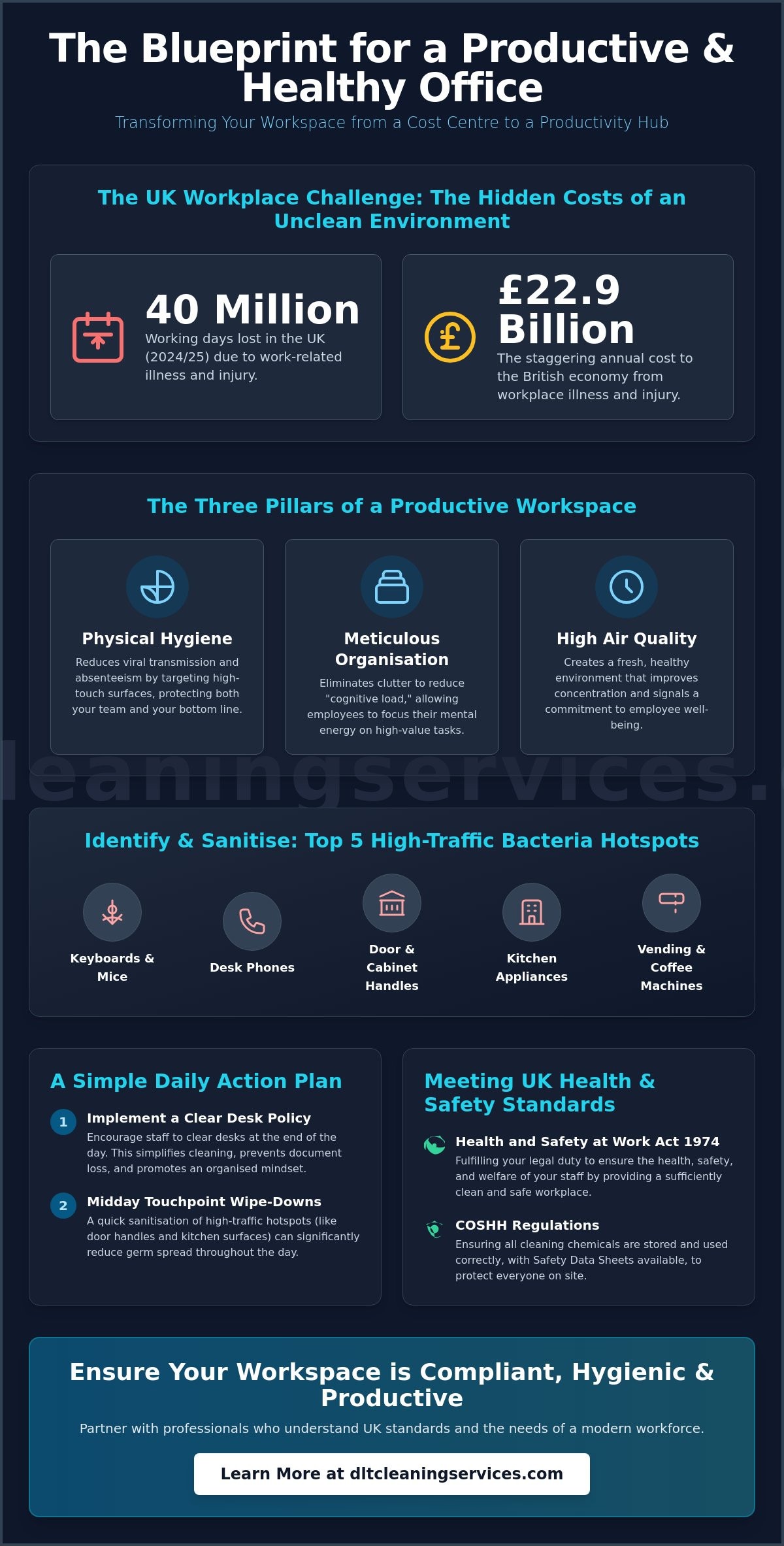
Did you know that over 40 million working days were lost in the UK during the 2024/2025 period due to work-related illness and injury? For many managers, the challenge isn’t just about appearances; it’s about the staggering £22.9 billion cost to the economy and the direct impact on your team’s productivity. You likely feel the pressure to maintain clean office environment standards whilst navigating complex HSE updates and the rising expectations of a modern workforce. It’s a lot to handle alongside your daily operations.
We understand that your priority is a healthy, focused team. In this guide, you’ll discover practical steps and professional strategies to sustain a hygienic, productive, and health-and-safety-compliant workplace. If you’re wondering how to best maintain clean office environment protocols without disrupting your workflow, this article provides the answers. We’ll explore how to reduce absenteeism through targeted disinfection, organise cluttered spaces to boost focus, and ensure your site meets the latest 2026 UK standards. This roadmap will help you maintain clean office environment excellence that impresses visiting clients and keeps your staff well.
Key Takeaways
- Understand how the combination of hygiene, organisation, and air quality directly impacts employee focus and reduces the psychological burden of workplace clutter.
- Learn the essential requirements of the Health and Safety at Work Act 1974 and COSHH to ensure your workspace meets current UK hygiene standards.
- Identify the top five high-traffic bacteria hotspots, such as keyboards and microwave handles, to effectively maintain a clean office environment.
- Discover how to implement a simple daily routine, including a Clear Desk Policy and midday touchpoint wipe-downs, to prevent cross-contamination.
- Recognise the importance of on-site supervision and local expertise in sustaining a professional atmosphere that impresses clients and supports staff well-being.
The Importance of Maintaining a Clean Office Environment for Productivity
To maintain a clean office environment effectively, we must look beyond the surface level of tidy desks and empty bins. A truly productive space is a managed ecosystem that balances physical hygiene, meticulous organisation, and high indoor air quality. When these three elements align, the workplace becomes a sanctuary for concentration rather than a source of distraction. It’s about creating a setting where employees feel safe and focused from the moment they clock in.
Clutter has a profound psychological impact that many managers overlook. Every misplaced file or dusty monitor adds to a person’s “cognitive load.” This mental strain occurs because our brains are constantly processing the visual chaos around us, which saps energy that should be spent on high-level tasks. By removing these physical hurdles, you’re essentially clearing the path for your team to work with greater clarity and speed. A streamlined desk leads to a streamlined mind. Achieving this level of organisation often requires more than just tidying; it involves smart storage. In high-end office environments or professional home setups, incorporating bespoke fitted wardrobes london can ensure that everything from coats to office equipment has a dedicated, out-of-sight place, further reducing the cognitive load of clutter.
First impressions are lasting, especially for your visiting clients. When a partner walks into a crisp, fresh-smelling office, they immediately associate that order with your brand’s reliability. It signals that you take pride in every aspect of your business, from your internal operations to the professional standards of your commercial cleaning services. Whilst it might seem like a secondary concern, the decision to maintain a clean office environment is actually a strategic investment in your reputation.
Reducing Absenteeism Through Better Hygiene
Shared spaces like kitchens and breakrooms are often the epicentre of viral transmission. Germs spread rapidly amongst staff when high-touch surfaces aren’t sanitised properly. With over 40 million working days lost in the UK during 2024/2025 due to work-related illness, the financial burden is significant. Small businesses in the South East feel this impact acutely when key team members are sidelined. Implementing a strategy of “preventative cleaning” helps mitigate seasonal flu outbreaks before they take hold, protecting both your bottom line and your people.
Boosting Employee Morale and Retention
A well-maintained office is a tangible sign that a company values its employees. It’s difficult for staff to feel motivated or take pride in their work if they’re sitting in a neglected environment. Consistent hygiene standards foster a “culture of care” that encourages workplace pride and mutual respect. Some employers even extend this philosophy to personal wellness, providing staff with access to premium oral care from GLI GLI to enhance their professional confidence. When people feel looked after, they’re more likely to stay with the business long-term, reducing costs associated with high staff turnover.
Understanding UK Health and Safety Standards for Workplace Hygiene
Compliance is the backbone of any successful facility management strategy. Under the Health and Safety at Work Act 1974, employers carry a legal obligation to ensure the health, safety, and welfare of their staff, which includes providing a workplace that is kept sufficiently clean. To maintain clean office environment standards that stand up to scrutiny, you must look beyond aesthetic appeal and focus on statutory requirements. This means ensuring that floors, walls, and ceilings are kept in a state of good repair and that any waste is managed promptly to avoid attracting pests or creating fire hazards.
The Control of Substances Hazardous to Health (COSHH) regulations also play a vital role in your cleaning regime. Even common office cleaning chemicals can pose risks if they aren’t stored or used correctly. You must ensure that every product on your site has a corresponding Safety Data Sheet and that your team, or your contractors, understand the risks associated with them. If you’re looking for a partner who understands these complexities, the team at DLT Cleaning Services Ltd is on hand to ensure your site remains both safe and compliant through professional office cleaning.
Beyond hygiene, the law requires you to prevent physical accidents like slips, trips, and falls. These are frequently caused by poor cable management or neglected floor care. A spilled coffee that isn’t mopped up immediately or a loose data cable across a walkway represents a breach of safety standards. Employers carry a legal duty of care to provide sufficient sanitary facilities and ensure all workplace waste is managed and removed according to hygiene regulations.
Maintaining the integrity of the floor itself is just as vital; if you need to replace worn carpets or vinyl to meet safety standards, you can learn more about GW Flooring for expert supply and installation services.
The Role of Risk Assessments in Cleaning
A robust risk assessment is your first line of defence against non-compliance. You should regularly identify potential hazards, such as overflowing bins in the breakroom or dust buildup on high shelves, which can affect air quality. These audits allow you to move from general tidiness to a state of regulatory compliance. It’s a methodical process that proves you’re taking proactive steps to protect your staff, rather than just reacting to problems as they arise.
Ensuring Safe Use of Janitorial Supplies
Professional-grade supplies are essential for high-traffic environments because they are formulated to handle heavier usage than domestic products. To prevent cross-contamination, you should implement a colour-coded system; for example, using red cloths for toilets and blue for general desk surfaces. Storing these chemicals in a secure, organised cupboard prevents accidents and ensures that your janitorial team can find exactly what they need whilst maintaining a dedicated workspace for their equipment.
Identifying and Sanitising High-Traffic Bacteria Hotspots
To maintain a clean office environment, managers must look beyond visible dust and target the invisible microbes that thrive in shared spaces. Germs don’t stay put; they migrate across the office via “hotspots” that dozens of people touch every day. Identifying these areas is the first step in breaking the chain of infection. The five most contaminated sites in a typical office include keyboards, microwave handles, printer buttons, kettle handles, and fridge doors. These surfaces often harbour significantly higher bacteria levels than a toilet seat because they are frequently touched but rarely sanitised with the same rigour.
The science of cross-contamination is particularly evident in shared office kitchens. When a colleague touches a shared kettle handle after coughing into their hand, they leave behind a microbial footprint for the next person. Shared sponges and dishcloths can also spread pathogens across “clean” plates and surfaces if they aren’t replaced regularly. Beyond these hard surfaces, soft furnishings like carpets and upholstery act as filters, trapping skin cells, food particles, and allergens within their fibres. Without commercial deep cleaning in Hampshire and across the South East, these areas become reservoirs for bacteria that can affect indoor air quality.
Bathroom facilities require a specialised approach that goes beyond a quick wipe-down. Limescale and organic matter build up in areas that are difficult to reach, providing a breeding ground for mould and bacteria. Regular deep cleans are essential to ensure these spaces remain hygienic and pleasant for staff. This methodical approach helps you maintain a clean office environment whilst protecting the health of every team member.
The “Desk Hygiene” Challenge
Personal workspaces are often the primary breeding ground for office germs. The trend of “al-desko” dining introduces food crumbs into keyboards and crevices, which can attract pests and encourage bacterial growth. We recommend using isopropanol-based wipes to sanitise electronics like mice and phones. This effectively kills pathogens without damaging sensitive components, ensuring that personal equipment stays as clean as the rest of the facility.
Communal Areas and Shared Touchpoints
Communal areas like reception desks and meeting rooms see a high turnover of people, making them high-risk zones for transmission. Light switches and door handles should be sanitised multiple times daily to manage the constant flow of touchpoints. By focusing on these specific areas, you create a safer environment for both your staff and any visiting clients who move through these shared spaces.
A Step-by-Step Daily Routine for a Tidy and Organised Workspace
Consistency is the secret to a high-performing workplace. To maintain clean office environment standards, you must move away from sporadic cleaning and embrace a structured, daily routine. This begins the moment your team arrives. A “Clear Desk Policy” review ensures that all surfaces are free from unnecessary paperwork and personal items. This simple habit doesn’t just reduce visual clutter; it makes it physically possible for your cleaning team to sanitise every inch of the workspace without moving sensitive documents or equipment.
As the morning progresses, shared facilities like kitchens and bathrooms experience peak traffic. We recommend a midday “Touchpoint Wipe-down” to address these areas. Focusing on fridge handles, kettle switches, and taps prevents the cross-contamination discussed in previous sections. It’s also the ideal time to check that cables and peripheral wires under desks are tucked away. Organising these leads to less dust accumulation and removes the tripping hazards that can lead to workplace accidents.
The day should conclude with a methodical approach to waste. Emptying bins every evening prevents unpleasant odours from lingering overnight. Implementing a sustainable waste management system involves placing clearly labelled recycling points in accessible locations to encourage correct disposal habits amongst staff. If you’re finding it difficult to keep up with these daily demands, DLT Cleaning Services Ltd provides bespoke hygiene services that take the weight off your shoulders, ensuring every task is completed to a professional standard.
Encouraging an “Organise as You Go” Culture
Hygiene shouldn’t feel like a chore for your employees. You can foster a “culture of care” by providing accessible sanitising wipes and hand centres in high-use zones. When staff have the tools they need within reach, they’re more likely to wipe down a shared meeting table after use. Management plays a vital role here by leading by example. When directors take ownership of communal space tidiness, it sets a standard that the rest of the team will naturally follow.
Weekly vs. Monthly Maintenance Tasks
Whilst daily tasks keep the office operational, some areas require less frequent but equally dedicated attention. Weekly schedules should include dusting window sills, monitor tops, and high shelves that aren’t part of the daily sweep. On a monthly basis, we suggest scheduling periodic commercial deep cleaning in Hampshire for carpets and hard floors to remove deep-seated grime. Monitoring your janitorial supply levels is also crucial; ensuring you never run out of essential soaps or sanitisers means your cleaning regime never grinds to a halt.
Implementing a Managed Cleaning Strategy in Surrey and Hampshire
Many managers find that standard cleaning contracts often fall short because they lack one critical component: consistent oversight. To maintain a clean office environment that truly supports your team, you need a strategy that moves beyond a simple checklist of tasks. On-site supervision is the missing link in many commercial arrangements. Without a dedicated lead to verify that every desk is sanitised and every high-traffic touchpoint is addressed, standards can quickly slip. A managed solution ensures that the quality of work remains as high on day 100 as it was on day one. Understanding why supervised office cleaning delivers consistently higher standards can help you make a more informed decision when evaluating your current contract.
Partnering with a local Surrey-based provider offers distinct advantages for businesses in the South East. Whether your office is located in the heart of Guildford or an industrial estate in Hampshire, having a responsive partner nearby means that any issues are resolved with a personal touch. You aren’t just a number in a national database; you’re a local partner. This proximity allows for a level of accountability and “hands-on” care that larger, distant corporations simply cannot replicate. It’s the difference between a “vanilla” service that only scratches the surface and a comprehensive managed hygiene solution that prioritises your staff’s well-being.
When selecting a partner to help you maintain a clean office environment, consider this checklist to ensure they understand the specific needs of South East businesses:
- Dedicated Supervision: Do they provide on-site leads to monitor nightly performance?
- Local Knowledge: Are they deeply rooted in Surrey and Hampshire for rapid response?
- Regulatory Expertise: Do they demonstrate a clear understanding of the latest HSE and COSHH standards?
- Contract Flexibility: Can they scale their services as your business grows or changes?
The Value of Dedicated On-Site Supervision
Supervision is the only way to guarantee that Health and Safety standards are met every single night. A supervisor acts as a proactive problem-solver, identifying potential issues like low soap levels or frayed carpet edges before they become hazards. DLT Cleaning Services prioritises this hands-on management for every contract. We believe that consistent quality control is the foundation of a safe workplace, ensuring that our team always delivers the high standards your business deserves.
Tailoring Services to Your Business Size
Every office has unique requirements based on its footprint and footfall. We specialise in customising cleaning schedules, whether you’re a small independent firm in Guildford needing a light weekly touch or a large national chain in Hampshire requiring daily deep cleans. A flexible contract is essential; it should be a living document that grows alongside your operations. Discover how we maintain clean office environments with 25 years of local expertise and a commitment to service excellence.
Elevate Your Workplace Standards for 2026
Creating a workspace that fosters health and focus is a continuous commitment rather than a one-off task. By identifying high-traffic bacteria hotspots and implementing a structured daily routine, you protect your team from the disruption of seasonal illnesses. The right strategy combines employee engagement with professional oversight to maintain a clean office environment that meets every UK regulatory standard. This proactive approach ensures your facility remains a safe, professional asset that reflects your brand’s values.
At DLT Cleaning Services, we’ve been family-run since 1999, providing the stability and dedication your business needs. We are specialists in Surrey, Hampshire, and Berkshire office maintenance, offering dedicated on-site supervision for every contract to ensure nothing is overlooked. Our hands-on approach allows you to focus on your core operations whilst we take full ownership of your facility’s hygiene. We’re on hand to ensure your environment is managed with the care it deserves.
Ready to transform your workplace? Request a tailored office cleaning quote for your Surrey business today. Let’s build a safer, more productive environment together.
Frequently Asked Questions
What is the most effective way to maintain a clean office environment daily?
The most effective strategy is to combine a Clear Desk Policy with a midday touchpoint wipe-down. This approach ensures that cleaning teams have full access to surfaces whilst preventing the rapid buildup of bacteria in high-traffic areas like shared kitchens. It creates a consistent, manageable routine that supports workplace hygiene without causing disruption to your team’s daily operations.
How often should a professional deep clean be carried out in a Surrey office?
Most offices in Surrey benefit from a professional deep clean every three to six months. This frequency ensures that carpets, upholstery, and high-level surfaces are thoroughly sanitised to remove deep-seated grime and allergens. High-traffic sites or those with communal dining areas may require more frequent attention to maintain a clean office environment that meets professional standards.
Are there specific UK laws governing office cleanliness and hygiene?
Yes, the Health and Safety at Work Act 1974 and the Control of Substances Hazardous to Health (COSHH) regulations are the primary legal frameworks. These laws mandate that employers provide a safe and healthy working environment, which includes adequate cleanliness and the safe management of cleaning chemicals. Compliance is essential to avoid legal repercussions and protect employee welfare.
What are the most common bacteria hotspots in a modern office?
Shared touchpoints such as printer buttons, microwave handles, kettle switches, and fridge doors are the most common hotspots. Personal equipment, particularly keyboards and mice, also harbour high levels of bacteria if they aren’t sanitised regularly. Identifying these specific areas allows for a more targeted and effective disinfection strategy that breaks the chain of cross-contamination amongst staff.
Can a clean office environment actually reduce employee sick days?
A hygienic workspace significantly reduces absenteeism by limiting the spread of seasonal viruses and bacteria. Since over 40 million working days were lost in the UK during 2024/2025 due to work-related ill health, investing in high-quality hygiene services is a practical way to protect your team. A sanitised environment leads to a healthier, more resilient workforce and lower operational costs.
How do I choose between a local cleaning company and a national franchise?
Local companies typically offer greater accountability and a more personalised service than large national franchises. A local partner in Surrey or Hampshire can provide rapid, responsive support and direct access to management. This “hands-on” approach ensures that your specific site requirements are understood and that any issues are resolved quickly by a team that takes personal pride in their work.
What janitorial supplies should we always keep in stock?
You should always maintain a stock of colour-coded microfibre cloths, isopropanol-based wipes for electronics, and high-quality hand sanitisers. It’s also vital to have a consistent supply of professional-grade disinfectants that meet EN14476 standards. Keeping these essential items on hand ensures that your daily cleaning regime remains effective and that hygiene standards never slip due to a lack of resources.
What is on-site supervision in office cleaning and why does it matter?
On-site supervision involves a dedicated lead who monitors the cleaning team’s performance during every shift. This matters because it provides a vital layer of quality control and proactive problem-solving. A supervisor ensures that every task is completed to the required standard and that Health and Safety protocols are strictly followed, giving you peace of mind that your environment is always well-managed. For a deeper understanding of how this works in practice, explore the benefits of supervised office cleaning and on-site management for your workspace.
3 thoughts on “How to Maintain a Clean Office Environment in 2026: A Manager’s Guide”