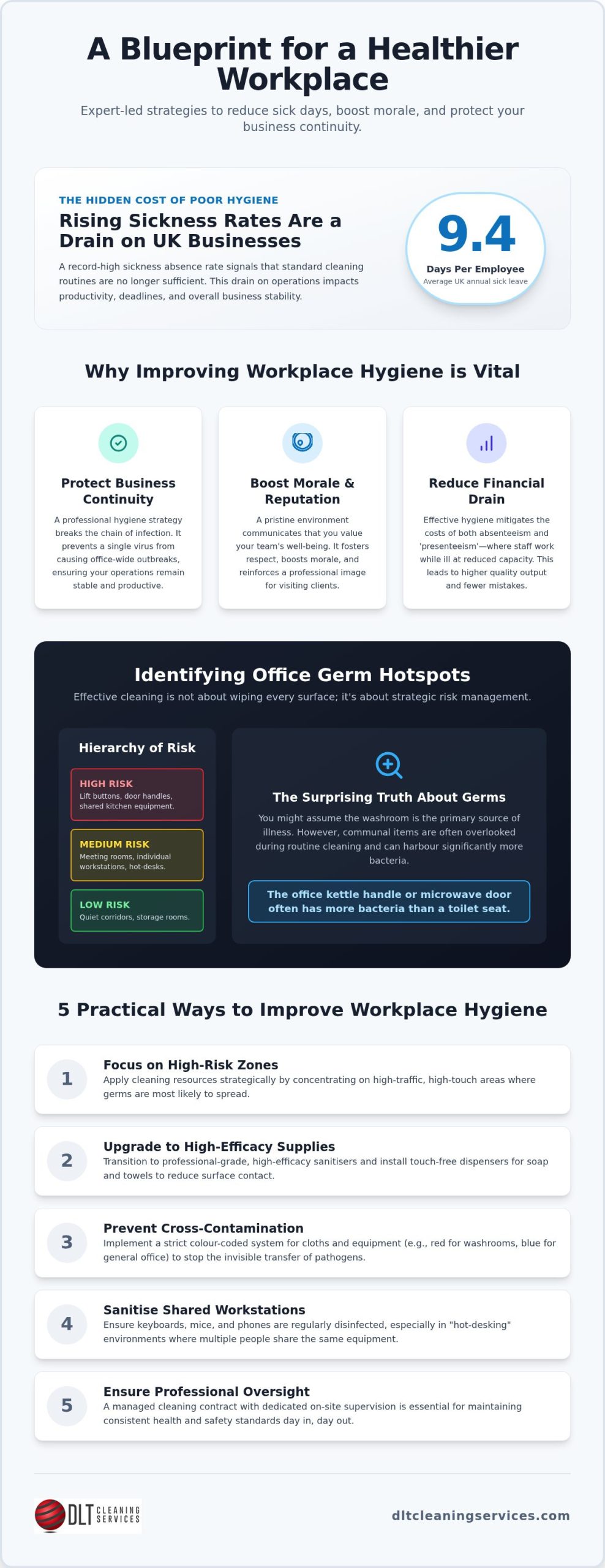
Did you know that the average sickness absence rate in the UK has recently climbed to 9.4 days per employee every year? This record high represents a significant drain on your operations and a clear signal that standard cleaning routines might not be enough. If you’re struggling with inconsistent standards or frequent complaints about communal areas, it’s time to rethink how you improve workplace hygiene. A clean office isn’t just about appearances; it’s a foundational element of your team’s health and your business’s stability.
We understand the frustration of paying for a service that leaves you managing the details yourself. You deserve a workspace that impresses clients and keeps your staff at their desks. This guide provides practical, expert-led strategies to help you reduce sick days and create a pristine environment through a structured hygiene action plan. We’ll look at everything from effective janitorial management to the importance of dedicated on-site supervision, giving you the tools to foster a more productive and morale-boosting workplace.
Key Takeaways
- Understand the critical link between environmental cleanliness and biological safety to protect your business continuity and staff well-being.
- Identify high-risk germ hotspots within your office, such as shared kitchen equipment, that often harbour more bacteria than traditional “dirty” zones.
- Discover five actionable strategies to improve workplace hygiene, including the transition to high-efficacy sanitisers and touch-free dispensers.
- Learn why professionally managed hygiene contracts with dedicated on-site supervision are essential for maintaining consistent health and safety standards.
- Recognise how a hands-on, personalised approach can transform your office into a pristine environment that boosts staff morale and impresses visiting clients.
Why Improving Workplace Hygiene is Vital for Business Continuity
Workplace hygiene is more than just a tidy desk. It’s a sophisticated blend of environmental cleanliness and biological safety. To understand the foundation of a healthy office, we should consider the principles of Occupational hygiene, which involves the recognition and control of environmental stressors. In a modern office, these hazards are often microscopic. Open-plan layouts, whilst excellent for collaboration, frequently act as a “petri dish” for pathogens. Without a strategy to improve workplace hygiene, a single virus can move through communal surfaces or shared facilities in just a few hours.
The financial impact of absenteeism is a heavy burden for firms across the South East, from the tech hubs of Berkshire to the professional services in Surrey. When staff are unwell, productivity stalls and deadlines shift. However, an even quieter drain on resources is “presenteeism.” This occurs when employees attend work whilst feeling under the weather. They’re physically present, but their mental focus is fractured, leading to mistakes and reduced output. A pristine environment helps clear this mental fog, allowing your team to perform at their best.
The Real Cost of Employee Sick Days
In the UK service sector, rising sickness rates signal a need for better intervention. Cross-contamination in communal areas, such as the office kitchen or lift buttons, is the primary driver for office-wide outbreaks. One person’s cold can quickly become a department’s week off. Think of professional hygiene services as an insurance policy for your business continuity. By choosing to improve workplace hygiene through professional intervention, you’re investing in the long-term resilience of your workforce and breaking the chain of infection before it spreads.
Boosting Morale and Professional Reputation
Your office environment is a silent communicator of your company culture. A neglected washroom or a dusty meeting room tells employees that their well-being isn’t a top priority. Conversely, a high standard of cleanliness fosters respect and boosts daily morale. This extends to your clients, too. When visitors enter a well-maintained workspace in Hampshire, it reinforces your reputation for detail and care. Managers should define hygiene-driven productivity as a core management KPI to ensure these standards never slip.
Identifying Office Germ Hotspots: The Science of a Healthy Workspace
Effective management begins with understanding where the greatest risks lie. To improve workplace hygiene, we categorise office environments into a hierarchy of risk. Low-risk zones typically include quiet corridors or storage rooms with minimal footfall. Medium-risk areas encompass meeting rooms and individual workstations. High-risk zones are the real battlegrounds; these are lift buttons, door handles, and shared facilities where bacteria can spread rapidly through constant human contact. Understanding this map allows for a more strategic application of resources rather than a blanket, superficial clean.
The concept of “high-touch” surfaces often reveals surprising truths. You might assume the washroom is the primary source of illness, but the office kettle handle or the microwave door often harbours more bacteria than a toilet seat. This is because washrooms are subject to rigorous, frequent sanitisation, whilst communal kitchen items are often overlooked. Surface type also plays a role in bacterial longevity. Non-porous surfaces like metal and plastic allow germs to survive for longer periods compared to porous materials, making the sanitisation of tech and hardware a priority.
Preventing cross-contamination is the cornerstone of professional hygiene. We utilise a strict colour-coded cleaning system to ensure that equipment used in high-risk zones, such as red for washrooms, never enters a blue-coded general office area. This methodical approach stops the invisible transfer of pathogens across the building. If you feel your current provider is cutting corners with their equipment, our team is ready to step in and restore order to your environment with a more disciplined approach.
The Hidden Dangers at the Desk
A standard office desk can host hundreds of times more bacteria per square inch than a kitchen table. Keyboards and computer mice are notorious traps for skin cells, food particles, and dust. The rise of “hot-desking” has only intensified this issue; when multiple people share the same equipment throughout the week, the risk of transmission spikes. These sensitive electronics require specialised cleaning agents that kill germs without damaging the hardware. Regular, professional intervention is the only way to truly improve workplace hygiene at the individual level.
Communal Hubs: Kitchens and Breakrooms
Shared fridges, coffee machines, and microwaves are high-traffic hubs that require more than a quick wipe with a domestic spray. Standard supermarket products often lack the necessary dwell time or chemical efficacy to tackle the volume of bacteria found in a busy office kitchen. For these critical areas, we recommend tailored office cleaning services that focus on deep-cleansing shared appliances. This ensures your breakrooms remain a place of rest rather than a source of infection.
5 Practical Ways to Improve Workplace Hygiene and Reduce Illness
Moving from identifying risks to implementing solutions requires a structured approach. To improve workplace hygiene, managers must bridge the gap between office policy and physical maintenance. This begins with a clear hygiene policy that balances personal responsibility with professional care. Whilst you can’t control every cough or sneeze, you can control the environment in which they occur. Providing the right infrastructure makes it easier for your team to maintain high standards without it feeling like a chore.
A “Clear Desk” policy is one of the most effective management tools at your disposal. If workstations are cluttered with paperwork and personal effects, cleaning crews are restricted to wiping around the edges. By requiring desks to be clear at the end of each day, you facilitate a thorough nightly sanitisation of the entire surface. This is particularly vital in hot-desking environments where different individuals use the same space within a 24-hour period. Alongside this, don’t overlook air quality. Proper ventilation and the strategic use of air-purifying plants can significantly reduce the concentration of airborne pathogens and allergens.
Optimising Janitorial Supplies and Dispensing
The tools you provide for hand hygiene dictate the results you’ll see. Research into washroom habits suggests that paper towels are often superior to hand dryers for improve workplace hygiene goals, as the physical friction of the paper helps remove bacteria that washing might have missed. Dryers, by contrast, can sometimes aerosolise germs into the air. We recommend upgrading to touch-free soap and sanitiser dispensers to eliminate another common touchpoint. DLT manages these supply chains for our clients across Surrey and Hampshire, ensuring that high-efficacy sanitisers and quality soaps are always in stock so your defences never drop.
The Role of Professional Deep Cleaning
There’s a fundamental difference between routine maintenance and a workplace deep clean. While daily cleaning keeps visible dirt at bay, deep cleaning targets the invisible “biofilm” that builds up in bathroom grout and kitchen seals over time. These bacterial colonies are resistant to standard wiping and require specialist chemicals and techniques to eradicate. We suggest scheduling these intensive sessions quarterly or just before seasonal flu peaks in autumn. This proactive scheduling acts as a reset for your office environment, clearing out deep-seated contaminants that regular routines might miss.
Policy vs. Reality: Why Managed Cleaning Contracts are Essential
Bridging the gap between a written policy and daily execution is where many businesses falter. A casual approach to cleaning often results in surface-level results that fail to address the biological risks discussed in previous sections. To truly improve workplace hygiene, you need a managed system that prioritises consistency and accountability. A professional hygiene contract moves beyond simple tidying, transforming your cleaning routine into a rigorous, health-focused operation that protects your workforce.
Compliance with UK regulations, such as the Control of Substances Hazardous to Health (COSHH), is a non-negotiable aspect of modern business management. Professional providers ensure that all chemicals are stored, used, and documented correctly, preventing accidents and ensuring environmental safety. This level of diligence means your cleaning team acts as a vital extension of your own health and safety department. They don’t just follow a basic checklist; they understand the technical requirements behind health and safety compliant cleaning, ensuring your premises remain safe for both staff and visitors.
The Importance of On-Site Supervision
Accountability is the primary difference between a clean office and a hygienic one. Our dedicated supervisors ensure that “hidden” tasks, such as sanitising the areas behind monitors or disinfecting telephone handsets, are never missed. Regular audits and detailed hygiene checklists provide office managers with tangible proof of performance and peace of mind. For Surrey business owners, this hands-on supervision significantly reduces operational liability by maintaining a documented trail of high-standard maintenance. It’s about taking ownership of the environment so you don’t have to.
Bespoke Schedules for Modern Work Patterns
The traditional office model has evolved, and your cleaning schedule must follow suit. Whether you are managing a fast-paced Guildford startup or a large corporate headquarters in Berkshire, a “one size fits all” contract rarely delivers value. Hybrid work patterns require flexible attendance to ensure the office is fresh and sanitised exactly when your team arrives for their collaborative days. You can find more advice on structuring these agreements in our manager’s guide to office cleaning in Surrey. If you are ready to eliminate inconsistent standards, we invite you to explore our professional hygiene services tailored to your specific operational needs.
The DLT Difference: 25 Years of Hygiene Expertise in the South East
Since 1999, DLT Cleaning Services Ltd has supported businesses across Surrey, Hampshire, and Berkshire with a level of dedication that only a family-run enterprise can provide. We believe that professional cleaning should be a partnership rather than a transaction. Our hands-on management style ensures that we don’t just send a crew to your premises; we actively supervise every contract to maintain the highest standards. This personal investment is what allows our clients to improve workplace hygiene with total confidence, knowing that their environment is in the hands of seasoned experts who take pride in their work.
Our commitment to excellence extends to the products we use. We exclusively utilise professional-grade sanitisers and cleaning agents that are highly effective against pathogens yet safe for modern office materials. Transitioning to a higher standard of cleanliness shouldn’t be a burden for your management team. We have refined our onboarding process over two decades to be entirely seamless. From the initial site visit to the first supervised shift, we handle the logistics so you can stay focused on your core operations.
A Local Partner You Can Trust
Working with a local Surrey company offers distinct advantages that national franchises often struggle to match. We understand the regional business landscape and the specific expectations of firms operating in the South East. Our “Reliable Local Expert” persona translates into a service that is both professional and amicable. We have extensive experience supporting a diverse range of clients, from small independent firms requiring a light touch to large national chains with complex, high-traffic headquarters. This breadth of experience ensures we can adapt our methods to suit any professional setting.
If you require specialist support outside of the South East, particularly in the Bristol region, you can learn more about That’s Cleaning for expert commercial hygiene solutions.
For readers with residential property interests in the UAE, Extra Hand Cleaning Services provides professional cleaning solutions across Abu Dhabi and Dubai, ensuring high standards of hygiene in every home.
Ready to Improve Your Workplace Hygiene?
Taking the first step toward a healthier office environment is straightforward. We begin by conducting a bespoke hygiene audit of your premises to identify specific risk zones and supply requirements. This allows us to provide a quote that is tailored to your actual needs rather than a generic estimate. There is a unique peace of mind that comes with family-run office cleaning in Surrey, as our family name is tied to the quality of your workspace. If you are ready to improve workplace hygiene and protect your team’s productivity, we are ready to deliver.
Contact DLT Cleaning Services for a professional hygiene quote and discover how a managed approach can transform your office environment.
Creating a Resilient and Productive Office Future
Maintaining a healthy workspace is a continuous commitment that pays dividends in staff loyalty and business resilience. By moving beyond surface-level cleaning and addressing high-risk hotspots with professional-grade solutions, you can significantly reduce the impact of seasonal illness. We’ve explored how a structured approach, from clear desk policies to managed contracts, provides the foundation for a thriving corporate culture. It’s about protecting your most valuable asset: your people.
Choosing to improve workplace hygiene isn’t just a maintenance decision; it’s an investment in your team’s peace of mind. DLT Cleaning Services has been a dedicated family-run partner to businesses since 1999. Our model focuses on reliability, with on-site supervision provided for every contract we manage. Whether you are based in Guildford, Basingstoke, or Woking, our team is ready to take ownership of your environment so you can focus on your operations.
Secure your office health with a bespoke hygiene quote from DLT Cleaning. Let’s work together to create a pristine workspace that supports your long-term success.
Frequently Asked Questions
How often should high-touch surfaces in an office be cleaned?
High-touch surfaces should be sanitised at least once daily, though high-traffic environments benefit from multiple interventions during peak hours. Focus your efforts on lift buttons, door handles, and shared kitchen equipment where bacteria transfer is most frequent. Consistent daily attention ensures that pathogens don’t have the opportunity to colonise these critical areas.
What are the most important janitorial supplies for a hygienic office kitchen?
A hygienic kitchen requires professional-grade sanitisers with proven efficacy against both bacteria and viruses. Stocking touch-free soap dispensers and high-quality paper towels is also vital, as these reduce the risk of cross-contamination. We manage these supply chains for our clients to ensure that essential items never run out during busy periods.
Can improving office hygiene really reduce employee sick days?
Yes, targeted hygiene measures break the chain of infection within the workplace. By sanitising communal hotspots, you prevent a single illness from spreading amongst the entire team. This proactive approach to improve workplace hygiene acts as a safeguard for your business continuity and helps maintain a more resilient workforce.
What is the difference between standard office cleaning and professional hygiene services?
Standard office cleaning typically focuses on visible aesthetics, such as vacuuming floors and emptying bins. Professional hygiene services go deeper by prioritising biological safety and the eradication of pathogens on shared surfaces. This technical approach involves specialised chemicals and methodical techniques designed to protect employee health rather than just improving appearances.
How do I ensure my office cleaning contract is health and safety compliant?
Verify that your provider maintains up-to-date COSHH documentation and conducts regular risk assessments for your specific site. A compliant contract should also include dedicated on-site supervision to ensure that all safety protocols are followed during every shift. This level of oversight is essential for meeting current UK HSE guidelines for commercial environments.
What should be included in a workplace hygiene policy for employees?
Your policy should clearly outline expectations for hand-washing, the use of provided sanitisers, and the maintenance of a “Clear Desk” environment. It’s helpful to include guidelines for the use of shared kitchen appliances and personal responsibility for workstation cleanliness. A well-drafted policy provides a framework that supports your professional cleaning efforts.
How does on-site supervision improve hygiene standards in a commercial setting?
Supervision provides the accountability necessary to maintain high standards over the long term. A dedicated supervisor monitors the thoroughness of the cleaning team, ensuring that “hidden” areas like telephone handsets and light switches aren’t overlooked. This hands-on management style is a cornerstone of our service, providing peace of mind for office managers.
Which areas of the office are the most unhygienic?
Workstations and shared kitchen hubs are frequently the most unhygienic areas in any building. Keyboards, computer mice, and kettle handles often harbour significantly higher bacterial loads than washrooms because they’re used constantly but cleaned less rigorously. Identifying these zones is the first step for managers who want to improve workplace hygiene effectively.