Workplace cleanliness depends on a routine suited to how each space is used. Commercial cleaning covers regular care of work areas, floors, touchpoints and washrooms, with tasks and visit frequency tailored to the premises. Offices commonly need cleaning daily or several times a week, while retail spaces often require daily cleaning. For businesses comparing commercial cleaners in Burpham, start with the rooms, footfall and hygiene needs rather than a one-size-fits-all schedule.
It’s reasonable to want a clear picture of what’s included and how the cost is worked out before agreeing to a service. A site assessment helps identify the areas, tasks and schedule required, giving a tailored quote a practical basis. This guide explains what commercial cleaning can cover, how assessments and quotes work, and how contract terms and flexible plans can reflect your workplace’s needs. It also outlines the factors that shape a cleaning plan, so you know what to consider before taking the next step.
Key Takeaways
- Match cleaning frequency to how each space is used: offices commonly need daily or several-times-weekly cleaning, while retail spaces often need daily care.
- Use a site assessment to set out the areas, tasks and schedule for a tailored quote; cleaning costs can be calculated per hour, per square metre or per visit.
- Shape a flexible plan around your premises and routine, including the different needs of food-preparation areas and shared workplaces.
- Learn what to consider when reviewing a cleaner’s insurance and DBS-check arrangements before agreeing to a contract.
- Consider how visit timings could fit around your business operations, then explore office cleaning and hygiene services as possible next steps.
What is Commercial Cleaning?
Commercial cleaning is the planned care of business premises, from offices and shared work areas to customer-facing spaces. In Guildford and Burpham, tasks and visit frequency depend on each building’s use, layout and daily footfall.
Commercial cleaning across Guildford and Burpham
Businesses looking for commercial cleaners in Burpham can consider how each room is used before setting the cleaning scope. An office plan may cover desks, floors, kitchens and washrooms; a customer-facing centre may need extra attention to entrances and shared areas. Offices commonly need cleaning daily or several times a week, while retail spaces often require daily cleaning.
Workplace and business park cleaning
Business parks can include individual offices, shared entrances, meeting rooms and communal kitchens. Start by listing these spaces separately, then identify which need routine cleaning and which need periodic attention. For example, a meeting room used by visiting teams may need a different schedule from a low-traffic records room. The layout and access between spaces also shape an efficient cleaning route.
Hot-desking centres need a plan that accounts for changing users rather than fixed desk occupants. The scope can identify shared desks, touchpoints, meeting rooms and kitchens, with tasks assigned to each space. A clear checklist helps prevent overlooked areas as staff move between workstations. Consider how often desk surfaces are used when deciding the cleaning frequency.
Different premises need different task lists. An office may prioritise desks and washrooms; a medical setting may have specific hygiene procedures; retail premises need presentable customer areas, and schools have classrooms and shared facilities. Restaurants and food-preparation areas need daily cleaning, plus regular deep cleans. The building’s purpose should guide the scope, rather than a single routine being applied everywhere.
Community spaces, such as shared halls or meeting rooms, often combine public areas with kitchens and toilets. Name each area in the plan and note how it is used, so regular tasks cover the spaces visitors encounter most. In a shared office building, that could mean treating the entrance, corridors and communal facilities as separate zones.
Eco-friendly cleaning choices depend on the surface and task. Use only the product and amount appropriate for the job, and choose reusable cleaning materials where suitable. A desk needs a different method from a washroom, so the cleaning plan should identify products and methods by area instead of assuming one solution fits all.
Customer feedback should be read in context. The listed commercial cleaning services in Guildford have an average customer rating of 10 out of 10, based on a sample of 96 reviews; this figure describes Guildford listings, not Burpham alone. Look for comments that explain the service experience, such as consistency or communication, rather than relying only on a score.
Commercial cleaning contracts and pricing
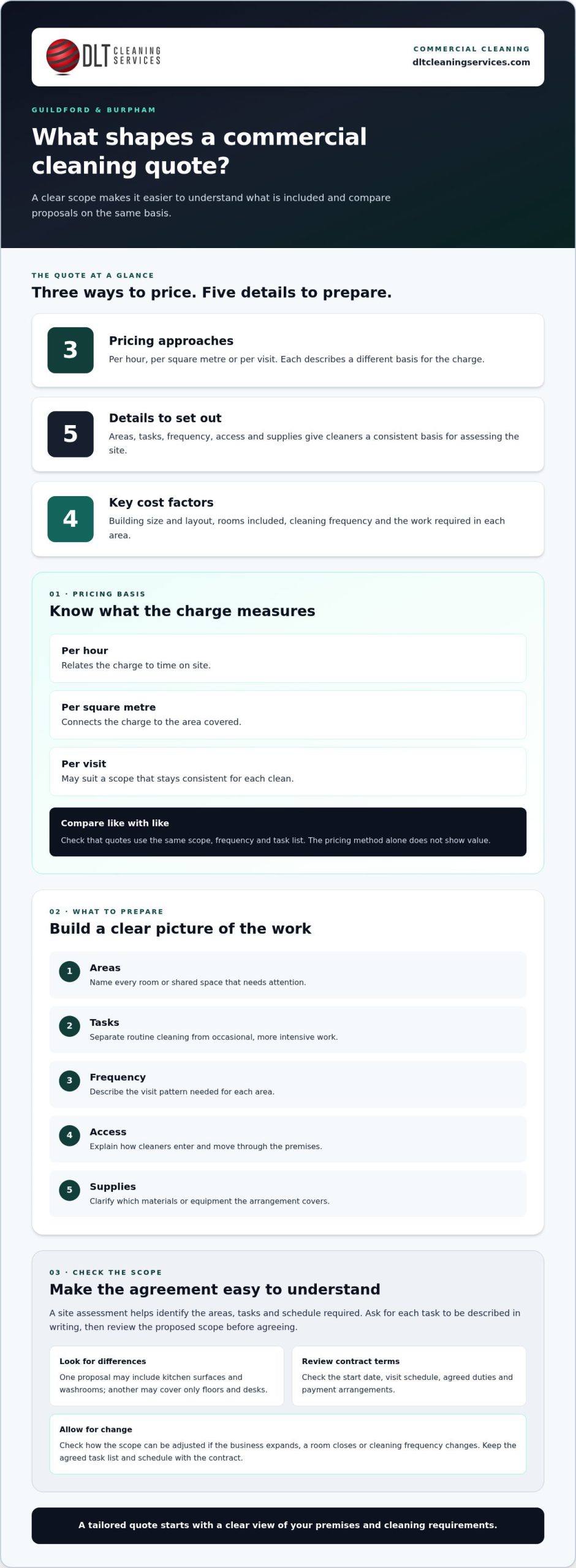
A cleaning contract should make the service clear before regular visits begin. In Guildford, commercial cleaning is commonly priced per hour, per square metre or per visit. These approaches describe different things: time on site, the area covered or each scheduled clean. Compare quotes with the same scope, frequency and task list, not just the headline figures.
The price depends on the premises and is provided after a quote request. Key cost factors include the building’s size and layout, the rooms included, cleaning frequency and the work required in each area. For example, a quote for a small office with one shared kitchen will differ in scope from one covering several floors, meeting rooms and washrooms.
Before comparing cleaning services, write down the practical details that shape the work:
- Areas: name each room or shared space that needs attention.
- Tasks: distinguish routine work from occasional, more intensive tasks.
- Frequency: describe the required visit pattern for each area.
- Access: explain how cleaners enter and move through the premises.
- Supplies: clarify which materials or equipment the arrangement covers.
This outline gives a prospective cleaner a consistent basis for assessing the site and preparing a tailored quote. It also reveals differences between proposals. One quote might include kitchen surfaces and washrooms, while another covers only office floors and desks. Ask for each task to be described in writing, so the agreed scope is easy to understand.
Review the contract for its start date, visit schedule, agreed duties and payment arrangements. Check how changes are handled if the business expands, a room closes or the required frequency shifts. A clear process for adjusting the scope helps the cleaning plan keep pace with operational changes without leaving responsibilities unclear.
Commercial cleaning may be priced per visit when the scope is consistent for each clean. Hourly pricing relates the charge to time on site, while a per-square-metre basis connects it to the area covered. The right structure depends on the work being purchased. Compare what each quote includes rather than assuming the pricing method alone shows value.
Keep a copy of the agreed task list and schedule alongside the contract. If a reception area, staff kitchen or washroom needs different treatment, record that distinction before accepting the quote. For a tailored cleaning quote, set out your premises and cleaning requirements so the proposed scope can reflect the work involved.
Flexible cleaning plans based on specific needs
A flexible plan assigns cleaning tasks according to how each part of a workplace is used. Rather than applying the same routine everywhere, divide the premises into zones, such as reception, desks, kitchens, washrooms and meeting rooms. Then set the tasks and frequency for each zone. This links the cleaning schedule to everyday activity.
Start by identifying the spaces used most often. For example, a shared kitchen in use throughout the working day may need different attention from an occasional-use meeting room. Record the tasks required in each area, such as wiping work surfaces, cleaning floors or replenishing hygiene supplies. This makes priorities visible and keeps less-used rooms within the plan.
Food businesses have specific scheduling needs: restaurants and food-preparation areas need daily cleaning, plus regular deep cleans. A practical plan distinguishes routine cleaning from deeper work, then assigns each task to the relevant area. For example, preparation surfaces and shared dining areas may have different requirements. Clear task descriptions help staff understand what each scheduled visit covers.
Work patterns can also change an office schedule. A hot-desking area has shared workstations, while a private office may have consistent users. List shared desks and common touchpoints separately from individual work areas. For meeting rooms, consider how bookings affect use, then align the checklist with the surfaces and facilities that need attention after occupancy.
Use a simple zone plan to organise the requirements:
- Reception: note entrance floors, counters and visitor seating.
- Work areas: distinguish shared desks from fixed workstations.
- Kitchen: list surfaces, sinks and shared appliances.
- Washrooms: define the cleaning tasks and hygiene supplies needed.
- Meeting rooms: identify tables, chairs and frequently handled items.
Review the schedule when the premises or their use changes. If a business adds a team, turns a room into a meeting space or changes how staff share desks, revisit the relevant zone and task list. This keeps the plan aligned with actual use instead of carrying forward routines that no longer fit.
Flexible arrangements also separate regular duties from occasional priorities. A routine visit might focus on areas used every working day, while a periodic task list covers less frequent needs. Set out both clearly, including the rooms each task covers. Defined zones, examples and review points make the plan easier to discuss, adjust and follow.
Are local commercial cleaners insured and DBS-checked?
Insurance and DBS checks are separate matters, and practices can differ between cleaning providers. A DBS check relates to an individual’s criminal record information, while insurance concerns cover for specified risks. Neither alone explains how cleaning tasks are managed. For a Burpham office, consider both the documentation and the arrangements for staff entering the premises.
Ask what insurance applies to the work and who it covers. A policy document should identify the insured party, type of cover and scope. For example, if a cleaner accidentally damages a reception desk, check whether the policy addresses that kind of incident. The contract should also clarify how damage or loss is reported and handled.
Insurance documents can contain exclusions and conditions. Read the wording alongside the proposed cleaning tasks, rather than relying only on a general statement that cover exists. A business park with shared entrances, for instance, may need clarity about which areas are included in the service. Keep the agreed scope and insurance details with the contract for easy reference.
DBS checks are not the same as identity checks or references. If a provider uses DBS checks, establish which roles are checked and how the process relates to staff access. A cleaner entering reception while staff are present has different access arrangements from someone working alone in a restricted office. Understand who will attend and how access is controlled.
Before agreeing terms, set out these points in writing:
- Insurance: record the type of cover and the activities it relates to.
- Staff checks: clarify the provider’s approach to DBS checks and relevant roles.
- Access: specify which rooms cleaners may enter and how keys or codes are handled.
- Reporting: agree how incidents, damage or access concerns are communicated.
- Staff changes: establish how replacement personnel are introduced to the site.
For a medical practice, school or office holding sensitive records, access arrangements may be central to the decision. Identify restricted rooms, confidential files and any areas requiring an escort. Then ensure the cleaning schedule and site instructions reflect those boundaries. Clear instructions help staff understand what they may clean and where they should not enter.
Use the same questions when comparing commercial cleaners in Burpham. Written answers about insurance, DBS processes and premises access are easier to assess than broad verbal assurances. Once these arrangements are clear, include relevant responsibilities in the contract and review them if the site, staff access or cleaning scope changes.
Can commercial cleaners in Burpham work evenings or weekends?
Evening or weekend cleaning can be discussed as part of a commercial cleaning schedule. Agreed days and access times need to suit the premises and tasks. For an office open during the day, an evening visit may keep cleaning activity separate from meetings, staff movement and reception duties.
Start by mapping the working day. Note when staff arrive, when customer-facing areas are busiest and when rooms become available. A reception team, for example, may need clear access during opening hours, while a meeting room could be cleaned between bookings. A timetable based on actual room use gives the cleaning team a practical sequence.
Weekend visits may suit premises that remain busy during the week, such as offices with regular meetings or shared facilities. They can also provide a window for tasks that would interrupt weekday activity. List the areas requiring attention and their access conditions, including rooms that must remain locked or available to staff.
Before agreeing a schedule, record the operational details that affect timing:
- Opening hours: note when staff, visitors or customers use the building.
- Quiet periods: identify times when cleaning activity causes less disruption.
- Room access: specify how cleaners enter and which spaces are included.
- Security: set out key, alarm and locking arrangements in the site instructions.
- Priority areas: identify spaces, such as washrooms or kitchens, that need attention before reopening.
Consider the cleaning sequence as well as the visit time. A meeting room may be easier to clean after its final booking than earlier in the day. In a shared office, arranging work around staff departures can help keep active desks clear. Discussing these details with commercial cleaners in Burpham can help turn a preferred time into a workable schedule.
Include changes in the written arrangement. If a business adjusts its opening hours, adds weekend events or changes a room’s purpose, revisit the schedule and access instructions. For example, a Saturday training session may mean the meeting room needs cleaning before or after the event, rather than during it.
When comparing commercial cleaners in Burpham, explain your operating pattern, preferred access windows and priority rooms. Record the agreed schedule alongside the cleaning tasks, so both sides have a clear reference if the workplace routine changes. This makes timing a defined part of the service plan instead of an informal assumption.
DLT Cleaning Services Ltd: Office Cleaning
DLT Cleaning Services Ltd provides Office Cleaning and Hygiene Services for businesses seeking consistent workplace care. If your office needs a defined routine for shared areas, workspaces or washrooms, a tailored scope can align the cleaning plan with how your premises operate.
Consider DLT Cleaning Services Ltd when you want to discuss the tasks, frequency and site requirements for a commercial cleaning arrangement. Clear priorities help shape a suitable plan around your workplace, whether you need ongoing office cleaning, hygiene support or both.
Contact DLT Cleaning Services Ltd.
Set your workplace cleaning priorities
A useful next step is to decide what a well-maintained workplace needs to support: a comfortable staff environment, presentable visitor areas or dependable hygiene routines. For a business considering commercial cleaners in Burpham, those priorities can guide a focused conversation and keep the proposed service relevant to daily operations.
Before getting in touch, note which areas matter most and what you want a cleaning arrangement to achieve. DLT Cleaning Services Ltd offers Office Cleaning and Hygiene Services, giving businesses a way to discuss workplace care suited to their needs. A clear starting point makes it easier to explain your priorities and consider a practical way forward.
Contact DLT Cleaning Services Ltd to discuss your workplace cleaning requirements. A considered plan can help you move ahead with confidence and keep your team focused on the work they do best.
Frequently Asked Questions
What commercial cleaning companies serve Burpham, Surrey?
DLT Cleaning Services Ltd serves businesses across Surrey, with Guildford as its local focus. For a Burpham workplace, Office Cleaning and Hygiene Services are relevant starting points. Outline the building’s use, access arrangements and priority areas when discussing your requirements. This helps establish whether the service scope suits a professional workplace, such as an office with shared kitchens or washrooms.
Which commercial cleaning services are available in Burpham?
DLT Cleaning Services Ltd provides Office Cleaning and Hygiene Services. For example, an office manager may need routine care for work areas alongside hygiene support for staff washrooms. The right combination depends on the premises and required tasks. Listing the rooms needing attention and their priorities gives a clear basis for discussing a suitable scope.
How much do commercial cleaners in Burpham charge?
The price depends on the premises and is provided after a quote request. Factors include the layout, tasks required, cleaning frequency and spaces covered. For example, a workplace with several shared areas may need a different scope from a compact office with fewer facilities. Compare quotes by checking that each describes the same tasks and visit pattern.
Do Burpham commercial cleaners provide free quotes and site visits?
A tailored quote can be developed around the workplace’s requirements, with a site assessment helping define the scope. For example, an assessment can identify which rooms need regular attention and where access arrangements affect the cleaning plan. A quote should specify the tasks and areas covered, so you can understand the proposed service before deciding whether it suits your premises.
Do Burpham cleaning companies offer office, retail, school, and industrial cleaning?
Services vary by provider and premises type. DLT Cleaning Services Ltd offers Office Cleaning and Hygiene Services for workplace maintenance and hygiene needs. Retail shops and schools have their own operational requirements, while cleaning industrial heavy-duty equipment is a distinct specialist activity. If you manage an office, focus your enquiry on the work areas and facilities needing routine attention.
What do customers say about commercial cleaners in Burpham?
Guildford commercial cleaning listings average 10 out of 10 from 96 reviews, but this rating is not specific to Burpham. When comparing feedback, look for comments about consistency and communication.