Trust in the people entering teaching spaces matters as much as the visible result. With office cleaning for training centres in Guildford, local cleaning services describe operatives as DBS-checked and trained; insurance is a separate part of understanding the protection in place.
It’s reasonable to want clear information about who cleans your centre, which areas are covered and how the service fits around lessons and staff activity. This guide explains what staff checks and insurance mean in practice, and which spaces a professional cleaning service can cover.
You’ll also learn how cleaning can be arranged for Guildford premises and what to consider when planning a training-centre service. The aim is to help you decide whether the approach suits your centre’s needs.
Key Takeaways
- See how daily, weekly or fortnightly cleaning can be arranged around a training centre’s routine.
- Understand what operative vetting tells you and why insurance is a separate consideration.
- Find out which shared and teaching spaces can be included, from desks and floors to kitchens and washrooms.
- Explore the kinds of Guildford learning venues the service can cover, including coaching centres, colleges and universities.
Do you clean offices across all of Guildford?
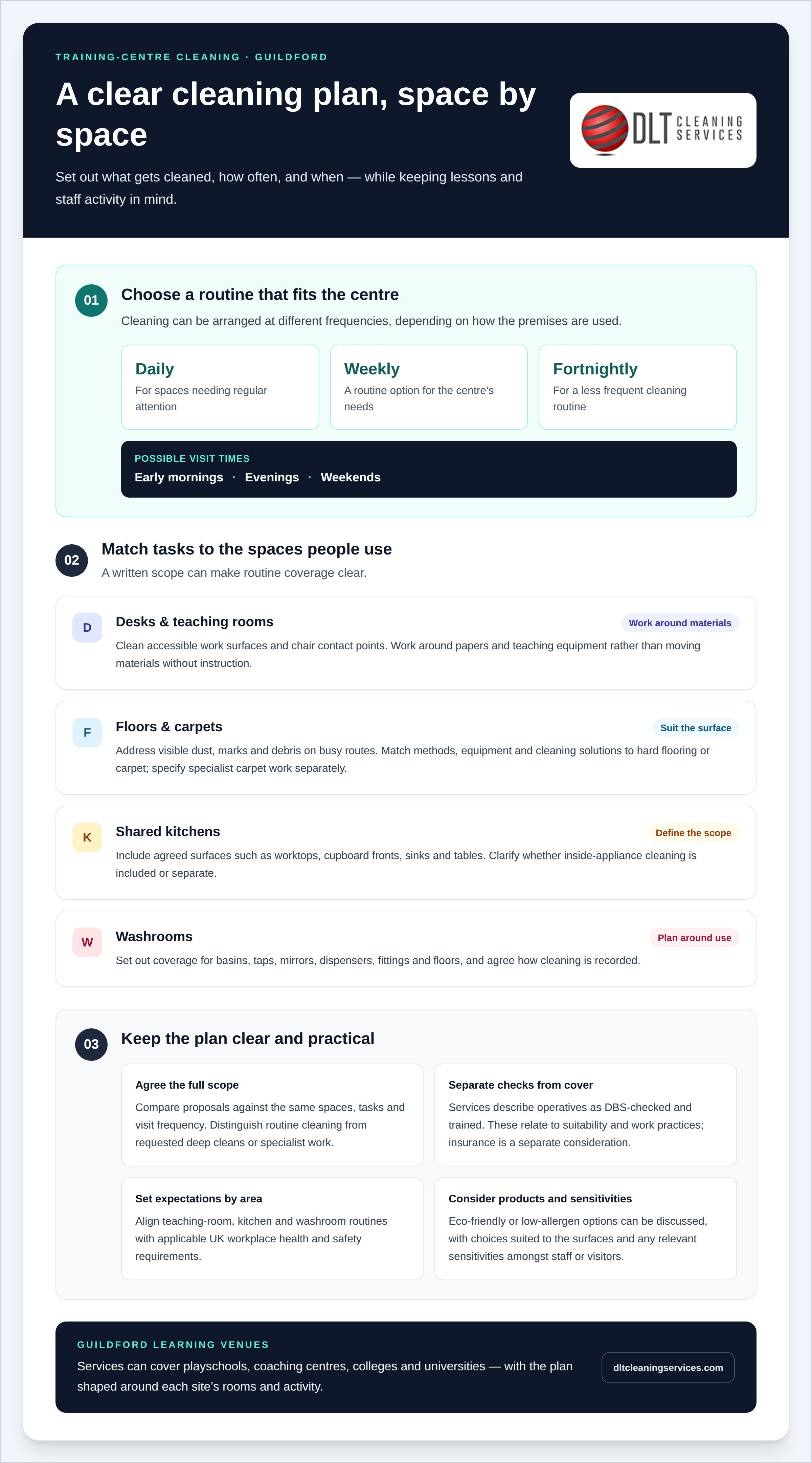
Cleaning schedules in Guildford can be arranged daily, weekly or fortnightly, depending on how your centre uses its spaces. A busy coaching centre with classes throughout the week may need regular attention to shared areas. A quieter training office may need a less frequent routine, with specific tasks planned around its timetable.
Visits can be scheduled for early mornings, evenings or weekends to fit around lessons, staff activity and visitors. For example, cleaning a kitchen between sessions may suit one timetable, while work in teaching rooms may fit better outside scheduled classes.
When comparing cleaning quotes and contracts, match each proposed schedule against the same spaces, tasks and visit frequency. Check that the written scope explains what routine cleaning covers and how any requested deep clean will be handled.
Set clear hygiene expectations for teaching rooms, kitchens and washrooms, and align cleaning routines with applicable UK workplace health and safety requirements. Tasks and cleaning solutions should suit each space’s use and surfaces.
DLT Cleaning Services Ltd serves playschools, coaching centres, universities and colleges in Guildford. These learning environments range from smaller teaching spaces to larger education sites, each with its own cleaning priorities.
Eco-friendly or low-allergen cleaning options can be discussed as part of the product requirements for a centre. The choice should account for the surfaces being cleaned and any relevant sensitivities amongst staff or visitors.
When reading local customer feedback, look for specific details about communication, consistency and how a cleaning schedule fits around classes. A review describing a particular space or service offers more context than a general rating alone.
Are your cleaning operatives fully vetted and insured?
In Guildford, cleaning services describe operatives as DBS-checked and trained. These checks and training relate to suitability and work practices; insurance is a separate matter. A DBS check alone does not explain what insurance cover applies, so avoid treating the terms as interchangeable.
For training-centre premises, clear procedures matter around desks, chairs, teaching equipment and stored materials. Cleaning staff should work carefully around furniture and keep products and equipment away from items that should remain undisturbed. In a classroom, that means cleaning accessible surfaces without disrupting course materials or workstations.
Floors need methods suited to their material and daily use. Hard floors may need routine removal of dust and marks, while carpeted areas can collect debris around entrances and beneath chairs. A professional plan can identify these needs and assign suitable equipment and cleaning solutions to each surface.
Carpet care involves more than one task. Routine maintenance focuses on visible debris and busy routes, such as the path from reception to a training room. A deeper clean can be arranged separately, with timing chosen to reduce disruption to staff and visitors. Furniture care should also account for upholstery, desk surfaces and chair frames, rather than applying one product to every finish.
Eco-friendly cleaning products can be matched to the centre’s surfaces and workplace requirements. The choice should suit the task, whether cleaning a carpeted meeting space or wiping a desk. A clear scope also distinguishes routine cleaning from specialist floor or carpet work.
For an office cleaning service, define which floors, carpets and furniture need attention, and how often each task belongs in the plan. That gives the cleaning team a practical basis for working through the facilities consistently.
Cleaning desks, floors, kitchens and washrooms
A training room may contain desks, chairs, presentation equipment and course materials. Cleaning can focus on accessible work surfaces, chair arms and other frequently touched points. Staff should work around papers and equipment rather than move teaching materials without instruction, helping keep the room ready for its next session.
Floors need care suited to their finish and use. Hard flooring near reception can collect marks from shoes, while carpet beneath desks gathers dust and crumbs. A planned routine addresses visible debris and busy routes, with specialist attention for carpets or stubborn marks where needed. Equipment and cleaning solutions should suit the surface.
In a shared kitchen, cleaning can cover worktops, cupboard fronts, sinks and tables. Wiping preparation surfaces and clearing marks around the sink helps keep the area presentable between classes. A contract should distinguish routine surface cleaning from tasks such as cleaning inside appliances, so the agreed scope is clear.
Washroom tasks can include cleaning basins, taps, mirrors, dispensers and floors. A practical service plan sets out which areas receive attention and how cleaning is recorded. The schedule can fit around morning training sessions, staff breaks or room use, helping limit disruption to learners and visitors.
- Desks: Clean accessible surfaces and chair contact points.
- Floors: Match the method to carpet or hard flooring.
- Kitchens: Include shared tables, sinks and worktops.
- Washrooms: Cover basins, mirrors, fittings and floors.
DLT Cleaning Services can scope commercial cleaning in Guildford around the spaces your centre uses most. A professional plan separates recurring office tasks from specialist work, such as a deep carpet clean. Clear task descriptions make it easier to understand what the cleaning team will cover.
Cleaning locations across Guildford
For a Guildford training centre, a useful cleaning plan reflects the actual premises. Rooms, access arrangements and daily activity matter more than a broad town-wide label. A clear site scope connects the agreed tasks to the spaces learners, staff and visitors use.
Learning environments vary across Guildford. A coaching centre may have reception, teaching rooms and shared washrooms, while a college may include offices, staff spaces and busy corridors. DLT Cleaning Services serves playschools, coaching centres, universities and colleges. Each layout calls for clear priorities, especially where visitors and learners share entrances or facilities.
To make the cleaning plan practical, map the site by function: reception and visitor routes, training rooms, staff offices, kitchens and washrooms. Then set schedules around how each space is used. For example, a corridor linking classrooms may need more frequent attention than an office used occasionally. This gives the commercial cleaning plan a thorough, site-specific focus.
Guildford premises differ in room layout, access and class timetables. A venue with several teaching rooms may need a different task sequence from a smaller centre with shared facilities. Including entry procedures and room use in the plan helps organise cleaning around the centre’s routine, without assuming every location needs identical tasks.
For centres with more than one site in Guildford, use consistent task descriptions across locations, then adjust priorities for each building. A shared schedule makes standards easier to follow, while site-level details account for different kitchens, teaching spaces or visitor flows. The right cleaning partner should understand both parts: consistency and the practical differences between premises.
For a Guildford site, arrange a cleaning discussion around its location, rooms and daily use. A clear site plan gives the service a practical starting point for maintaining hygiene across the spaces learners and staff use.
DLT Cleaning Services Ltd: Office Cleaning
DLT Cleaning Services Ltd provides office cleaning for training centres, with a consistent approach to teaching rooms, shared spaces and staff areas. Office cleaning can be shaped around your centre’s priorities, while Hygiene Services support facilities such as washrooms.
Choose DLT Cleaning Services Ltd for professional routine cleaning with a clearly agreed scope. Dedicated on-site supervision helps oversee each contract and maintain attention to health and safety requirements.
Share the spaces your centre uses, the tasks that matter most and how cleaning should fit around its activities. This gives DLT Cleaning Services a practical starting point for planning support suited to your premises.
Contact DLT Cleaning Services Ltd to discuss cleaning support for your training centre.
Set up a cleaning plan that fits your centre
A well-organised cleaning plan starts with the way your training centre operates. Consider which areas need regular attention, how room use changes during the week and what you want learners and staff to find when they arrive. Clear priorities make it easier to shape a practical service around the premises.
For office cleaning for training centres in Guildford, DLT Cleaning Services Ltd offers office cleaning and Hygiene Services. Discuss your centre’s requirements to establish a scope that fits its daily use without adding unnecessary tasks.
Bring together the spaces you want covered and the outcomes that matter to your team. From there, you can discuss a suitable approach with a local cleaning company and decide on the next step with confidence.
Contact DLT Cleaning Services Ltd to discuss cleaning support for your training centre.
Frequently Asked Questions
Do you cover weekends and evenings?
Yes. Evening and weekend cleaning can be arranged in Guildford, alongside early-morning visits. This gives a training centre options around lessons, staff activity and visitor arrival times. For example, work can be scheduled outside teaching periods so rooms are ready for the next session. Agree which spaces need attention at each visit rather than assuming every area needs the same timing.
How quickly can you start in Guildford?
The start date depends on the cleaning scope, site access arrangements and schedule agreed for your Guildford premises. First, outline the rooms, priority tasks and preferred visit pattern, then agree when the service begins. A centre opening a new teaching room, for example, may want the plan to include that space before regular use starts.
What cleaning services are typically included for Guildford training centres?
Office cleaning for training centres in Guildford can cover desks, accessible surfaces, floors, kitchens and washrooms, with tasks set out for the premises. Hygiene Services may include bathroom deep cleans and supplies such as toilet rolls, paper towels and soap. Distinguish recurring room cleaning from a separate deep-clean requirement in the agreed scope to help keep shared facilities in order.
Do Guildford cleaning companies offer one-off, daily, and term-time cleaning schedules?
Daily, weekly and fortnightly visits are available in Guildford, and schedules can align with a centre’s term-time pattern. Cleaning priorities can reflect when teaching rooms, staff offices and shared facilities are in use. Deep cleans are also offered. The agreed scope should identify whether these form a separate visit or sit alongside a wider cleaning arrangement.
How should a professional cleaning provider safely clean classrooms, shared equipment, washrooms, and kitchens?
A professional team should match its methods to each area: clean desks and shared touchpoints with suitable products, and choose floor methods according to the surface. For shared equipment, follow the manufacturer’s care guidance and avoid applying products to screens or controls unless suitable. Keep equipment organised between areas to avoid carrying soil from washrooms into teaching spaces.
What insurance, DBS checks, and staff training should a training-centre cleaning provider have?
Look for clear information about staff vetting, insurance and relevant instruction. DLT Cleaning Services states: “All staff undergo thorough DBS background checks and the cleaning team is fully insured against damage or injury.” Training should also cover the products and equipment used, site access procedures, and how operatives handle teaching materials or shared equipment. These details help set expectations for a training-centre contract.