A health and safety checklist is only as effective as the hands-on supervision that stands behind it. You likely understand the pressure of keeping a busy office running whilst worrying about complex COSHH regulations or the new August 2026 chemical labelling deadlines. It’s often stressful to manage daily operations when the fear of a slip or trip liability is always at the back of your mind, especially if you lack a clear office cleaning health and safety checklist to follow. We know that finding the time to effectively supervise cleaning staff is a persistent challenge for even the most organised managers.
We’ve created this guide to remove that burden from your shoulders. Our aim is to ensure your workplace remains fully compliant, safe, and hygienic according to the latest UK standards. We’ll walk you through the essential 2026 regulatory updates, including “Simpler Recycling” rules and the upcoming changes to wet wipe legislation. This guide provides the peace of mind you need to focus on your core operations, knowing your environment is managed with dedicated expertise and the stability of a reliable partner.
Key Takeaways
- Understand your core legal obligations under UK law and how upcoming 2026 chemical labelling updates affect your office hygiene protocols.
- Implement a robust office cleaning health and safety checklist that covers essential daily tasks, from floor safety to the sanitisation of high-touch surfaces.
- Learn the best practices for managing COSHH registers and conducting effective risk assessments to identify and control workplace hazards proactively.
- Identify how dedicated on-site supervision ensures consistent standards and takes the stress of health and safety compliance off your plate.
- Get ahead of 2026 sustainability trends, including new recycling requirements and the shift away from plastic-containing cleaning materials.
Understanding Your Health and Safety Obligations in Office Cleaning
Maintaining a safe office environment is a fundamental legal duty that goes far beyond simple aesthetics. Under the Health and Safety at Work etc. Act 1974, every employer in the UK has a statutory obligation to ensure the health, safety, and welfare of their staff. Cleanliness is a cornerstone of this responsibility. A neglected office isn’t just an eyesore; it’s a breeding ground for hazards that can lead to significant legal and financial consequences. The Health and Safety Executive (HSE) provides the framework for these standards, and they are clear that a workplace must be kept sufficiently clean to prevent accidents and ill health.
The primary risks in any office setting usually involve slips, trips, and chemical exposure. HSE statistics show that contamination is a factor in almost all slip accidents in the workplace. Whether it’s a leaked bottle in a kitchen or a freshly mopped floor without a warning sign, these incidents are preventable with the right protocols. Chemical safety is equally vital. With the August 2026 deadline for updated GB Mandatory Classification and Labelling (GB MCL) rules, managers must ensure every substance in their cleaning cupboard is correctly documented. Using a comprehensive office cleaning health and safety checklist helps you track these obligations and ensures nothing is overlooked during a busy week.
Gaining a deeper perspective on Occupational safety and health allows managers to see hygiene as a specialized discipline. It’s not just about emptying bins; it’s about risk mitigation and the long-term protection of your most valuable asset: your people.
The Impact of Poor Hygiene on Employee Welfare
Duty of Care for Office Managers
Your duty of care extends to every individual who enters your building, including visitors, clients, and external contractors. If an accident occurs because of a spill that wasn’t cleared, the liability rests with the business. Maintaining an up-to-date health and safety policy is your best defence. Regular cleaning audits provide a paper trail of compliance, showing that you’ve taken proactive steps to manage risks. At DLT Cleaning Services, we understand that managers are often stretched thin. Our dedicated on-site supervision takes the weight of this compliance off your shoulders, ensuring that your office cleaning health and safety checklist is followed to the letter every single day.
The Essential Office Cleaning Health and Safety Checklist
Turning compliance into a daily reality requires more than just good intentions; it needs a methodical system. A robust office cleaning health and safety checklist acts as the essential bridge between theoretical safety and a truly protected workplace. It ensures that every member of the team, from the cleaning operative to the on-site supervisor, understands the specific standards required to maintain a secure environment. Whilst local HSE rules are your primary guide, referencing broader Cleaning Industry safety standards can provide additional insights into hazard identification and preventative measures.
Your daily checklist should prioritise immediate hazards. This includes clearing waste to prevent fire risks and sanitising communal areas to stop the spread of seasonal illnesses. On a weekly basis, the focus should shift to deeper tasks, such as cleaning ventilation grilles and high-level surfaces where dust accumulates. Monthly audits are the time to inspect the physical integrity of your equipment. Check vacuum filters, look for frayed electrical cables, and ensure that chemical storage areas remain secure and well-organised. If a spill occurs, whether it’s coffee in the reception or a leak in the staff kitchen, your team must have an immediate protocol. This involves cordoning off the area instantly and using the correct absorbent materials to prevent a slip accident.
Floor Safety and Trip Prevention
Slips and trips remain the most frequent cause of workplace injuries in the UK. During cleaning hours, the use of “Wet Floor” signage is non-negotiable. However, it’s vital to remove these signs as soon as the floor is dry to prevent staff from becoming desensitised to their presence. Whilst cleaning is in progress, ensure that vacuum cables aren’t stretched across walkways or doorways. It’s also a good habit to check for loose carpet tiles or damaged flooring during your daily rounds. These small defects can easily catch a heel, leading to a serious fall and potential liability for the business.
Surface Sanitisation and Hygiene Standards
To maintain high hygiene standards, a colour-coded cloth system is a simple but effective tool. This method prevents cross-contamination by ensuring that cloths used in bathrooms are never used in kitchen or desk areas. Focus your sanitisation efforts on “hot spots” such as door handles, lift buttons, and shared kettles. These surfaces are touched by dozens of people every day and can harbour bacteria for long periods. Ensuring that bathroom dispensers are functional and fully stocked is also a key part of your duty of care. If you’re finding it difficult to maintain this level of detail, DLT Cleaning Services provides the dedicated on-site supervision needed to keep your office cleaning health and safety checklist up to date without adding to your workload.
Managing COSHH and Equipment Safety Protocols
COSHH might sound like industrial jargon, but it applies directly to that small cleaning cupboard in your office. The Control of Substances Hazardous to Health (COSHH) regulations require you to assess every cleaning agent used on your premises. By 15 August 2026, all cleaning chemicals in Great Britain must be classified and labelled according to updated GB Mandatory Classification and Labelling (GB MCL) rules. This isn’t just a paperwork exercise. It’s a vital safety measure. Your office cleaning health and safety checklist must include a live register of Safety Data Sheets (SDS) for every product. These sheets provide critical instructions on what to do if a staff member accidentally ingests a substance or suffers a chemical burn.
Electrical safety is another area where a small oversight leads to a significant hazard. Every piece of powered equipment, from heavy-duty floor buffers to standard vacuum cleaners, requires regular Portable Appliance Testing (PAT). A frayed cord or a faulty motor is a fire risk that no business can afford to ignore. Beyond the hardware, the way products are applied matters. Staff need clear training on correct dilution ratios. Using too much chemical doesn’t make a surface cleaner; it often leaves a slippery residue or creates harmful fumes that linger in the air. We ensure all operatives are fully trained in these nuances to maintain a stable and safe environment.
Safe Storage of Cleaning Chemicals
Chemicals should always remain in their original containers with the manufacturer’s labels intact. Decanting liquids into unlabelled spray bottles is a recipe for a serious accident. Your cleaning cupboards must be secured with a lock to prevent unauthorised access by office staff or visitors. Proper ventilation is also a legal requirement for these storage areas. This prevents the buildup of volatile organic compounds (VOCs) that can negatively affect the air quality throughout your building. A well-managed cupboard is a sign of a professional and safety-conscious operation.
Personal Protective Equipment (PPE)
PPE serves as the last line of defence for cleaning staff. Your risk assessment should dictate whether a specific task requires nitrile gloves, aprons, or eye protection. It’s not enough to simply provide the equipment; it must be fit for purpose and replaced as soon as it shows signs of wear or damage. We also recommend training staff on the correct “donning and doffing” techniques. This ensures they don’t accidentally contaminate themselves whilst removing used gloves or aprons. At DLT, our dedicated on-site supervisors handle these checks daily, ensuring your office cleaning health and safety checklist is always fully implemented.
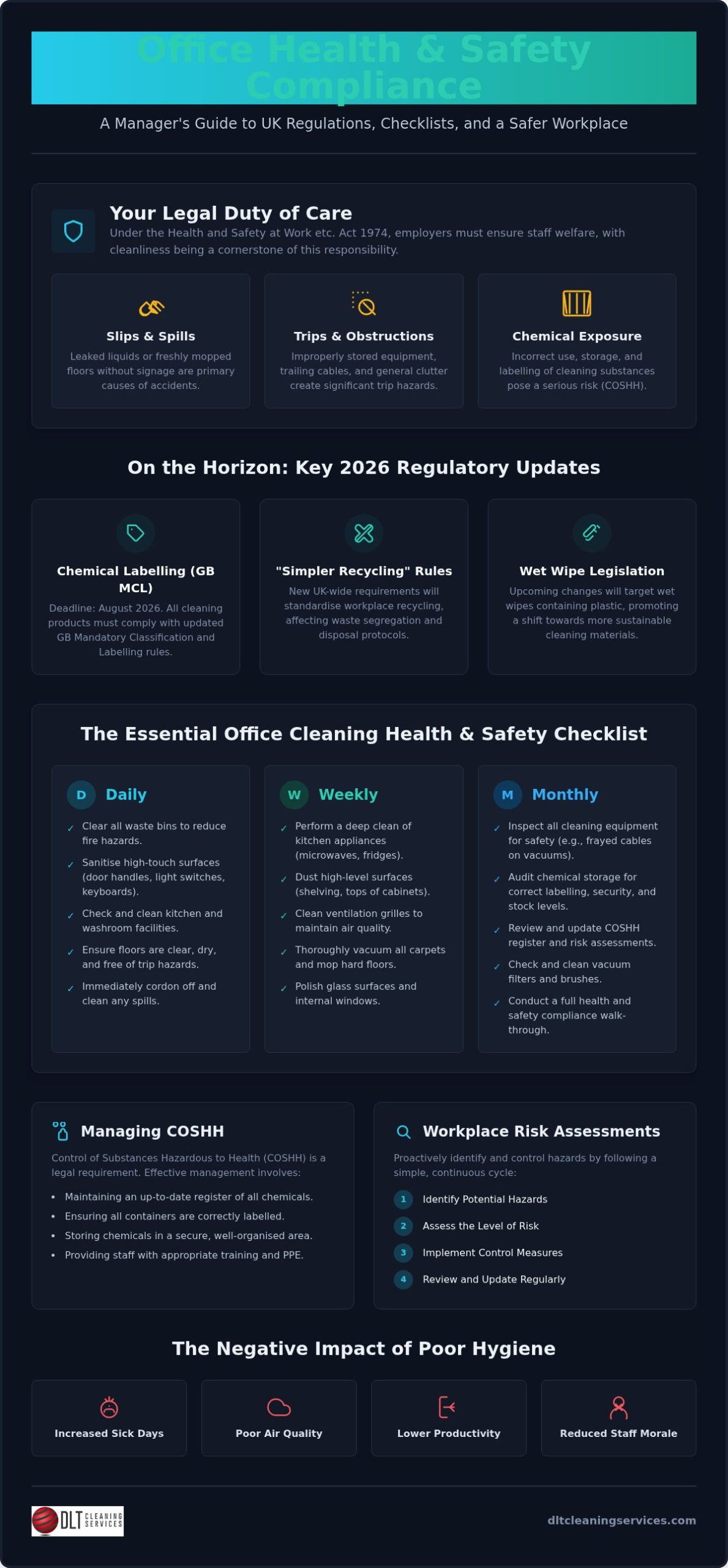
How to Organise Your Workplace Risk Assessments
Effective documentation is becoming even more critical. From 2026, large companies must report under the new UK Sustainability Reporting Standards (UK SRS). This means your cleaning suppliers will need to provide transparent data on workforce practices and chemical usage. Having a methodical risk assessment process in place ensures you’re ready for this increased demand for transparency. If you find the prospect of managing these legalities daunting, we can help. You can request a professional site survey to see how our supervised approach simplifies your compliance journey.
Identifying Hidden Hazards
Looking beyond the obvious is what separates a basic assessment from a professional one. According to the Health and Safety Executive, musculoskeletal disorders are the most commonly reported work-related health problem amongst cleaners. Repetitive mopping or awkward reaching can cause long term injury if ergonomic risks aren’t addressed. Lone working is another significant factor. If your cleaning team operates out of hours, you must have protocols for their security and emergency contact. Server rooms also require specific attention. Standard cleaning methods can damage sensitive equipment or create static hazards that put your data at risk.
Implementing Control Measures
Once you’ve identified a risk, you must decide how to control it. Substitution is often the most effective method. For example, you might replace a harsh, volatile chemical with a safer, eco-friendly alternative to improve air quality. Changing the timing of your cleaning can also reduce the risk of staff interaction and slip accidents. If a risk cannot be eliminated entirely, providing additional, hands-on training is essential. This ensures that every operative understands how to use equipment safely and follows your office cleaning health and safety checklist to the letter. Dedicated supervision is the most reliable way to ensure these control measures are actually followed every night.
Ensuring Compliance with DLT’s Supervised Cleaning Services
The most comprehensive office cleaning health and safety checklist is only a piece of paper without active, on-site management. Whilst many providers leave their teams to work in isolation, we believe that dedicated supervision is the only way to guarantee consistent safety. This hands-on approach ensures that every protocol discussed in this guide, from COSHH labelling to slip prevention, is executed with precision every single shift. It’s the difference between hoping for compliance and knowing it’s happening. Our supervisors take ownership of the environment so you don’t have to.
Our dedicated supervisors act as your eyes and ears on the ground. They don’t just tick boxes; they actively manage the details that keep your workplace safe. This includes conducting regular audits and providing the transparent reporting you need for internal safety records or upcoming 2026 sustainability disclosures. We’ve refined this methodical approach over more than 25 years, having served the local business community since 1999. This stability allows us to build long-term trust with every client we support through our hygiene services.
Professional Standards for Local Businesses
We specialise in providing office cleaning and hygiene services across Surrey, Hampshire, and Berkshire. Whether you’re managing a corporate headquarters in Guildford or a smaller office in the surrounding areas, we create tailored plans that integrate seamlessly with your existing health and safety policies. We understand that every building has unique hazards. Our local expertise allows us to address these nuances with a sense of personal pride and accountability that only a family-run business can provide.
Taking the Burden Off Office Managers
Outsourcing your hygiene needs to seasoned experts significantly reduces your operational and legal risk. You no longer have to spend your time worrying about whether the cleaning cupboard is locked or if the latest office cleaning health and safety checklist has been completed correctly. We take that burden off your plate, giving you the peace of mind to focus on your own operations. Our hands-on service provides a level of dedication and reliability that ensures your environment is always in safe hands. Enquire about our health and safety compliant cleaning today to see the DLT difference for yourself.
Securing Your Workplace Future
Managing a modern office in 2026 requires a proactive approach to hygiene that balances legal compliance with employee well-being. You’ve seen how a detailed office cleaning health and safety checklist serves as your primary defence against workplace hazards, provided it’s backed by rigorous risk assessments and up-to-date COSHH registers. The most successful managers are those who recognise that safety isn’t a one-off task but a continuous cycle of auditing and improvement.
At DLT Cleaning Services, we take pride in being more than just a vendor. We’re a family-run business that has been dedicated to excellence since 1999. Our service model is built on the foundation of dedicated on-site supervision, ensuring every operative remains fully HSE and COSHH compliant whilst on your premises. This hands-on management style removes the operational burden from your shoulders, allowing you to focus on your business with complete peace of mind.
Ready to elevate your workplace standards? You can Request a managed office cleaning quote for your Surrey business today. We look forward to helping you create a healthier, safer environment for your entire team.
Frequently Asked Questions
What is the most important item on an office cleaning health and safety checklist?
The most critical item is a thorough risk assessment that identifies and controls site-specific hazards before work begins. This document forms the backbone of your office cleaning health and safety checklist, ensuring that tasks like floor mopping are performed with the correct signage and timing. Without this foundation, daily cleaning tasks can inadvertently create new trip or chemical risks for your staff and visitors.
Do I legally need a COSHH register for my office cleaning supplies?
Yes, it’s a legal requirement under COSHH regulations to maintain a register of all hazardous substances kept on your premises. This register must include up-to-date Safety Data Sheets (SDS) for every chemical in your cleaning cupboard. By 15 August 2026, you must also ensure all products comply with the updated GB Mandatory Classification and Labelling rules to remain fully compliant with UK law.
How often should a workplace risk assessment for cleaning be updated?
You should review and update your workplace risk assessments at least once a year to ensure they remain relevant. However, if you change your office layout, introduce new cleaning chemicals, or experience a “near miss” incident, an immediate review is necessary. Keeping these assessments current ensures that your safety protocols reflect the actual environment your team operates in every day.
What are the risks of using unsupervised cleaning staff in an office?
Unsupervised cleaning staff are significantly more likely to overlook essential safety protocols, such as using “Wet Floor” signs or wearing correct PPE. Without a dedicated supervisor on-site, there’s a lack of immediate accountability, which can lead to increased liability for the business. Professional on-site management ensures that every task is performed to a high, safe standard whilst protecting your staff from preventable accidents.
Is PAT testing required for all office cleaning equipment?
Portable Appliance Testing (PAT) is required for all electrical cleaning equipment to ensure it remains safe for use by operatives. This includes vacuum cleaners, floor polishers, and any other corded appliances. Regular testing helps identify internal faults or frayed cables that could pose a fire or shock hazard, protecting both the person using the machine and your office infrastructure.
How can I improve workplace hygiene to reduce employee sick days?
Improving hygiene starts with a focus on sanitising high-touch “hot spots” like door handles, lift buttons, and shared kitchen equipment. Implementing a rigorous office cleaning health and safety checklist that prioritises these areas helps break the chain of infection. Regular sanitisation, combined with professional hygiene services, can lead to a noticeable reduction in respiratory illnesses and related sick days amongst your team.
What PPE should be provided for standard office cleaning tasks?
Standard PPE typically includes nitrile or latex-free gloves and aprons to protect against chemical splashes and biological hazards. If the task involves spraying chemicals at height or handling particularly caustic agents, eye protection or face masks may also be required. The specific PPE provided must be dictated by your risk assessment and replaced as soon as it shows signs of wear or damage.
How do I ensure my cleaning company is actually following H&S protocols?
The most effective way to ensure compliance is to partner with a company that provides dedicated on-site supervision for every shift. You should request regular audit reports and evidence of staff training in COSHH and equipment safety. A transparent provider will be happy to share their documentation and demonstrate how they maintain high standards across Surrey, Hampshire, and Berkshire.