A reception can look tidy yet still miss important cleaning tasks. Effective office reception and lobby cleaning covers desks and frequently touched surfaces, glass, visitor seating, floors and entrance mats, bins and visible marks. The routine should reflect how people use the space, not just how it looks before the doors open.
A clean, welcoming entrance helps visitors feel expected and gives staff a more comfortable place to work. Maintaining it takes a clear routine, with extra attention to busy periods, spills, waste and lingering odours.
This guide explains what reception cleaning should include, which tasks need regular attention and how to adapt standards for different workplaces. It also covers how footfall, shared areas and specific site needs shape a practical cleaning plan.
Key Takeaways
- Keep entrance floors and mats clear of grit and moisture, and plan floor care around footfall to help reduce slip risks.
- Build daily upkeep around the surfaces visitors notice and touch, with extra attention during busy periods.
- Manage waste and stale smells through a consistent bin routine and good ventilation. The UK Government says the Workplace (Health, Safety and Welfare) Regulations 1992 require employers to provide an adequate supply of fresh air in enclosed workplaces.
- Adapt cleaning priorities to the sector, the way the reception is used and any specific hygiene needs.
1. What Should Be Included in Reception Area Cleaning?
A thorough office reception and lobby cleaning routine covers the surfaces visitors see and use. Wipe desks, side tables and shelving to remove dust and smudges. Clean glass doors and windows to keep the entrance bright, and vacuum visitor chairs and sofas, including seams and crevices. Dust plant leaves, remove dead foliage and check fabric seating for stains before visitors arrive.
Attend to floors daily, matching the method to the surface. Sweep or vacuum grit from hard floors, then spot-clean marks and spills. Vacuum carpeted entrance routes and beneath seating, where debris collects. Deal with wet patches promptly and leave the floor dry before people walk across it. This helps reduce slip risks and keeps the route presentable.
Entrance mats provide an important first line of defence. Clean them each morning and check them again after wet weather, especially in busy receptions. Remove trapped grit and moisture before they spread onto lobby floors. Keep mats straight and flat to avoid curled edges that could cause trips. Make sure visitors can take several steps across the mat and that it stays firmly in place.
Plan deeper floor care around the material and level of use. Reception carpets or floors may need a full deep clean monthly or quarterly. Footfall, visible soil and the floor’s finish help determine a suitable interval. A regular schedule also limits dirt build-up at entrances and beneath furniture.
For office reception and lobby cleaning, choose products and methods suited to each surface. UK commercial cleaning products used in client-facing areas must comply with COSHH regulations. Identify delicate furniture, artwork and branded installations before work begins, and follow any special care instructions. Testing a product on a small area first can help prevent damage to glass, flooring or delicate finishes.
2. Continuous upkeep and daily reception cleaning
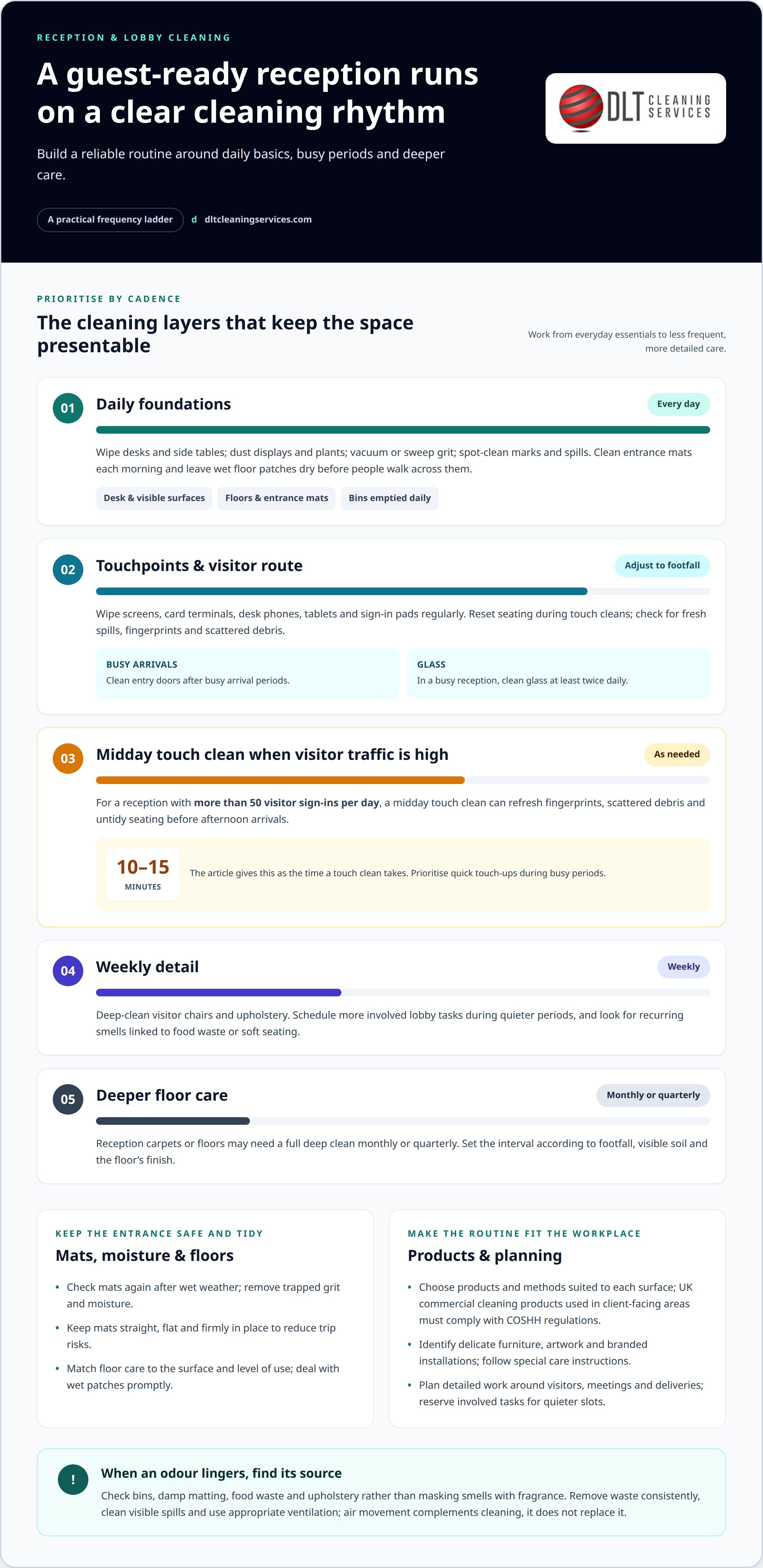
A full clean before opening gives the reception a consistent starting point. During the day, a short checklist helps keep the desk, visitor route and shared surfaces orderly. Clean the desk during every cleaning round and reset seating during each touch clean. Remove unnecessary papers and food to keep the area presentable.
Plan a routine for high-touch surfaces. Wipe reception screens, card terminals, desk phones, tablets and sign-in pads regularly, adjusting the routine to visitor footfall. In a busy reception, clean glass at least twice daily and entry doors after busy arrival periods. Use a suitable product and finish each surface without leaving residue.
Daily tasks can include dusting, vacuuming and wiping high-touch points. Clean display items and plants daily, and check floors for fresh marks or spills. For a reception with more than 50 visitor sign-ins per day, a midday touch clean can address fingerprints, scattered debris and untidy seating before afternoon arrivals. A touch clean takes 10 to 15 minutes.
Weekly tasks add detail that routine visits may not cover. Deep-clean visitor chairs and upholstery weekly, and schedule more intensive lobby tasks during quieter periods. Adjust deeper floor-care frequency to footfall and the surface’s condition. A regular schedule also helps identify recurring smells, such as those linked to food waste or soft seating, before they linger.
To limit disruption, cleaning teams schedule detailed tasks around actual use, including early visitors, meetings and deliveries. They prioritise quick touch-ups during busy periods and reserve more involved work for quieter slots. The agreed checklist should clarify whether reception staff will be present and where papers or equipment can remain. A planned office cleaning routine can keep these tasks organised around the working day.
3. Managing stale odours and waste bins
Stale smells often point to a specific source, such as food waste, damp matting or soft furniture. Trace the odour rather than masking it with fragrance. Empty reception bins daily, remove waste left beside them and clean visible spills around the bin area. Check for clutter, discarded food and damp items that could keep smells in the space.
Entrance mats collect moisture and soil carried in by visitors, particularly after wet weather. A mat that stays damp or dirty can contribute to an unpleasant entrance. Include mat checks in the cleaning schedule, remove trapped debris and allow the surface to dry. Address wet patches on nearby floors promptly, leaving the walking route dry and presentable.
Ventilation also matters. According to the UK Government, The Workplace (Health, Safety and Welfare) Regulations 1992 require employers in the UK to provide an adequate supply of fresh air in enclosed workplaces. Opening windows or using the building’s ventilation system can help refresh reception spaces, where appropriate. Air movement should complement cleaning, not replace removing the source of a smell.
For a polished reception, check bins, mats and seating during the same visit. Upholstery can hold odours, so attend to visible stains and signs of spills as well as surrounding furniture. Food in reception can also create lingering smells; a clear policy on eating in the area can help limit the problem. Keep waste removal consistent and match checks to visitor traffic and how the space is used.
If an odour returns after bins are emptied and surfaces cleaned, review nearby sources such as damp materials, stored waste or poor air circulation. Record where and when it appears, for example beside a bin or after a busy arrival period. This helps cleaning teams focus on the likely source instead of repeatedly polishing surfaces that are not causing the smell.
4. Reception cleaning standards across sectors
Reception cleaning standards should reflect who uses the space, the work taking place and the surfaces visitors touch. HSE workplace cleaning guidance provides a baseline for commercial environments, including reception areas. From there, define a site-specific schedule covering visible floors, reception furniture, waste and frequently touched handles. The aim is a clear, repeatable scope, not an identical checklist for every building.
In a corporate office, visitors may move between reception, meeting rooms and shared desks. A practical specification can prioritise the visitor route, desk surfaces, door handles and visible marks before appointments. A public-facing office with frequent arrivals may need closer attention to glass and touchpoints than a quiet suite. Traffic and use, not the sector label alone, should guide the difference.
Where a reception serves a healthcare, education or community setting, the cleaning plan should reflect the organisation’s hygiene procedures and designated responsibilities. The cleaning team needs to know which spaces are in scope, which surfaces have special care instructions and how shared areas are managed. This avoids treating a public lobby, private waiting area and staff-only entrance as interchangeable.
Across sectors, a useful service specification records the accessible areas, included seating, visible glass, waste removal and any surfaces requiring particular care. It should also explain how the cleaning team reports missed tasks, such as a marked entrance panel or an unemptied bin. Clear responsibilities matter in shared buildings, where another arrangement may cover lifts or common bathrooms. A named contact and location-based reporting make follow-up more precise.
For a consistent result, review the checklist when room use or visitor flow changes. A cleaning service can then adjust task priorities to match the reception’s actual demands. Arrange office cleaning for your reception with a scope shaped around the space and its use.
DLT Cleaning Services: Office Cleaning
DLT Cleaning Services Ltd provides office cleaning for businesses that need consistent reception and lobby upkeep. It’s a practical option when daily routines no longer keep visitor routes, shared surfaces and waiting areas reliably presentable.
A clear cleaning scope can reflect how your reception is used, including the entrance, seating, visible glass and waste points. DLT’s Hygiene Services can also support workplace hygiene needs. Together, these services help businesses maintain cleaner, more welcoming spaces while keeping attention on the details that matter to staff and visitors.
If you’re ready to discuss office cleaning for your reception, contact DLT Cleaning Services Ltd.
Set a reception standard that works for your business
A useful next step is to turn your expectations into a clear, workable cleaning scope. Decide which parts of the visitor journey matter most, then align those priorities with how the space is used. If the layout, opening arrangements or reception activity changes, revisit the scope so routine cleaning continues to meet your needs.
Consistent office reception and lobby cleaning is easier to manage when responsibilities are clear and the standard suits the building. A focused discussion can help shape an approach for your workplace instead of relying on a generic checklist.
DLT Cleaning Services Ltd offers Office Cleaning and Hygiene Services for businesses seeking support with workplace cleanliness. Contact DLT Cleaning Services Ltd to discuss a suitable approach for your reception. A well-considered plan can help your team welcome visitors with confidence.
Frequently Asked Questions
What Should Be Included in Reception Area Cleaning?
A reception cleaning scope should cover visitor-facing surfaces, seating, floors, entrance glass and waste points. Clarify how to handle items needing care, such as artwork, branded displays or documents left on desks. Before cleaning begins, put confidential papers away and identify delicate items. This helps the cleaning team work carefully without disturbing business materials.
How can a professional cleaning service stop dirt being carried into your reception area?
Focus cleaning on the threshold, mat edges and the path visitors take from the entrance. Removing grit from these transition points helps prevent it being walked further into the building. After rain, attending to damp marks near the doorway can help stop dirt spreading. The right routine reflects the entrance layout and how people move through it.
How can a professional cleaning service keep your glass entrance doors looking clean?
Remove fingerprints and marks from the full door surface, including around handles, where visitors commonly touch. Inspect the glass from different angles, since streaks may show more clearly in daylight. A suitable product and clean cloth help achieve a clear finish. The agreed routine can reflect the doors’ visibility and daily use.
How should a commercial reception smell?
A commercial reception should smell neutral and fresh, not strongly perfumed. Find the source of persistent odours, such as food waste, damp materials or an unclean bin, rather than covering them with fragrance. Good airflow can support a fresher space. The cleaning team can also note where a smell occurs to help identify the affected area.
Should my reception be cleaned separately from the rest of the office?
Not necessarily. The reception can be a defined part of the wider office cleaning schedule, with task priorities based on visitor use. A separate scope may be useful when the lobby is shared, has different access arrangements or falls under another building agreement. Clear boundaries help prevent gaps, particularly where lifts, common bathrooms or entrance areas are maintained separately.
What can a professional cleaning service do to help keep your office area clean?
A professional service can organise routine office cleaning around your workplace’s layout and needs, with tasks and responsibilities clearly agreed. DLT Cleaning Services provides Office Cleaning and Hygiene Services, including janitorial products and bathroom deep cleans. For a Guildford workplace, this support can help keep staff and visitor areas orderly, leaving your team more time to focus on daily operations.