A renovated space isn’t ready for use just because the trades have finished. A post-renovation office clean-up in Guildford typically starts with a builders clean to remove heavier dust and debris, followed by a sparkle clean for the final details. It’s best arranged once cutting, sanding, drilling and waste removal have stopped, so dust is less likely to settle again.
Fine dust can reach floors, desks, windows, cupboards and doors, so a thorough clean helps prepare the refurbished office for everyday use. Follow the installer’s care guidance for new materials, and avoid scraping residue aggressively. Builders should remove construction waste before the cleaning visit, and hazardous or unidentified materials need appropriate handling.
This guide explains what after-builders cleaning involves, how the initial and final stages differ, and which commercial and residential spaces can benefit. It also covers practical preparation, the areas a detailed clean may address, and the Guildford neighbourhoods and nearby Surrey locations served, so you can understand what to expect before the space is put back into use.
Key Takeaways
- Understand how the initial builders clean and final sparkle clean work together, and when each stage fits after renovation.
- See how cleaning priorities differ between offices and homes, so the scope suits the space being refreshed.
- Learn what a careful approach to floors, windows, cupboards, doors and other surfaces involves.
- Find out how DLT Cleaning Services Ltd’s office cleaning and hygiene services can support workplaces in Guildford and nearby Surrey areas.
What is after builders cleaning?
After-builders cleaning removes renovation dust, marks and remaining debris before an office or home is used again. In Guildford, good timing and surface-aware methods help prevent repeat work and avoid damage.
Timing the Clean After Building Work
Arrange the clean after cutting, sanding, drilling, snagging and other trade work have finished. This reduces the chance that dust settles on areas already cleaned. Builders should remove their waste first, allowing the cleaning visit to focus on the office interior rather than construction debris.
Follow installer guidance for newly fitted materials, including any curing times and care limits. This is especially important for surfaces that need time to settle or gentle treatment. For a post-renovation office clean-up in Guildford, plan the visit around the last trade work and removal of builders’ waste.
Cleaning Renovation Residue
After-builders cleaning can address plaster dust, paint marks and other residue left by renovation work. The method should suit the surface: aggressive scraping can damage an unfamiliar finish, while careful treatment helps remove residue without treating every material the same way. Desks, fittings and other items may also need attention where dust has settled.
Before work begins, identify the affected areas, access arrangements, delicate finishes and any hazardous materials. Hazardous or unidentified substances need appropriate handling and should not be left for cleaners to manage. Builders should remove paint, plaster and other construction waste before the cleaning visit.
Builders’ Cleans and Sparkle Cleans
A builders’ clean is the initial, heavier clean after construction, focused on removing the bulk of dust and debris. A sparkle clean is the final detailed stage, addressing visible dust and remaining marks before rooms return to use. Some projects need both; the appropriate scope depends on the work completed and the condition of the office.
When comparing Guildford office cleaning companies and reviews, look for a clear description of the work covered and feedback about communication and consistency. Reviews can indicate other customers’ experiences, while a written scope clarifies whether the clean is an initial builders’ clean, a final sparkle clean or both.
Commercial and residential post-construction cleaning in Guildford
Renovation leaves different cleaning tasks in an office, shop or home. Whether dealing with a workplace refurbishment or bespoke home improvement work from specialists like Custom Carpentry Solutions, the scope depends on the rooms affected, the surfaces installed and any residue remaining after construction.
Removing Dust, Paint and Plaster
Fine construction dust can settle on desks, skirting boards, shelves and fittings. Paint splashes and plaster marks may also remain on nearby surfaces. Work through affected areas methodically, removing loose dust before addressing marks. Floors and touchpoints need attention too, particularly where building work has taken place in areas used by staff.
In an office, the clean can cover affected work areas and shared rooms such as kitchens. Builders’ waste should be removed before cleaning begins, and hazardous or unidentified materials need appropriate handling rather than being left for cleaners.
Assessing Construction Residue
Paint, adhesive and plaster residue may require different treatment. Assess the affected material and finish before attempting removal: scraping an unfamiliar surface can cause damage. Choose a careful method suited to the residue and the surface beneath it. Follow installer guidance for new materials, including curing times and care limits.
Risk assessments and insurance arrangements vary between cleaning companies. A site plan should identify access issues, fragile finishes, wet-floor risks and materials needing specialist handling. This helps define the cleaning work separately from construction inspections, without treating a cleaner’s visit as approval of building work.
Post-Handover Cleaning
After handover, cleaning prepares rooms for furniture, equipment and everyday use. A clear scope can list affected rooms, surfaces and remaining marks, distinguishing a detailed post-construction clean from routine office maintenance. Allow cleaned floors and surfaces to dry before returning furniture or stored items.
HBF sign-off and cleaning serve different purposes: a clean addresses dust and residue, not the standard of construction workmanship. Where an HBF-related inspection forms part of a project, the inspection process remains separate from cleaning. For a Guildford workplace preparing to reopen, discuss a post-renovation clean as part of the return-to-work plan.
Cleaning floors, surfaces, windows, cupboards and doors
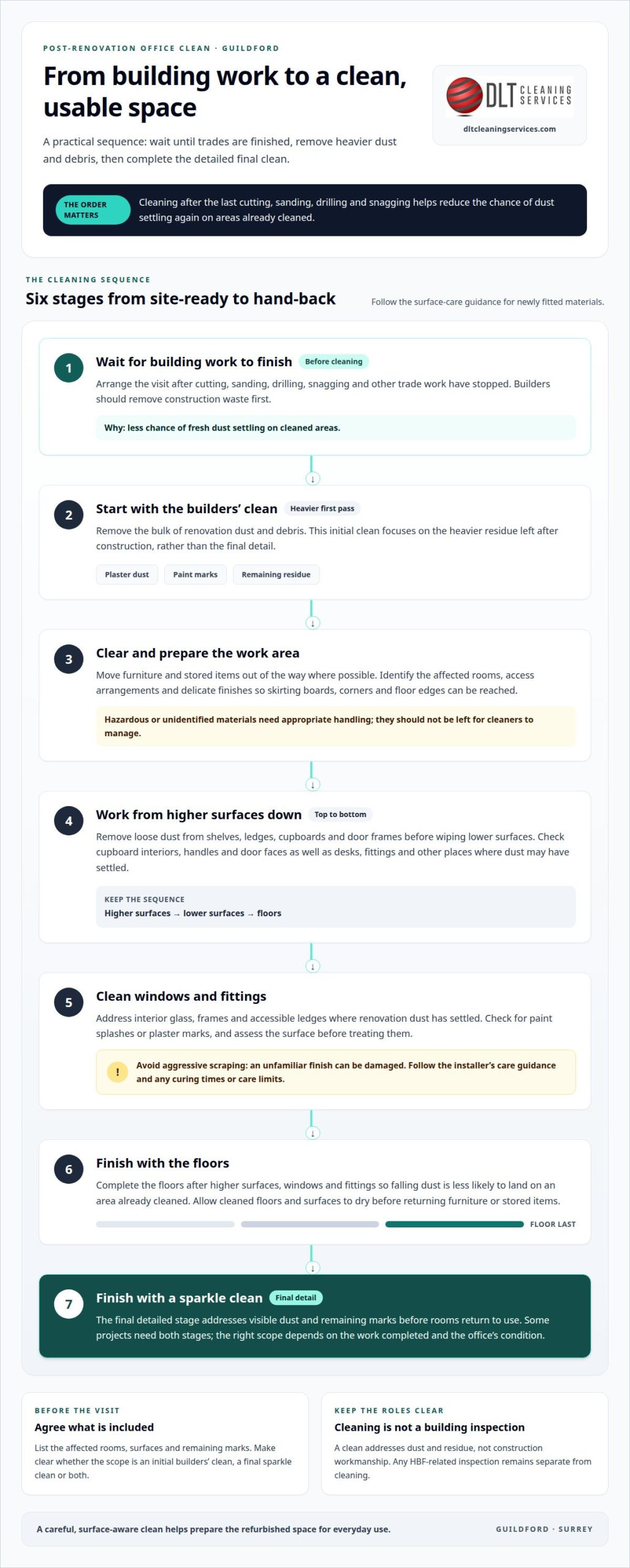
A post-renovation office clean follows a practical sequence: remove loose debris, clean high surfaces, address windows and fittings, then finish the floors. This helps prevent dust from falling onto areas that have already been cleaned.
- Clear and prepare: Remove remaining loose debris and dust from the work area. Keep furniture and stored items out of the way where possible, so skirting boards, corners and floor edges are accessible. Newly installed materials need cleaning in line with installer guidance.
- Work from higher surfaces down: Carefully remove dust from shelves, ledges, cupboards and door frames before wiping lower surfaces. Check cupboard interiors as well as handles and door faces. Choose a suitable method for each finish, especially where paint or adhesive residue remains.
- Clean windows and fittings: Address interior glass, frames and accessible ledges where renovation dust has settled. Look for paint splashes or plaster marks, but assess the surface before treating them. Aggressive scraping can damage an unfamiliar finish, so residue removal should suit the material.
- Finish the floors: Remove remaining dust from floor edges and open areas, then clean according to the floor’s material and care guidance. Pay attention to thresholds and corners where debris can collect. Allow cleaned floors to dry before returning rugs, storage or furniture.
For desks, cupboards and shared areas, set the scope according to where building work took place and what needs to be ready for staff. A room-by-room handover list can note the surfaces cleaned and any residue requiring separate attention. This makes the completed work easier to review without confusing cleaning with repairs or construction checks.
Arrange the visit after dusty work and builders’ waste removal are complete. If cutting, sanding or drilling is still underway, dust can settle again on windows, doors and floors. Once work has stopped, a careful clean can address the remaining mess and allow surfaces to dry before furniture and equipment return.
Cleaning services in Guildford and nearby Surrey areas
For a Guildford business, start by listing the rooms affected by renovation. A town-centre office might need its meeting rooms, corridors and shared kitchen cleaned, while another workplace may need only selected areas. The work completed and the condition of each room should shape the scope.
Throughout Guildford, describe which rooms contractors worked in and what remains. For example, plaster dust on skirting, paint marks beside a doorway or debris on a carpet each calls for a different task. A clear room-by-room list helps distinguish areas needing detailed attention from spaces that only need routine cleaning.
Before arranging a post-renovation office clean up Guildford, confirm that building work has stopped and waste has been removed. Then outline access arrangements, affected surfaces and handover timing. These details help DLT Cleaning Services Ltd plan an orderly visit and understand which areas need to be ready first.
Local coverage matters for more than the postcode. Guildford’s commercial premises vary in layout, from individual offices to shared workplaces with kitchens and meeting rooms. Give the cleaning team a concise description of the site, the areas involved and any delicate finishes. That makes the scope more precise without assuming every room needs the same treatment.
After the clean, review the agreed scope room by room. Check whether the listed surfaces, such as carpets, skirting boards and renovation-affected areas, were included. Let cleaned floors dry before returning furniture or stored items, keeping the handover sequence clear.
For office premises in Guildford, DLT Cleaning Services Ltd provides office cleaning and hygiene services. If renovation has affected your workplace, discuss office cleaning for your premises as part of the return-to-use plan.
DLT Cleaning Services Ltd: Office Cleaning
DLT Cleaning Services Ltd provides office cleaning and hygiene services for Guildford workplaces after renovation. A clearly scoped clean can address renovation dust and residue, then support ongoing workplace cleanliness. The company serves commercial premises, not residential cleaning needs.
For a refurbished office, consider which rooms need attention and how cleaning fits around staff, furniture and equipment returning. DLT Cleaning Services Ltd’s hygiene services can also support the ongoing care of workplace facilities. Share the affected areas and priorities when requesting a free quote and on-site survey.
To discuss office cleaning for your workplace, contact DLT Cleaning Services Ltd.
Plan a confident return to your workplace
Use the final stage of refurbishment to plan for the workplace’s ongoing cleaning needs. A practical plan can reflect how staff use each area, from shared kitchens and meeting rooms to desks and reception spaces, helping the office transition back to its everyday routine.
For a post-renovation office clean-up in Guildford, outline the areas that need attention and how office cleaning and hygiene services can support the workplace. DLT Cleaning Services can provide a free quote and on-site survey to discuss the scope. Cleaning prepares the office for use but does not replace building inspections or repairs.
When you’re ready to plan workplace cleaning, contact DLT Cleaning Services. A well-prepared space is a positive place to begin the next chapter of work.
Frequently Asked Questions
Do you remove builders’ rubbish?
The building team should clear builders’ rubbish before cleaners arrive, keeping the visit focused on dust and residue rather than construction waste. Arrange removal of packaging, offcuts and leftover materials after the final trade work. Hazardous or unidentified materials need appropriate handling and should not be left for cleaners.
Do you remove paint splashes and plaster from floors and windows?
A suitable post-renovation clean can address paint splashes and plaster residue, depending on the surface. A mark on glass may need different treatment from residue on timber or a finished floor. Include delicate coatings and new materials in the scope so the cleaning approach can account for their care requirements.
What details help with an after builders quotation?
When requesting a free quote, give DLT Cleaning Services the Guildford premises’ location, the rooms affected and the type of work completed. Note any remaining dust, paint or plaster marks, floor and window types, access arrangements and delicate finishes. This information can support an on-site survey and help define the work. DLT’s cleaners are directly employed and DBS-checked, and the cleaning team is fully insured.
What if newly fitted materials need time to cure?
Schedule cleaning in line with the installer’s curing guidance rather than assuming every new surface is immediately ready. If a floor finish or sealant needs time before wiping or damp cleaning, leave that area until its care instructions allow it. Share relevant material guidance when arranging the clean so the sequence protects the new finish.
How much does post-construction office cleaning cost in Guildford?
The cost depends on the premises, affected areas and work required. An on-site survey can help define whether the scope covers selected rooms or a wider office clean, and whether residue on particular finishes needs attention. DLT Cleaning Services offers a free quote so you can discuss the work before deciding how to proceed.
How long does a post-renovation office clean take, and when can staff return?
The time required depends on the size of the affected area, the amount of residue and the detail needed. Staff can return once cleaning is complete and floors and surfaces are dry, while any installer curing restrictions should be observed. For example, a room with a newly treated floor may need to remain clear longer than an unaffected office area.