Reliable sanitary disposal involves more than removing waste. It requires a consistent collection arrangement suited to the workplace. For organisations seeking washroom services in Hampshire, the right plan should account for how facilities are used, which areas need support and how waste is handled responsibly.
Keeping washrooms clean and well managed matters to staff and visitors, and a dependable service helps make this part of day-to-day operations easier to oversee. Whether you manage an office, a customer-facing venue or another workplace, clear collection arrangements and waste handling help keep responsibilities organised. This article explains what sanitary disposal involves, how washroom waste management works and which details can shape a bespoke service contract. It also looks at coverage across Hampshire and the South Coast, so you can understand how arrangements may work across one site or several. From collection needs to contract planning, the focus is on the decisions that help create a suitable, consistent service for your workplace.
Key Takeaways
- See how hygienic cleaning of toilets, urinals and washbasins contributes to a well-managed washroom.
- Understand the key steps in washroom waste management, including safe handling and disposal of healthcare waste.
- Identify the site-specific details that can shape a bespoke service contract and its collection arrangements.
- Explore how service requirements can be planned across Hampshire and the South Coast, including for multiple locations.
Looking for a Reliable Sanitary Disposal Service?
A reliable washroom arrangement brings together cleaning, hygiene supplies and appropriate waste handling. The service scope should state which facilities and tasks need attention.
Toilet and Washbasin Hygiene
Washroom cleaning covers the fixtures people use throughout the working day. A clear routine identifies toilets, urinals and washbasins, with attention to taps, flush points and surrounding surfaces. Naming these tasks helps define the expected standard. For example, list the fixtures and surfaces to be cleaned instead of describing the task only as general washroom cleaning.
Consider how the cleaning scope fits the building. A staff washroom and a customer-facing facility may have different usage patterns. Listing each area and its fixtures gives the cleaning team a clear task list and helps managers understand what the service covers.
Sanitary Waste Collections
Sanitary and feminine hygiene services are distinct from routine surface cleaning. A service plan should identify the receptacles included, their locations and how they fit into the site’s hygiene arrangements. Clear provisions help prevent bins from being overlooked or becoming unsuitable for use, and show staff where sanitary waste belongs.
Planning hygiene services depends on the number and location of facilities, how they are used and access to the site. Where a workplace has several washrooms, include each one in the agreed scope. Healthcare providers also need safe storage, collection and disposal arrangements for healthcare waste to reduce cross-contamination and infection risks.
Workplace Hygiene and Compliance
Workplace hygiene depends on clearly assigned cleaning tasks and waste handling responsibilities. A written scope can record which washrooms are covered, the fixtures included and how sanitary waste moves from receptacles to collection. These practical details help managers oversee the service and identify gaps, such as an unlisted staff toilet or a bin outside the agreed collection arrangement.
Legislative compliance should be considered alongside the workplace’s actual activities and waste streams. Healthcare settings, for example, need safe storage, collection and disposal arrangements for healthcare waste. A service agreement should distinguish that stream from ordinary sanitary waste, so handling instructions remain clear for the relevant areas.
For a cleaning contract, define washroom hygiene and sanitary disposal as distinct tasks, then show how they fit together. The scope can name toilets, urinals, washbasins and sanitary receptacles, plus the site areas requiring service. This gives managers a practical basis for reviewing delivery and adjusting arrangements when room use or workplace needs change.
Washroom waste management
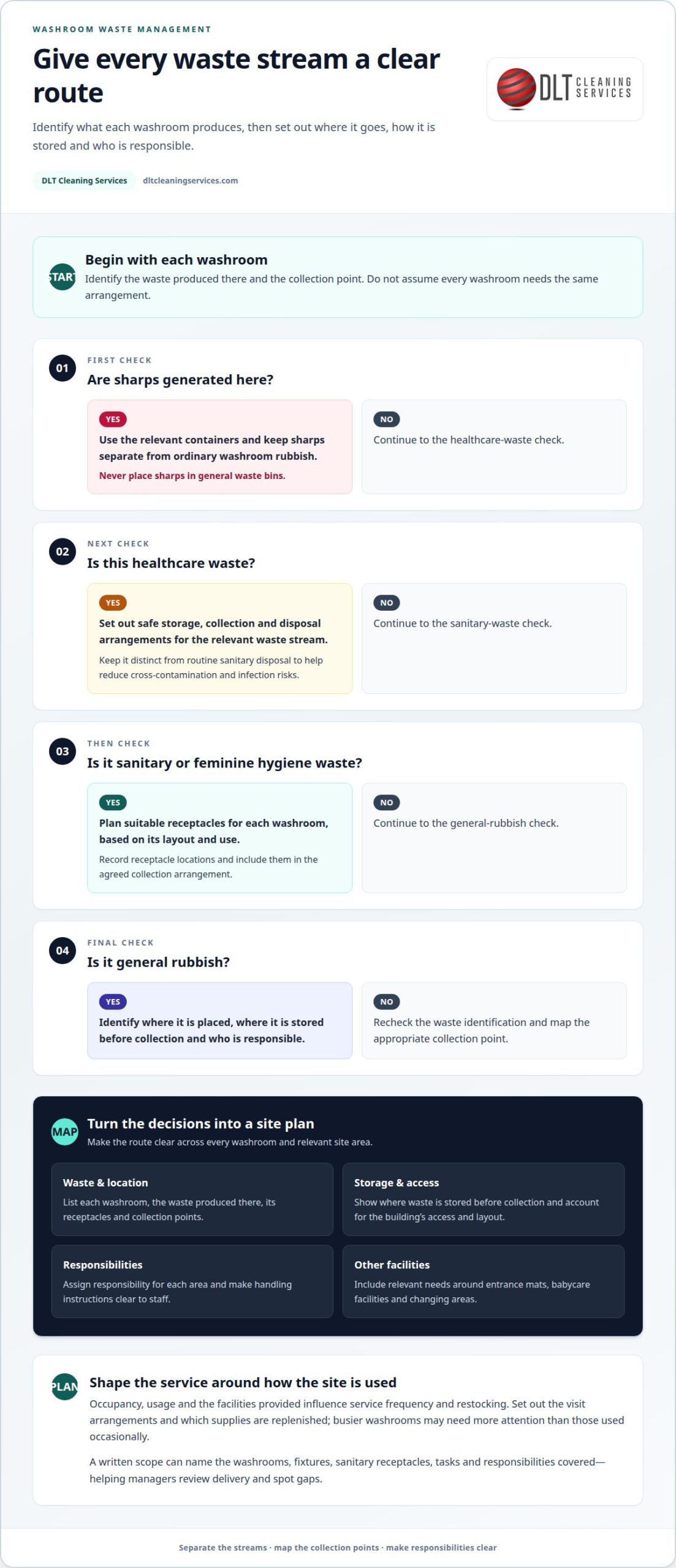
Effective washroom waste management begins by identifying each waste stream and its collection point. General rubbish, sanitary waste and clinical waste have different handling needs, so a clear site plan helps prevent them being mixed. It should show where waste is placed, where it is stored before collection and who is responsible for each area.
Feminine hygiene services support the discreet disposal of hygiene products. The plan should account for the facilities and receptacles required in each washroom, based on its layout and use. Treating every washroom as identical can leave some areas without suitable arrangements.
Clinical waste and sharps need particular care. Where a workplace generates them, the waste plan should identify the relevant containers and keep these streams separate from ordinary washroom rubbish. Sharps must not be placed in general waste bins. Clear instructions for staff help prevent accidental handling and make collection responsibilities easier to manage.
Healthcare providers need safe storage, collection and disposal of healthcare waste to reduce cross-contamination and infection risks. The storage arrangements, collection route and disposal process should therefore be set out for the relevant waste stream. Keeping this process distinct from routine sanitary disposal helps staff understand which procedures apply in each area.
Washroom planning can also include entrance mats, babycare facilities and the disposal needs around changing areas. For example, a baby-changing space may need a dedicated waste point, while mats require attention as part of the surrounding hygiene routine. Including these facilities in the service plan helps avoid gaps between washroom cleaning and waste collection.
A practical review should map each washroom, identify the waste produced there and assign the appropriate collection arrangements. It should also account for access and storage locations, so collections fit the building’s layout. These details give managers a clearer view of how sanitary, clinical and general waste are handled across the workplace.
Bespoke washroom service contracts
A bespoke contract should reflect how each workplace uses its washrooms, not assume every site has identical needs. It can set out the facilities covered, service tasks, collection arrangements and responsibilities. For example, an office with staff and visitor washrooms may need different servicing plans for each area.
Service frequency and restocking depend on factors such as occupancy, usage and the facilities provided. The agreement should state how often visits take place and which supplies are replenished, so essential tasks are clear. The busiest washrooms may need more attention than facilities used occasionally.
To arrange a Hampshire site survey and quote, provide the site address, washroom locations, usage patterns and required services. A survey can assess the facilities and access, helping shape a proposal around the site’s functions and strictly necessary support.
Before signing, check that the contract clearly describes the areas covered, tasks included and visit arrangements. Confirm how restocking, waste collections, access and changes to site requirements are handled. For example, the agreement should distinguish routine washroom servicing from any additional cleaning responsibilities, rather than leaving the scope open to interpretation.
Also review how the provider records completed work and handles service queries. Clear responsibilities help managers understand who deals with missed tasks, changes in usage or an added washroom. Make sure the agreed service matches the building’s facilities and the waste streams generated there.
Timing should form part of contract planning. Work on a washroom project can generally commence within 6 – 8 weeks after the order is received. The site assessment, agreed requirements and order date help establish the project’s start point, so include the expected commencement arrangements in the contract discussions.
Washroom services across Hampshire and the South Coast
Hampshire and the South Coast include workplaces with different layouts, access needs and washroom usage. Service planning can involve locations such as Guildford, Southampton, Winchester, Portsmouth and Fareham, anchored from our base in Guildford. For organisations with sites across the region, a consistent service plan can help coordinate visits while accounting for each building’s facilities.
Yes, washroom hygiene services can be planned for small businesses and public buildings in Guildford and throughout Hampshire. The arrangement should reflect the site’s facilities, usage and access, rather than assume that a small workplace needs the same service as a busy public building.
For a business with several premises, map each location and record its washroom requirements. A central plan can note which facilities need sanitary waste collection, cleaning or restocking, while allowing local preferences to shape practical details. For example, a public-facing site may need its visitor facilities prioritised, whereas an office may focus on staff washrooms.
Regional coordination also depends on clear communication. A named point of contact can help managers share changes to access, occupancy or site requirements across locations. Consistent service records make it easier to see which sites received attention and where needs have changed.
Public buildings may have varied users and several types of washroom. A site plan should identify each area, including accessible facilities and babycare spaces where present. This helps ensure arrangements reflect the actual building, including less frequently used rooms.
Across Hampshire and the South Coast, plan requirements by site, then coordinate them regionally. Grouping locations under one service arrangement can simplify oversight, while site-level details preserve flexibility. A workplace in one town and a public building in another may share a regional plan, but their facilities, access and usage patterns still need individual consideration.
To discuss washroom services Hampshire and hygiene service requirements for workplaces across the region, contact DLT Cleaning Services Ltd.
DLT Cleaning Services
DLT Cleaning Services Ltd helps Hampshire workplaces maintain cleaner, more hygienic environments through Office Cleaning and Hygiene Services. If your washroom arrangements need clearer oversight, or your workplace needs cleaning support alongside its hygiene requirements, these services can help bring day-to-day responsibilities together.
For example, a business reviewing its washroom needs can consider how hygiene fits with its wider workplace cleaning routine. DLT Cleaning Services Ltd manages contracts with dedicated on-site supervision, helping maintain attention to agreed tasks and health and safety requirements.
Share your workplace requirements and the areas where support is needed to discuss a suitable approach. Contact DLT Cleaning Services Ltd to talk through your cleaning and hygiene needs.
Plan a clear next step for your workplace
For businesses planning washroom services in Hampshire, treat the arrangements as part of ongoing workplace operations, not a document to file away after setup. Assign an internal contact to gather staff and visitor feedback and note changes in how facilities are used. This gives future reviews a practical starting point.
A concise brief covering your priorities, access considerations and site requirements can make an initial discussion focused and useful. It also helps clarify what your workplace needs from its washroom arrangements.
Consider what you want the service arrangement to achieve, then take the next step at a pace that suits your organisation. Discuss your requirements with DLT Cleaning Services Ltd and move towards a cleaner, well-managed workplace.
Frequently Asked Questions
What washroom services are available in Hampshire?
Workplace washroom services in Hampshire can include feminine hygiene, bathroom deep cleans, air care and hygiene supplies. Some arrangements also cover soap care and nappy bin services. The scope depends on the site’s facilities and needs. For example, a workplace with a baby-changing area may need different hygiene provisions from an office with staff facilities only.
Which Hampshire companies provide washroom services?
DLT Cleaning Services Ltd provides Hygiene Services for workplaces in Hampshire, alongside Office Cleaning. Its hygiene services include feminine hygiene, bathroom deep cleans, air care, soap care, nappy bin services and related supplies. Based in Guildford, the company serves Hampshire, making it a local option for organisations seeking workplace hygiene support. The right scope depends on the facilities and tasks required at each site.
What is included in a standard washroom services contract?
Contract contents depend on the agreed scope, so there is no single package for every workplace. A useful agreement identifies the locations covered, included tasks, visit arrangements, supply responsibilities and how changes are handled. For example, a business adding a washroom or changing its layout should have a clear process for updating the agreed scope and responsibilities.
What hygiene, waste-disposal and health-and-safety rules apply to washroom services in the UK?
Requirements depend on the workplace and the waste it produces. Healthcare providers need safe storage, collection and disposal arrangements for healthcare waste to reduce cross-contamination and infection risks. A practical site plan should distinguish relevant waste streams and set out handling responsibilities. For other workplaces, clear cleaning and disposal procedures help staff understand which tasks apply to each facility and waste type.