A low cleaning quote can cost more when it leaves important tasks out. The hidden costs of cheap office cleaners can include inconsistent standards, extra work for staff, disruption when shared areas are poorly maintained, and avoidable wear on floors, furniture and office equipment. Poor cleaning can also make hygiene harder to maintain in kitchens and washrooms, adding to concerns about staff sickness and downtime.
It is understandable to focus on the headline quote when managing workplace costs. But the real value of a cleaning arrangement depends on what gets done, how consistently it is done, and whether the service suits the building, its people and its access requirements.
This article explains how cleaning specifications, staff cover, occupancy and access can affect the overall cost of office cleaning. It also outlines what to look for in a service scope and contract, so you can assess the full picture rather than the initial quote alone.
Key Takeaways
- Set out included areas, excluded tasks, supplies and measurable cleaning standards in the contract so the service matches your expectations.
- Consider how cleaning quality and absence cover can affect workplace hygiene, staff time and day-to-day productivity.
- Match cleaning frequency and tasks to occupancy, washroom and kitchen use, building size and access arrangements.
- Look beyond the headline quote for contract terms, supervision and possible extra charges that can change the overall value.
1. Fixed-price contracts, specifications, KPIs and audits
A fixed-price contract helps with budgeting only when its scope is clear. Compare the same office areas, visit frequency and task list in each quote. Check whether materials and equipment are included, and whether window cleaning covers the inside, outside or both. A low quote may reflect fewer tasks, shorter visits or exclusions, rather than better value.
To compare office cleaning quotes and assess unusually low bids, match each line of work against a written specification. Check whether desks, floors, kitchens, washrooms and bins are covered, then note any exclusions or extra-work charges. A five-day cleaning contract should set out the tasks for each visit, not simply promise a clean office.
Set clear measures for reviewing the service, such as completed tasks, missed visits and how reported issues are handled. Agree how results are recorded and how often they are reviewed. A checklist for each visit gives both sides a consistent way to assess performance and address recurring gaps before they create extra work.
Include periodic tasks in the scope, too. For example, specify whether carpet cleaning is included every 6 months. UK Government states that businesses with 5 or more employees must record their COSHH risk assessment. COSHH concerns assessing and controlling risks from hazardous substances, including cleaning chemicals; safe handling and clear procedures should form part of workplace health and safety arrangements.
Read renewal and exit clauses before signing. Some UK cleaning contracts set an auto-renewal deadline often 90 days before the contract ends, potentially locking a business into a new 12-month or 36-month term. Negotiate a definite 30-day notice period for ending the contract, and record how notice must be given.
Clarify whether contract management, supervision or audits attract separate charges. Some firms add an administration or supervisory fee of 5% to 10% on labour costs. The price depends on office size, visit frequency, specified tasks and access arrangements; the exact figure is given in a quote for your case.
2. Staff sickness and downtime
Poorly maintained shared spaces can make workplace hygiene harder to manage. Kitchens, washrooms and frequently touched surfaces need consistent attention, especially when staff use them throughout the day. Missed or rushed cleaning can leave these areas less clean than intended. This does not mean every illness starts at work, but cleanliness is one practical part of maintaining a healthier environment.
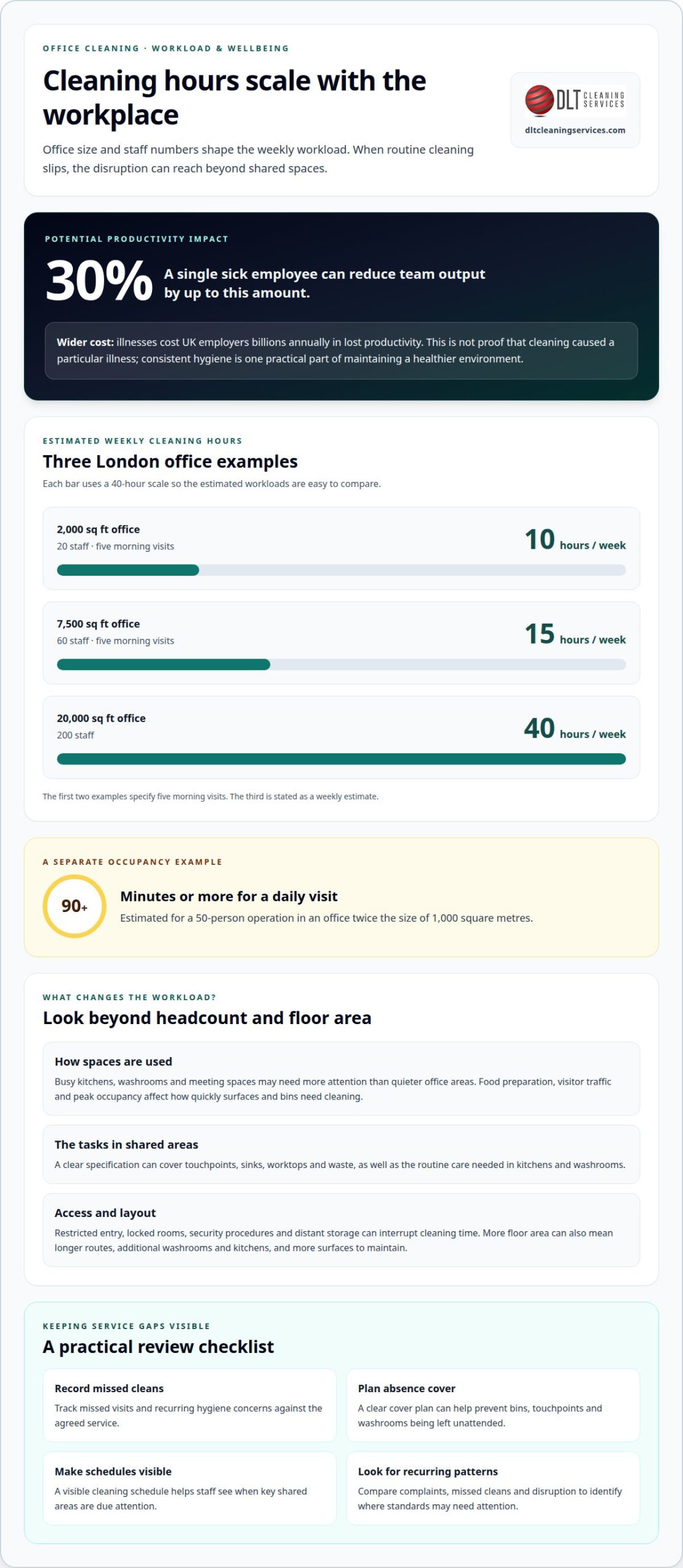
The business impact can extend beyond the person who feels unwell. A single sick employee can reduce team output by up to 30%, and illnesses cost UK employers billions annually in lost productivity. Colleagues may need to cover urgent tasks, move meetings or delay work. Repeated disruption can put pressure on deadlines and customer service.
Consider a shared kitchen where food spills remain on worktops, or a washroom that is not cleaned routinely. Staff may spend time dealing with the problem, avoid the facility or raise repeated complaints. These interruptions can affect concentration and morale. A visible cleaning schedule helps employees see when key areas are due attention and gives managers a practical way to spot missed tasks.
Cover for staff absence matters, too. A clear plan for maintaining routine cleaning when a cleaner is absent can help prevent gaps. Without one, bins, touchpoints or washrooms may go unattended until the next scheduled visit. Record missed visits and recurring hygiene concerns, then review whether the agreed service is being delivered.
Look for patterns rather than relying on anecdotes. Note recurring complaints, missed cleans and disruption in shared areas, then compare them with attendance and operational issues. This will not prove that cleaning caused a particular illness, but it can help identify where standards need attention. Clear reporting also helps managers address problems early, before temporary workarounds become part of the daily routine.
A 2,000 sq ft London office with 20 staff is estimated at 10 cleaning hours weekly for five morning visits. A 7,500 sq ft London office with 60 staff is estimated at 15 cleaning hours weekly for five morning visits. A 20,000 sq ft London office with 200 staff is estimated at 40 cleaning hours weekly.
3. Washrooms, kitchens, occupancy and access as cost drivers
Washrooms and kitchens often need more attention than quieter office areas. Staff numbers, visitor traffic and food preparation affect how quickly surfaces and bins need cleaning. A specification should detail the tasks for each shared space, including touchpoints, sinks, worktops and waste. If these areas are excluded or given too little attention, employees may face overflowing bins, unclean surfaces or extra work during the day.
Occupancy changes the workload. A 50-person operation in an office twice the size of 1,000 square metres could need a daily cleaning visit of 90 minutes or more. A 5,000-square-metre facility also presents different demands from a compact office. More floor area can mean longer routes between rooms, additional washrooms and kitchens, and more surfaces to maintain. The headcount alone won’t describe the full workload.
Consider how people use the building, not just its floor plan. A kitchen used during several breaks needs a different routine from one used occasionally. A meeting space with frequent visitors may need attention between scheduled cleans. Map the busiest areas, note peak occupancy and identify rooms that need daily care. This helps prevent a fixed schedule from overlooking heavily used facilities.
Access arrangements can affect how much of each visit is spent on cleaning. Restricted entry, security procedures, locked rooms and distant storage areas can interrupt the work. If staff must wait for access to a washroom or collect supplies from another floor, less time remains for the agreed tasks. Record entry instructions, key or pass arrangements, storage locations and rooms requiring permission.
Before agreeing a schedule, walk through the building and list its washrooms, kitchens, meeting rooms and access points. Match each area with its use and required tasks, then review the plan when occupancy or room use changes. A practical detail, such as a kitchen becoming a daily staff hub, can affect priorities more than total floor area alone.
4. Hidden costs in office cleaning
Yes. UK cleaning employers must pay staff at least the applicable National Minimum Wage. A low quote alone does not show whether wages comply. Compare the staffing, visit time and duties in the proposal, since a limited specification may leave essential work uncovered. The hidden costs of cheap office cleaners can arise when a quote relies on unrealistic staffing or leaves necessary work outside its scope.
Uninsured or inadequately vetted cleaning staff can expose a business to financial and operational risks. If property is damaged or someone is injured, appropriate insurance and liability cover matter. Check the provider’s insurance, liability cover and health and safety procedures. Ask for proof of Public Liability Insurance, and clarify access arrangements and responsibilities before work begins.
Missed cleans can create extra work for employees or lead to a return visit. Rework takes time, particularly when kitchens, washrooms or floors need attention before staff can use them comfortably. Keep a record of missed tasks and reported problems. This helps distinguish an isolated oversight from a recurring service gap.
Damage is another possible cost beyond the quote. Incorrect or inconsistent care can contribute to premature wear on flooring, furniture and office technology. Regular cleaning can help prevent that wear and reduce longer-term spending. For example, neglected dirt on flooring may require more intensive attention than routine maintenance.
Timing and management arrangements can also change the total. Cleaning before 7 AM, after 6 PM or at weekends may attract out-of-hours premiums. Some firms add administration or supervision charges, so compare the full contract rather than the headline figure. In-house cleaning also brings costs such as recruitment, training, equipment, supervision and absence cover. These are further hidden costs of cheap office cleaners to consider when assessing overall value.
To assess the real cost, compare the written task scope, visit schedule, cover arrangements and any extra-charge triggers. Then weigh these against missed work, staff time and avoidable wear. If your current arrangement leaves repeated gaps, discuss a more consistent cleaning plan.
DLT Cleaning Services: Office Cleaning
DLT Cleaning Services provides office cleaning for businesses in Guildford, with dedicated on-site supervision to support consistent standards. Its Hygiene Services include bathroom deep cleans and the supply of janitorial products.
If missed tasks or uneven cleaning are affecting your office, outline the areas that need attention and the outcomes you expect. Explaining how staff use shared spaces can help shape an appropriate cleaning arrangement.
Each contract is managed with dedicated on-site supervision to support health and safety compliance and maintain oversight of agreed standards.
Contact DLT Cleaning Services to discuss office cleaning for your Guildford workplace and request a free quote.
Make your next cleaning decision with confidence
The hidden costs of cheap office cleaners are easier to manage when you treat cleaning as part of workplace operations, not simply a line in the budget. Review how your current arrangement supports the way your team uses the office, and whether it still fits as rooms and routines change.
DLT Cleaning Services provides Office Cleaning and Hygiene Services for businesses in Guildford and across Surrey, Hampshire and Berkshire. Contact the team to discuss your premises and daily requirements, and request a free quote.
Discuss your office cleaning requirements with DLT Cleaning Services Ltd, and take a considered step towards a workplace your team can feel comfortable in.
Frequently Asked Questions
How does poor cleaning contribute to staff sickness?
Poor cleaning can leave germs on shared touchpoints and food-preparation surfaces, making it easier for them to pass between people. For example, staff may repeatedly touch kitchen taps, fridge handles or door handles throughout the day. Cleaning is only one part of workplace hygiene, so pair regular attention to frequently used surfaces with clear handwashing routines and prompt spill clean-up.
What do cheap office cleaning quotes typically include and exclude?
There is no universal cleaning package: each quote depends on its written scope. A proposal may cover routine tasks but exclude periodic work, consumables or particular areas. Compare the task schedule with the way your team uses the office, and note who supplies items such as bin liners or soap. Make sure every exclusion is clearly identified so you can compare like with like.
What should UK businesses check in an office cleaning contract, including VAT and cancellation fees?
Check the full amount payable, whether VAT is included or added, and how any cancellation charge is calculated. Read the notice requirements, renewal terms and the date your responsibilities end. Confirm how and where to give notice, and whether charges continue during the notice period. Keep the signed contract and any written changes together so finance and facilities teams work from the same terms.