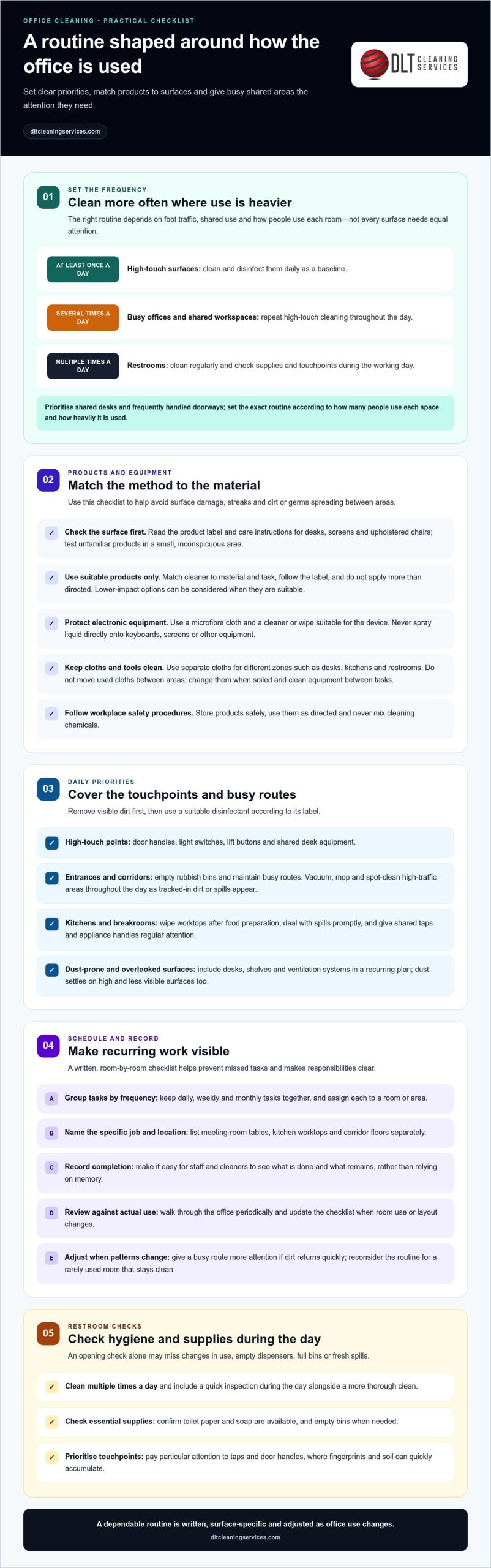
High-touch office surfaces should be cleaned and disinfected at least once a day. Busy offices and shared workspaces may need attention several times throughout the day. This daily baseline is a useful starting point for avoiding common office cleaning problems, but the routine should reflect how people use each space. Shared desks and frequently handled doorways need more attention than areas with little foot traffic.
A dependable routine also depends on using products suited to each surface and making sure essential tasks are not missed. It is easy to focus on visible mess while overlooking touchpoints, changes in room use or low restroom supplies. Set clear priorities, choose suitable products, schedule daily, weekly and monthly tasks, and check and restock restrooms. A written routine makes it easier to maintain a clean, orderly workplace without relying on guesswork.
Key Takeaways
- Match cleaning products to each surface, and keep cloths and equipment clean to avoid transferring dirt between areas.
- Adjust high-touch cleaning frequency to how busy and shared each space is, and include dust-prone surfaces in the routine.
- Divide cleaning duties into daily, weekly and monthly tasks, then revisit the checklist when office use or layout changes.
- Build regular restroom checks into the routine so soap, toilet paper and bins don’t get overlooked.
1. Choosing suitable cleaning products for different surfaces
Match each product to the material instead of using one cleaner everywhere. A product suitable for glass may leave marks on wood, while fabric may need a gentler method. Read the label and care instructions before cleaning desks, screens or upholstered chairs. Test an unfamiliar product on a small, inconspicuous area first. This helps prevent damage and supports consistent results.
Consider environmental impact as well. Offices can choose lower-impact products and methods, but suitability for the surface and task comes first. Use products for washable surfaces only where appropriate, and follow the label rather than applying more than directed. An environmental preference is no benefit if the product is unsuitable for the material or job.
For electronic devices, use a microfibre cloth and a cleaner or wipe that is suitable for the device. Never spray liquid directly onto keyboards, screens or other equipment. A cleaning plan should identify products for different materials, explain how cleaning tasks are separated and set out how equipment is kept clean. Use clean equipment for each day’s work.
In UK workplaces, follow product labels and workplace health and safety procedures. Store products safely, use them as directed and never mix cleaning chemicals. These controls help reduce avoidable exposure and surface damage. When assessing an office cleaning routine, check that it explains how products are matched to surfaces, equipment is managed and shared spaces are cleaned. Common problems include streaks, damaged finishes, lingering dirt and germs spreading between areas. They can result from unsuitable products, skipped tasks or reusing a cloth or sponge on multiple surfaces. Use separate cloths for areas such as desks and kitchens to help prevent cross-contamination. These steps make avoiding common office cleaning problems part of everyday practice.
2. When to clean high-touch surfaces?
Clean and disinfect high-touch surfaces at least once a day, and repeat the task several times throughout the day in busy offices and shared workspaces. Prioritise door handles, light switches, lift buttons and shared desk equipment. Remove visible dirt first, then apply a suitable disinfectant according to its label. This lets the product work on the surface rather than a layer of grime.
To prevent cross-contamination, use separate cleaning cloths for different office zones, such as desks, kitchens and restrooms. Do not move used cloths between areas, and change them when they become soiled. Clean equipment between tasks and plan a route through the building so tools do not carry dirt from a restroom to a meeting room. Reusing the same cloth across surfaces can spread germs.
Clean shared desk touchpoints daily, and dust desks, shelves and ventilation systems regularly. In kitchens, wipe worktops after food preparation and deal with spills promptly. Shared taps and appliance handles also need regular attention. Clean restrooms multiple times a day, paying particular attention to taps and door handles. Set the exact routine according to how many people use each space and how heavily it is used.
Dust settles on high and less visible surfaces, including shelves and ventilation systems, so include them in a recurring plan. Regular dusting helps manage dust and allergens. Air purifiers can improve indoor air quality and reduce allergens. Add vents and other overlooked surfaces to the cleaning checklist, and revisit it when office use changes, such as when a meeting room becomes a shared workspace.
3. Establishing a regular cleaning schedule
A written office cleaning schedule turns recurring jobs into clear responsibilities. Group tasks by daily, weekly and monthly frequency, then assign each one to a room or area. Set frequencies according to how staff use the space, rather than assuming every surface needs equal attention. A regular routine helps prevent dirt and germs building up and may reduce the need to close the office for deep cleaning.
Daily priorities include emptying rubbish bins and maintaining busy entrances and corridors. Vacuum, mop and spot-clean these high-traffic areas throughout the day, responding to tracked-in dirt or spills as they appear. Keep less frequent jobs visible too: vacuum carpets regularly and schedule occasional deep cleaning. Record these tasks so they do not disappear beneath daily priorities.
To avoid missed areas and inconsistent standards, use a room-by-room checklist with a specific task for each location. List meeting-room tables, kitchen worktops and corridor floors separately, then record when each task is completed. Walk through the office periodically and compare the checklist with actual use. Update it when the layout or purpose of a room changes.
Kitchens and breakrooms need clear expectations as well as scheduled cleaning. Set out who should deal with spills and mess, and include regular inspections to catch unfinished jobs. A visible record helps staff and cleaners see what remains, instead of relying on memory. In a shared kitchen, dealing with a spill promptly can prevent sticky surfaces and mess spreading to nearby floors.
Review the schedule when problems recur. If corridor dirt returns quickly, give that busy route more attention. If a rarely used room stays clean, its routine may need adjusting. A checklist should guide work, not stay fixed while the office changes. Keep daily, weekly and monthly tasks together, and make completion easy to record. This helps the team maintain standards and spot overlooked areas.
4. Restroom hygiene and supply levels
Check workplace restrooms regularly and clean them multiple times a day. Use can change during the working day, so an opening check alone may miss empty dispensers, full bins or fresh spills. Include a quick inspection during the day alongside a more thorough clean. Pay extra attention to taps, door handles and other frequently touched surfaces, where fingerprints and soil can quickly accumulate.
Include supplies in each inspection. Confirm toilet paper and soap are available, and empty bins regularly. A simple checklist can record when each check took place, whether dispensers need refilling and whether bins have been cleared. If a dispenser runs empty between checks, note when it happened and adjust the routine to match actual use. These records help staff spot recurring shortages and keep the restroom usable.
Deal promptly with urine, blood or vomit on restroom floors. These are biohazards, and effective cleaning is needed to protect employees’ health. Keep the affected area away from ordinary foot traffic while it is being cleaned, and use methods and products suitable for the contamination. Do not use the same cloth or equipment elsewhere afterwards, as this can spread contamination beyond the restroom.
A blocked toilet needs prompt attention. If it overflows, effluent can be trodden through the restroom and into office areas, creating a wider clean-up problem. Keep the route around the affected cubicle clear and include the incident in handover notes so staff know the issue remains unresolved. Regular inspections can also reveal slow drainage or recurring supply gaps before they disrupt restroom use.
For structured workplace restroom support, explore Hygiene Services and consider how they can complement your cleaning routine.
DLT Cleaning Services: Office Cleaning
DLT Cleaning Services Ltd provides Office Cleaning for workplaces that need a consistent routine across shared spaces, desks and busy corridors. Its service can help keep cleaning tasks and restroom checks on track. Hygiene Services also support workplace hygiene, including bathroom deep cleans and janitorial products.
A clear cleaning plan should reflect how your office is used, which areas need frequent attention and where routine checks can prevent recurring problems. These priorities help shape a service around the workplace instead of relying on a one-size-fits-all checklist. DLT Cleaning Services Ltd provides Office Cleaning and Hygiene Services for businesses in Guildford and the surrounding area.
Contact DLT Cleaning Services Ltd to discuss your office cleaning needs.
Make your cleaning routine easier to sustain
A useful next step in avoiding common office cleaning problems is to decide who is responsible for each part of the routine. When responsibilities are clear, staff know how to report a concern and managers can address recurring gaps before they become frustrations. Consider which tasks your team can manage consistently and where a dedicated service would provide practical support.
DLT Cleaning Services Ltd offers Office Cleaning and Hygiene Services for businesses seeking support with their workplace environment. Discussing your priorities can help you see how these services fit your office and its day-to-day needs. You can explain which areas need attention and the practical challenges your current routine creates.
Contact DLT Cleaning Services Ltd to discuss support for your workplace. A clear plan can help your team move forward with confidence and keep the working environment ready for the day ahead.
Frequently Asked Questions
When to clean high-touch surfaces?
Clean high-touch surfaces at least daily, with extra attention in busy shared spaces. Map touchpoints according to how people use the office, from entrance handles and printer controls to meeting-room switches and shared kitchen fittings. Add a check after a large meeting or room handover, when use may rise between routine rounds. This makes cleaning frequency responsive to actual activity rather than just a fixed timetable.
Why is a regular cleaning schedule important?
A regular schedule makes responsibilities visible and separates planned work from one-off incidents. Records of completed tasks can reveal recurring trouble spots, such as a corridor that needs more frequent attention or a kitchen spill that keeps being missed. Managers can then adjust responsibilities or room priorities based on what is happening in the workplace, rather than relying on memory or waiting for complaints.
How can you create an effective office cleaning schedule and checklist?
Walk through each office zone and list its cleaning tasks, assigned role, frequency and completion field. Include less obvious spaces, such as printer areas, meeting-room touchpoints and the floor beneath shared tables. Keep the checklist easy to access and review it when someone reports a missed task or room use changes. A dated record helps show whether the same duty is repeatedly overlooked.
Which cleaning products and equipment are best for different office surfaces?
Choose products and tools according to the surface and task, then read the label and relevant care instructions before use. Do not assume a general desk spray is suitable for a monitor, glazed partition or upholstered chair. Keep equipment clean and usable, and make different cloth sets easy to distinguish. Before buying supplies, list the office surfaces and tasks they need to cover.
How should office cleaning chemicals be stored and used safely in the UK?
Follow each product label, keep chemicals in their original containers and store them in a designated area away from everyday work supplies. Never mix cleaning products, as combinations can create hazards. Use only the amount and method stated on the label, and keep containers closed when not in use. Include these steps in staff induction and the cleaning procedure.