A well-kept washroom depends on more than a quick clean. Recommended office washroom services include hand hygiene solutions, sanitary bins, air-freshening systems and floor matting. Fully managed office hygiene solutions bring these essentials into a coordinated plan, with service frequency shaped by how the workplace is used.
Washroom cleanliness matters because employees need facilities that are comfortable, maintained and ready to use throughout the working day. A practical hygiene plan also helps businesses manage sanitary waste and keep shared areas in good order.
This guide explains which washroom services offices may need, how sanitary waste is handled and what to consider when tailoring a plan to workplace risks. It also covers how regular servicing, clear responsibilities and attention to busy areas can support consistent hygiene across the office.
Key Takeaways
- Match washroom servicing and hygiene provisions to how often facilities are used and which areas need the most attention.
- Understand the key considerations behind sanitary waste collection and disposal in a workplace.
- See how workplace hygiene measures can support infection control and meet facility needs.
- Use a tailored hygiene survey to identify workplace risks and shape a practical cleaning plan.
Consultation between clients and cleaning companies
A useful site discussion turns the office layout and working patterns into a clear cleaning plan. It identifies busy areas, priority tasks, suitable service times and the supplies required.
Equipment, materials and consumables
The cleaning plan should match the building’s surfaces and tasks. Consumables may include hand soap and paper products, while hygiene services can include bathroom deep cleans and janitorial supplies. Agree who provides and replenishes each item so washroom essentials remain available.
Agree how cleaning protocols will cover work areas, shared equipment, kitchens and washrooms. Employees’ use of these spaces helps determine where regular attention is needed. Ask how staff are trained in health and safety procedures, and how the cleaning schedule is communicated. Clear task lists help align daily cleaning with the building’s priorities.
Costs, setup and service coverage
How much do managed office hygiene services cost in the UK? The price depends on the site and services required, and is provided after a quote request. Key factors include the areas covered, cleaning frequency, occupancy patterns, consumables and the equipment needed.
Setup starts with a site discussion: the provider reviews the layout, use of facilities and areas requiring extra attention. They then agree the cleaning tasks, schedule, responsibilities and supplies. Serviced office agreements typically include cleaning and maintenance, while managed office arrangements typically include regular office cleaning.
Offices should have a daily schedule covering essential areas, adjusted to usage and operational needs. UK service coverage, including smaller towns and rural areas, depends on the provider’s operating area and travel routes. A clear discussion of site location and required tasks helps establish whether the proposed schedule fits the workplace.
Sanitary waste collection and disposal
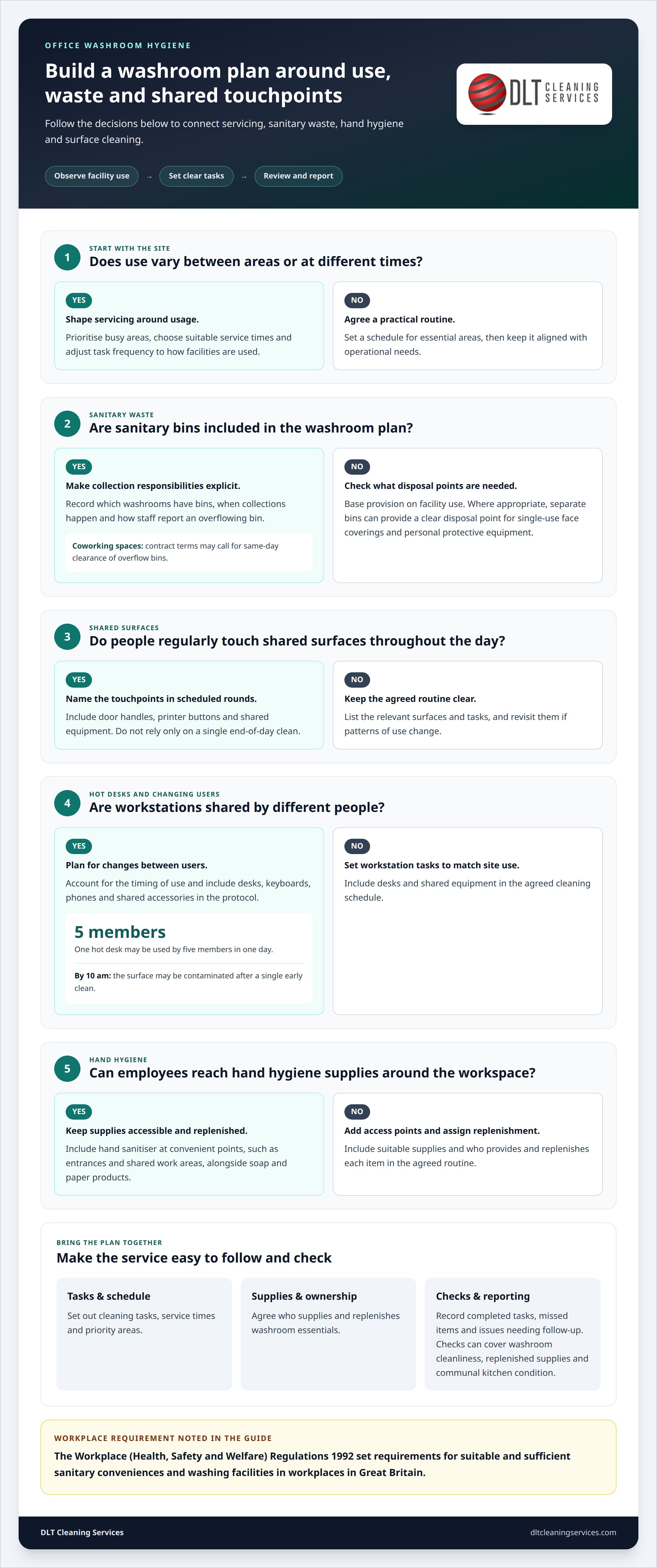
A washroom plan should account for sanitary bins, hand hygiene, air freshening and floor matting. The right arrangement depends on facility use, bin locations and how regularly each area needs attention.
Sanitary waste arrangements work best when collection points and responsibilities are clear. A managed office arrangement commonly includes bins and waste disposal. The service plan should identify which washrooms have bins, how collections fit the cleaning schedule, and how staff report an overflowing bin. In coworking spaces, contract terms may call for same-day clearance of overflow bins. Separate bins can also provide a clear disposal point for single-use face coverings and personal protective equipment.
Hand hygiene needs to be accessible beyond the washroom. Place hand sanitiser at several convenient points, such as entrances and shared work areas, so employees can use it as they move through the workspace. Soap and paper products should be considered alongside sanitiser, with replenishment included in the agreed routine.
High-touch surfaces need dedicated attention in shared areas. Door handles, printer buttons and shared equipment require sanitisation because employees touch them throughout the day. A cleaning protocol can name these surfaces and include them in scheduled rounds, rather than relying only on a single end-of-day clean.
Hot desks need a different approach from permanently assigned workstations. One desk may be used by five members in one day, and its surface may be contaminated by 10 am after a single early clean. The protocol should therefore account for changes between users and the timing of use, with attention to desks, keyboards, phones and shared accessories.
Clear schedules connect waste collection, replenishment and surface cleaning without leaving responsibilities unclear. For workplaces reviewing their arrangements, office hygiene services can help bring these requirements into a coordinated plan.
Workplace hygiene and infection control
Infection control combines suitable washroom facilities with practical cleaning, clear responsibilities and visible quality checks. Contract terms also need to explain how the service operates and how changes are arranged.
Quality checks and reporting
A quality process can record completed tasks, missed items and issues needing follow-up. For example, a supervisor’s inspection checklist can cover washroom cleanliness, replenished supplies and communal kitchen condition.
Agree how findings are reported, who receives them and how follow-up work is recorded. Regular communication helps workplace managers identify recurring issues and discuss practical changes to the cleaning plan. Clear records also make it easier to review the agreed service standards.
Applicable workplace requirements
What UK health and safety or workplace hygiene regulations apply to office washrooms? The Workplace (Health, Safety and Welfare) Regulations 1992 set requirements for suitable and sufficient sanitary conveniences and washing facilities in workplaces in Great Britain, according to The National Archives.
For an office, the washroom plan should support access to appropriate facilities and washing provision. Cleaning arrangements help maintain those spaces, while the employer’s workplace planning should account for their suitability and sufficiency.
Infection-control routines should cover shared spaces as well as washrooms. A cleaning schedule can prioritise communal kitchens, desks and shared equipment, with task frequency shaped by use. Employees also benefit from clear hygiene guidance, such as handwashing signage and instructions for reporting a spill or supply shortage.
Contract terms should set out the agreed tasks, schedule, reporting route and process for raising service concerns. Notice periods and any steps for changing or ending the arrangement should be clear in the agreement. This gives both parties a defined way to manage adjustments as workplace needs change.
Regular reviews can connect observations with practical changes. If a communal kitchen needs more attention, the cleaning schedule can be discussed and revised through the agreed contract process. This keeps quality control linked to how employees use the workplace.
Office hygiene surveys and tailored solutions
A workplace hygiene survey turns building use into a practical plan. It should map facilities, shared equipment and communal areas, then identify where cleaning needs more attention. For example, a kitchen used throughout the day may need a different schedule from a meeting room used occasionally.
Occupancy patterns matter as much as the floor plan. In hybrid offices, employees may spend half the week at home and half in the office. Some workplaces also concentrate a 50% workforce in a smaller area, while staff split across days may use that space over 24 hours. A survey helps match tasks to these changing levels of use.
To tailor the plan, a provider can assess washrooms, kitchens, desks, entrances and shared equipment. The next step is to rank areas by use and hygiene needs, then agree which tasks happen daily, during the day or less often. This gives employees a clear routine and helps reduce gaps between the facilities that need attention.
Which UK providers offer fully managed office hygiene solutions? Look for a service that coordinates office cleaning and hygiene around the premises, facilities and required schedule. A useful plan sets out the areas covered, task frequency, hygiene supplies and how changes are handled.
A survey connects workplace needs with specific tasks instead of applying one routine to every space. The plan can then be reviewed and adjusted when workspace use or priorities change, keeping cleaning aligned with how employees use the building.
To discuss a plan shaped around your facilities and workplace use, arrange a tailored office hygiene discussion.
DLT Cleaning Services: Office Cleaning
DLT Cleaning Services Ltd provides Office Cleaning and Hygiene Services for workplaces that need consistent care across offices and washrooms. If shared areas are being overlooked or responsibility for supplies is unclear, a coordinated plan can bring these tasks together.
Turn to DLT Cleaning Services Ltd for professional support shaped around your workplace’s facilities and cleaning priorities. Office Cleaning and Hygiene Services can address agreed needs across office areas and washrooms, reflecting how your premises are used.
For a practical conversation about your workplace’s cleaning and hygiene needs, contact DLT Cleaning Services Ltd.
Set a clear plan for your workplace
The next step is to turn your workplace’s hygiene priorities into a practical service plan. Identify which areas need the most attention, how employees use shared facilities and which tasks should be included in regular cleaning. Clear priorities help align day-to-day service with the way your office operates.
DLT Cleaning Services Ltd offers Office Cleaning and Hygiene Services to support businesses seeking professional help with workplace cleanliness. Fully managed office hygiene solutions can coordinate these services around your workplace and its priorities.
Start a conversation about the areas you want covered and the approach that suits your office. Discuss your office cleaning and hygiene needs and take a considered first step towards a well-managed workplace.
Frequently Asked Questions
What washroom services are recommended for offices?
Office washrooms need suitable handwashing provision, sanitary waste facilities and regularly replenished essentials. The servicing plan should reflect how frequently each washroom is used and whether particular facilities need closer attention. Clear checks for soap and paper supplies help identify shortages before they become disruptive. Accessible dispensers and well-maintained facilities also make hygiene provisions easier for employees and visitors to use.
The Future of Work – What’s next for hygiene in workspaces?
Workplace hygiene plans will need to respond to changing attendance and shared-space use. A practical approach is to organise cleaning around how employees use the office, rather than treating every room identically. For example, a regularly booked meeting room may need attention between busy periods, whilst a quiet area may follow its normal schedule. Clear communication also helps employees understand how to report a hygiene issue.
What are fully-serviced hygiene solutions?
A fully serviced hygiene arrangement brings agreed hygiene tasks and related provisions under a coordinated service plan. A fully managed office hygiene solution can define which areas are covered, what products are supplied, and how replenishment or servicing is handled. The written scope helps workplace managers understand what the provider is responsible for and how the service fits the building’s daily operation.
What are the different services available?
Workplace support can include routine office cleaning and dedicated hygiene services. Office Cleaning is tailored to office environments. Hygiene Services include bathroom deep cleans and supplies such as toilet rolls, paper towels and soap. The right combination depends on the workplace’s facilities and agreed requirements. Setting out the scope clearly distinguishes cleaning tasks from hygiene products and servicing.
What are the risks of poor office hygiene?
Poor office hygiene can leave shared surfaces and facilities unpleasant or unsuitable for comfortable use. When cleaning and replenishment are overlooked, employees may find washrooms less comfortable or essential supplies unavailable. Communal kitchens and frequently handled equipment can also be missed. Defined responsibilities and regular attention to shared areas help support a more orderly environment.
What services are included in fully managed office hygiene solutions in the UK?
In the UK, inclusions depend on the agreed workplace scope. For Guildford businesses, DLT Cleaning Services Ltd provides Office Cleaning and Hygiene Services. Hygiene Services include feminine hygiene units, air-care products, bathroom deep cleans and janitorial products such as toilet rolls, paper towels and soap. The agreed plan sets out which provisions and cleaning tasks apply to the premises, helping managers understand what the service covers.