A consistently clean office can do more than improve appearances. It can make shared spaces feel orderly and reassuring. If concerns about shared desks, kitchens or washrooms make it harder to feel comfortable at work, a reliable cleaning routine can help. It cannot remove every health concern, but it can support a calmer workplace.
It’s understandable to want confidence that the spaces you use each day are cared for. To stop worrying about office cleanliness, understand how regular cleaning can support wellbeing, why visible order matters and what consistent hygiene can contribute to a shared environment.
This article explains how cleanliness can relate to health-related anxiety, how clutter and untidy surroundings may add to workplace distress, and why dependable cleaning routines can offer practical reassurance.
Key Takeaways
- Understand how a cleaner, more orderly shared workplace may help people feel more comfortable and settled.
- Recognise how clutter and untidy surroundings can affect focus and add to workplace stress.
- See why consistent attention to shared spaces can make hygiene standards feel more dependable.
- Learn when professional office cleaning and hygiene services can support a more reassuring workplace routine.
How does office cleanliness reduce health-related anxiety?
A clean, orderly office can make shared spaces feel more predictable, which may ease health-related anxiety. For example, seeing a wiped meeting table and emptied kitchen bin can reassure staff that routine care is happening. Clean surroundings don’t remove every health concern, but they can support comfort and a calmer experience at work.
Physical conditions matter too. Research published in BMC Public Health linked workplace dust exposure with higher anxiety and depression. Dust on shelves or around equipment can feel concerning, particularly to someone already worried about hygiene. Regular attention to surfaces and shared areas addresses visible build-up and supports a more comfortable environment.
Reasonable office cleaning standards in the UK focus on keeping premises clean, orderly and suitable for their use. In practice, that means addressing visible dirt, clearing waste and paying attention to shared spaces such as kitchens, meeting rooms and washrooms. The right routine depends on how each area is used and what needs cleaning.
UK offices manage workplace hygiene as part of their health and safety arrangements, and the cleaning routine should reflect the workplace and its risks. There isn’t one schedule that suits every office. A frequently used kitchen, for example, may need attention more often than a private office. Clear responsibilities and consistent routines make expectations easier to understand.
To stop worrying about office cleanliness, focus on what’s observable and actionable. Note a specific concern, such as a visibly dirty desk, and report it through the workplace’s usual process. Avoid repeatedly inspecting the same area, which can keep your attention fixed on the worry. If anxiety persists or affects daily life, speaking with a health professional can help address it directly.
Research from 2022 found that the act of cleaning can significantly reduce physiological stress responses, so a routine task may offer more than a visibly tidy result. Cluttered and dirty workspaces can increase stress, reduce concentration and contribute to absenteeism. The National Institute for Occupational Safety and Health’s guidance on indoor environmental quality highlights that clean, well-maintained workplaces support overall wellbeing.
Harvard Business Review notes that physical surroundings shape employees’ experience of work, including their wellbeing and sense of belonging. The 2024 CloroxPro Clean Index reports that perceptions of cleanliness affect how safe and comfortable people feel in shared environments. A clean office can promote a sense of calm, order and professionalism.
Office cleanliness and psychological distress
Visible disorder can place extra demands on attention, making it harder for employees to focus on work. Research from Princeton University indicates that visual clutter can reduce the brain’s ability to focus and process information. A crowded desk, overflowing paper tray or cluttered meeting table can compete with the task at hand. Repeated interruptions from the surroundings may add to workplace stress.
Office clutter has also been linked with emotional strain. A 2020 study in the North American Journal of Psychology linked office clutter with higher occupational stress and emotional exhaustion. Research from UCLA’s Center on Everyday Lives of Families also links cluttered environments with higher stress levels. These findings help explain why a disorganised workspace can feel draining, even when no single untidy item seems serious.
Order can support a stronger sense of control. Psychology Today notes that orderly environments are linked to lower stress and greater perceived control. When items have clear places, employees spend less attention navigating piles or searching for shared equipment. The Leesman Index also indicates that people’s feelings about their surroundings shape their emotional response to work. A visibly cared-for workspace can show that the environment is being managed.
A 2025 study published in Frontiers in Public Health found that employees who practised sorting, setting items in order and shining their workplaces reported significantly lower psychological distress. The finding points to the value of manageable, visible improvements, such as clearing a shared table or putting supplies back in their designated place. For a workplace that needs a dependable routine, consistent office cleaning can help keep shared areas orderly and support a more settled working environment.
The poll found that 44 per cent of UK office staff working from home were worried about appropriate hygiene and cleaning standards when returning to the office.
Consistent cleaning as preventative support
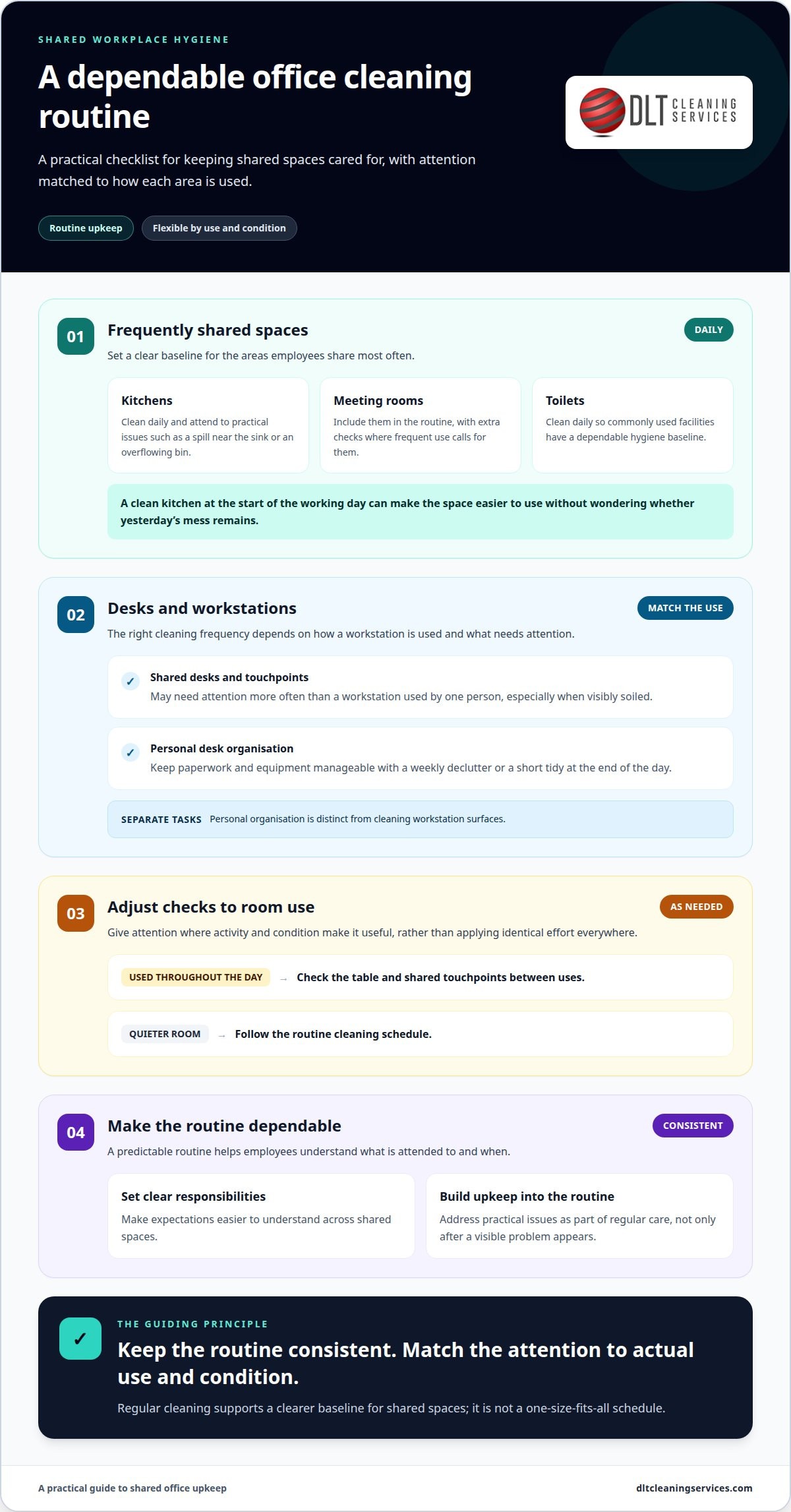
A regular cleaning routine makes hygiene part of workplace upkeep, rather than a response only to visible problems. Kitchens, meeting rooms and toilets should be cleaned daily, giving employees a clear baseline in frequently shared spaces. The routine can also identify practical issues, such as an overflowing bin or a spill near a sink, before they affect the wider environment.
Desk cleaning should suit how a workstation is used. Shared desks and touchpoints may need attention more often than a workstation used by one person, especially when visibly soiled. Personal desk organisation is separate from surface cleaning: a weekly declutter or a short tidy at the end of the day can keep paperwork and equipment manageable.
Consistency matters because unpredictable cleaning can leave employees unsure whether shared facilities have been attended to. A dependable schedule gives people a clearer expectation of what happens and when. For example, a clean kitchen at the start of the working day makes it easier to use the space without wondering whether yesterday’s mess remains.
Preventative support also depends on matching tasks to each area. A meeting room used throughout the day may need its table and shared touchpoints checked between uses, while a quieter room may follow the routine cleaning schedule. This keeps attention on actual use and condition instead of applying the same effort everywhere.
Visible consistency can shape how an office feels socially. Staff are more likely to feel comfortable sharing a kitchen or meeting room when these spaces are regularly maintained. Clear responsibilities help too: cleaning teams handle scheduled tasks, while employees report spills or overflowing bins through the workplace’s usual process. That division supports prompt attention without asking individuals to monitor every surface.
A routine cannot remove every concern, but it can replace uncertainty with practical, repeatable care. Regular attention to shared facilities, together with desk cleaning suited to use and condition, gives hygiene a defined place in workplace operations.
Getting help with cleaning
Clear responsibilities and a practical routine can address actual cleaning concerns without placing extra pressure on employees. The right approach separates workplace upkeep from persistent personal anxiety.
Responsibility for office cleanliness
Office cleanliness is a shared workplace responsibility: managers organise standards, employees care for their immediate spaces, and cleaners complete scheduled tasks. This division matters because nobody should have to guess who handles a spill or an untidy shared area. For example, employees can report a full kitchen bin, while the facilities team arranges its removal and records recurring issues.
Employees can keep their own workspaces orderly and flag specific problems, rather than taking on cleaning duties beyond their role. Managers can set expectations and ensure concerns reach the right person. Cleaners follow the agreed schedule and task priorities, helping the workplace address issues consistently.
Keeping offices clean without excessive rules
Employers can keep offices clean without excessive rules by setting a few clear routines for shared areas. Specify who reports spills, where waste belongs and how to raise a washroom concern. These simple steps give staff a practical way to act without asking them to inspect every surface or monitor colleagues.
Make the routine fit how each space is used. A frequently used kitchen may need more attention than a rarely occupied meeting room. Managers can review feedback and recurring problems with the facilities team, then adjust cleaning priorities. Clear reporting channels also help address actual issues before they become a source of repeated frustration.
Support for persistent cleanliness worries
Persistent cleanliness worries can occur alongside anxiety or obsessive-compulsive disorder (OCD), but a cleaning concern alone cannot establish a diagnosis. If worries take up substantial time, disrupt work or lead to repeated checking, speak with a GP or a qualified mental health professional in the UK. They can discuss what support may suit your circumstances.
For a workplace concern, describe the specific issue to a manager or facilities team. Say which shared area needs attention and what you observed. Separating a practical request from repeated checking can help reduce pressure while ensuring the cleaning issue reaches the right person.
If your workplace needs a dependable routine for shared spaces, discuss office cleaning support to help keep standards consistent.
DLT Cleaning Services: Office Cleaning
DLT Cleaning Services Ltd provides office cleaning and hygiene services to workplaces in Guildford and across Surrey. If shared areas or everyday upkeep are causing concern, our professional cleaning can establish a dependable routine suited to your office.
As a family-run company established in 1999, DLT Cleaning Services Ltd manages each contract with dedicated on-site supervision. Its work focuses on maintaining office environments and essential hygiene, helping businesses keep cleaning responsibilities organised and standards consistent. This can be useful when staff are spending time addressing cleaning issues instead of their usual work.
For a considered conversation about office cleaning, contact DLT Cleaning Services Ltd.
Make a calmer workplace your next step
To stop worrying about office cleanliness, focus on creating a routine that feels clear and proportionate. A workplace doesn’t need constant checking to be cared for. It needs agreed responsibilities, a dependable way to raise practical concerns and cleaning priorities that reflect how people use each space.
That structure can also help separate a genuine maintenance issue from anxiety that continues after the issue has been addressed. If worries are affecting your wellbeing, seeking appropriate support is a constructive step alongside workplace improvements. Both concerns deserve thoughtful attention, without expecting one solution to do everything.
If your organisation would benefit from a more consistent approach, start a conversation about the needs of your workspace and the support that could fit. Contact DLT Cleaning Services to discuss a suitable next step. Small, practical changes can help make the working environment feel more settled.
Frequently Asked Questions
Why do clean offices help people feel calmer and more in control?
A clean, organised office can make it easier to understand how shared spaces are cared for. Clearly arranged kitchen supplies and tidy meeting tables, for example, reduce visual disorder and make items easier to find. That predictability can support a sense of control, particularly for employees who feel uneasy in shared environments. Cleanliness supports comfort, but it can’t guarantee that everyone will feel calm.
What are the health risks of a dirty office versus normal germs and everyday mess?
Everyday mess, such as papers left on a desk, isn’t automatically a health risk. Concerns are more practical when spills, food waste or visibly dirty shared facilities remain unattended. Workplace dust exposure has been linked with higher anxiety and depression, so reducing dust build-up is sensible. A cleaning routine should address actual conditions without treating every ordinary mark or germ as evidence of danger.