The cost of commercial cleaning in the UK is usually quoted as a monthly amount, with the final figure shaped by the premises and the work required. Size, cleaning frequency and how heavily different areas are used all affect the scope, so a price that suits one workplace may not suit another.
It’s understandable to want a clear budget before arranging regular cleaning. The most useful estimate reflects the rooms and tasks that genuinely need attention, rather than treating every space as equally busy. Excluding rarely used rooms from the regular schedule can reduce the overall scope and cost.
This guide explains how commercial cleaning prices are structured, what affects hourly rates and monthly quotes, and how cleaning frequency and building use influence the work involved. It also explains why a tailored scope matters, so you can identify which areas need regular attention and where a more focused plan may be appropriate.
Key Takeaways
- Understand why cleaning quotes can vary with site size, visit frequency, location and the level of work involved.
- Learn how hourly rates relate to the monthly cost of a regular cleaning contract.
- See how a clear cleaning scope can focus attention on the rooms and tasks that matter most.
- Find out how DLT Cleaning Services Ltd’s Office Cleaning and Hygiene Services can support a well-maintained workplace.
How much does commercial cleaning cost in the UK?
Commercial cleaning prices depend on the premises, cleaning frequency and agreed tasks. These factors also shape how businesses plan a monthly budget for office, retail and shared-building hygiene.
Price differences by site type
Site type affects cleaning costs because each building creates different tasks and demands. Offices need attention to desks, kitchens and washrooms, while retail units bring customer footfall and shared buildings require clear arrangements for communal spaces.
Warehouses can involve larger floor areas and specialist work, so their requirements differ from routine office cleaning. A defined scope helps identify which rooms, surfaces and hygiene tasks drive the cost.
London office cost examples
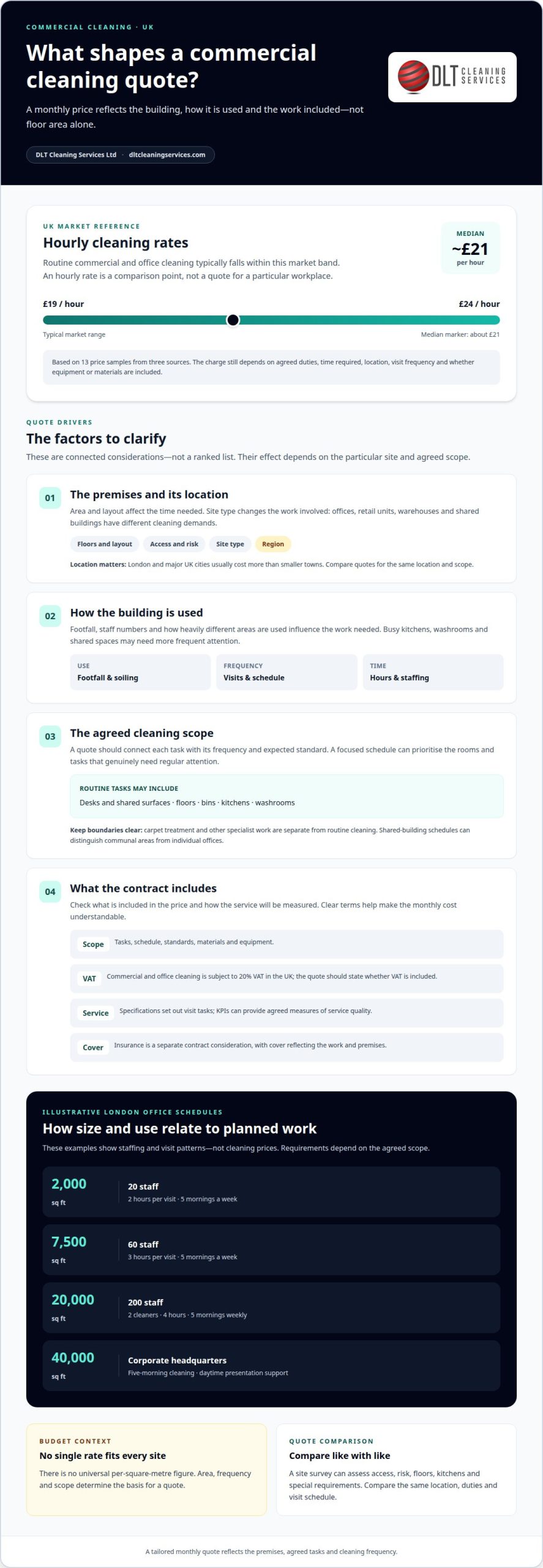
London examples show how staffing and visit frequency shape a monthly cleaning plan. A 2,000 sq ft office with 20 staff might need two hours per visit, five mornings a week; a 7,500 sq ft office with 60 staff might need three.
For a 20,000 sq ft office with 200 staff, an example uses two cleaners for four hours, five mornings weekly. These comparisons help businesses relate the planned work to their building’s size and daily use.
Monthly prices by office size
Five-day cleaning requirements vary by office size, but area alone does not determine the monthly cost. A small office, a medium workplace and a multi-floor site can need different staffing, visit lengths and task schedules.
For example, a London corporate headquarters of 40,000 sq ft may need five-morning cleaning and daytime presentation support. A tailored monthly quote depends on the premises, scope and frequency, and follows a quote request.
Daily tasks and included services
Daily office cleaning focuses on the areas staff use most. A typical schedule may cover desks and shared surfaces, floors, bins, kitchens and washrooms, with hygiene tasks matched to footfall and the condition of each space.
Clear task boundaries matter: carpet treatment and other specialist work are separate from routine cleaning. For shared buildings, the schedule can distinguish communal areas from individual offices.
Commercial and office cleaning is subject to 20% VAT in the UK; a quote should state whether VAT is included. UK legislation identifies the Workplace (Health, Safety and Welfare) Regulations 1992 as relevant to compliance. Insurance is a separate contract consideration, with cover reflecting the work and premises. There is no single per-square-metre figure that fits every site: area, frequency and scope determine the basis for a quote.
What Affects Office Cleaning Prices?
Office cleaning quotes reflect the building, its location and the agreed work. A clear cleaning contract makes monthly costs easier to understand by connecting each task with its frequency and expected standard.
Regional price differences
Regional price differences reflect local operating conditions, with London and major UK cities usually costing more than smaller towns. A rate from another region may not represent the cost of cleaning a local site, so compare quotes for the same location and scope.
Location is only one part of an accurate estimate. A walk-round can establish how staff use the premises, which floors need attention and whether kitchens or shared areas require more frequent visits.
Monthly prices by site type
Typical monthly costs vary by site type because a warehouse, retail unit and office require different cleaning scopes. Warehouses may involve larger areas or specialist work, while retail cleaning must account for customer footfall and visible presentation.
Offices often centre on desks, floors, kitchens and washrooms; shared buildings add communal corridors and facilities. These differences explain why broad market ranges are less useful than a site-specific monthly quote.
Several practical details shape the contract price. Area and layout affect the time needed; visit frequency determines how work is distributed; and the level of soiling influences the tasks required. Regular cleaning can cost less per visit than one-off work because the premises are maintained consistently.
A fixed-price contract should define the scope, schedule and included materials or equipment. Specifications set out the tasks for each visit, while key performance indicators (KPIs) provide agreed measures for service quality, such as completing scheduled tasks. Clear wording helps prevent a low headline quote from obscuring essential work.
For an accurate quote, a site survey considers access, risk, floors, kitchens and special requirements. The resulting cleaning contract should match the building’s use, not simply its floor area. Businesses in Guildford and across Surrey seeking office cleaning can use this scope-led approach to understand what their monthly service covers.
Typical commercial cleaner hourly rates in the UK
Hourly rates offer a useful comparison, but they don’t show the full cost of daily cleaning. On the market, routine commercial and office cleaning typically falls between £19 and £24 per hour, with a median of about £21. This range reflects 13 price samples from three sources collected on 22 November 2026.
A market band is not a quote for a particular workplace. The charge depends on the agreed duties, time required and whether equipment or materials are included. Cleaning desks, floors and washrooms across a small office differs from maintaining busy shared areas, even if both quotes use an hourly rate.
London rates are generally higher than those in smaller towns, reflecting regional price differences. When comparing hourly cleaning costs across UK locations, account for that difference and compare the scope of each quote. The number of visits and expected standard also affect the total.
Hourly pricing can suit work where the time needed varies between visits. A fixed monthly fee can make costs more predictable for larger or more complex premises. It also gives the business a clear recurring budget, provided the contract sets out the tasks and visit frequency.
For a fair comparison, look beyond the hourly figure. Check whether the quote covers equipment, materials, daily cleaning, kitchens and washrooms. Confirm how additional or specialist tasks are treated, since they may require different time and resources from routine duties.
A site survey helps establish the hours and scope behind a quote. The cleaning team can assess the layout, access, floor types and level of use, then specify a schedule. This connects the charge to the work rather than relying on an hourly rate alone.
Before agreeing a contract, match each quote against the same task list and frequency. For example, one proposal may include washrooms at every visit, while another may schedule them differently. Clear specifications make the service and monthly commitment easier to compare.
Reducing costs by excluding rarely used rooms
Cleaning frequency should reflect how each room is used, not simply its presence on a floor plan. A meeting room used occasionally may need less routine attention than a busy kitchen or washroom. Excluding low-use rooms from every visit can reduce the agreed workload, while keeping shared and high-traffic areas on the regular schedule.
For an effective scope, divide the premises into three groups: daily-use areas, occasional-use rooms and spaces needing periodic attention. A warehouse office, for example, may need frequent cleaning in staff facilities but less attention in a rarely occupied meeting room. The schedule can set different frequencies for each group.
UK monthly cleaning costs vary with site type, area, frequency and scope. Routine office cleaning differs from a warehouse or customer-facing retail space, where floor area, footfall and specialist requirements change the work involved. London and other major UK cities generally have higher commercial cleaning prices than smaller towns. A site survey helps translate these factors into a monthly budget.
Deep cleaning and specialist cleaning usually cost more than routine work because they require additional time or equipment. One-off cleans may also involve more work in a single visit than an ongoing schedule. Keeping routine tasks consistent can help prevent dirt building up, while reserving deeper work for areas that need it avoids treating every room alike.
Labour is a major cost factor, accounting for 60-70% of a UK commercial cleaning contract. The National Living Wage can affect the labour costs behind a quote, alongside holiday pay, staffing, travel and supervision. Other influences include access, floor types, hygiene requirements, materials and the condition of kitchens or washrooms.
To reduce unnecessary work, a site survey can map room use and set a suitable cleaning frequency for each area. A clear specification then separates routine tasks from periodic deep cleaning, helping keep the contract focused on what the premises need. Discuss a tailored cleaning scope for your workplace.
DLT Cleaning Services Ltd
DLT Cleaning Services Ltd helps businesses plan workplace cleaning around the areas and hygiene needs that matter most. Its Office Cleaning and Hygiene Services support organisations seeking a consistent approach to maintaining their premises.
For businesses reviewing cleaning costs, a clearly defined scope is a practical starting point. The schedule can distinguish frequently used workspaces from rooms that need less regular attention, aligning the service with how the building operates. DLT Cleaning Services Ltd manages each contract with dedicated on-site supervision, supporting consistent delivery and attention to health and safety.
As a family-run company established in 1999, DLT Cleaning Services Ltd works across Surrey, Hampshire and Berkshire. If your business needs a considered approach to workplace cleaning, contact DLT Cleaning Services Ltd to discuss your requirements.
Set a cleaning plan that fits your workplace
Planning the cost of commercial cleaning in the UK is an opportunity to shape a service around how your workplace operates. A well-defined schedule can balance consistent standards with practical use of the space, while giving your team one less detail to manage.
DLT Cleaning Services Ltd provides Office Cleaning and Hygiene Services for businesses seeking dependable workplace support. The next step is to discuss your premises, priorities and the areas that need attention, so the service can be shaped around your requirements. You can contact DLT Cleaning Services Ltd today to start that conversation and move towards a cleaner, well-managed workplace.
Frequently Asked Questions
Are fixed-price contracts better than hourly rates?
Fixed-price contracts can suit businesses that need a predictable recurring budget, while hourly pricing can fit work with changing time requirements. The better option depends on how stable the schedule and task list are. For example, a workplace with regular visits and consistent duties may value a set monthly charge; occasional or variable tasks may be easier to price by time.
What changes cleaning costs after a contract starts?
Costs can change if the cleaning scope, visit frequency or premises change. Adding an occupied office, increasing visits to a busy kitchen or requesting extra hygiene work means the agreed tasks may need revising. A clear contract records what is included, making it easier to understand how a proposed change affects the service and its charge before work is adjusted.
Why do quotes vary between providers?
Quotes can differ because providers may price different tasks, visit schedules and supply arrangements. One proposal might include cleaning shared kitchens at every visit, while another may cover them less often. Staffing, access, the premises’ condition and specialist requirements also affect the work involved. Compare the written scope alongside the price to see whether each quote covers the same needs.
Are long-term contracts available to reduce costs?
Recurring cleaning contracts can support a stable budget by setting out regular tasks and scheduled visits. They don’t automatically mean a lower total cost; the value comes from matching the service to ongoing workplace needs and avoiding repeated one-off arrangements. For a business with a steady routine, a longer-term schedule can make costs more predictable. Record any changes clearly in the contract.
Can I get a customised cleaning plan for my property?
Yes, a cleaning plan can be tailored to the premises, its use and the tasks required. For example, an office in Guildford might prioritise frequently used work areas and washrooms, while scheduling less-used rooms differently. A suitable plan should state the work, frequency and any separate hygiene requirements, giving the cleaning team a clear scope and shaping the service around your business operations.
Do professional cleaners provide their own equipment and cleaning products?
Supply arrangements vary, so the written service scope should say which equipment and products are provided and which, if any, the business supplies. DLT Cleaning Services Ltd Hygiene Services include janitorial products, but this doesn’t mean every item or piece of equipment is covered. A clear agreed list helps prevent misunderstandings and makes responsibilities straightforward for workplace staff and the cleaning team.