Can a cleaner office really make people feel better about coming to work? It can help: in the 2024 Staples Workplace Survey, 89% of employees said workplace cleanliness directly affects their morale. A tidy desk isn’t a cure-all, but neglected kitchens, washrooms and shared areas can leave staff feeling that their comfort has been overlooked. Businesses looking to boost employee morale with a clean workplace should focus on consistent care, not occasional deep cleans.
Employees notice everyday details: whether surfaces are clean, bins are emptied and facilities are ready to use. When cleaning feels patchy or disruptive, even good intentions can be missed. A reliable routine helps make shared spaces more pleasant and shows that people’s working environment matters, without suggesting cleaning alone will transform morale or productivity.
This guide explains the realistic link between cleanliness and morale, highlights the improvements staff are most likely to notice, and shares practical ways to build cleaning into everyday working life. It also covers how clear routines, hygiene support and consistent oversight can help keep standards steady, so your office feels cared for day after day.
Key Takeaways
- Learn how morale reflects employees’ shared confidence, belonging and everyday engagement, and where workplace cleanliness fits in.
- Spot how desks, kitchens, meeting rooms and washrooms can affect comfort and dignity throughout the working day.
- See why a clean office can support morale without being a complete solution, and weigh its benefits alongside its limitations.
- Use a practical review to gather staff feedback, prioritise problem areas and shape routines around the spaces that need attention.
- Discover how office cleaning, hygiene services and dedicated on-site supervision can help your business boost employee morale with a clean workplace.
How a clean workplace can support employee morale
Workplace morale describes the shared sense of confidence, belonging and day-to-day engagement employees bring to their work. It develops through relationships, management and working conditions. A clean environment can contribute to comfort and show that employees’ everyday experience matters, but it can’t create high morale on its own.
A clean workplace is a space that feels cared for, is hygienic and usable, and supports employees’ everyday working experience. This means more than keeping visible clutter at bay. Clear desks and tidy meeting rooms help a space look orderly, while regular attention to surfaces, shared facilities and general upkeep helps keep it pleasant and ready to use. Both matter, although staff may have different expectations depending on their roles and how they use the office.
What employees may notice in a clean office
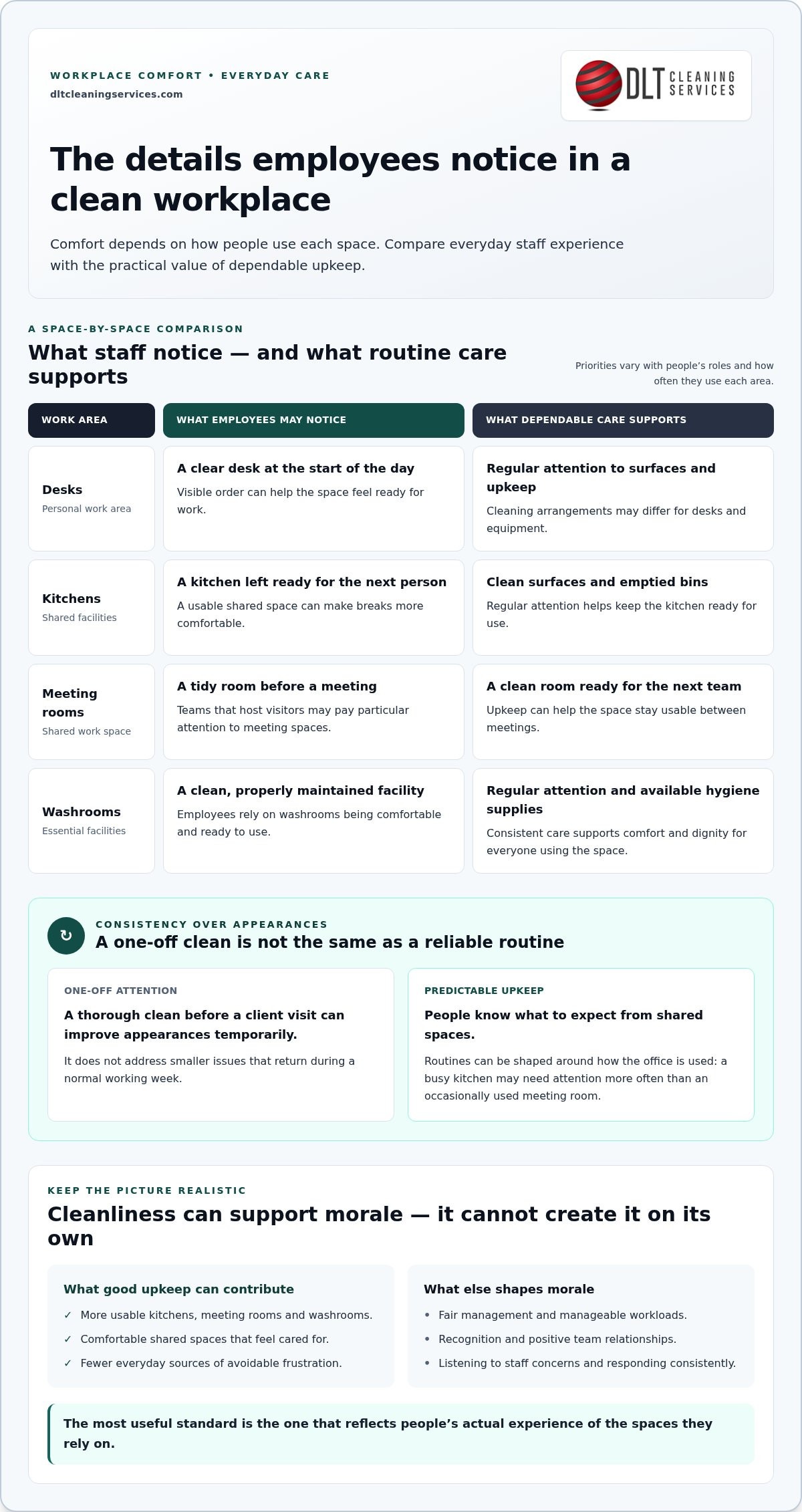
Small details can shape how a working day feels. Employees may notice a clear desk at the start of the day, a kitchen left ready for the next person, or a washroom that feels clean and properly maintained. These details won’t necessarily change how someone feels about their job, but neglected shared spaces can add avoidable discomfort: a sticky table before a meeting, an overflowing bin or supplies that have run out.
Expectations vary. A team that regularly hosts visitors may pay close attention to reception and meeting rooms, while staff who share a kitchen may care more about its daily condition. Find out which spaces employees use most and where problems recur. This helps managers focus on people’s actual experience rather than cleanliness as an abstract standard.
Why cleanliness is one part of morale
Clean surroundings can support comfort and contribute to employees’ sense that their workplace is cared for. But employee morale has several influences, including fair management, manageable workloads, recognition and positive team relationships. A spotless office won’t resolve poor communication, excessive pressure or a lack of appreciation.
It’s more useful to treat cleanliness as one practical part of a wider effort to support staff. Businesses can boost employee morale with a clean workplace by maintaining the spaces people rely on, listening when they raise concerns and responding consistently. This won’t guarantee a particular morale outcome, but it can remove some everyday sources of frustration and help make the office a more comfortable place to work.
How workplace cleanliness shapes comfort, dignity and daily routines
Cleanliness affects ordinary moments throughout the working day, not just a visitor’s first impression of an office. A clear desk can make it easier to settle in, a clean meeting room is ready for the next team, and a usable kitchen makes breaks more comfortable. What matters most depends on how staff use each space, so distinguish practical hygiene needs from preferences about appearance.
Shared spaces, hygiene and employees’ sense of consideration
Kitchens and washrooms need particular care because people share them for essential daily routines. Clean surfaces, emptied bins and available hygiene supplies help make these facilities comfortable and dignified to use. If a shared area is repeatedly left dirty or unusable, employees may face avoidable discomfort or frustration. Set a standard that supports accessibility and individual needs, rather than treating one preferred appearance as the priority.
Clean shared facilities can show consideration by making everyday spaces comfortable and ready for everyone who relies on them. That signal comes from visible, dependable attention, not from expecting staff to overlook recurring problems. The American Society for Clinical Laboratory Science also connects dignity and worth at work with the conditions employees experience in their workplace.
Consistency matters more than a one-off clean
A thorough clean before a client visit may improve appearances temporarily, but it won’t address smaller issues that return during a normal working week. Predictable upkeep helps employees know what to expect: the kitchen is ready for breaks, meeting rooms are usable and washrooms receive regular attention. It can also reduce the repeated irritation of arriving to find a shared area in poor condition, without guaranteeing a measurable change in morale.
Set routines around how the office is actually used. A busy kitchen may need attention more often than a meeting room used occasionally, while desks and equipment may need different arrangements. For further guidance, the article How Often Should Offices Be Cleaned for Productivity? explores cleaning frequency. Consistent office cleaning and hygiene support can make shared facilities easier to rely on. Explore office cleaning support as one way to organise that care.
Does a clean office automatically boost employee morale?
No. Cleanliness can support a more comfortable, considerate workplace, but it doesn’t automatically create high morale. It’s one part of the conditions employees experience each day, not a quick fix for deeper concerns. A clean office may make shared spaces more pleasant to use; whether staff feel engaged and valued also depends on how they’re treated and supported.
Cleaning can reasonably contribute to:
- More usable shared areas: A maintained kitchen, meeting room or washroom is easier to use as intended.
- Fewer everyday irritations: Consistent upkeep can help prevent small, recurring problems from becoming part of the working routine.
- A visible sense of care: Looking after the workplace can show that the business pays attention to its shared environment.
These are supportive conditions, not proof that engagement, productivity or retention will improve. Specific health or performance claims need current, credible evidence and shouldn’t be inferred from a clean appearance alone.
What cleaning cannot fix on its own
A tidy office won’t resolve unclear communication, excessive workloads, concerns about management or a lack of recognition. Nor should cleanliness distract from issues around inclusion, fairness or relationships within a team. Employees may appreciate a cared-for environment and still feel dissatisfied for reasons that cleaning can’t address.
That’s why feedback about the workplace deserves a fuller conversation. If someone raises a concern about a shared facility, address the practical issue. If they describe wider pressures, listen without reducing the problem to cleanliness. Managers can then respond to the actual need instead of treating every concern as a facilities issue.
A clean office can support morale by improving everyday working conditions, but it can’t guarantee how employees feel about their work. To boost employee morale with a clean workplace, treat dependable cleaning as one practical part of a broader approach that also considers leadership, workload, recognition and team relationships. This keeps expectations realistic while recognising that the condition of shared spaces is something managers can improve.
Practical ways to make a clean workplace support morale
A useful cleaning plan starts with what employees actually experience, not an assumed standard of perfection. This five-step review helps managers identify practical priorities, shape routines around how the office is used and check whether changes are working. It won’t guarantee higher morale, but it can help make everyday spaces more comfortable and dependable.
A simple manager’s review of office cleanliness
- Walk through the workplace. Check entrances, work areas, kitchens, meeting rooms and washrooms at representative points in the working day. Note how spaces are left and whether they’re ready for their next use.
- Ask employees what matters. Invite staff to identify which shared areas affect their comfort and what needs attention. A short conversation or feedback form can reveal recurring problems that a quick visual check might miss.
- Record patterns. Note repeated issues, where they occur and when. Separate routine upkeep from tasks that may need periodic deeper cleaning, so a one-off concern doesn’t obscure a recurring need.
- Prioritise and organise. Agree which issues matter most, assign responsibility and set a routine that reflects the office layout, occupancy and use of each space. A frequently used kitchen may need a different level of attention from a room used occasionally.
- Review and adjust. Observe whether the agreed approach is being followed, then gather feedback again. Record concerns fairly. Staff input should inform decisions, even though it may not be possible to address every preference immediately.
Turn feedback into consistent cleaning routines
Clear routines help employees and those responsible for upkeep understand what should happen and how to raise issues. Communicate the approach, including who staff should tell if a shared area needs attention. Where cleaning arrangements need oversight, consistent supervision can help managers keep standards visible and respond to recurring concerns.
Use feedback to refine the plan rather than treating it as a one-time exercise. If the same issue returns, consider whether the timing, frequency or responsibility needs adjusting. For related guidance, see Workplace Hygiene Services: Protecting Employee Health and Health and Safety Compliant Cleaning: A Manager’s Guide to Workplace Standards. The article How Often Should Offices Be Cleaned for Productivity? also explores how cleaning frequency can reflect workplace use.
Thoughtful routines can help businesses boost employee morale with a clean workplace by showing that staff concerns receive practical attention. Cleaning alone won’t change how people feel about their jobs, but consistent care can help maintain comfortable shared spaces. Discuss office cleaning support to organise dependable care for your workplace.
Building a consistently cared-for workplace with the right cleaning support
Once managers understand which spaces need attention, the next step is making that care dependable. A cleaning arrangement should reflect the office’s layout, how often different areas are used and the working patterns of the people who share them. This keeps attention on practical needs rather than applying the same approach to every space regardless of use.
What dependable office cleaning support looks like
Office cleaning helps maintain work areas and shared facilities, while hygiene services support clean, usable workplace amenities. Priorities depend on the office and its routines. Consider how kitchens, washrooms and meeting areas are used, and where consistent attention will make the most difference to staff’s everyday experience. Periodic deep cleaning also helps preserve soft furnishings and flooring; specialist providers such as cleaningguru.ca show how dedicated carpet and upholstery care contributes to a fresher, more welcoming workplace environment.
DLT Cleaning Services Ltd provides office cleaning and hygiene services with dedicated on-site supervision for cleaning contracts. This gives cleaning arrangements a point of oversight and helps keep attention on agreed standards over time. For more detail on planning workplace hygiene around a business’s needs, read Tailored Office Cleaning Services: A Manager’s Guide to Bespoke Workplace Hygiene.
A considered next step for Guildford workplaces
Before reviewing cleaning support, consider what employees have raised and which shared spaces they rely on most. Look for recurring concerns rather than focusing only on a one-off issue. This gives managers a clearer basis for setting priorities and planning a suitable routine, while recognising that cleanliness is one part of a positive working environment, not a guarantee of improved morale.
DLT Cleaning Services Ltd is a family-run business founded in 1999, providing office cleaning and hygiene services in Guildford and across Surrey, Hampshire and Berkshire. Its office maintenance and hygiene support helps businesses take consistent care of workplace spaces, with dedicated on-site supervision for cleaning contracts.
For managers looking to boost employee morale with a clean workplace, dependable cleaning is a practical way to support a cared-for environment while broader staff concerns receive attention too. Explore office cleaning support for your workplace and consider how a consistent arrangement could fit the spaces your team uses.
Make consistent workplace care part of everyday life
A clean office can support comfort and show employees that shared spaces are cared for, but it can’t guarantee high morale on its own. Start by listening to staff, prioritising the areas they use most and maintaining a consistent routine that fits the way your workplace operates.
For Guildford businesses, DLT Cleaning Services Ltd provides office cleaning and hygiene services, backed by a family-run team established in 1999. Dedicated on-site supervision for cleaning contracts helps oversee standards and support consistency. These practical measures can help you boost employee morale with a clean workplace, while recognising that leadership, workload and team relationships matter too.
Explore DLT’s office cleaning services and consider how dependable support could help keep your workplace cared for. Small, consistent improvements can make shared spaces more comfortable for the people who use them every day. Get in touch with DLT Cleaning Services Ltd about office cleaning for your Guildford workplace.
Frequently Asked Questions
Can a clean workplace improve employee morale?
Yes, a clean workplace can support employee morale by making everyday surroundings more comfortable and showing that shared spaces are cared for. It’s one influence, not a standalone solution: fair management, manageable workloads, recognition and good team relationships also matter. Managers can ask which areas cause recurring discomfort, then address those concerns consistently. A cleaner office may improve the day-to-day experience, but it can’t guarantee higher morale.
How does a clean office affect employees?
A clean office can make shared spaces more comfortable and ready to use, helping reduce small frustrations such as finding a meeting room in poor condition or a kitchen that needs attention. Regular upkeep may also help employees feel that their working environment is being considered. People’s preferences differ, so focus on practical hygiene and usability as well as appearance. Cleaning alone can’t resolve wider workplace concerns.
What areas of an office should be kept clean for employee wellbeing?
Prioritise the areas employees use throughout the day: workstations, kitchens, meeting rooms, entrances and washrooms. Kitchens and washrooms need particular attention because staff rely on them for shared daily routines. Consider the office’s layout and how often each area is used, rather than applying an identical approach everywhere. Keep hygiene needs distinct from appearance preferences, and ensure cleaning arrangements support accessibility and the different ways people use workplace facilities.
Does a clean office increase productivity?
A clean, orderly office can support a more comfortable working environment, but it doesn’t guarantee increased productivity. How people work is also shaped by factors such as workload, management, equipment and team communication. Treat cleaning as one practical part of maintaining a usable workplace, not as a performance intervention on its own. Avoid claiming measurable productivity gains unless they’re supported by relevant, credible evidence for the specific claim.
How can managers find out whether office cleanliness is affecting morale?
Ask employees directly which shared spaces affect their comfort and what issues they notice repeatedly. A short staff survey, team discussion or simple feedback channel can help identify patterns, such as particular facilities being left in poor condition. Walk through the office at representative times too, and compare observations with staff feedback. Record concerns, agree priorities and review whether changes help, while recognising that morale can be influenced by issues beyond cleanliness.
How often should an office be professionally cleaned?
There isn’t one frequency that suits every office. Consider the number of people using the space, the way areas are used, the office layout and which facilities need regular attention. A busy shared kitchen may need a different routine from a meeting room used occasionally. Professional commercial specialists such as HERA Cleaning recommend structuring cleaning schedules around footfall and specific room usage to maintain hygiene without disrupting daily workflows. Review the workplace condition and staff feedback, then adjust the cleaning schedule as needs change. The aim is dependable upkeep that fits everyday use.
Can professional office cleaning help create a more welcoming workplace?
Yes, consistent office cleaning can help shared areas feel cared for and ready for employees and visitors. DLT Cleaning Services Ltd provides office cleaning and hygiene services in Guildford, with dedicated on-site supervision for cleaning contracts. The family-run company was founded in 1999. These services can support a clean, usable workplace, though they can’t guarantee improved morale. Managers can explore cleaning support that reflects their office’s needs and working patterns.