What do visitors notice first when they step into your office: the reception desk, the floor or fingerprints on the meeting-room glass? Maintaining a professional image with a clean office isn’t about relying on an occasional deep clean. It means keeping visible, frequently used areas consistently presentable.
A tidy workplace matters, but deciding where to focus can be less straightforward. Reception may be immaculate while shared kitchens, washrooms or high-touch surfaces fall below the standard visitors and staff expect. When routines vary or your team has limited time, gaps can remain despite good intentions. A clear routine helps prioritise the places people see and use most.
This article explains how to identify the areas that shape first impressions, set practical cleaning priorities and decide which tasks your team can manage in-house. It also considers when professional office cleaning or hygiene support may help maintain agreed standards. Use the guidance to keep shared spaces welcoming without treating every task as equally urgent.
Key Takeaways
- Recognise how visible order and care influence the impression your workplace makes before a meeting begins.
- Focus your review on the office areas visitors and staff see and use most, while distinguishing presentation concerns from hygiene needs.
- Use a simple walk-through to record issues, consider how each space is used and set practical cleaning priorities.
- When maintaining a professional image with a clean office, clarify which everyday tasks staff can manage and where consistent cleaning support may be useful.
- Build a repeatable plan by agreeing responsibilities, setting a written scope and reviewing whether it keeps shared areas presentable.
How a clean office shapes your professional image
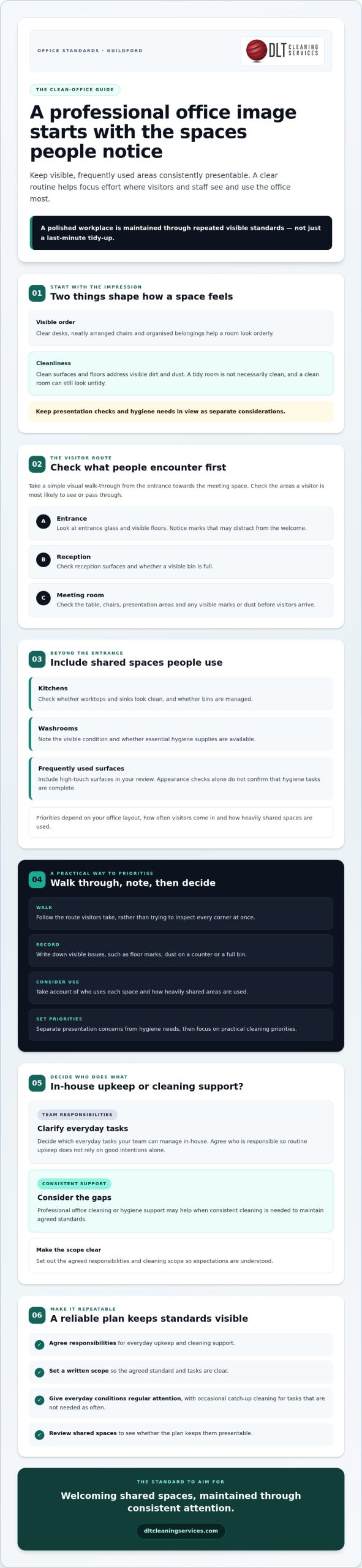
Before a meeting begins, your office is already representing your organisation. Visitors may notice the entrance, reception area or meeting room before they speak with anyone, and the condition of those spaces can shape their first impression. Maintaining a professional image with a clean office means giving visible order and cleanliness consistent attention, rather than relying on a last-minute tidy-up.
Cleanliness and tidiness are related, but they aren’t the same. A clear desk and neatly arranged chairs make a room look orderly; clean surfaces and floors address visible dirt and dust. Both matter, and each needs its own routine. A room can look organised but still need cleaning, just as a freshly cleaned space can appear untidy if paperwork and belongings are scattered.
Which office conditions affect visitors’ first impressions?
Start with the areas a visitor is most likely to see or pass through: the entrance, reception, meeting rooms and routes between them. Look for specific signs of neglect, such as marks on the floor, dust on the reception counter or a visibly full bin. These details don’t tell the whole story of a workplace, but they can distract from the welcome and conversation you’ve prepared.
For example, a manager might welcome a prospective client into a meeting room and notice a dusty table and overflowing bin as they sit down. The meeting can still go well, but those visible issues may draw attention away from its purpose. A brief check of visitor-facing spaces before appointments can catch distractions without turning every visit into a full-office clean.
Why does consistency matter more than a one-off tidy-up?
An intensive tidy before an important visit may improve the room for that day, but it won’t address marks or clutter that return during normal use. Regular attention helps keep shared spaces presentable between meetings, while occasional catch-up cleaning can cover tasks that aren’t needed as often. Both have a place. The key is ensuring everyday conditions receive regular attention.
A professional office image is built through visible standards that are repeated, not just restored for a special visit. For managers in Guildford, this starts with deciding what visitors should see and what routine will maintain that standard. Understanding the scope of commercial cleaning can also help when deciding which cleaning needs require professional support, a choice explored later in this article.
The office touchpoints that make a workspace look professional
Once you’ve identified the spaces that shape first impressions, focus checks on areas people regularly see and use. You don’t need to inspect every corner at once. Priorities will depend on your office layout, how often visitors come in and how heavily shared spaces are used. A small reception beside a meeting room may need a different routine from a larger workplace with several shared routes and facilities.
Keep presentation and hygiene in view as separate considerations. A tidy worktop or orderly row of chairs supports a polished appearance, but it doesn’t confirm that a surface has been cleaned. Equally, a clean space can still look disorganised. Treat appearance checks as one part of your cleaning priorities, not as proof that hygiene tasks are complete.
What should managers check in reception and meeting rooms?
Take a simple visual walk-through from the entrance to the meeting space. Check entrance glass, reception surfaces, visible floors and meeting-room tables. Before visitors arrive, make sure bins aren’t overflowing, chairs are arranged neatly and shared presentation areas are ready to use. This route-based check helps you spot what a visitor is likely to encounter without becoming an exhaustive inspection.
For wider guidance on setting workplace standards, see the complete office cleaning manager’s guide. A further additional workplace cleaning reference can sit alongside your own checks when reviewing priorities.
How do kitchens, washrooms and shared areas affect presentation?
Shared spaces can quickly shape how employees and visitors experience the premises. In kitchens, check whether worktops and sinks look clean and bins are managed. In washrooms, note the visible condition and whether essential hygiene supplies are available. These observations support presentation, but they don’t replace a defined cleaning routine or confirm that hygiene tasks have been completed. Where persistent moisture leads to deeper concerns such as mould, specialist inspection and remediation services like mypureenvironmentsf.com demonstrate how professional testing resolves environmental hazards that regular cleaning cannot address.
Include areas staff use frequently in your plan, even if visitors rarely see them. For more detail on workplace standards, consult the health and safety compliant cleaning guide. If your Guildford office needs help maintaining agreed priorities, you can also explore office cleaning support.
How to assess and prioritise office cleaning needs
A short, repeatable review turns general expectations into clear actions. It also makes maintaining a professional image with a clean office less dependent on someone spotting a problem at the last minute. The right plan will vary with how your office is used, its condition and the standards you agree, so avoid applying the same cleaning frequency to every site.
How can you carry out a practical office presentation check?
Walk the route a visitor would take and look at what’s visible at normal eye level. Check a shared area at a representative point in the working day, not only just after it has been cleaned. Use the same checklist each time, and record who will follow up and when the issue should be reviewed.
- Walk the space: Follow the visitor route and include shared areas staff use regularly.
- Note visible issues: Record specific observations, such as marks on a reception floor or a full kitchen bin.
- Assess use: Consider how often each area is used and whether visitor traffic or shared use affects its condition.
- Set priorities: Identify what needs attention now, what belongs in routine cleaning and what requires planned work.
- Assign and review: Name an owner for each action and set a review point, so follow-up doesn’t rely on memory.
A cleaning inspection reference may offer another prompt for your review. Adapt your checklist to the premises and the requirements you’ve agreed.
Which cleaning tasks should take priority?
Start with issues in high-visibility areas and frequently used shared spaces. A marked entrance floor or poorly presented meeting room may need prompt attention; less visible tasks can be planned according to the site’s needs. Separate routine office cleaning from periodic work, such as bathroom deep cleans, so each task has clear ownership and doesn’t disappear into an informal catch-up list.
Set cleaning priorities according to visibility, use and the needs of your site, rather than a one-size-fits-all timetable. Record agreed tasks and review points in a shared plan. For a Guildford workplace, professional office cleaning with dedicated on-site supervision may help keep agreed standards in view. Check that any provider’s scope matches your priorities.
In-house upkeep or professional office cleaning: how to choose
There isn’t one right approach for every workplace. The choice depends on your team’s capacity, how reliably tasks get done, who oversees standards and what the work involves. Staff can help keep personal desks and shared areas orderly, but cleaning tasks still need clear ownership. This distinction helps managers maintain a professional image with a clean office without assuming employees must take on specialist or contracted cleaning duties.
Consider whether your current arrangement provides continuity when workloads change, whether responsibilities are understood and whether agreed tasks are completed consistently. Everyday tidiness is different from regular office cleaning or planned hygiene work. A contractor may be useful when internal time is limited or standards are difficult to maintain, but it isn’t necessary for every office.
When can an internal routine be enough?
An internal routine may suit a smaller workplace where staff can keep their own work areas orderly and put shared items back after use. For example, a team might agree who checks that meeting rooms are left ready and kitchen items are stored neatly. Make responsibilities practical and explicit, then review whether they’re being followed. This supports order in shared spaces without shifting professional cleaning duties on to employees.
When might a professional cleaning service help?
Professional support may be worth considering if internal capacity is stretched, several shared areas need attention or cleaning standards vary from one visit or week to another. Before choosing a service, set out the tasks required, the areas included and how completion will be overseen. Clear expectations make it easier to assess continuity and accountability rather than relying on informal requests or assumptions.
DLT Cleaning Services Ltd provides office cleaning with dedicated on-site supervision for cleaning contracts, helping keep agreed standards under review. Its hygiene services include bathroom deep cleans and janitorial product supplies. If you manage a Guildford office, consider whether these services match the requirements you’ve identified and check current coverage and details before deciding.
If you’re working out what belongs in a tailored cleaning scope, read the guide to tailored office cleaning services and compare it with your workplace priorities. You can also discuss your office cleaning needs with DLT Cleaning Services Ltd.
How to maintain a professional office image with a reliable cleaning plan
A dependable plan turns priorities into work people can follow, review and improve. Agree what needs attention, assign responsibility, check the results and adjust the plan when the office or its use changes. This gives maintaining a professional image with a clean office a practical structure without imposing the same routine on every workplace.
What should an office cleaning plan include?
Keep the written scope clear enough that managers and cleaning staff understand what’s expected. Record priority areas, agreed standards, task ownership and how to raise issues. Set review points to suit your office’s occupancy, layout and visitor patterns, then check whether the plan still fits.
Separate different requirements so they don’t become blurred. Routine office cleaning, bathroom deep cleans and janitorial product supplies are distinct elements to discuss and document. Broader facility upkeep, such as commercial pest management provided by specialists like Pestrol, should also be scheduled separately from daily housekeeping. A clear scope helps everyone understand what is included, what needs separate planning and who is responsible for following up. Keep the plan proportionate: if a shared area’s use changes, review its priorities rather than applying a fixed frequency to every task.
How can Guildford businesses take the next step?
Before discussing support, note the areas that matter most to your workplace, the standards you want to maintain and any recurring gaps in your current routine. This gives a prospective provider a useful picture of your requirements and helps you assess whether the proposed scope matches them. Check service details and current coverage directly when considering a local option.
DLT Cleaning Services Ltd is a family-run office cleaning and hygiene company established in 1999, serving businesses across Surrey, Hampshire and Berkshire. Its office cleaning includes dedicated on-site supervision, providing a point of oversight for agreed cleaning standards. If your Guildford office is reviewing its plan, bring your priorities and questions to the conversation.
Discuss your office cleaning requirements with DLT Cleaning Services Ltd to explore whether its office cleaning and hygiene services fit your workplace needs.
Put consistent office standards into practice
A professional workplace is shaped by repeatable care, not a one-off tidy before an important visit. Focus first on visible, frequently used areas, then record who owns each task and how you’ll review standards. A written plan helps distinguish everyday tidiness from routine office cleaning, hygiene supplies and planned bathroom deep cleans.
Maintaining a professional image with a clean office doesn’t require every business to follow the same schedule. Set priorities around your premises, how staff use shared spaces and the impression you want visitors to experience. If internal capacity makes consistency difficult, professional support may help provide a clearer scope and oversight.
DLT Cleaning Services Ltd is a family-run business established in 1999, providing office cleaning and hygiene services across Surrey, Hampshire and Berkshire. Its cleaning contracts include dedicated on-site supervision to support oversight of agreed standards. For a Guildford office, outline the areas and requirements you’d like to discuss.
Discuss your office cleaning requirements with DLT Cleaning Services Ltd to take a considered step towards a welcoming, well-presented workplace.
Frequently Asked Questions
How does a clean office create a professional image?
A clean, orderly office helps visitors see that the organisation takes care of its shared environment. Reception, meeting rooms and washrooms are particularly noticeable, so consistent upkeep in these areas can support a welcoming experience. Cleanliness alone doesn’t define a company’s professionalism or guarantee a particular response. Set observable standards that suit the premises and keep them consistent for staff and visitors.
Which areas of an office should be cleaned to maintain a professional appearance?
Start with the route visitors take, including the entrance, reception and meeting rooms, then consider shared kitchens, washrooms, floors and frequently used surfaces. The right priorities depend on the office layout, how people use shared spaces and which areas visitors see. A short, repeatable walk-through helps managers identify issues, record them and assign follow-up rather than relying on a last-minute check before an appointment.
Can employees keep an office looking professional without a cleaning service?
Employees can help by keeping personal work areas orderly and following clear expectations for shared spaces, such as returning meeting-room chairs to their places. Internal tidying isn’t automatically a substitute for planned cleaning. Managers should consider available time, the size and use of the office, and whether tasks are completed consistently. If standards are difficult to sustain, professional office cleaning may provide a clearer structure for agreed tasks.
How often should an office be cleaned to maintain a professional image?
There’s no single cleaning schedule that suits every workplace. The appropriate routine depends on factors such as occupancy, layout, shared facilities and the tasks included in the agreed scope. Review visible areas regularly and set a routine that reflects how the office is used. Reassess it if staffing, visitor patterns or the condition of the premises changes, rather than relying on a fixed timetable that may no longer fit.
Does a clean office improve the way clients see a business?
A tidy, well-maintained office can contribute to a positive visitor experience, particularly in reception and meeting spaces. It’s one part of how clients encounter a business, alongside its communication, service and premises. Cleanliness can’t guarantee trust, sales or a particular impression. Consistent upkeep is a practical way to support a professional, welcoming environment, while the wider client relationship depends on many aspects of how the business operates.
What is the difference between routine office cleaning and a deep clean?
Routine office cleaning supports regular upkeep of the areas and tasks agreed for a workplace, while a deep clean involves additional planned attention. The precise scope can vary by premises and provider, so confirm what each service includes before arranging it. DLT Cleaning Services Ltd provides office cleaning and hygiene services, including bathroom deep cleans. Verify the current service scope when discussing your requirements.
When should a Guildford business consider professional office cleaning?
Consider professional support if internal routines are difficult to maintain, shared areas need regular attention or responsibility for standards is unclear. Before speaking with a provider, note your office layout, visitor-facing areas and main priorities. DLT Cleaning Services Ltd is a family-run company established in 1999, providing office cleaning and hygiene services across Surrey, Hampshire and Berkshire. Its cleaning contracts include dedicated on-site supervision. Check current coverage and service details when discussing your needs.