A sound schedule doesn’t mean cleaning every glass surface every day. Office windows should be cleaned quarterly and blinds twice a year; set the frequency for internal glass according to use and how quickly marks appear. An office cleaning quality assurance checklist makes these tasks easier to schedule and review.
It’s reasonable to expect glass and blinds to stay presentable while also wanting cleaning to be safe and consistent across the workplace. This checklist explains how to set practical frequencies, use cleaning products according to their labels and assess results in busy areas such as washrooms, kitchens and reception.
You’ll also find straightforward ways to record completed work, spot recurring issues and follow up when standards aren’t met. The aim is a clear, dependable routine that supports a clean working environment without treating every surface as if it needs the same attention.
Key Takeaways
- Set daily and more frequent cleaning around how heavily shared areas are used, and keep a clear weekly routine for lower-contact tasks.
- Make chemical safety part of each cleaning task: follow label directions, use the right protective equipment and prevent cross-contamination with colour-coded cloths.
- Plan periodic care for HVAC vents, carpets and high surfaces so dust and dirt don’t build up unnoticed.
- Use dated inspection records to log area condition, issues and follow-up actions, making recurring quality problems easier to address.
Daily, multiple-times-daily and weekly cleaning frequencies
What are the risks of poor office cleaning, and how can they be reduced? Missed cleaning can leave spills, dust and frequently touched surfaces unaddressed, raising avoidable hygiene and slip risks. A planned schedule matched to room use and checked against completed tasks helps reduce these risks.
The Workplace (Health, Safety and Welfare) Regulations 1992 set out UK workplace cleanliness duties, according to The National Archives. The Health and Safety at Work etc. Act 1974 places a general duty on UK employers to ensure, so far as is reasonably practicable, employees’ health, safety and welfare, according to The National Archives.
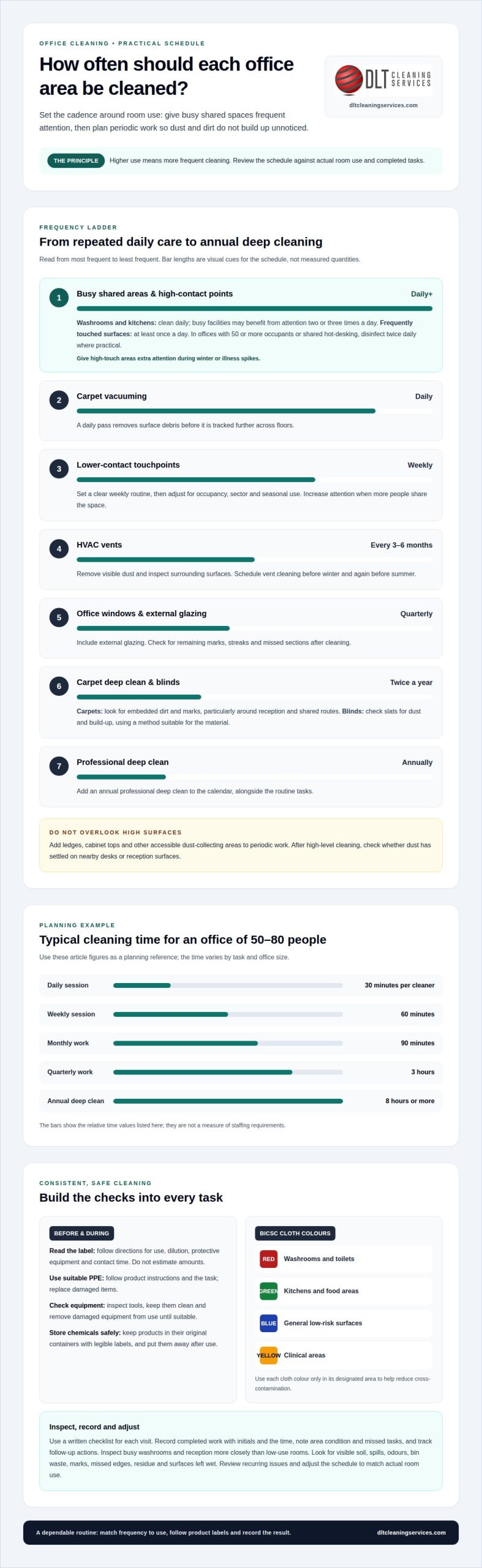
- Clean washrooms and kitchens daily. These shared areas need regular attention, with busy facilities potentially benefiting from cleaning two or three times a day.
- Vacuum carpet daily. A daily pass removes surface debris before it is tracked further across floors.
- Set high-contact touchpoints at least once a day. In offices with 50 or more occupants or shared hot-desking, disinfect these areas twice daily where practical.
- Schedule lower-contact touchpoints weekly. Adjust the frequency to occupancy, sector and seasonal use, increasing attention when more people share the space.
- Estimate labour by office size and task. For a mid-sized office of 50 to 80 people, a typical daily session takes 30 minutes per cleaner; a weekly session takes 60 minutes.
- Include periodic work in the calendar. For the same 50-to-80-person office, typical monthly cleaning takes 90 minutes, quarterly cleaning takes 3 hours, and an annual professional deep clean takes 8 hours or more.
Set inspection frequency according to the cleaning schedule and the risk of missed work. Use a written checklist for each visit, recording completion with initials and the time. Inspect busy washrooms and reception areas more closely than low-use rooms. This creates accountability and shows whether the planned frequency keeps floors, carpets and shared surfaces clean. Review missed tasks and recurring issues, then adjust the schedule to match actual room use.
Chemical handling and personal protective equipment
The Control of Substances Hazardous to Health Regulations are dated 2002, according to The National Archives. A structured cleaning routine puts safe handling into each task, from selecting products to storing them after use. Staff need training in chemical handling and in choosing and using personal protective equipment (PPE) for their work.
Use these checks before and during cleaning:
- Read the product label. Follow its instructions for use, dilution, protective equipment and contact time, rather than estimating amounts.
- Keep chemicals in safe storage. Retain products in their containers, with labels legible, and put them away after use.
- Use the specified PPE. Select gloves or other protective equipment according to the product instructions and task, and replace damaged items.
- Check cleaning equipment. Inspect tools before use, keep them clean, and remove damaged equipment from the routine until it is suitable to use.
Colour-coded cloths help separate cleaning between areas and reduce the chance of carrying soil from one space to another. The BICSc scheme assigns red to washrooms and toilets, green to kitchens and food areas, blue to general low-risk surfaces, and yellow to clinical areas. Use each colour only in its designated area.
For a shared workstation, clean agreed surfaces and equipment with a suitable product, following its label. Leave disinfectant on touchpoints for the contact time stated on the label. Take care around keyboards, phones and other equipment: use the product as instructed and avoid leaving surfaces wet.
Record the product and task checks in the cleaning routine, alongside any equipment issue or missed step. This makes safe practice easier to review and supports consistent hygiene across the workplace. For help maintaining shared workstations and facilities, professional office cleaning can bring these checks into a structured routine.
HVAC, carpets, high surfaces and external glazing
In washrooms, kitchens and other high-touch areas, inspect for visible soil, spills, odours, bin waste and marks on frequently handled points such as taps and door handles. Clean washrooms and kitchens daily. Clean frequently touched surfaces at least once a day, giving them more attention during winter or illness spikes.
Choose a disinfectant suitable for the surface and follow its label for application and contact time. A product intended for one material may not suit another, so match the instructions to the surface. During inspection, look for missed edges, residue and surfaces left wet.
- Check HVAC vents every three to six months. Remove visible dust and inspect surrounding surfaces; schedule vent cleaning before winter and again before summer.
- Plan a twice-yearly deep clean for carpets. Check for embedded dirt and marks, especially around reception and shared routes, where foot traffic can leave soil.
- Clean office windows quarterly. Include external glazing in the schedule, then inspect for remaining marks, streaks or missed sections.
- Clean blinds twice a year. Check slats for dust and build-up, and use a suitable method for the blind material.
Include high surfaces in the schedule too. Add ledges, cabinet tops and other accessible areas that collect dust, then check them during periodic inspections. A thorough review should also check whether dust has settled on nearby desks or reception surfaces after high-level cleaning.
For a consistent quality check, record the date, area and result for each task. If an inspection finds a missed vent, carpet mark or streaked window, note its location and the follow-up action. This makes periodic work visible alongside daily routines and helps identify areas that need closer attention. Include washroom and kitchen fixtures in the review, checking taps, handles and visible spills.
Quality assurance and quality control in commercial cleaning
Reliable commercial cleaning starts with a written scope, agreed standards and clear measures in the contract. An office cleaning quality assurance checklist can turn expectations into observable checks, such as clean kitchen worktops, empty bins and visibly clean door handles.
In-house cleaning gives a workplace direct control over task allocation and daily adjustments. A commercial cleaning service can provide organised cleaning with defined responsibilities; either approach needs suitable training, supervision and records to keep work consistent. Training should cover cleaning methods, equipment use, safe product application, client privacy and professional conduct.
UK checklist templates can be adapted to the building rather than used unchanged. Include the inspection date and time, inspector, areas checked, condition, issues, photographs if useful, required action and follow-up date. Store inspection records for at least 12 months to identify recurring problems, such as missed kitchen surfaces or unclean handles.
- Inspect the agreed areas. Record whether scheduled tasks were completed and whether the results meet the contract standard.
- Track performance over time. Useful measures include areas passing inspection each week, monthly complaints, response time, attendance and equipment or supply availability.
- Review training and resources. Repeated defects can point to gaps in instruction, supervision, equipment or staffing, so record corrective actions.
How should cleaning defects and complaints be reported and resolved? Report a quality problem to the contractor within 24 hours and keep a written record; standard issues are typically given 48 hours to be corrected. Record the affected area, defect, action agreed and follow-up result.
For accreditation and training, a contract review can include BICSc membership or accreditation and ISO 9001 quality management certification. These checks sit alongside practical evidence from inspections and customer feedback, rather than replacing routine performance reviews. Use the findings to agree achievable standards and adjust task schedules when the building’s needs change.
Arrange office cleaning support to put a clear scope, inspection routine and follow-up process into practice.
DLT Cleaning Services: Office Cleaning
DLT Cleaning Services Ltd provides office cleaning with dedicated on-site supervision, helping maintain agreed routines and consistent standards across the workplace. If daily tasks, periodic cleaning or inspection follow-up are difficult to manage in-house, a structured service can bring these requirements together. Cleaning plans can reflect how your offices are used, including shared workstations, kitchens, washrooms and high-traffic areas.
DLT Cleaning Services Ltd also provides hygiene services, including bathroom deep cleans and janitorial products, to support essential workplace needs. Clear schedules and supervision help keep tasks accountable and make it easier to address issues identified during quality checks.
For a dependable approach to your workplace cleaning and hygiene needs, contact DLT Cleaning Services Ltd.
Make consistent standards part of your workplace routine
A useful office cleaning quality assurance checklist should remain a working tool, not a document that gets filed away. As teams, room use and shared spaces change, review how the routine fits the workplace and where closer attention would make the greatest difference. This keeps expectations practical and gives cleaning reviews a clear purpose.
Choose the next step that suits your organisation: refine your existing routine or bring in support to manage workplace cleaning and hygiene. DLT Cleaning Services Ltd helps businesses in Guildford with a dependable approach, shaping the cleaning plan around how the office operates.
To discuss a suitable approach for your workplace, contact DLT Cleaning Services Ltd. A clear conversation is a straightforward way to move towards a more consistent, well-managed environment.
Frequently Asked Questions
How often should blinds, windows, and glass surfaces be cleaned?
Clean office windows quarterly and blinds twice a year; set the frequency for internal glass according to visibility, fingerprints and use. Reception partitions and meeting-room doors may need attention sooner than rarely touched panes. Include frames, handles and lower edges in inspections, since a clear pane can still look unfinished when surrounding surfaces retain marks. Include external glazing in the quarterly window-cleaning schedule.
How often should commercial washrooms and kitchens be cleaned?
Clean commercial washrooms and kitchens daily, with busy facilities benefiting from cleaning two or three times a day. Prioritise toilets, basins, taps, kitchen worktops and visible spills. Include waste removal and a check for remaining marks in the routine. This helps keep shared facilities presentable between scheduled cleans, particularly when high use quickly affects surfaces.
How should high-touch areas be handled in a daily routine?
Clean high-touch areas at least once a day. In offices with 50 or more occupants or shared hot-desking, ideally disinfect these areas twice daily. Include door handles, taps, lift buttons and shared equipment in the route. Choose a suitable product for each surface and allow the label’s stated contact time. Log any missed touchpoints for follow-up.
What are the dirtiest areas in an office that need daily attention?
Prioritise shared, frequently handled or food-contact areas every day, including washroom taps, kitchen worktops, door handles, reception touchpoints and shared equipment. Check for visible spills and waste as well as surface marks. Entrance carpets collect tracked-in debris, so include daily vacuuming in the cleaning routine. Set priorities according to how staff and visitors use each space.
What should an office cleaning quality assurance checklist include?
An office cleaning quality assurance checklist should connect each task with an area, schedule and observable standard. For example, a kitchen entry could record clean worktops, removed waste and any issue requiring follow-up. Add fields for completion initials and time, inspection condition, corrective action and review date. Include product use, equipment condition, safety and waste disposal so quality checks cover more than appearance.
How often should office cleaning tasks be inspected?
Match inspections to the cleaning schedule: record completion at each visit, then review results regularly for repeated misses or changing needs. A weekly review of areas passing inspection can reveal patterns, such as recurring marks in a meeting room. Keep inspection records for at least 12 months to help identify persistent issues and track whether follow-up actions resolved them.