A cleaning contract’s return is not measured by its invoice alone. The ROI of outsourced office cleaning in Guildford comes from weighing the service cost against practical savings, such as staff time freed for their own work and cleaning supplies included in the service. A clean workplace can also support morale and productivity.
It is understandable to focus on cost: businesses need to know what they are paying for and whether the arrangement makes daily operations easier. The value depends on your premises, cleaning requirements and how much staff time or supply purchasing outsourcing can replace.
This guide explains how to assess those factors, what to consider when choosing cleaning support for a Guildford workplace, and how consistent cleanliness may benefit your team. It also covers the role of office and commercial cleaning locally, helping you decide whether outsourcing is a practical fit for your business.
Key Takeaways
- Compare the cleaning contract with the supplies, staff time and management effort it could replace to judge its financial value.
- Define the needs of your Guildford premises so cleaning frequency and priorities fit how the workplace is used.
- Consider how a consistently clean environment can support staff morale and help employees focus on their work.
- Clarify which routine tasks and additional cleaning needs matter most before shaping an outsourced service.
Cost efficiency and return on investment
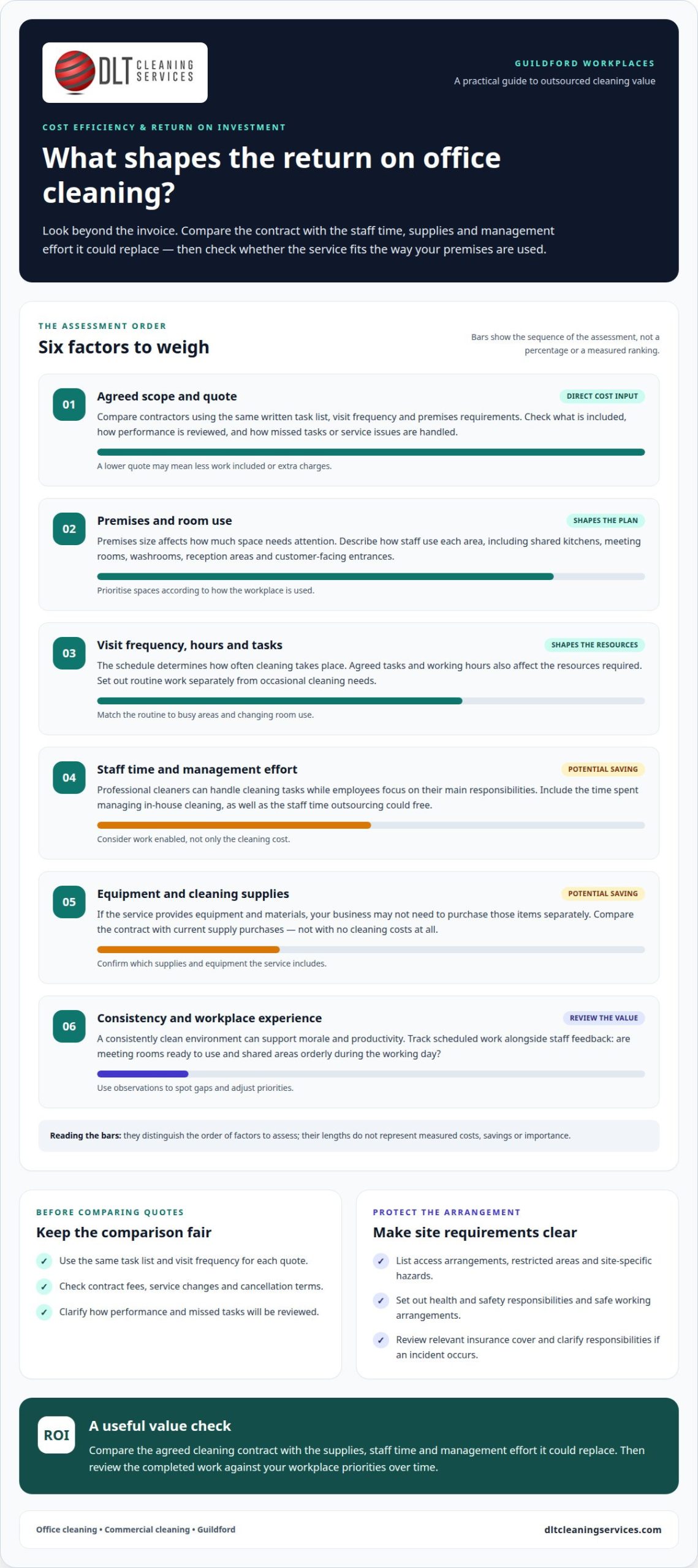
To assess the ROI of outsourced office cleaning in Guildford, compare the contract cost with the resources it replaces and the work it enables. The return is not simply a cleaner workplace: it can also include staff time saved and supplies provided.
Comparing Cleaning Quotes and Contractors
Compare quotes against the same written task list, visit frequency and premises requirements. Check what the contract includes, how performance is reviewed, and how missed tasks or service issues are handled. A lower figure may offer less value if essential work falls outside the agreed scope or incurs extra charges.
Professional cleaners can complete cleaning tasks while your employees focus on their main responsibilities. Factor potential time savings into your comparison, alongside the cost of managing cleaning in-house. Check the contract terms for fees, service changes and cancellation, so unexpected charges do not undermine the expected return.
Factors Affecting Cleaning Costs
Premises size affects how much space needs attention, while the schedule determines how often cleaning takes place. The agreed tasks and working hours also shape the resources required. A compact workplace with limited shared areas has different needs from a larger premises with busy kitchens, meeting rooms and washrooms.
A cleaning quote depends on premises size, visit frequency, cleaning hours and agreed tasks. Describe how staff use each area, then prioritise the spaces that need regular attention. This gives DLT Cleaning Services Ltd a practical basis for preparing a quote and helps you compare options on the same scope.
Supplies matter too. When the cleaning service provides equipment and materials, your business does not need to purchase those items separately. Include current supply purchases and staff time in your assessment, rather than comparing the contract with no cleaning costs at all. Track the agreed work against workplace priorities to judge whether the arrangement delivers value over time.
Guildford office and commercial cleaning
For outsourced cleaning in the UK, set out workplace health and safety responsibilities and insurance arrangements clearly in the contract. Assess site-specific risks and agree safe working arrangements, rather than assuming one generic checklist suits every premises.
Guildford workplaces vary, so commercial cleaning should reflect how each building is used. An office may need attention to reception areas, meeting rooms and shared kitchens, while customer-facing premises may prioritise entrances and frequently used surfaces. A clear schedule keeps these priorities visible.
Before agreeing a contract, list the rooms, surfaces and recurring tasks that matter most. Note access arrangements, restricted areas and site-specific hazards. Then agree how cleaning standards will be reviewed and how concerns should be reported. These practical details help make commercial cleaning consistent across the premises.
A tailored plan should match how the building is used, rather than applying the same routine everywhere. For example, a meeting room used throughout the day may need a different schedule from a quieter office. The agreed scope can also distinguish routine work from occasional tasks, helping managers understand what the contract covers.
Insurance deserves a clear place in the selection process. Review the cleaning company’s relevant cover and clarify how responsibilities are divided if an incident occurs. Keep agreed procedures, site information and reporting routes accessible to the people managing the workplace. This gives everyone a practical reference point.
Dedicated on-site supervision can support consistent standards and health and safety compliance. A structured review can identify missed tasks, changing room use or new access requirements, then feed those findings into the cleaning plan. For Guildford businesses shaping a suitable scope, explore commercial cleaning support for workplaces as a natural next step.
Set out workplace health and safety responsibilities and insurance arrangements clearly in the contract. Assess site-specific risks, agree safe working arrangements, review the cleaning company’s relevant insurance cover and clarify how responsibilities are divided if an incident occurs.
Office cleanliness and productivity
Cleanliness affects how employees use a workplace, not just how it looks. A tidy meeting room lets teams begin discussions without first clearing surfaces or rearranging chairs. An orderly kitchen provides a usable shared space during breaks. A clean environment can support morale and productivity in these everyday activities.
Outsourcing cleaning can free employees to focus on their main responsibilities. Office staff, for example, need not divide their attention between cleaning tasks and customer enquiries. Managers can keep teams focused on core work while cleaning follows an agreed routine. This separation makes workplace responsibilities easier to organise.
To connect cleaning practices with staff experience, identify the areas that affect daily work most. Ask teams which shared spaces become difficult to use, such as a busy kitchen or frequently booked meeting room. Make those areas clear priorities in the cleaning schedule, then review whether the routine suits how they are used.
Consistency matters because a one-off tidy will not maintain a workplace through regular use. Assign recurring tasks to specific areas, such as reception surfaces, desks and shared facilities. Employees can then see what the routine covers, while managers can report recurring gaps through an agreed route.
Track workplace feedback alongside completion of scheduled tasks. For instance, note whether meeting rooms are ready to use and shared areas remain orderly during the working day. These observations help distinguish an effective routine from one that looks satisfactory only immediately after cleaning. They also give managers useful details for adjusting priorities.
Review the arrangement when working patterns or room use change. A team using more shared desks may need more attention in those spaces, while a quieter office may have different priorities. Matching cleaning services to actual workplace activity helps keep areas usable and reduces cleaning-related distractions for staff.
Typical outsourced office cleaning services in Guildford
A Guildford cleaning contract should spell out routine tasks, supplied materials and any additional work. Agree which equipment and materials the cleaning company supplies and where they will be stored. This helps premises managers understand what the regular arrangement covers.
Routine schedules can be organised by area. List reception, desks, meeting rooms, kitchens and washrooms, then set out the tasks expected in each space. A meeting room may need attention to tables and floors, while a shared kitchen may require cleaning worktops and sinks. Clear descriptions make the agreed scope easier to review.
Frequency matters too. A busy reception or shared kitchen may need a different routine from a quieter meeting room. Record which spaces need regular attention, when work should take place and how completed tasks will be reported. This gives the cleaning team practical instructions and helps the business spot gaps against the agreed schedule.
Some requirements sit outside routine cleaning. Commercial cleaning companies may provide additional services such as deep cleaning, floor scrubbing, carpet cleaning and window cleaning. Treat these as separate scope items: identify the area, the task and when it is needed. That distinction helps prevent assumptions about what the regular contract covers.
Before signing, turn your premises’ needs into a written task schedule. Include each area, its routine work, supplied equipment and materials, and any additional cleaning requirements. Agree how changes will be recorded, so an altered office layout or increased use of a shared space can be reflected in the scope. Review the schedule against how staff actually use the premises, rather than relying on a generic list.
For a workplace with defined priorities, discuss your office cleaning requirements and the tasks that matter most to your team.
DLT Cleaning Services: Office Cleaning
DLT Cleaning Services provides Office Cleaning and Hygiene Services for businesses seeking consistent workplace support. Turn to the team when you want to define a clear cleaning routine around your premises, staff needs and priorities.
Dedicated on-site supervision helps manage each contract and maintain attention to health and safety. This gives businesses a clear structure for overseeing the agreed work and responding to changing workplace requirements. Start by outlining the areas and tasks that matter most, such as shared spaces or meeting rooms, then discuss how they fit into an office cleaning arrangement.
If you are considering outsourced cleaning for your Guildford workplace, contact DLT Cleaning Services to discuss your requirements and request a free quote.
Make your next cleaning review count
Treat cleaning as an operational decision, not simply a recurring task. Set a review point and consider whether the arrangement still supports how your team uses the workplace. This keeps the ROI of outsourced office cleaning in Guildford connected to your business priorities as they evolve.
DLT Cleaning Services provides Office Cleaning and Hygiene Services for businesses organising workplace cleaning support. Discuss a routine that fits your premises and the areas your team relies on most.
Contact DLT Cleaning Services Ltd today to discuss your workplace requirements. A considered approach can help you move forward with greater confidence in your cleaning arrangements.
Frequently Asked Questions
Outsourcing Cleaning Services: Why Should You Do This Today?
Outsourcing can help when cleaning takes staff away from their main duties or leaves important tasks inconsistently managed. List the cleaning jobs employees currently handle, then identify which responsibilities should remain with your team. This gives you a practical basis for deciding whether external support would improve daily organisation and help employees focus on their core work.
What is the average cost of outsourced office cleaning in Guildford per hour or square metre?
There is no single average that applies to every Guildford office, because the scope and working pattern shape the quote. Key factors include premises size, cleaning frequency, required hours, task list and whether equipment and materials are included. For a meaningful comparison, ask for the same areas and duties to be priced, then assess each quote against that shared scope.
How much does it cost to employ an in-house office cleaner in Guildford, including wages, National Insurance and pension?
Calculate the full employment cost by adding gross wages, employer National Insurance and pension contributions, then include recruitment, supervision, absence cover and cleaning supplies. The total depends on the agreed hours, pay arrangements and workplace requirements. Compare that figure with an outsourced quote covering equivalent tasks and hours, so the comparison reflects the resources needed rather than wages alone.
How can businesses calculate the ROI of outsourced office cleaning compared with in-house cleaning?
Compare the outsourced contract cost with the in-house costs it replaces. Include employment costs, supplies, equipment and management time, then account for staff time redirected to core duties. Subtract the contract cost from the value of those savings and benefits, then compare the remainder with the contract cost to express the return as a percentage. Use the same period and scope for both options.
What productivity, absence and staff retention benefits can professional office cleaning provide?
Professional cleaning can support a more usable workplace, helping staff concentrate and feel comfortable in shared spaces. An orderly environment may benefit morale and productivity, while absence and retention also depend on wider workplace conditions. Track employee feedback, cleaning-related concerns and workforce trends separately. This helps managers understand how cleaning fits into staff experience without treating it as the sole cause of change.