Strong access controls matter as much as a thorough clean. For higher-security offices, BS 7858 is an employment-screening standard to consider, alongside DBS checks appropriate to the setting and verification of each operative’s identity and right to work. A secure and confidential office cleaning arrangement also depends on clear rules for access, information and reporting concerns.
It’s understandable to want a clean, well-maintained workplace without exposing confidential records, devices or conversations. Staff vetting is an important starting point, but day-to-day safeguards matter too: cleaners need clear instructions about restricted areas and how to work around sensitive information.
This guide explains what to consider when reviewing cleaner vetting, schedules, confidentiality agreements, security procedures and insurance. Clear arrangements can help your cleaning service support a professional workplace while protecting privacy.
Key Takeaways
- For higher-security sites, consider BS 7858 screening, suitable DBS checks, and identity and right-to-work verification for cleaning operatives.
- Arrange cleaning for quieter periods and coordinate visits with office managers to reduce the chance of sensitive information being exposed.
- Confidentiality clauses should set clear expectations for handling information encountered at work, including not disclosing it without authorisation.
- Set out access, sign-in, incident-reporting and insurance requirements; data protection for cleaning teams is discussed in relation to UK GDPR and the Data Protection Act 2018, according to The National Archives (legislation.gov.uk).
What vetting should office cleaners have?
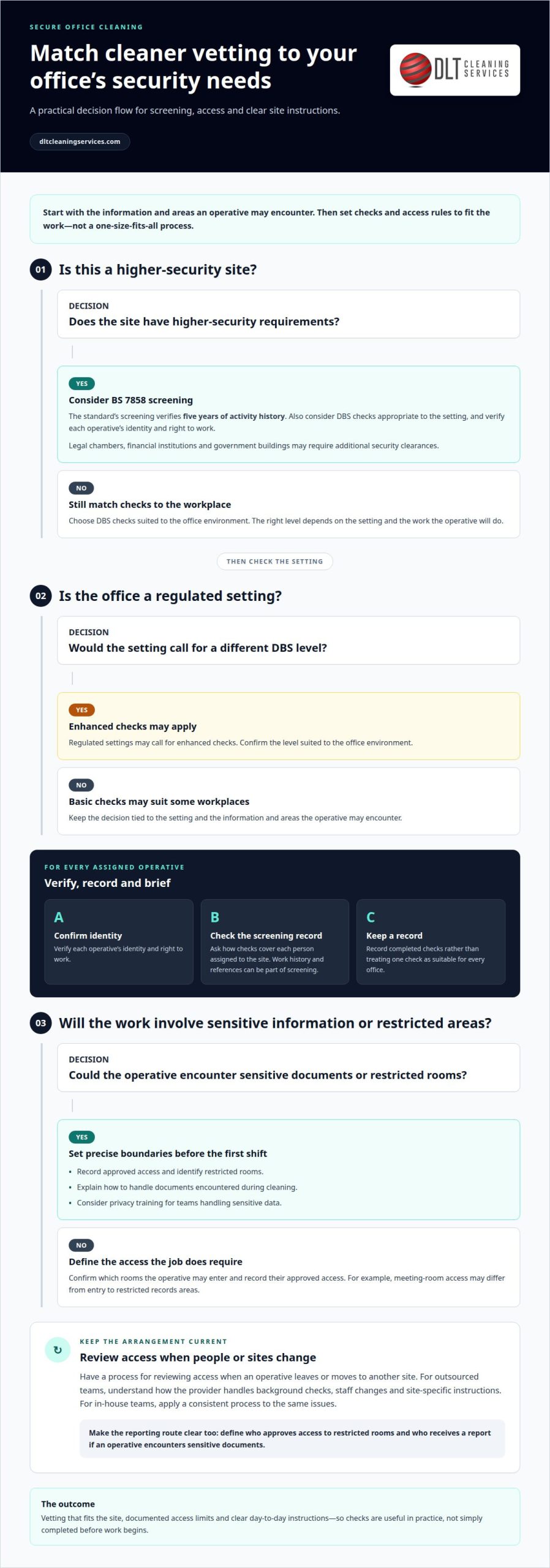
Vetting should fit the information and areas an operative may encounter. For higher-security sites, consider BS 7858 screening, appropriate DBS checks, and identity and right-to-work verification. These checks form a practical starting point for secure and confidential office cleaning.
Background Checks for Cleaning Staff
Ask how the screening process covers each person assigned to the site. Checks can include work-history and reference verification, alongside a DBS check suited to the office environment. Basic checks may suit some workplaces, while enhanced checks may apply in regulated settings. BS 7858 is a screening standard to consider for higher-security sites; its screening verifies five years of activity history.
For teams handling sensitive data, privacy training can reinforce checks by setting clear expectations for discretion. Legal chambers, financial institutions and government buildings may require additional security clearances. Match the vetting to the work, and keep a record of completed checks rather than treating one check as suitable for every office.
Operative Security Checks
Security checks should establish who is entering the building and what access they need. Verify each operative’s identity and right to work, then confirm relevant DBS checks and screening records. For example, a cleaner assigned to meeting rooms may need different access from someone entering restricted records areas.
Before the first shift, record the operative’s approved access and explain how to handle documents encountered during cleaning. A secure and confidential office cleaning plan also needs a process for reviewing access when an operative leaves or moves to another site. This makes vetting useful in practice, not simply a file completed before work begins.
In-House and Outsourced Cleaning Security
In-house cleaning gives an employer direct control over recruitment and daily supervision. With outsourced cleaning, those responsibilities sit with a provider under an agreed arrangement. Either model can support confidentiality when screening, access rules and reporting responsibilities are clearly recorded.
For outsourced teams, understand how the provider handles background checks, staff changes and site-specific instructions. For in-house teams, apply a consistent process to the same issues. In either case, define who approves access to restricted rooms and who receives a report if an operative encounters sensitive documents.
- Match DBS checks and any additional clearance to the site’s setting.
- Record identity, right-to-work and screening checks for assigned operatives.
- Set access rules for meeting rooms, documents and restricted areas before cleaning begins.
Cleaning rotas to limit exposure to sensitive information
Plan cleaning around occupancy, confidential work and restricted facilities. A rota agreed with the office manager helps employees know when rooms will be accessed and which areas need special arrangements.
Off-Hours Cleaning Schedules
Cleaning when most employees are absent can reduce exposure to sensitive documents and conversations. The right window depends on opening hours, building access and when confidential work takes place. In a Guildford workplace, for example, a rota could avoid a regular evening meeting or a period when staff handle private records.
Coordinate visits with office managers to avoid confidential meetings and busy periods. Weekend cleaning may suit high-security facilities if building access and alarm procedures are planned around normal arrangements. Internal window cleaning is also easier to schedule during low-occupancy periods, limiting visibility into workspaces.
Compare a fixed rota with a flexible one by considering occupancy, meeting patterns and the areas that need attention. A strict schedule makes visits predictable, while flexibility helps when sensitive meetings or operational changes affect access. Agree who can approve changes, then share updated timings with employees and cleaning staff.
Preparing the Office for Cleaners
Before each visit, employees can put sensitive documents in locked drawers or cabinets and clear desks where possible. Shred confidential papers before disposal rather than leaving them in general waste. These steps reduce the chance of documents being seen or moved during routine cleaning.
Give the cleaning team a current rota showing restricted rooms, meeting times to avoid and any access changes. For example, an office manager can mark a room unavailable during a confidential meeting, then update the schedule when it ends. Clear instructions help staff follow the same plan at every visit.
- Agree cleaning times with the office manager and communicate rota changes to employees.
- Schedule internal window cleaning for quieter periods and secure confidential papers before visits.
- Use a flexible rota when sensitive meetings or changing facility needs affect access.
A planned office cleaning schedule can fit around the working patterns and privacy needs of your workplace.
Confidentiality agreements
Every operative should have confidentiality or non-disclosure terms in their employment conditions. A cleaning contract and service-level agreement should also record the agreed scope, access boundaries, reporting route and visit procedures.
Confidentiality and Non-Disclosure Agreements
A confidentiality agreement sets expectations for information an operative might encounter at a client’s premises. It should cover information seen, heard or handled during work, and prohibit unauthorised use or disclosure. A non-disclosure agreement can set out the same core commitment, giving staff a clear reference if they encounter documents or overhear a meeting.
Include the requirement in every operative’s terms, not only the supervisor’s. During induction, explain practical behaviours: leave papers undisturbed, respect clear desks and don’t photograph client areas. Staff should also know how to report accidental exposure, such as finding confidential papers in a general waste bin. Unauthorised disclosure may have legal consequences.
Contract and Service-Level Terms
The contract should define the cleaning scope, approved schedule and any restricted areas. Its service-level terms can record sign-in and sign-out steps, alarm-setting responsibilities, and how the cleaning company reports an incident. Clear wording helps both parties understand who manages access and who receives updates after a concern.
Set out how staff changes are handled, including removing access and returning keys or fobs. The agreement can also describe reviews, such as checking cleaning logs and discussing missed tasks with the account manager. For a sensitive site, specify which rooms need supervised cleaning and how instructions are updated when arrangements change.
Use the security induction to connect signed terms with daily routines. For example, explain the difference between general waste and confidential shredding, and tell operatives not to move documents between waste streams. A defined procedure gives staff a practical reference during each visit, rather than leaving confidentiality as a broad promise without clear actions.
Swift says unauthorised use or disclosure of information obtained while working at a client’s premises breaches confidentiality and may have legal consequences. The page recommends including confidentiality or NDA clauses in every operative’s terms.
Cleaning-company security protocols and insurance
Written procedures should cover personal data, site access, incident reporting and insurance. They turn confidentiality commitments into practical steps for commercial cleaning.
Document, Screen and Personal Data Handling
Cleaning teams should leave documents and screens undisturbed, never photograph work areas, and report exposed information through a defined route. UK GDPR and the Data Protection Act 2018 are both discussed in data-protection procedures for cleaning teams; The National Archives (legislation.gov.uk) names the 2018 Act.
The Information Commissioner’s Office (ICO) explains that organisations remain responsible for personal data when third parties are on site. A cleaning operative may encounter personal data incidentally, so induction should explain clear-desk expectations, confidential waste streams and how to report a suspected breach.
Access Cards, Keys and Restricted Areas
Set out sign-in and sign-out steps for every visit, including who receives keys or access cards and where they are secured. Explain alarm-setting procedures and which rooms, such as server rooms, HR offices or records areas, are restricted.
When staff change, revoke their access promptly and recover keys or fobs. Arrange supervised cleaning for highly sensitive rooms, or keep them locked when cleaners are unaccompanied. Security seals can also show whether a drawer or cabinet has been disturbed.
Accreditations and Standards
ISO 9001 provides a framework for managing cleaning processes, including documented method statements and audits, according to the International Organization for Standardization (ISO). It is useful to understand how a cleaning company records and reviews its procedures, but it does not replace site-specific access controls.
Weak controls can expose confidential information, leave keys unaccounted for or make incidents harder to investigate. Review whether insurance cover suits the work and risks at your workplace, and whether responsibilities are documented.
For office cleaning services shaped around clear workplace procedures, discuss your office cleaning requirements.
Discuss security measures with the cleaning company, including controls on after-hours access and the disposal of sensitive materials. Surveillance cameras in key areas can monitor cleaning activity and help check that protocols are followed. Set rules for access to restricted server rooms, HR, legal and records areas.
Employers can audit cleaning processes with surprise inspections and reviews of cleaning logs. A cleaning provider usually is not processing a client’s data as a service, although its staff may incidentally access personal data on site. Verify adequate insurance coverage to protect the business in case of incidents.
DLT Cleaning Services: Office Cleaning
DLT Cleaning Services Ltd provides office cleaning and hygiene services for workplaces that need dependable, well-managed upkeep. If your office handles sensitive information, clear cleaning routines and communication about access can help maintain an orderly workplace alongside your own security procedures.
Each contract has dedicated on-site supervision to support consistent service and compliance with health and safety requirements. Discuss your workplace’s cleaning needs and how the service can fit its day-to-day routines.
For a considered approach to secure and confidential office cleaning, contact DLT Cleaning Services Ltd to discuss your requirements.
Set the right standard for your workplace
Make privacy part of the everyday working environment, not an afterthought. Understanding how cleaning fits around your team’s routines helps you set practical priorities and maintain a cared-for workplace without losing sight of confidentiality. Secure and confidential office cleaning should support how your organisation works, with arrangements shaped around its needs.
DLT Cleaning Services provides Office Cleaning and Hygiene Services. If you’re considering a new arrangement or reviewing how your workplace is maintained, get in touch to discuss your priorities and a suitable approach.
Contact DLT Cleaning Services to discuss your office cleaning needs and take a considered next step towards a clean, well-managed workplace.
Frequently Asked Questions
How can businesses verify a commercial cleaning company’s security credentials and references?
Review written evidence and references from comparable commercial workplaces. For a Guildford office, check that staff screening is documented, insurance covers the work and references can speak to reliability and following site rules. DLT Cleaning Services states, “We conduct thorough DBS background checks on all our staff” and “Our cleaning team is fully insured against any potential damage or injury.”