Why is it that the most comprehensive-looking cleaning quotes often result in the dustiest desks and most frustrated facility managers? You likely understand that a clean, healthy workspace is the foundation of your team’s success, yet maintaining that standard shouldn’t require constant micro-management or chasing staff for basic hygiene supplies. It’s exhausting to deal with rigid agreements that don’t adapt to your hybrid schedule or hide extra costs in the fine print.
Understanding exactly what to look for in an office cleaning contract is your best defence against inconsistent service and unexpected invoices. As we move into 2026, a robust agreement must do more than just list tasks. It needs to guarantee transparency and provide clear lines of accountability. This guide explores the essential clauses you require, including updated GB CLP chemical compliance and dedicated on-site supervision, to ensure your office remains a safe and welcoming environment whilst protecting your bottom line. We will walk through the benchmarks for quality and the legal requirements that keep your business compliant and your staff healthy.
Key Takeaways
- Understand why a robust service level agreement acts as the essential blueprint for your workplace hygiene, health, and employee productivity.
- Learn how to define a granular scope of works to ensure you know exactly what to look for in an office cleaning contract to prevent service gaps.
- Discover why dedicated on-site supervision is the most critical management factor for ensuring your cleaning standards never slip.
- Identify the non-negotiable legal requirements, including COSHH compliance and liability insurance, that safeguard your business operations.
- Recognise the unique value of partnering with a family-run local expert that offers higher staff retention and a personal commitment to your office.
What is an Office Cleaning Contract and Why Does It Matter?
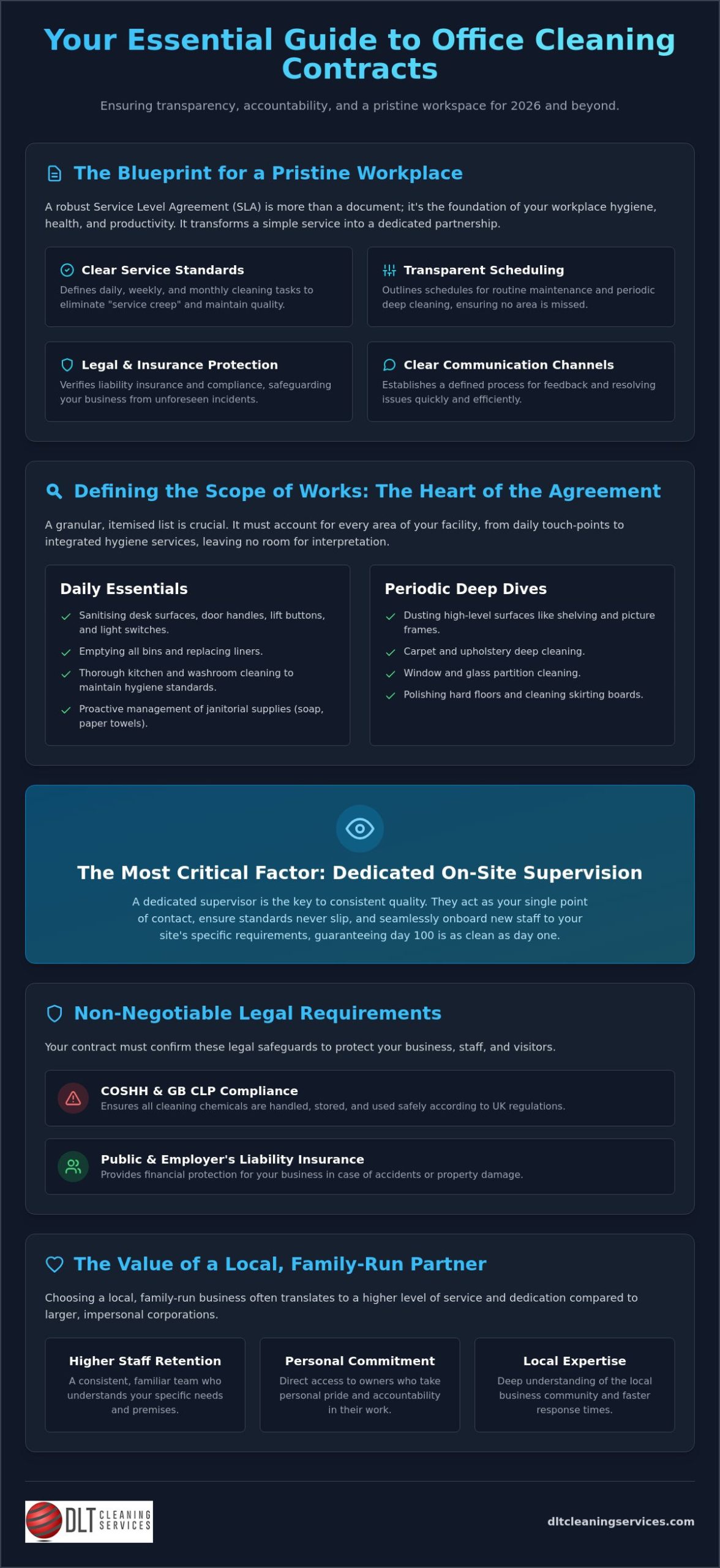
At its core, an office cleaning contract is a formal Service Level Agreement (SLA) between your business and your cleaning provider. It acts as the definitive blueprint for your workplace hygiene, directly influencing employee health and productivity. Without this structured document, you’re essentially leaving your office’s first impression to chance. A robust agreement provides a clear framework for success, ensuring your environment remains a safe, professional space for both your staff and visitors. A well-drafted contract should act as a functional tool that guarantees:
- A clear definition of daily, weekly, and monthly service standards.
- A transparent schedule for routine maintenance and periodic deep-cleaning.
- Legal protection and insurance verification for both parties.
- A defined process for communication and resolving issues quickly.
Vague agreements often lead to “service creep,” where cleaning standards gradually decline over time. You might find that the high-quality finish you saw in the first month starts to fade, with dust accumulating on skirting boards or bins left unemptied because they weren’t explicitly mentioned. When you’re deciding what to look for in an office cleaning contract, you should prioritise a document that defines a partnership rather than a mere vendor relationship. A true partner takes ownership of your space, allowing you to focus on your operations whilst they manage the environment with a sense of dedication.
The Risks of Inadequate Documentation
Relying on verbal agreements or “handshake deals” in commercial cleaning is a significant risk for any facility manager. These informal arrangements lack the clarity needed to resolve disputes over “ad-hoc” tasks or unexpected charges for hygiene supplies. If a spill occurs or a specific meeting room needs urgent attention, a lack of documentation often results in confusion about responsibility and cost. Poor cleaning doesn’t just look bad; it actively harms staff morale. Employees who feel their workspace is neglected are less likely to feel valued, which can impact your business reputation amongst clients who visit your premises.
Setting the Foundation for Consistency
A meticulously drafted contract ensures that the level of care your office receives on day 100 is identical to the standard set on day one. It provides a clear framework for onboarding new cleaning personnel, ensuring that specific site requirements are passed on seamlessly without a drop in quality. This consistency is a hallmark of the importance of professional standards in the industry. By clearly outlining expectations from the start, you eliminate ambiguity. This clarity is exactly what to look for in an office cleaning contract if you want to avoid the cycle of hiring and firing providers every six months. A stable agreement fosters a sense of accountability amongst the cleaning team, who understand that their role is vital to your business success.
Defining the Scope of Works: The Heart of the Agreement
The “Scope of Works” is the engine room of your agreement. It shouldn’t be a vague summary but a granular, itemised list that leaves no room for interpretation. When considering what to look for in an office cleaning contract, you must ensure that every square inch of your facility is accounted for. This includes often-overlooked high-touch points like door handles, lift buttons, and light switches, which are critical for reducing the spread of seasonal illnesses. A comprehensive contract also integrates hygiene services, ensuring that your janitorial supplies, from hand soap to recycled paper towels, are managed proactively so you never run out at a critical moment.
A dedicated provider will walk through your premises to identify specific needs that a generic checklist would miss. This hands-on approach ensures that the resulting document reflects the actual usage of your building. By being specific about every task, you create a clear baseline for quality that protects your business from the “service creep” mentioned earlier. It transforms the cleaning from a background chore into a managed service that supports your operational goals.
Daily vs. Periodic Cleaning Tasks
Your contract should clearly categorise tasks by their required frequency to maintain a pristine environment. Daily essentials typically include emptying bins, sanitising desk surfaces, and thorough kitchen cleaning to maintain food safety standards. Weekly deep-dives might focus on dusting high-level surfaces or descaling taps, whilst monthly maintenance often involves hard floor buffing or internal window cleaning. We recommend scheduling periodic tasks, such as carpet shampooing, during quieter periods or weekends to avoid any disruption to your team’s workflow. This methodical approach ensures that even the “hidden” areas receive regular attention.
Tailoring the Contract to Your Office Layout
Modern, flexible workspaces have moved beyond the traditional rows of desks. A “one size fits all” contract fails because it doesn’t account for the unique requirements of server rooms, which need specialised dust control, or high-traffic reception areas that require constant vigilance. Breakout zones with soft furnishings need different care than a tiled canteen. When you prioritise bespoke workplace hygiene solutions, you ensure that every zone in your office receives the specific care it needs to stay functional and inviting. If you’re unsure if your current agreement covers these nuances, it might be time to speak with a specialist about a more tailored approach for your Surrey-based premises.
Accountability and Management: Looking Beyond the Mop
A detailed list of tasks is a vital starting point, but it doesn’t guarantee a clean office on its own. You need a robust system to ensure those tasks are actually completed to the high standard your business deserves. When researching what to look for in an office cleaning contract, you should look past the list of chores and examine the management structure behind them. Accountability is what separates a mediocre service from one that truly protects your workspace. Without regular oversight, even the most diligent cleaners can fall into habits that lead to missed corners or neglected high-level dusting over time.
Effective management provides peace of mind, knowing that your environment is being monitored by professionals who care about the details. This proactive approach prevents small issues from becoming major frustrations. It ensures that your office remains a healthy, welcoming space without you having to spend your own time inspecting desks or checking bin liners.
The Value of Dedicated On-Site Supervision
At DLT, we’ve spent over 25 years refining our approach to quality control across Surrey and the South East. We believe that dedicated on-site supervision is the single most important factor for contract success in 2026. There is a fundamental difference between a “manned” service and a “managed” service. A manned service simply puts bodies in the building; a managed service provides a supervisor who takes personal ownership of the results. This supervisor acts as your primary point of contact, conducting regular spot checks and ensuring that all health and safety protocols, including manual handling and chemical safety, are strictly followed. For a facilities manager, this hands-on supervision reduces the daily burden of monitoring staff, as you can trust that an expert is already on hand to catch and correct any issues before they reach your desk.
This requirement for seamless management is universal across all service-led industries. For those operating in high-pressure sectors, you can learn more about Contesto and how they provide specialised operational support and out-of-hours management for care providers across the UK.
SLA Benchmarks and Quality Audits
To maintain consistency, your agreement should define specific Key Performance Indicators (KPIs) that reflect your operational needs. These might include response times for urgent hygiene requests or specific scores from monthly quality audits. We recommend structuring a monthly review meeting where you can discuss these audit results with your provider. This shouldn’t be a box-ticking exercise; it’s a chance to adjust the service based on real-world findings. If your office usage changes due to new hybrid working patterns, your contract should be flexible enough to reallocate resources where they are needed most. Clear communication channels, whether through a digital portal or a traditional site communication book, must be explicitly defined to ensure that no request amongst your team gets lost in a busy inbox.
The Fine Print: Insurance, Compliance, and Legal Terms
Whilst the daily results are visible on every desk, the legal foundation of your agreement remains largely unseen until a problem arises. Ensuring your provider carries the correct insurance is a non-negotiable step when evaluating what to look for in an office cleaning contract. In the UK, it is a legal requirement for any cleaning business with employees to hold Employers’ Liability insurance with a minimum cover of £5 million. You should also verify their Public Liability insurance, which typically ranges between £1 million and £5 million, to protect your premises against accidental damage or injury. These documents provide the financial safety net your business requires if an incident occurs on-site.
Compliance extends beyond insurance certificates. By August 2026, all chemical products used in commercial cleaning must comply with the updated GB Classification, Labelling, and Packaging (GB CLP) requirements. Your contract should stipulate that the provider is responsible for maintaining updated Safety Data Sheets (SDS) and adhering to these new standards. If you are switching providers, you must also understand the “TUPE” (Transfer of Undertakings) regulations. These laws protect the rights of cleaning staff when a contract changes hands, and a professional partner will guide you through this transition to ensure continuity and fairness for the workers involved.
Health and Safety Standards in the UK
A reputable provider won’t offer a generic health and safety policy. They will conduct a site-specific risk assessment for your unique office layout. This document must address the Manual Handling Operations Regulations 1992 to minimise the risk of musculoskeletal disorders, which currently affect approximately 477,000 workers in the UK. Furthermore, COSHH (Control of Substances Hazardous to Health) training is absolutely essential. Your cleaners must be trained to handle chemicals safely to protect themselves and your employees from harm. For more detail, you can read our manager’s guide to H&S compliant cleaning to see how these standards are applied in practice.
Contract Duration and Termination Clauses
When reviewing the length of your agreement, consider the balance between stability and flexibility. Fixed-term contracts offer price certainty, but rolling monthly agreements provide more agility if your office needs change rapidly. You must look for clear termination clauses that define exactly what constitutes a “material breach,” such as consistently missed shifts or failure to meet hygiene standards. A fair notice period, usually between one and three months, protects both parties and allows for a managed handover. If you want to ensure your legal bases are covered, you can contact our team for a professional contract review of your current hygiene arrangements.
The Family-Run Difference: Selecting a Partner in Surrey
Choosing between a national cleaning chain and a family-run local specialist is often the final hurdle in your procurement process. Whilst large corporations might boast about their nationwide reach, this scale often comes at the cost of personal accountability and site-specific attention. When you’re evaluating what to look for in an office cleaning contract, the structure of the business itself should be a primary consideration. A family-run provider offers a level of personal investment that national models simply cannot replicate. This translates to better staff retention, as cleaners often feel more valued in a smaller, dedicated team, leading to the consistency your office requires.
Local knowledge in areas like Guildford, Woking, and the wider South East is invaluable for managing logistics. A provider based in Surrey understands the local transport links and staffing landscape far better than a distant head office in another part of the country. This regional expertise ensures that your contract is managed with a “can-do” attitude, where directors are personally involved in the success of your site. We always encourage managers to ask for local testimonials or even visit current contract sites to see the standards in person before signing.
The same principles of trust and local accountability apply to residential settings; for professional home maintenance in the North West, Apartment Clean provides a high-quality alternative for those who demand excellence in their private spaces.
Why Personal Investment Matters for Your Workspace
At DLT, our family-run roots have defined our approach since 1999. We believe that cleanliness is a foundational element of your business success, and our “hands-on” directors remain reachable and accountable for every contract we hold. This isn’t just about being amicable; it’s about having a seasoned professional on hand who understands the nuances of your specific environment. You gain a partner who takes ownership of your workspace so you can focus on your own operations. This is why personal investment matters; it builds a bridge of trust that ensures your hygiene standards never falter.
Verifying Local Experience in Guildford and Surrey
A local provider can manage staffing and emergency cover much more effectively than a national firm relying on remote supervisors. Before you finalise what to look for in an office cleaning contract, use this final checklist to vet your prospective Surrey cleaning partner:
- Local Longevity: How many years have you actively served the Surrey and South East business community?
- Director Access: Will I have a direct line to the business owners if an issue needs urgent escalation?
- Staff Stability: What is your average staff retention rate compared to the industry average?
- Site Visits: Can you arrange a visit to a similar office you currently manage in the local area?
- Logistical Readiness: How do you handle cover for staff absences whilst maintaining our specific security protocols?
Securing Your Office Standards for 2026
Securing a robust agreement is about more than just checking off a list of chores. It’s about establishing a framework that prioritises accountability, legal compliance, and consistent quality. By focusing on a granular scope of works and ensuring your provider offers dedicated on-site supervision, you protect your business from the frustration of slipping standards. You now have the tools to understand exactly what to look for in an office cleaning contract to create a workspace where your team can truly thrive.
DLT Cleaning Services Ltd has been a dedicated, family-run specialist since 1999, providing the South East with reliable hygiene solutions. Our expertise across Surrey, Hampshire, and Berkshire ensures that your specific site requirements are always met with hands-on care and professional oversight. If you’re ready to partner with a team that takes personal ownership of your environment, you can request a tailored office cleaning quote for your Surrey business today. We look forward to helping you maintain a healthier, more productive office for years to come.
Frequently Asked Questions
What is the most important clause in an office cleaning contract?
The most important clause is a granular Scope of Works coupled with a clear accountability structure. This section defines exactly which tasks are performed and how often, leaving no room for ambiguity. When considering what to look for in an office cleaning contract, ensure that a management clause is included. This should specify who is responsible for quality control and how issues are resolved to prevent standards from slipping over time.
Should hygiene supplies be included in my cleaning contract?
Including hygiene services and supplies in your contract is highly recommended for seamless facility management. When your provider manages the procurement and replenishment of soap, paper towels, and sanitiser, you eliminate the risk of running out of essentials. This integrated approach ensures that your janitorial supply chain is proactive rather than reactive. It allows your cleaning team to take full ownership of the hygiene standards in your washrooms and kitchens.
How much Public Liability Insurance should an office cleaner have?
An office cleaning provider should typically hold Public Liability Insurance between £1 million and £5 million. Whilst the specific amount depends on your building’s value and footfall, £5 million is often the benchmark for modern commercial sites in the UK. This insurance protects your business against costs arising from accidental damage or injury during cleaning operations. You should always request a copy of the current certificate before any work commences on your premises.
What happens to my current cleaners if I switch contracts (TUPE)?
Your current cleaning staff will likely transfer to the new provider under the Transfer of Undertakings (Protection of Employment) regulations, known as TUPE. These UK laws protect employees’ rights and terms of employment when a service contract changes hands. A professional provider will manage this transition with care, ensuring that the staff are integrated into the new management structure whilst maintaining continuity of service for your office during the handover process.
How often should a cleaning contract be reviewed or audited?
You should conduct quality audits monthly and perform a comprehensive contract review at least once a year. Monthly spot checks and review meetings allow you to address minor issues before they escalate into significant problems. An annual review is the perfect time to assess if your office needs have changed, such as a shift in occupancy levels or the requirement for additional periodic deep-cleaning services for carpets and windows.
Is a fixed-term or rolling contract better for a small office?
A rolling monthly contract is often better for smaller offices that require flexibility as they grow or adapt to hybrid working. Whilst fixed-term agreements provide price stability for a set period, rolling contracts allow you to adjust your service levels or exit more easily if your requirements change. When deciding what to look for in an office cleaning contract, weigh the need for long-term budget certainty against the benefits of operational agility.
What should I do if my cleaning company misses a scheduled visit?
You should immediately contact the designated site supervisor or the provider’s director to report the missed visit. A reliable provider should have a contingency plan to send a replacement team or reschedule the service within a few hours. Check your agreement for a “service failure” clause. This should outline how the provider compensates for missed shifts or failure to meet the agreed standards, ensuring you aren’t paying for work that hasn’t been completed.