A hygiene certificate is useful only when its scope is clear. Cleaning reports can document completed tasks, while ATP test results can help assess cleaning on selected surfaces. For businesses preventing workplace illness with professional cleaning in Guildford, these records show what has been done and which areas may need attention.
It’s reasonable to want clear evidence that workplace cleaning supports good hygiene, rather than relying on appearances alone. Reports and certificates serve different purposes, so understanding what each covers helps you interpret the documentation.
This guide explains what cleaning reports and hygiene certificates may include, how cleaning needs vary between workplaces, and how to handle contamination and chemical hazards. It also outlines how UK workplace health and safety rules apply to cleaning, helping you make informed decisions about maintaining a cleaner working environment.
Key Takeaways
- Understand what cleaning reports and hygiene certificates can document, and how ATP testing results can help verify cleaning.
- Match routine office cleaning to how your workplace is used, including staff numbers, footfall and the areas needing attention.
- Learn when a deeper clean or disinfection may be appropriate, and what to consider when contamination is present.
- See how safe handling of bodily fluids and cleaning chemicals depends on suitable procedures and protective equipment.
- Recognise how UK health and safety duties relate to workplace cleaning, and where professional office cleaning and hygiene services can support your approach.
Can you provide cleaning reports and hygiene certificates?
Cleaning reports can show which areas were cleaned, when tasks were completed and any issues recorded during a visit. A hygiene certificate may describe a specific inspection or verification process. Read its scope and date rather than treating the title alone as proof that every area is hygienic.
Useful records connect the cleaning schedule with the work completed on site. For example, an entry might name a kitchen worktop, record the task completed and note a missed area that needs attention. This detail helps managers identify recurring gaps, adjust priorities and track routine workplace care.
The Workplace (Health, Safety and Welfare) Regulations 1992 include Regulation 25 on facilities for rest and meals, according to UK Parliament. This makes rest and meal facilities relevant when reviewing workplace hygiene arrangements, including how food-preparation and eating areas are maintained.
The Health and Safety Executive’s Approved Code of Practice, paragraph 233, covers maintaining good hygiene in parts of rest facilities used to eat or prepare food and drinks. In practice, records can help show whether cleaning plans address shared tables, food-preparation surfaces and other relevant areas.
ATP test results can provide an additional indication of cleaning effectiveness on selected surfaces. Read them alongside the test location, timing and cleaning record, not as a general certificate for the whole building. The clearest records state their limits.
When choosing a commercial cleaning company in Guildford, compare its proposed task schedule with your facilities, staff use and hygiene priorities. Look for reports that identify completed work, exceptions and how concerns are followed up.
For a staff room, the plan should account for shared tables, handles, taps and food-preparation surfaces. Cleaning records make it easier to see whether these touchpoints are included, while a manager can review missed tasks before the next shift or meal period.
Workplace cleaning helps remove dirt and contamination from frequently used surfaces. A consistent routine also helps staff feel more comfortable using shared facilities. A clean break area, for example, gives employees a practical place to eat, prepare drinks and rest.
Good records support staff wellbeing by making responsibilities visible. If employees report a spill or unclean shared surface, recording the concern and its resolution helps ensure it is not overlooked. It also gives managers a clearer basis for discussing hygiene expectations with staff.
Use reports to review patterns, not simply to collect paperwork. Check that recorded areas match how the workplace is used, then update the schedule when activities or facilities change. Clear dates, task details and follow-up notes make records more useful for everyday decisions.
Office and commercial cleaning services
In Guildford, office cleaning can cover desks, floors, touchpoints, kitchens and washrooms. Deep cleaning gives selected areas more detailed attention. A suitable contract sets tasks and frequency around your building, staff use and footfall.
Daily and weekly cleaning
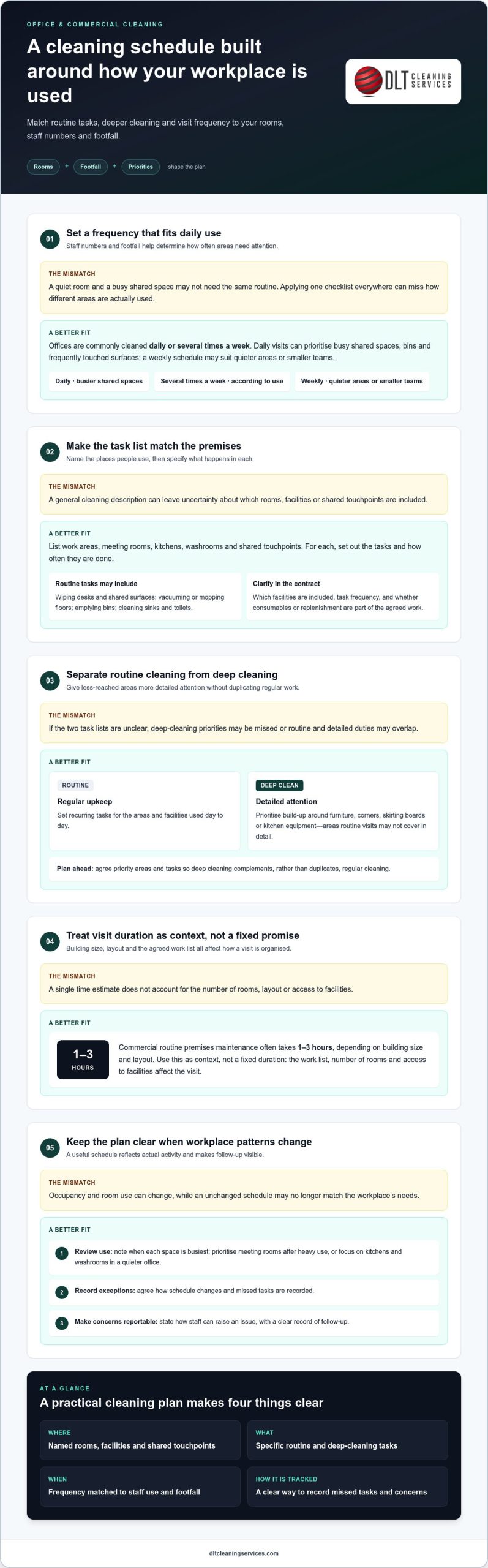
Offices in Guildford are commonly cleaned daily or several times a week, depending on staff numbers and footfall. Daily visits can focus on busy shared spaces, bins and frequently touched surfaces, while a weekly schedule may suit quieter areas or smaller teams.
Commercial cleaning for routine premises maintenance often takes 1-3 hours, depending on building size and layout. Use that as context, not a fixed duration: the work list, number of rooms and access to facilities affect how a visit is organised.
Office, washroom and deep cleaning
Office and washroom cleaning may include wiping desks and shared surfaces, vacuuming or mopping floors, emptying bins, and cleaning sinks and toilets. The contract should state which facilities are included, how often each task is done, and whether consumables or replenishment are part of the agreed work.
Deep cleaning focuses on areas that routine visits may not cover in detail, such as build-up around furniture, corners, skirting boards or kitchen equipment. Set out the priority areas and tasks in advance so the work complements, rather than duplicates, regular cleaning.
A tailored contract starts with a practical review of the premises. List work areas, meeting rooms, kitchens, washrooms and shared touchpoints, then note when each space is busiest. This helps the schedule reflect actual use rather than applying the same checklist to every room.
Flexibility matters when workplace patterns change. A business with busy meeting rooms may need those spaces prioritised after heavy use, while a quieter office may focus more on kitchens and washrooms. Agree how schedule changes and missed tasks are recorded so everyone has a clear reference.
When comparing cleaning services, look for a task plan that names each area and how often it is cleaned. Check that routine and deep-cleaning duties are distinct, and that the contract explains how staff can report an issue. Clear expectations are easier to manage as occupancy or office use changes.
For a more tailored plan, set out your workplace’s rooms, footfall and cleaning priorities, then explore workplace cleaning requirements in that context.
Workplace deep cleaning and disinfection
Deep cleaning targets dirt and build-up that routine visits may not reach. Disinfection focuses on selected surfaces, such as door handles, desks and shared equipment. For Guildford employers, preventing workplace illness with professional cleaning in Guildford means planning both tasks around how rooms are used.
Commercial cleaning in Guildford and Surrey can support enhanced hygiene routines, including cleaning and disinfection planned around the workplace. Clinics and care settings may need enhanced daily hygiene routines, so plans should reflect the spaces and touchpoints in use. A treatment room, reception area and staff kitchen may each have different priorities.
Start by identifying why a deeper clean is needed: visible build-up, a change in room use or frequently touched surfaces requiring attention. A practical plan lists each area, the task and the order of work. Clean visible soil before applying disinfectant so the product can reach the surface properly.
Give high-touch points a specific place in the plan. In an office, these may include door plates, lift buttons, shared keyboards, taps and table edges. Staff and visitors handle them repeatedly, so cleaners should work systematically rather than wiping only the most obvious surfaces.
For clinical touchpoints, reflect how each room is used. Reception counters, chair arms and accessible handles may need attention alongside shared equipment. Clinics and care settings in Guildford may need enhanced daily hygiene routines, so task order and frequency should suit the setting’s activities.
Disinfection does not replace removing dust, grease or other visible dirt. A sound sequence is to clear debris, clean the surface, apply an appropriate disinfectant and follow its label instructions. Allow the stated contact time: wiping the product away too soon can undermine the intended process.
Deep cleaning can also target less accessible areas. Furniture may be moved to clean floor edges, while kitchen worktops and appliance handles receive detailed attention. Agree priorities beforehand so the team knows which spaces need deeper treatment and which remain part of routine cleaning.
Discuss infection-control procedures in practical terms with cleaning providers in Guildford or Surrey. Ask how they identify touchpoints, organise the cleaning plan and record completed tasks. For businesses preventing workplace illness with professional cleaning in Guildford, a clear explanation connects each method to specific rooms and activities rather than relying on broad claims.
After cleaning, compare the result with the plan: were the named surfaces reached, and were access issues recorded? In a shared meeting room, inspect the table, chair arms and door handle. This straightforward review helps managers spot omissions and refine future priorities.
Biological hazards, bodily fluids and contaminated materials
A spill of blood, vomit or another bodily fluid needs a controlled response, not an ordinary desk wipe. Keep people away from the area, inform the responsible manager and avoid touching the material. A clear response helps limit the spread of contamination to handles, footwear or nearby equipment.
Before cleaning starts, identify what was affected and whether the material reached porous surfaces, furnishings or flooring. A small splash on a hard surface differs from contamination across carpet or several work areas. The location and extent help determine the cleaning method, equipment and protective measures needed.
Cleaners should use protective equipment suited to the task. Gloves, masks and protective clothing may be appropriate, depending on the material and work involved. A comprehensive response begins by understanding the hazard, rather than selecting equipment by habit.
Keep cleaning materials used on a contaminated area separate from those used elsewhere. For example, do not carry a cloth from a spill site to a kitchen worktop or shared desk. Follow product instructions, work methodically and avoid actions that could spread droplets or residue to nearby surfaces.
Bird droppings need particular care, especially when they have accumulated. For larger quantities, avoid high-pressure water, which can create contaminated droplets. Instead, consider the affected area and use a controlled cleaning approach that limits disturbance. A roof entrance, ledge or courtyard may need attention before staff use the space.
Gather and handle contaminated materials carefully, without shaking them or dragging them across clean floors. Keep them separate from general cleaning equipment while dealing with the affected area. The correct handling route depends on the material and workplace procedures, so staff need clear instructions before starting.
After removing visible contamination, clean the affected surface and apply a suitable disinfectant according to its label. Follow the stated contact time before wiping or allowing the area back into use. Check nearby touchpoints too, such as a handle or tap that may have been touched during the incident.
A written incident note can record the location, material, actions taken and any area needing further attention. This helps managers spot recurring issues, such as repeated spills near a staff washroom. It also provides a practical handover to the next shift, whether the incident happens in the morning or later.
For workplace incidents, cleaning procedures should address the specific hazard, protective equipment and safe handling of contaminated materials. Clear communication with the responsible manager helps cleaners understand access restrictions and which areas need attention. A careful, step-by-step response supports a safer return to normal use.
What UK health and safety rules apply to workplace cleaning and infection control?
UK workplace cleaning sits within wider employer health and safety responsibilities. The Health and Safety at Work Act 1974 places a duty on employers to ensure employees’ health, safety and welfare, according to UK Parliament. Cleaning arrangements should therefore form part of how a workplace manages hygiene risks, not operate as a separate checklist.
The Workplace (Health, Safety and Welfare) Regulations cited for workplace facilities are from 1992, according to UK Parliament. Employers can apply this context by considering how facilities are maintained, including shared areas used during the working day. A break room, for example, needs suitable arrangements for keeping its food-preparation and eating surfaces clean.
Risk assessment helps turn broad responsibilities into practical controls. The Health and Safety Executive says workplace risk assessments must meet the legal standard described as “suitable and sufficient”. For cleaning, consider the task, who may be exposed, the surfaces involved and how staff or visitors use the space. A spill beside a busy reception desk presents different considerations from routine floor cleaning in an empty office.
Chemical use is covered by the Control of Substances Hazardous to Health (COSHH) Regulations. Workplaces should consider which products are used, how exposure is controlled and what instructions cleaners need. Staff should follow product labels and avoid mixing cleaning chemicals. Keep relevant product information accessible to those responsible for the work.
Personal protective equipment is another consideration. The Personal Protective Equipment at Work Regulations 1992, as amended by the 2022 regulations, are relevant to cleaning work in the UK. Employers should consider appropriate equipment for each task. Where workers need respiratory protective equipment of this kind, they must have a face-fit test before using the mask.
Risk controls should reduce workplace hazards to a level that is as low as reasonably practicable, or ALARP. In practice, this means identifying workable measures and applying them to the hazard. For a cleaning task, controls might include restricting access to a wet floor, using suitable equipment and following a planned sequence.
Managers can make these requirements easier to apply by linking the risk assessment to the cleaning schedule. Record which areas need attention, who is responsible and how hazards are communicated. If an office layout changes or a new cleaning product is introduced, revisit the assessment to keep the controls relevant.
Clear communication between the employer and cleaning team helps translate those controls into daily practice. Share access arrangements, known hazards and the location of relevant instructions before work begins. To discuss workplace cleaning arrangements for your premises, set out the areas and tasks that need attention.
DLT Cleaning Services: Office Cleaning
DLT Cleaning Services Ltd provides Office Cleaning and Hygiene Services for workplaces that need consistent, organised support. Whether your office needs a routine schedule, closer attention to shared spaces or help maintaining washroom hygiene, these services can form part of a practical workplace plan.
Each contract receives dedicated on-site supervision, supporting attention to cleaning tasks and health and safety requirements. This gives businesses clear oversight as they maintain their premises and review day-to-day cleaning needs.
To discuss Office Cleaning or Hygiene Services for your workplace, contact DLT Cleaning Services Ltd.
Make workplace hygiene part of your next steps
Turn your workplace priorities into a clear cleaning brief. Note which areas see the most daily use, where staff share facilities and what needs regular attention. This gives you a practical starting point for discussing a routine that fits how your workplace operates.
Preventing workplace illness with professional cleaning in Guildford depends on consistent attention to the environment and the way your team manages hygiene each day. Professional support can help organise cleaning responsibilities, while staff promptly report spills, contamination or areas needing attention.
DLT Cleaning Services Ltd provides Office Cleaning and Hygiene Services for workplaces seeking ongoing support with cleanliness and hygiene. Discuss your premises and priorities with the team to consider a suitable next step for your working environment.
Contact DLT Cleaning Services Ltd to discuss your workplace cleaning needs and take a positive step towards a cleaner, more hygienic workplace.
Frequently Asked Questions
Do you provide cleaning during illness outbreaks?
DLT Cleaning Services Ltd provides Office Cleaning and Hygiene Services to support workplace hygiene in Guildford. During an illness outbreak, prioritise the affected area and shared touchpoints, and coordinate cleaning with your workplace’s incident procedures. Managers can communicate access arrangements and identify spaces needing attention, such as a meeting room used by an unwell colleague. This helps organise a focused response without disrupting unrelated cleaning tasks.
How do you ensure staff health while cleaning?
Protect cleaning staff by matching precautions to the task and substances involved. Before work starts, identify hazards, provide appropriate protective equipment and explain safe handling procedures. Cleaning a bodily-fluid spill, for example, requires different precautions from vacuuming an office carpet. DLT Cleaning Services Ltd states that its cleaners are directly employed, carefully interviewed, DBS-checked and fully insured; these staffing and insurance details do not replace task-specific safety controls.
How does professional workplace cleaning help prevent illness and infection?
Professional cleaning helps remove soil and contamination from workplace surfaces, followed by targeted disinfection where appropriate. This can reduce opportunities for contamination to transfer through shared touchpoints, such as a printer control panel used by several colleagues. It works best alongside everyday habits, including handwashing and promptly reporting spills. Consistent cleaning supports hygiene but cannot guarantee employees will avoid illness.
Which workplace surfaces and shared areas should be cleaned and disinfected most often?
Prioritise surfaces touched repeatedly by different people: door handles, lift buttons, taps, shared keyboards and kitchen worktops. Include communal tables, reception counters and washroom fittings in the plan. Set frequency according to how many people use each space and how often. A meeting room used throughout the day needs closer attention than a rarely occupied storage room.
What cleaning frequency is recommended for UK workplaces?
There is no single schedule for every workplace. Offices in Guildford are commonly cleaned daily or several times a week, depending on staff numbers and footfall. A busy shared office may need frequent attention to kitchens and washrooms, while a quieter workspace may need a different pattern. Review the schedule when occupancy, room use or seasonal working patterns change, and keep high-use areas covered.
How do professional cleaners safely use disinfectants and cleaning chemicals in workplaces?
Cleaners should follow product labels, use chemicals only for their intended purpose and avoid mixing products. In the UK, cleaning chemical use is covered by the Control of Substances Hazardous to Health (COSHH) Regulations. Safe practice also means considering exposure, storage and suitable protective equipment. Workers who need respiratory protective equipment of this kind must have a face-fit test before using the mask.
What are the risks of poor workplace cleaning, including seasonal illness outbreaks?
Poor cleaning can leave dirt and contamination on shared surfaces, allowing it to transfer between hands, equipment and work areas. During seasonal illness periods, crowded spaces and frequently used touchpoints make hygiene routines especially important. Missed spills may also create slip risks, while neglected kitchens can become unpleasant for staff. A clear reporting process helps managers address problems promptly and prevent them from recurring.
How can businesses check the quality and effectiveness of workplace cleaning?
Compare completed tasks with the agreed cleaning schedule, then inspect relevant areas such as kitchen surfaces, washroom fittings and meeting-room tables. Ask for records showing completed work, missed tasks and follow-up. ATP test results can provide another check on selected surfaces. Interpret them in context: a result applies to its sample point, not automatically to every area in the building.