Could a washroom look clean yet still let a busy workplace down? At Midleton Enterprise Park in Guildford, dependable hygiene planning means looking beyond visible surfaces. Midleton Enterprise Park hygiene services should reflect how staff use washrooms and shared areas, which essentials need regular replenishment, and where a deeper clean is needed.
It’s easy to treat routine cleaning and occasional deep cleaning as the same task, or to notice soap and paper supplies only when they run low. A clear plan separates these needs and helps keep everyday hygiene consistent.
This guide explains how to assess your premises, organise regular attention for washrooms and shared spaces, and distinguish ongoing hygiene support from bathroom deep cleans. It also covers practical ways to set priorities and choose relevant support, so you can keep essential products replenished and your workplace cared for.
Key Takeaways
- Plan Midleton Enterprise Park hygiene services around the washrooms, shared spaces and facilities people use, rather than relying on a one-size-fits-all routine.
- Separate recurring hygiene provision, bathroom deep cleans and general cleaning according to the needs each addresses.
- Map your facilities, identify essential product needs and set priorities to create a practical workplace hygiene plan.
- DLT Cleaning Services’ Hygiene Services include Feminine Hygiene, Air Care, Bathroom Deep Cleans, Janitorial Cleaning, Nappy Bin Services and Soap Care Products.
- Established in 1999, DLT is a family-run company serving locations across Surrey, Hampshire and Berkshire.
Hygiene Planning for Midleton Enterprise Park
For businesses looking for Midleton Enterprise Park hygiene services, start with the premises: which areas are shared, what facilities do people use, and which essentials need ongoing attention? At this Guildford location, as in any workplace, the right plan depends on the building’s layout and how people use it.
Workplace hygiene services support sanitary shared spaces and the essential hygiene provision used in them. They can sit alongside general cleaning, but the two aren’t interchangeable. Commercial cleaning is a broad category of work; a hygiene plan gives specific attention to facilities, products and recurring needs. The requirements depend on factors such as the premises’ layout, how people use it, and whether employees or visitors rely on particular facilities.
Which areas should a business assess first?
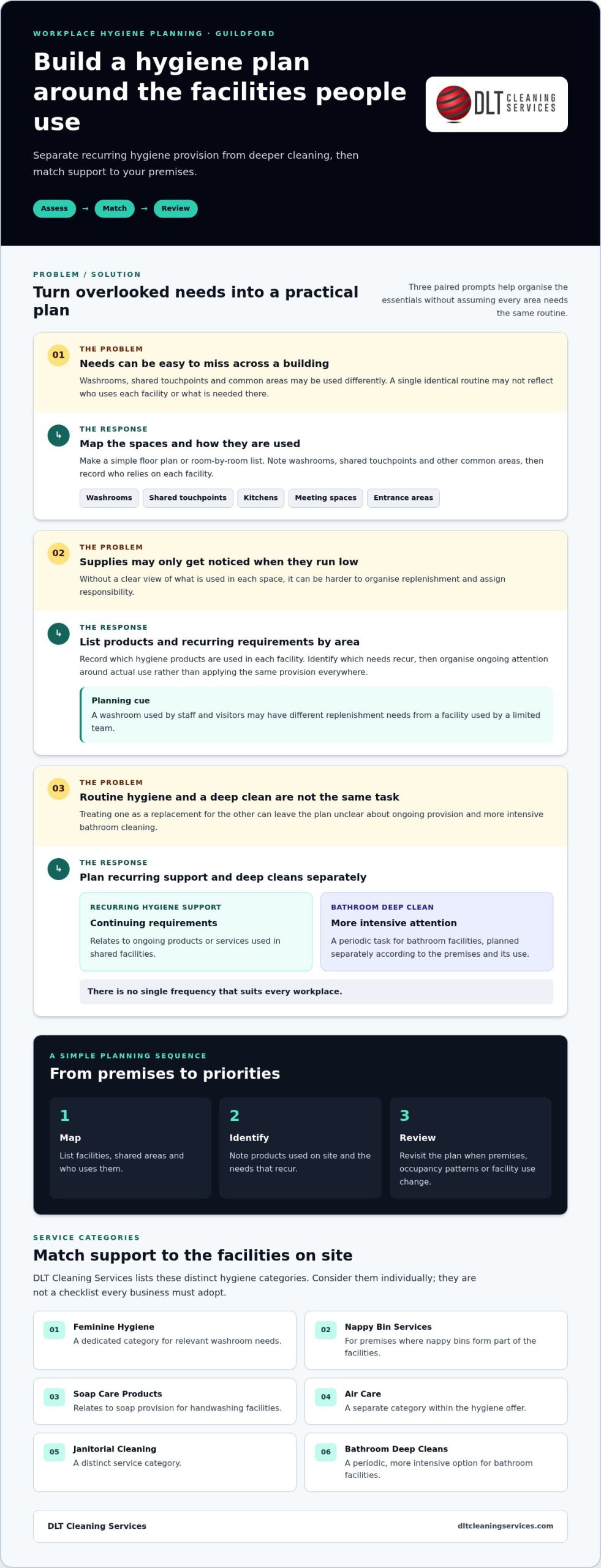
Map the areas within your premises. Note washrooms, shared touchpoints and other common areas, then record where hygiene products are used and who relies on each facility. A simple floor plan or room-by-room list can reveal overlooked spaces and make responsibilities easier to assign.
Consider each area’s purpose and pattern of use. A washroom used by staff and visitors may have different replenishment needs from a small facility used by a limited team. Shared kitchens, meeting spaces and entrance areas may also need attention as part of the wider cleaning arrangement. For properties maintaining on-site wastewater infrastructure alongside their washrooms, specialists like Lil’ Stinky Septic Service provide septic pumping and inspections to ensure facilities remain dependable. Product provision should reflect what is used on site. The aim isn’t to apply an identical routine everywhere, but to identify where regular support matters most.
What does a planned hygiene service aim to achieve?
A hygiene service supports the cleanliness and day-to-day provision of shared facilities, while general cleaning covers broader workplace cleaning tasks. This distinction helps managers identify which needs call for recurring attention and which may require a separate, occasional deep clean. Routine arrangements address continuing requirements; a deeper clean is a more intensive task planned for specific conditions or needs.
Consistent attention helps keep facilities presentable and essential products available for the people who use them. It also gives managers a clearer basis for organising responsibilities, rather than relying on occasional checks or discovering a supply has run out at an inconvenient moment. It doesn’t guarantee a particular health outcome, but it can support a clean, welcoming workplace.
To turn the assessment into a practical plan, note the facilities and shared areas, list the products used in each, and identify which needs recur. Separate those ongoing arrangements from work that is periodic or more intensive. Review the plan when the premises, occupancy patterns or use of facilities change. This gives a business a useful starting point for arranging hygiene support around its actual requirements.
What can commercial hygiene services cover beyond a standard office clean?
A standard office clean and a hygiene service address different parts of workplace care. General cleaning supports cleanliness across the wider workplace, while hygiene provision focuses on particular facilities, services and products. For businesses looking for Midleton Enterprise Park hygiene services, match each component to the premises’ actual needs rather than assuming every option is necessary.
DLT Cleaning Services’ Hygiene Services include Feminine Hygiene, Air Care, Bathroom Deep Cleans, Janitorial Cleaning, Nappy Bin Services and Soap Care Products. Each is a distinct category to consider in light of the facilities and requirements on site. This helps managers describe what they need and distinguish specific hygiene support from broader office cleaning.
How do bathroom deep cleans differ from routine hygiene support?
A Bathroom Deep Clean provides more intensive, periodic attention to bathroom facilities. It differs from ongoing hygiene support, which relates to continuing requirements for products or services used in those spaces. One doesn’t replace the other: a deep clean isn’t the same as maintaining ongoing hygiene provision, and routine arrangements don’t remove the need to consider a deeper clean when the premises require one.
There’s no single frequency that suits every workplace. The appropriate approach depends on the facilities, how people use them and the business’s operational requirements. Plan a deep clean as a distinct task alongside recurring provision, rather than treating it as the whole hygiene plan.
Which hygiene products and services can support washrooms?
DLT’s named categories can be considered individually, according to the facilities and products used on site:
- Feminine Hygiene is a dedicated hygiene service category for relevant washroom needs.
- Nappy Bin Services supports premises where nappy bins form part of the facilities.
- Soap Care Products relates to soap provision for handwashing facilities.
- Air Care is a separate category within the hygiene offer.
- Janitorial Cleaning is another distinct service category.
- Bathroom Deep Cleans provide a periodic deep-cleaning option for bathroom facilities.
These categories aren’t a checklist that every business must adopt. A premises without a particular facility may not need the related service; select support that reflects actual use. Product provision and deep cleaning also address different planning needs: products relate to ongoing requirements, while a deep clean is a separate, more intensive task. Shape their scope and timing around the premises rather than an assumed standard schedule.
To see how hygiene support fits alongside broader office cleaning services, identify the facilities in use and the requirements they create. This gives managers a practical starting point for planning appropriate workplace support.
How should businesses compare recurring hygiene support with one-off deep cleaning?
These arrangements serve different purposes, so comparing them by name alone can be misleading. When assessing Midleton Enterprise Park hygiene services, consider what needs attention, whether that need continues between visits, and whether it calls for general cleaning or a distinct hygiene service. A bathroom deep clean can form part of a wider plan, but it doesn’t replace ongoing attention to facilities and hygiene products.
This comparison is a planning guide, not a fixed schedule. The appropriate frequency depends on the premises, how people use its facilities and the business’s operational requirements.
| Option | Purpose | Planning frequency | Needs addressed |
|---|---|---|---|
| Recurring hygiene provision | Support ongoing hygiene requirements through relevant service categories and product provision. | Plan on a recurring basis, shaped around facility use and operational needs. | Continuing requirements for products or hygiene services in the facilities used. |
| Bathroom deep clean | Provide a distinct, more intensive clean for bathroom facilities. | Arrange periodically, according to the premises’ needs rather than a universal timetable. | Bathroom cleaning needs that call for deeper attention beyond routine provision. |
| General cleaning | Address broader cleaning needs across the workplace. | Plan around the premises and its normal cleaning requirements. | Everyday cleanliness in office and shared areas, distinct from specific hygiene provision. |
When might recurring hygiene provision suit a workplace?
Recurring support suits premises with continuing product or hygiene requirements. For example, a business using Soap Care Products or requiring Feminine Hygiene or Nappy Bin Services has needs that a one-off deep clean won’t address. The relevant categories depend on which facilities are present and how employees or visitors use them.
Consider patterns of use, the products relied upon and changes in how the premises operates. This gives managers a practical basis for planning recurring provision without assuming every workplace needs the same service or visit frequency. Align support with real requirements rather than imposing a standard routine.
When should a business consider a bathroom deep clean?
A bathroom deep clean is a separate option for occasions when bathroom facilities need more intensive attention. It can be arranged alongside recurring hygiene provision, not instead of it. Ongoing product needs remain separate; a deep clean alone doesn’t maintain those provisions between cleans. Set the scope and timing according to the premises and its operational needs.
Keep the distinction clear by noting which needs are recurring and which call for a periodic deep clean. For broader workplace planning, the health and safety compliant cleaning guide offers related context. A considered plan organises general cleaning, recurring hygiene support and bathroom deep cleans as separate but complementary parts of premises care.
How can facilities managers organise a practical workplace hygiene plan?
A straightforward plan makes it easier to explain what the premises needs and keep priorities visible. For managers researching Midleton Enterprise Park hygiene services, the same practical method applies: record the facilities, identify relevant products, decide what needs regular attention and review the arrangement if circumstances change.
Start with what happens inside your own premises. One workplace’s plan may not suit another because layouts, facilities and patterns of use differ. Describe these details clearly when arranging cleaning or hygiene support. That gives everyone a shared understanding of the requirements and helps match the arrangement to the site.
- Map the facilities. List washrooms, shared areas and other spaces that form part of the cleaning or hygiene plan. Record which facilities employees and visitors use, where relevant.
- Identify product needs. Note the hygiene products used in each facility and any service categories that apply to the premises. Keep the list specific to actual use.
- Set priorities. Separate recurring hygiene requirements from occasional needs, such as a bathroom deep clean. This helps avoid treating periodic work as a replacement for ongoing provision.
- Review the arrangement. Revisit the plan when the premises, its facilities or the way people use them changes. Update the recorded requirements so they remain useful.
What information should managers map before setting priorities?
A useful premises record connects each space with its purpose and requirements. For example, note which washrooms use soap products, which shared areas need general cleaning and whether any other facilities call for a specific hygiene service. Don’t assume every area has the same level of use or needs the same support.
Also distinguish continuing requirements from occasional deep-cleaning needs. When mapping shared areas and waste points, many facilities teams also coordinate preventative services—such as consulting commercial exterminators like Mosquito Assassin Pest Control to manage insect and pest risks alongside daily cleaning routines. Keeping the record factual makes it easier to describe the work accurately and plan a suitable arrangement for every space.
How can a manager keep the plan clear and reviewable?
Nominate a responsible contact within your organisation to coordinate requirements and keep the plan current. They can maintain a simple record of the agreed scope, priorities and any changes, giving staff and service partners a consistent reference point. If the premises changes or the way people use a facility shifts, review the plan rather than relying on outdated assumptions.
For wider workplace planning context, the tailored office cleaning services guide explains how cleaning arrangements can reflect a workplace’s needs. Consider legal or regulatory requirements in the correct jurisdiction and check them against relevant UK guidance, rather than inferring them from a generic plan.
Use this framework to describe your premises and operational requirements, then explore DLT’s hygiene services as part of planning workplace support.
How DLT Cleaning Services delivers hygiene support across its service areas
DLT Cleaning Services Ltd is a family-run cleaning company established in 1999. Its commercial services include Office Cleaning and Hygiene Services, supporting business premises with routine cleaning and hygiene provision. DLT serves Guildford, making its services relevant to businesses at Midleton Enterprise Park and across the local area.
DLT’s Hygiene Services include Feminine Hygiene, Air Care, Bathroom Deep Cleans, Janitorial Cleaning, Nappy Bin Services and Soap Care Products. These are distinct categories that businesses can consider in light of their facilities and requirements. A bathroom deep clean, for instance, is a named service in its own right, while soap care products relate to product provision. The appropriate combination depends on the premises; not every business needs every category.
What distinguishes DLT’s hygiene and cleaning approach?
DLT’s family-run background and history since 1999 provide context for its commercial cleaning and hygiene services. All cleaners are directly employed, carefully interviewed, DBS-checked and fully insured. These details give businesses clear information about the people delivering the work and the company’s employment approach.
For managers, a clear description of the premises and its requirements is a useful basis for planning support. It helps distinguish broader Office Cleaning needs from specific Hygiene Services, such as Bathroom Deep Cleans or Soap Care Products. Keeping those requirements clear makes it easier to identify the service categories relevant to the workplace.
Which locations does DLT serve?
DLT’s service areas include:
- Guildford, Woking, Aldershot, Camberley and Farnham
- Farnborough, Cobham, Banstead, Sutton and Weybridge
- Surrey, Hampshire and Berkshire
Guildford is among DLT’s service areas, providing local coverage for businesses at Midleton Enterprise Park and nearby commercial premises.
Businesses in DLT’s service areas can explore its Office Cleaning and Hygiene Services in relation to their premises and operational requirements. A considered plan starts with the facilities in use and the support needed, then focuses on relevant service categories. DLT’s family-run background, directly employed team and defined service offer provide a clear starting point for businesses seeking professional cleaning and hygiene support.
Make your next hygiene plan a practical one
A workable hygiene plan should make day-to-day responsibilities easier to manage, not add unnecessary complexity. Use your notes on facilities and operational needs to decide what support is relevant, then review the arrangement as the premises changes. This gives businesses searching for Midleton Enterprise Park hygiene services a clear planning approach grounded in the needs of each workplace.
DLT Cleaning Services provides Hygiene Services and Office Cleaning for commercial premises in Guildford and its other service areas. Its directly employed cleaners are carefully interviewed, DBS-checked and fully insured.
Explore DLT’s Hygiene Services and arrange cleaning support for your Guildford workplace.
Frequently Asked Questions
What do commercial hygiene services usually include?
Commercial hygiene services can cover specialist washroom services, hygiene products and bathroom deep cleaning. DLT Cleaning Services’ categories include Feminine Hygiene, Air Care, Bathroom Deep Cleans, Janitorial Cleaning, Nappy Bin Services and Soap Care Products. Use your premises’ facilities to decide which categories are relevant. For example, note which washrooms use soap products and whether the premises has facilities that need a feminine hygiene or nappy bin service.
How often should workplace washrooms receive a deep clean?
There isn’t one deep-cleaning frequency that suits every workplace. The appropriate arrangement depends on the facilities, how they’re used and the premises’ operational requirements. Review how washrooms are being used and whether routine attention meets the site’s needs, then plan a bathroom deep clean accordingly. Treat it as a distinct task rather than assuming it replaces day-to-day cleaning or ongoing hygiene provision.
Can hygiene services include feminine hygiene and nappy bin services?
Yes. Feminine Hygiene and Nappy Bin Services are both part of DLT Cleaning Services’ Hygiene Services. Their relevance depends on the facilities and requirements of the premises. A facilities manager can record which washrooms need these services and include that information when planning workplace support. This keeps the plan specific to the site rather than treating every service category as necessary in every building.
What is the difference between commercial cleaning and hygiene services?
Commercial cleaning is a broad term for cleaning work in business premises, whilst hygiene services address specific hygiene-related facilities, products and support. For example, cleaning an office’s general work areas differs from arranging Soap Care Products or a Bathroom Deep Clean. Businesses can plan both as complementary parts of premises care. Consider the areas involved and the purpose of each task to decide how they fit together.
How should a business plan janitorial products for its premises?
Start with an inventory of the products used in each relevant area, such as noting where Soap Care Products are needed. Record the facilities they support and who uses those spaces, then nominate someone in the organisation to keep the information current. Reviewing the inventory when facilities or their use changes helps managers keep product requirements clear when organising janitorial cleaning and wider hygiene support.
Does DLT Cleaning Services serve Midleton Enterprise Park?
DLT Cleaning Services serves Guildford, where Midleton Enterprise Park is located, and provides Office Cleaning and Hygiene Services for commercial premises. Its Hygiene Services include Feminine Hygiene, Air Care, Bathroom Deep Cleans, Janitorial Cleaning, Nappy Bin Services and Soap Care Products.
Which areas does DLT Cleaning Services cover?
DLT Cleaning Services serves Guildford, Woking, Aldershot, Camberley, Farnham, Farnborough, Cobham, Banstead, Sutton, Weybridge, Surrey, Hampshire and Berkshire. Guildford is the local service area relevant to Midleton Enterprise Park.