What if the time you spend chasing your cleaning crew is actually costing your business more than the contract itself? For many facility managers, a signed agreement feels like a solution, but it often becomes a source of daily frustration when standards slip or communication breaks down. Knowing exactly what to look for in an office cleaning contract is the only way to move from micro-managing a vendor to partnering with a dedicated service. It’s about ensuring your workspace remains a healthy, productive environment without you having to lift a finger.
We understand that you’re looking for stability and high standards, not just a list of tasks on a page. In this guide, we’ll help you evaluate the essential clauses and hygiene standards that define a modern, reliable partnership in 2026. You’ll discover how to spot hidden costs for supplies, identify red flags in service level agreements, and ensure your provider takes full ownership of the environment. From data-driven performance tracking to the latest health-first protocols, we’ve outlined everything you need to secure a contract that protects your staff and your peace of mind.
Key Takeaways
- Learn how to move beyond vague “general clean” descriptions by identifying exactly what to look for in an office cleaning contract to ensure every high-traffic zone is covered.
- Discover why dedicated on-site supervision is the most effective way to maintain consistent standards and eliminate the need for constant client intervention.
- Understand the importance of rigorous staff vetting and training to protect your business’s security and ensure compliance with the latest health and safety regulations.
- Evaluate different pricing structures to find a model that provides budget stability whilst accounting for the true cost of equipment and professional management.
- Use our final checklist to verify a provider’s local track record and the benefits of choosing an independent, family-run partner for greater accountability.
Defining the Service Scope: Ensuring Your Contract Covers Every Corner
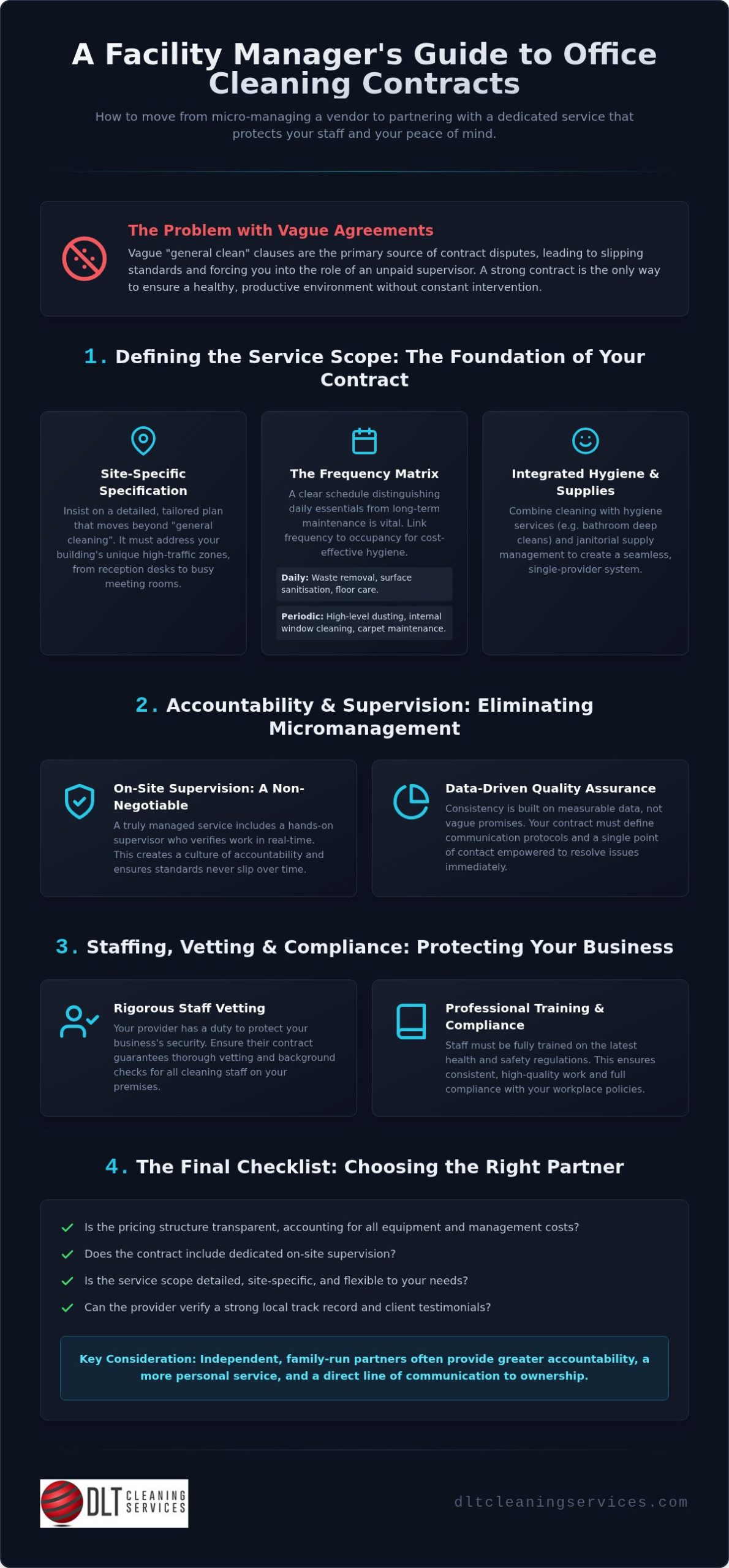
A vague “general clean” clause is the most common trigger for contract disputes. When a contract doesn’t define what “clean” actually looks like for your specific building, standards inevitably slip. A site-specific specification is the foundation of a successful partnership. It ensures your cleaning team focuses on the areas that matter most, such as high-traffic reception desks in Guildford or busy meeting rooms in Woking. When considering what to look for in an office cleaning contract, the level of detail in the service scope is your first indicator of a provider’s professionalism.
We believe a contract should be a living document that mirrors the pulse of your workplace. If your Surrey office has transitioned to hybrid working, a rigid, one-size-fits-all agreement won’t provide the value you deserve. A tailored scope allows for resources to be redirected where they are needed most, ensuring that your investment translates directly into a healthier environment for your staff.
Daily vs Periodic Tasks: The Frequency Matrix
Consistency relies on a clear frequency matrix that distinguishes between immediate needs and long-term maintenance. Daily tasks are the essentials: waste removal, surface sanitisation, and floor care that keep the office functional and presentable. However, the scope of commercial cleaning services should also include a transparent schedule for periodic work. High-level dusting, internal window cleaning, and carpet maintenance don’t need doing every night; they must be documented to prevent them from being forgotten.
Smart managers link task frequency to office occupancy levels. If your Woking headquarters is quieter on certain days, your contract should allow for a flexible approach. This ensures you aren’t paying for the intensive cleaning of empty desks whilst high-use areas like the canteen or breakout zones require extra attention. It’s a proactive way to manage your budget without compromising on the overall hygiene of the building.
Integrating Hygiene Services and Janitorial Supplies
Hygiene services often sit in a grey area between cleaning and facilities management, yet they are vital for employee well-being. A robust contract should formally include bathroom deep cleans to prevent the buildup of bacteria in hard-to-reach areas. This goes beyond a simple daily wipe-down; it involves specialised equipment and chemicals to maintain a truly sanitary environment. When you are deciding what to look for in an office cleaning contract, check if these deep-clean cycles are clearly defined or hidden as extra charges.
There is a significant benefit to having a single provider manage both your cleaning and your janitorial supply stocks. It creates a seamless system where soap, paper products, and kitchen essentials are replenished automatically. We find that clients save time and reduce waste when their cleaning partner takes ownership of the inventory. This hands-on approach means you never have to worry about running out of essentials or dealing with multiple invoices from different vendors.
Accountability and Supervision: Moving Beyond Visible Dust
The biggest failure in most cleaning agreements isn’t a missed coffee stain; it’s a lack of management oversight. Many providers promise a high standard of work but leave the daily execution entirely to the cleaners themselves. This forces you, the manager, into the role of an unpaid supervisor. When researching what to look for in an office cleaning contract, on-site supervision should be a non-negotiable requirement. A truly managed service means the provider takes ownership of the results so you don’t have to.
Dedicated on-site supervision ensures that standards never slip over time. At DLT, we’ve found that having a hands-on manager present to verify work in real-time creates a culture of accountability. Whilst commercial standards in the UK vary, looking at established federal contracting rules provides a useful benchmark for how service responsibilities should be governed and monitored. Your contract should clearly define communication protocols, identifying a single point of contact who is empowered to resolve issues immediately.
Quality Assurance and Verification Methods
Consistency is built on measurable data rather than vague promises. Your agreement should include clear Key Performance Indicators (KPIs) that define what “clean” looks like for your premises. Regular site audits are essential for verifying these standards. These shouldn’t be internal secrets; they should be reported to you monthly to prove the contract is being fulfilled. This is why we advocate for a health and safety compliant cleaning partner who takes ownership of the environment and documents every inspection.
Proactive vs Reactive Service Management
A reactive provider waits for your email to fix a problem. A proactive partner identifies the issue before you even arrive at your desk. You can spot the difference in the contract’s language. Look for a “partnership” clause that encourages the provider to suggest improvements or adjust schedules based on your office’s changing needs. A proactive partner understands the nuances of office cleaning in Surrey, from the specific dust challenges of older buildings to the high-pressure demands of modern tech hubs. If you are tired of supervising your current crew, it might be time to switch to managed office cleaning solutions that prioritise accountability.
Staffing, Vetting, and Compliance: Protecting Your Business
The quality of the people entering your building is just as critical as the chemicals they use. Staffing is often where budget providers cut corners to lower their quotes, but this creates significant risks for your organisation. Understanding what to look for in an office cleaning contract starts with verifying how staff are employed and vetted. You need to know that the team on-site is fully insured with both Public and Employers’ Liability cover, protecting you from potential litigation should an accident occur on your premises.
Cheap contracts often mask a lack of investment in training and fair labour practices. Professional cleaning is a specialised skill that requires knowledge of cross-contamination, high-traffic hygiene, and equipment safety. A provider that prioritises low costs over fair wages often suffers from high staff turnover, which directly impacts the security and consistency of your clean. We’ve seen how long-term, dedicated staff build a deep understanding of a building’s nuances, ensuring that standards remain high year after year. Since 1999, we’ve prioritised stability in our teams to give our clients peace of mind.
Vetting and Safeguarding for Office Environments
Security is paramount when allowing external contractors into your workspace, especially outside of normal business hours. You should ask for clear evidence of background checks and right-to-work verifications as a standard part of the agreement. Consistent staffing isn’t just about familiarity; it’s a security measure that ensures only authorised, known individuals have access to your sensitive office areas. This is why many facility managers prefer tailored office cleaning services that prioritise a stable, vetted workforce over a rotating door of temporary agency workers.
Health and Safety: COSHH and Risk Assessments
Compliance with UK workplace regulations is a non-negotiable part of any commercial agreement. Your provider must manage all cleaning chemicals under COSHH (Control of Substances Hazardous to Health) guidelines to ensure the safety of your employees and their own staff. In 2026, staying ahead of evolving safety standards is vital for any professional organisation. A professional contract should always include site-specific Risk Assessments and Method Statements (RAMS). These documents aren’t just paperwork; they’re a blueprint for safe working practices tailored to your specific Surrey premises. By ensuring these are in place, you protect your business from health and safety liabilities and demonstrate a commitment to a secure working environment.
The Commercials: Pricing Structures and Contract Terms
The pricing structure of your agreement often dictates the long-term success of the partnership. When evaluating what to look for in an office cleaning contract, you’ll typically choose between fixed-fee and variable models. Fixed-fee models are the preferred choice for Surrey businesses seeking budget stability. This structure provides a consistent monthly cost, allowing you to forecast your facilities spend without worrying about fluctuating invoices or surprise add-ons for routine tasks. In contrast, variable pricing might seem flexible but often leads to unexpected costs when minor additional requirements arise.
A professional quote should be transparent about the “true cost” of the service. This includes the hourly rate of the cleaners, the provision of high-quality chemicals, professional-grade equipment, and essential management time. If a quote seems unusually low, it likely suggests that the provider is cutting corners on staff training or failing to pay the Real Living Wage. Fair pay is essential for staff retention and morale, which directly impacts the quality of your workspace. You should also look for transparency in invoicing to ensure that hygiene supplies and janitorial stocks are clearly defined rather than hidden behind vague surcharges.
Contract Duration and Termination Clauses
Flexibility is a hallmark of a service-led business. Whilst some providers push for long-term “lock-in” agreements, a fair contract typically offers a rolling monthly term or an annual agreement with a clear notice period. A standard notice period of one to three months allows both parties enough time to manage a transition without disrupting office operations. You should be wary of clauses that make it difficult to exit if standards slip. A partner who is confident in their work shouldn’t need to trap you in a restrictive agreement to maintain your custom.
The TUPE Process: Transitioning Between Providers
Changing providers can feel daunting due to the Transfer of Undertakings (Protection of Employment) regulations, commonly known as TUPE. This legislation protects the rights of the existing cleaning staff when a contract moves to a new company. A professional provider will manage this transition seamlessly, handling all legal consultations and ensuring service continuity. They’ll assess the current team’s performance and integrate them into their own management structure, which often results in an immediate uplift in standards through better supervision and support. If you are reviewing your current arrangements and need a transparent, fair quote, you can request a managed office cleaning proposal that covers all your commercial requirements.
The Final Checklist: Is This the Right Partner for Your Office?
Choosing a cleaning partner is about more than just checking boxes on a list; it’s about finding a team that integrates into your business culture. You should look closely at a provider’s track record with similar-sized organisations across Surrey. Do they truly understand the specific needs of Guildford-based firms or the logistical demands of Hampshire and Berkshire? Local expertise isn’t just about travel time. It’s about having a proven network of reliable staff and supervisors who are already active in your community. When you’re deciding what to look for in an office cleaning contract, a provider’s history of long-term client retention is your strongest indicator of future reliability.
Trust is the silent clause in every successful agreement. You need to feel confident that the team entering your building after hours is as dedicated to your premises as you are. This trust is built through transparency, consistent performance, and a clear sense of accountability. A partner who takes ownership of the environment doesn’t just clean; they protect your professional image and the health of your workforce. By focusing on value and service stability rather than the lowest possible price, you ensure a productive workspace that stays consistently high-standard.
The Family-Run Advantage
Choosing family run office cleaning in Surrey offers a level of personal investment that national chains often struggle to match. In a family-run business, you aren’t just another contract number on a spreadsheet; you’re a valued client with direct access to the decision-makers. Since 1999, we’ve found that this hands-on approach creates a unique sense of stability. The person who quotes for your work is often the same person who oversees the on-site supervision, ensuring that the promises made during the initial meeting are actually delivered on the ground. This direct line of communication ensures that any adjustments to your service are handled with an amicable, “can-do” attitude.
Next Steps: Requesting a Professional Quote
Before you make your final decision, invite potential partners for a comprehensive site walk-through. This is your opportunity to test their expertise in real-time. Ask them how they would manage your specific high-traffic zones or how they handle the inventory of hygiene supplies. A professional provider will often identify potential maintenance issues during the tour that you might have overlooked. This initial consultation is a vital part of what to look for in an office cleaning contract, as it reveals the provider’s genuine attention to detail. At DLT Cleaning Services Ltd, we aim to simplify your office maintenance by taking full ownership of the environment, providing a steady, methodical service that lets you focus on your own operations without distraction.
Securing a Productive Future for Your Workspace
Securing a reliable cleaning partner for 2026 means looking beyond the surface of a simple task list. We’ve explored how a site-specific service scope and rigorous vetting protect your business from operational risks and health liabilities. Understanding what to look for in an office cleaning contract is ultimately about prioritising accountability and transparency over the cheapest bid. It’s about ensuring your environment is managed by experts who take personal pride in every corner of your office, from the reception desk to the breakout areas.
Since 1999, DLT Cleaning Services Ltd has provided this exact level of dedication to businesses across Surrey. As an established family-run business, we provide dedicated on-site supervision for every contract and remain fully H&S compliant and COSHH regulated. We’re ready to take ownership of your environment so you can focus on your core operations without distraction. Request a tailored office cleaning quote from DLT Cleaning Services Ltd today and experience the difference of a truly managed hygiene service. We look forward to helping you create a healthier, more consistent workplace for your team.
Frequently Asked Questions
What are the most important things to include in an office cleaning contract?
The core elements should include a site-specific task list, a clear frequency matrix, and a dedicated management plan. You must ensure the agreement defines both daily maintenance and periodic deep-cleaning cycles. Including these details is a vital part of what to look for in an office cleaning contract because it prevents standards from slipping. A robust agreement should also specify the reporting structure for site audits and the exact communication protocols for resolving issues.
How much should a standard office cleaning contract cost in the UK?
Costs vary significantly based on your office’s square footage, the number of staff required, and the frequency of visits. A professional quote should account for the Real Living Wage, high-quality chemicals, and management overheads. Beware of “budget” quotes that seem too low, as these often indicate a lack of investment in staff training or insurance. Most reputable providers will offer a fixed-fee structure to ensure your monthly facilities budget remains stable and predictable.
What is a ‘managed’ cleaning service and do I need one?
A managed service includes dedicated on-site supervision and proactive quality control, removing the burden of oversight from your shoulders. You need this if you want to avoid spending your own time checking desks or chasing cleaners for missed tasks. A managed provider takes full ownership of the environment, conducting regular audits and ensuring compliance with all health and safety regulations. This approach guarantees consistency and allows you to focus entirely on your own business operations.
Can I cancel my cleaning contract if the standards are poor?
Yes, provided your agreement includes a fair termination clause based on performance failures. Most professional contracts offer a notice period of one to three months, but you should look for specific language regarding service level breaches. If standards fall below the agreed KPIs, you should have a clear path to exit the partnership. It’s essential to document all issues and communicate them through the formal channels defined in your initial agreement whilst giving the provider a chance to rectify the problem.
What does TUPE mean when switching cleaning companies?
TUPE refers to the Transfer of Undertakings (Protection of Employment) regulations, which protect the rights of staff when a service contract changes hands. When you switch providers, the existing cleaners may have the right to transfer to the new company on their current terms. A professional provider will manage this complex legal process on your behalf. They will handle consultations and integrate the team into their own managed structure to ensure service continuity during the transition period.
Should hygiene supplies like soap and toilet paper be included in the contract?
Integrating hygiene supplies into your contract is highly recommended for better inventory management and cost control. When your provider manages these stocks, they ensure you never run out of essentials like soap, paper towels, or kitchen rolls. This is a key detail in what to look for in an office cleaning contract to avoid hidden surcharges. A single point of contact for both cleaning and supplies simplifies your invoicing and reduces administrative time for your management team.
How often should my office cleaning contract be reviewed?
You should review your contract at least once a year or whenever your office occupancy levels change significantly. If your business adopts hybrid working or expands into new floors, your task list and frequency matrix may need adjusting to maintain value. Regular reviews ensure that the service remains tailored to your current needs. An amicable partner will be happy to suggest improvements or reallocate resources to keep your workspace in peak condition as your organisation evolves.
What insurance should an office cleaning company have?
A reputable cleaning company must hold comprehensive Public Liability and Employers’ Liability insurance as a minimum standard. These policies protect your business from financial responsibility if a staff member or visitor is injured on your premises due to cleaning activities. You should also verify that the provider is fully COSHH regulated and H&S compliant. Always ask to see current insurance certificates before signing any agreement to ensure your organisation is fully protected against potential risks on-site.