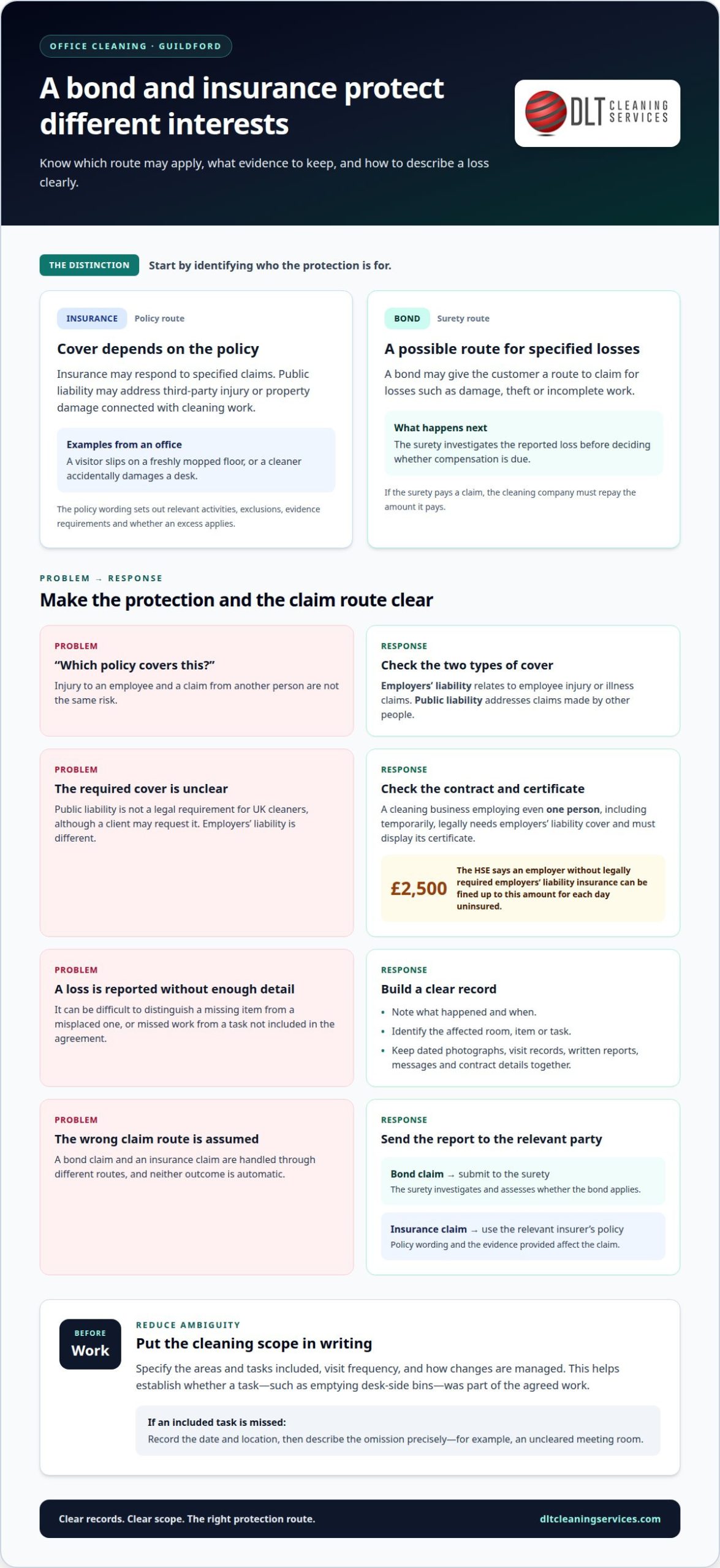
Insurance and bonding protect different interests. When choosing insured and bonded office cleaners in Guildford, remember that insurance protects the cleaning business, while a bond may give the customer a route to claim for specified losses, such as damage, theft or incomplete work. The surety investigates before deciding whether to compensate the customer, and the cleaning company must repay any amount the surety pays.
That distinction matters when you’re arranging office cleaning and want to understand what protection is in place. Public liability insurance isn’t a legal requirement for cleaners in the UK, although some clients may request it. According to the Health and Safety Executive, an employer without legally required employers’ liability insurance can be fined up to £2,500 for each day uninsured. A contract may also make bonding and insurance a condition of the work.
This guide explains what bonding does and doesn’t mean, how it differs from insurance, and what to consider when arranging office cleaning in Guildford. It also shows how to define a cleaning plan around your workplace, so you can understand the protections involved and choose a service that supports a clean, well-managed office.
Key Takeaways
- Understand which types of cover address injury or property damage, and why policy details and exclusions matter.
- Know what information can help clarify a claim involving damage, theft or unfinished cleaning work.
- Shape an office cleaning schedule around your building’s layout, staff numbers and footfall.
- See how contract requirements can influence whether a cleaning company needs to be insured, bonded or both.
Public liability cover for injury and property damage claims
Public liability insurance may respond to third-party claims for injury or property damage connected with cleaning work. For example, a visitor might slip on a freshly mopped floor, or a cleaner might accidentally damage a desk. The policy wording determines whether the incident is covered, what evidence is required and whether an excess applies.
Public liability insurance isn’t a legal obligation for UK cleaners, although a client may require it in a contract. Employers’ liability is different: a cleaning business employing even one person, including temporarily, legally needs this cover and must display its certificate. According to the Health and Safety Executive, an employer without legally required employers’ liability insurance can be fined up to £2,500 for each day uninsured.
Ask to see the employers’ liability certificate and details of the public liability cover, including its terms. Employers’ liability relates to employee injury or illness claims; public liability addresses claims made by other people. These documents clarify which risks each policy addresses and help you assess the cover against your office contract.
Policies can also set limits and exclusions. Cleaning insurance may exclude items being worked on when an accident occurs, so damage to a surface during cleaning could be treated differently from damage to nearby furniture. The policy excess affects the amount payable by the insured before cover applies. Read the wording for relevant activities, property and claim procedures.
Key access is another practical consideration. If cleaners hold office keys, a policy extension may cover failure to lock up properly after leaving. Cleaning businesses that transport equipment between jobs should ensure it is protected in transit. Depending on the policy, commercial cover can also include workers’ compensation, general liability and property insurance.
For a Guildford workplace, consider the site’s access arrangements and the equipment needed for its cleaning tasks. A clear agreement can set out responsibilities for keys, locking up and reporting damage. Matching these details to the policy wording helps everyone understand how the arrangements apply at your premises.
Claims for damage, theft or incomplete work
A bond may give a customer a route to claim for losses such as damage, theft or incomplete work. For example, a customer could report a damaged office fitting or a cleaning visit that left agreed tasks unfinished. The surety investigates the claim before deciding whether compensation is due.
Start by recording what happened and when. A clear account helps distinguish a missing item from a misplaced one, or incomplete work from a task that wasn’t included in the agreement. Note the affected room, item or cleaning task, and keep relevant messages, photographs and contract details together.
- Describe the loss: identify the damaged property, missing item or unfinished task, such as an uncleared meeting room.
- Gather supporting details: retain dated photographs, visit records and written reports connected with the incident.
- Use the right claim route: submit a bond claim to the surety, or an insurance claim under the relevant insurer’s policy.
- Keep a record: note communications and any response from the surety or insurance company.
These steps help set out the circumstances clearly, but they don’t determine the outcome. The surety investigates the reported loss and assesses whether the bond applies. Policy wording and the evidence provided affect an insurance claim. A friendly, factual account is more useful than assumptions about who caused the problem.
Incomplete work can be particularly easy to misunderstand. A written cleaning specification helps establish whether a task, such as emptying desk-side bins, formed part of the agreed work. If an included task was missed, record the date and location, then describe the omission precisely.
A bond claim is made against the surety, while an insurance claim is made under an insurance policy. If the surety pays a claim, the cleaning company must repay it. Understanding these separate steps helps your office team report damage, theft or missed work clearly and follow the appropriate process.
Cleaning services in Guildford
Guildford offices differ in layout, occupancy and daily use, so commercial cleaning works best with a clearly defined scope. Visit frequency, task priorities and access arrangements help shape a practical plan for each workplace.
Cleaning Services and Contract Options
Office cleaning can be arranged around regular visits, with the schedule reflecting staff numbers, footfall and the building’s layout. Offices are commonly cleaned daily or several times a week; daily or weekly Guildford visits often take 1-3 hours, depending on the premises. A written scope should specify the areas and tasks included, visit frequency and how changes are managed.
A cleaning agreement should make responsibilities clear, whether you need recurring cleaning or attention to particular workplace areas. For example, a busy shared kitchen may need different priorities from a lightly used meeting room. Set out the tasks and schedule that suit your premises, so the service can be tailored to how your office operates.
Insured and Bonded Companies
Businesses looking for insured and bonded office cleaners in Guildford should compare the proposed cleaning scope with the protections required by their contract. Commercial cleaning companies may need insurance and bonding under agreements with clients, landlords or lenders. Reviews can offer context about communication and consistency, but they don’t establish whether particular insurance or bond terms apply.
Consider whether the cleaning tasks, feedback about service delivery and relevant documents suit your premises. The right choice depends on your workplace requirements and any conditions set by a landlord or lender, not simply on a general claim of being insured or bonded.
Verifying Insurance and Bonding
When assessing insured and bonded office cleaners in Guildford, compare the documents with the cleaning agreement. Confirm that the named business matches the agreement, and read the policy scope, exclusions and excess. For a bond, identify the surety and the process for submitting a claim.
Keep relevant documents with written terms covering agreed tasks and access arrangements. If a landlord or lender has set conditions, compare those requirements with the agreement and supporting documents before cleaning begins. This gives your office a clear record of the arrangements for the premises.
Which office cleaning companies in Guildford are insured and bonded?
There isn’t one universal insurance and bonding arrangement for Guildford offices. Commercial cleaning companies may need both under agreements with clients, landlords or lenders, so the relevant company is the one whose cover meets your contract’s requirements.
Start with the written agreement and match its requirements against the cleaning company’s insurance documents and bond terms. A policy or bond should relate to the legal business named in the contract and the work taking place at your premises. A general statement that a company is “fully covered” doesn’t explain those details.
- Check the company name: make sure the documents identify the same business entering the agreement.
- Review the policy scope: see whether it relates to the cleaning activities and property involved.
- Read the bond wording: understand which losses may be considered and how a claim is made.
- Compare with contract terms: include any requirements set by your landlord or lender.
These steps help distinguish evidence of cover from a broad assurance. For example, a landlord’s contract might require bonding, while your own agreement may set out insurance conditions. Reviews can add context about communication and consistency, but they don’t establish whether a policy or bond applies to a particular loss.
Choose a provider whose proposed cleaning scope suits your office and whose documents address the conditions that apply to your premises. Keep the agreement and relevant insurance or bond details together, so the responsible contacts and claim route are easy to identify if an incident occurs.
For a Guildford office, the practical next step is to set out the premises, cleaning tasks and any contract conditions in your enquiry. Discuss your office cleaning requirements to establish a clear scope for the work.
Compare providers by matching their proposed cleaning scope to your office’s needs, using reviews for context on communication and consistency, and checking that their insurance and bond documents meet the requirements for your premises.
Choose a provider whose insurance and bond documents identify the business entering the agreement and address the cleaning work and property involved. The relevant cover is the cover that meets your contract and any conditions set by your landlord or lender.
DLT Cleaning Services: Office Cleaning
DLT Cleaning Services Ltd supports Guildford workplaces with office cleaning and hygiene services tailored to the premises and its day-to-day needs. If you’re arranging regular cleaning or want to improve workplace hygiene, outline the areas and tasks that need attention and your preferred schedule.
Each contract is managed with dedicated on-site supervision, helping keep agreed work organised and aligned with health and safety requirements. This provides clear oversight as the cleaning plan is delivered.
Contact DLT Cleaning Services Ltd to discuss your office cleaning requirements.
Set your office cleaning priorities
Use your next contract discussion to turn workplace needs into a clear plan. Identify the areas that need regular attention, the tasks that matter most to your team and any access or landlord requirements. These details give the conversation a practical starting point, rather than focusing on a label alone.
For businesses choosing insured and bonded office cleaners in Guildford, matching the written arrangements to the actual work is an important part of setting expectations. DLT Cleaning Services provides office cleaning and hygiene services, helping businesses address workplace cleanliness and hygiene through a clearly defined scope.
If you’re ready to discuss what would work for your premises, contact DLT Cleaning Services to talk through your requirements. A clear starting point can help you move towards a well-organised workplace plan with confidence.
Frequently Asked Questions
What does it mean to be bonded?
Being bonded means a surety company may consider a customer’s claim for a covered loss, such as theft, damage or incomplete work. The surety investigates before deciding whether to compensate the customer. If it pays a claim, the cleaning company must repay the surety. The bond wording defines eligible losses and the process for making a claim.
What is the difference between insurance and bonds?
Insurance provides cover under a policy issued by an insurer, while a bond allows a surety to consider a customer’s claim under its terms. For example, a business might make an insurance claim for an incident covered by its policy, or approach the surety about a loss covered by a bond. Each arrangement has its own conditions and claim route.
What public liability insurance cover do Guildford office cleaners provide?
Public liability cover may address third-party injury or property damage claims connected with cleaning work, subject to the policy terms. For instance, a visitor’s injury or accidental damage to office furniture may be relevant to a claim. Cover and exclusions vary by policy. Public liability insurance isn’t a legal obligation for UK cleaners, though a client may request it.
Are Guildford office cleaners bonded, and what does bonding cover?
Bonding isn’t automatic for every Guildford office cleaning contract. A client, landlord or lender may require it as a contract condition. A bond can provide a route to claim for specified losses, such as theft or incomplete work, but the surety assesses each claim against the wording. Check that the agreement identifies the bond and explains how claims are handled.
What checks should I make before hiring an office cleaner in Guildford?
Before agreeing a Guildford cleaning contract, make sure the written scope identifies the premises, tasks, visit arrangements and access responsibilities. Match the legal business name in the agreement to its insurance documents, then review relevant cover, exclusions and any bond terms. If a landlord or lender sets conditions, ensure the contract reflects them rather than relying on a verbal assurance.
Do Guildford office cleaners have employer’s liability insurance and DBS-checked staff?
Employers in the UK who employ even one person, including temporarily, legally need employers’ liability insurance and must display its certificate. DBS checks are a separate matter and aren’t evidence of insurance. DLT Cleaning Services states that its cleaners are directly employed, its team is fully insured, and all staff undergo DBS background checks. These checks address different aspects of workplace assurance.